
The Adaptive Technology : A New Mantra for Root Canal Shaping
Seema Dental College & Hospital, Rishikesh, Uttrkhand, India
Preparation of root canal system includes both enlargement and shaping of the complex endodontic space together with its disinfection . To fulfil these requirements, a variety of manual, rotary, and reciprocating instruments have been developed.Technological advancements in rotary nickel-titanium (NiTi) instruments have led to new design concepts and easier and faster techniques that preserve the original canal shape with considerably less iatrogenic error.
From the 90s,“traditional” NiTi root canal instrumentation has been done through continuous instrument rotation. More recently, the concept of canal instrumentation using a single NiTi file using reciprocation movement was introduced. Since then, reciprocation has been the focus of much research and designated motors and NiTi files have been brought to market. The benefits of reciprocation helped in making these file systems quite popular
Recently, Twisted File Rotary instruments (SybronEndo, Orange, CA)) have been introduced, it is another novel file that uses a combination of continuous rotation and reciprocating motion. The file uses continuous rotation when it is exposed to minimal or no applied load and uses reciprocal motion when it engages dentin and a load is applied. Manufacturers have claimed that this adaptive technology and twisted file design using R-phase treatment increase debris removal and flexibility and allow the file to adjust to intracanal torsional forces depending on the amount of pressure placed on the file..
The Twisted File Adaptive system is designed to use motion that is more similar to continuous rotation for optimal debris removal . When a load is applied, the Twisted File Adaptive system uses reciprocal motion, which may improve the file’s fatigue behavior .Twisted File Adaptive system extruded significantly less debris than the other rotary / reciprocating systems thus causes less postoperative pain when compared with the single-file reciprocating systems.
INNOVATIVE FILE DESIGN
Twisted Files are the only files in the market manufactured in the same way as stainless steel ones, by twisting them into shape. This is done during the thermal cycle that transforms into the R-Phase.
- The result is a smooth and continuous file surface. All other NiTi files are grounded into shape. The machining process leads to machining grooves on the surface of the file. File fracture always starts at the weakest link. These machining surface grooves serve as initiation points for cracks and then possibly file fracture
- In addition to twisting, Twisted Files then further undergo a process of surface deoxidation for even more enhanced surface smoothness.
- The Twisted Files’ cross section is a triangular one. This results in effective dentin cutting allowing us to use the same file both as a reamer and then later as a Hedstrom file to effectively brush laterally.
- The Twisted Files’ pitch configuration varies along the file rather than being constant. This reduces the “pull-in” effect and creates smooth tracking during root canal preparation.
- The Twisted Files’ tip is a safe ended non cutting pilot. The tip guides and does not dig. This helps in reducing occurrences of canal transportations.
THE TF ADAPTIVE SYSTEM
Operator use feels ‘different’ compared to pure rotating modes, yet the overall learning curve is quick and you get to love the entire system very soon. The system is designed to shift automatically between interrupted rotation to start with and reciprocation. The rotation reaches 600 degrees then stops and restarts to a new 600 degrees loop. This gives the benefits of rotation, i.e better cutting and debris being pushed upwards.
With increased load further down the canal and beyond the curves, the system will then gradually shift to varying reciprocation angles, as required. This is different to the traditional reciprocation systems with constant clockwise/counter clockwise angles.
Under higher torque stress, TF Adaptive rotates 370 degrees clockwise and up to 50 degrees counterclockwise. This provides further safety against file separation and canal trajectory is highly file set is a true crown-down technique. The taper of the first file facilitates better irrigation while the next ones work more on apical enlargement. The SM (Small) set manages sclerotic cases.
Clinical tips
| Cross section | Triangular |
| Tip angle | 60° |
| Cutting surfaces | 3 cutting flutes |
| Sizes | Small 04/20, 06/25, 04/35 |
| Med/LG 08/25, 06/35, 04/50 | |
| Handle material | NiTi |
| Handle length | 11.53mm |
Following access cavity preparation, achieving straight line access is an important step prior to inserting a file and measuring the working length. Next, achieving a glide-path is important. In the ML set, the green file .08/25 will usually do most of the work in the canal. It is tempting for the clinician to peck it up/down apically all the way to working length in one go because the system is efficient and therefore in many cases capable of doing so. Avoid doing this and once the file engages dentin, take it out to clean flutes, irrigate the canal and remember to maintain recapitulation.
File unwinding is unlikely to occur if the above rule is followed. However, in rare cases when it does happen, it should serve as a unique cautionary sign before file separation, and as a warning to the operator that the hand pressure applied apically on the handpiece was higher than advised.After ML1, the ML2 .06/35 will often go effortlessly straight to working length. This is greatly beneficial for apical enlargement,reduces the risk of file separation.
Depending on original canal size/complexity, this is also true when ML3 is needed. Achieving MAF (master apical file) of ML2 (.06/35) also means we can use an EndoVac irrigation system to better disinfect the root canal system. After MAF is achieved, I prefer final lateral brushing in the regular “TF Full Rotation Programme Mode” however this can also be done in the “TF Adaptive Mode”. The file will feel minimal torque and therefore brush in interrupted rotation 600-0 degrees and not reciprocation .
CONCLUSIONS
Adaptive Motion Technology is based on a patented, smart algorithm designed to work with the TF Adaptive file system. This technology allows the TF Adaptive file to adjust to intra-canal torsional forces depending on the amount of pressure placed on the file. This means the file is in either a rotary or reciprocation motion depending on the situation.
The result is exceptional debris removal with the tried and trusted classic rotary Twisted File design and less chance of file pull-in and debris extrusion with Adaptive Motion Technology.
The TF Adaptive file design is based on clinically proven Twisted file technology, which means the file is twisted to shape for improved file durability, features R-Phase Technology to improve file flexibility and provides exceptional debris removal. With TF Adaptive and Adaptive Motion, you get the best of both worlds. Now that’s “Rotary when you want it, reciprocation when you need it”.

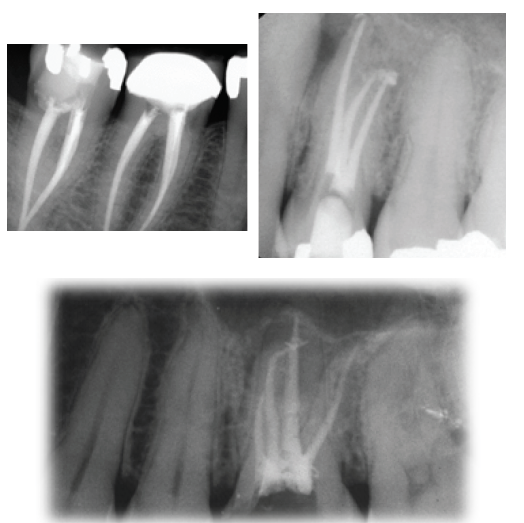
TF Adaptive: A Novel Approach to Nickel-Titanium Instrumentation"Rotary when you want it, Reciprocation when you need it"
Disclaimer from Guident
The views and opinions expressed in articles published in Guident are solely those of the authors and do not necessarily reflect the views of the editors, the editorial board or the publisher, Ivory India. Guident does not endorse any product, technique or treatment described. Clinical content is intended for qualified dental and medical professionals and is not a substitute for individual clinical judgement. Guident, its editors and the publisher accept no liability for any consequence arising from the use of information published in the journal.
How to cite this article
Dr. Anil Dhingra Department of Conservative Dentistry & Endodontics. The Adaptive Technology : A New Mantra for Root Canal Shaping. Guident. 2016 Oct;9(11). Available from: https://ivoryindia.in/articles/endodontics/the-adaptive-technology-a-new-mantra-for-root-canal-shaping.html


