Carbon Nanotubes-a Propitious Material
Department of dental materials, Department of prosthodontics, Department of oral and maxillofacial Surgery, Srinivas institute of dental sciences, Mukka, Mangalore, India
Abstract
This manuscript briefly describes the use of one of the most interesting nano materials-Carbon NanoTubes (CNTs), which has received significant importance in biomedical field. Bioapplications of carbon nanotubes have been predicted and explored ever since the discovery of these one dimensional carbon allotropes. The intention of this article is to provide an insight into the relative applications of the CNTs in biomedicine and dentistry and have a comprehensive look into toxicological aspect of CNTs.
Index Terms-CNTs, SWNTs, biomedical applications, implant coating, dentistry, toxicity.
INTRODUCTION
Recently scientists and engineers are becoming “new-age alchemists” by diving into a new scientific realm known as nanotechnology to create materials that will change the way we will live.Carbon NanoTubes (CNTs) are allotropes of carbon with a cylindrical nanostructure is one of the nanomaterial which fall under the category of fullerene. Their name is derived from their long, hollow structure with the walls formed by one-atom-thick sheets of carbon, called graphene. Ref.[1]Endo (1975) and ref. [2]Iijima (1991) observed a captivating new class of material in the soot produced during the arc-discharge synthesis of fullerenes.Since their discovery carbon nanotubeshave been of great curiosity, both from a fundamental point of view and for future applications.Carbon nanotubes are generally produced by three main techniques: arc discharge, laser ablation and chemical vapour deposition. Ref.[3] The most fascinating features of these structures are their electronic, mechanical, optical and chemical characteristics, which open a way into prospect.Shortly after the 1991 discovery of multi-wall CNTs, single-walled nanotubes (SWNTs) with small (1 nm) and uniform diameters were synthesized using arc-discharge methods with transition metal catalysts (Ref.[4] Bethune et al. 1993; Ref.[5] Iijima & Ichihashi 1993). Crystalline ropes of SWNTs, with each rope containing tens to hundreds of tubes of similar diameter, closely packed into a triangular lattice, have been synthesized by a variety of methods, providing ample amounts of sufficiently characterized samples for study of the fundamental properties of the SWNTs.Ref.[6], Fig. 1 Steady progress has been made in exploring the mechanical properties and potential applications of two types of CNTs: single-walled carbon nanotubes and multi-walled carbon nanotubes.
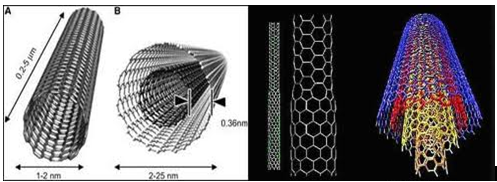
Fig.1 A.Single walled CNT B.Multiwalled CNT
. RELATED WORK/LITERATURE STUDIES
-
Biomedical Applications
Ref. [7],[8]Having tremendous potential CNTs have found wide area of application in biomedical field. The recent bloom of chemical modification and functionalization methods has made it possible to solubilize and disperse carbon nanotubes in water, thus opening the path for their facile manipulation and processing in physiological environments. Ref.[9] Equally important is the recent experimental demonstration that biological and bioactive species such as proteins, carbohydrates, and nucleic acids can be conjugated with carbon nanotubes. These nanotube bio-conjugates will play a significant role in the research effort toward bioapplications of carbon nanotubes.
General biomedical applications of carbon nanotubes either singly or in conjugation with other materials are as follows (based on various studies):
- Fig. 2, In nerve repair and regeneration
- In combination with chitosan composite to increase mechanical properties for artificial bone and bone regeneration
- Fig. 3a and 3b, As hard tissue implant material
- Coating on silicone rubber to improve cell proliferation
- Antimicrobial biomaterials based on carbon nano tubes
- Promising agents against free radicals
- Fig. 4, In drug delivery systems
- For invitro and invivo detection of ultrasensitive biological species and imaging
- As scaffolds for cell culture

Fig. 2 Neuron grown on CNT

Fig. 3a : Growth of bone crystals on CNT
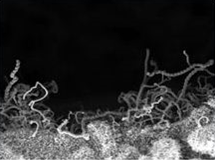
Fig.3b: Specially treated surface of anodized titanium implant to sprout CNT

Fig. 4 Outline of proposed drug delivery system (a) nanotube surface is functionalized with a chemical receptor and drug molecules are encapsulated (b) open end is capped (c) Nano scale carrier is ingested and locates to target site due to functionalized surface (d) cell internalizes the carrier (e) cap is removed or biodegrades inside cell (f) drug molecules are released
DISCUSSION
Carbon Nanotubes in Dentistry
CNTs effect nucleation of hydroxyapatite, because of which considerable interest has been generated regarding the use of CNTs in dentistry. However, there are only a few reports on the use of CNTs as dental materials.
Ref.[10] Recently, modification of dentin surface has been tried using CNT as it selectively adhered to the surfaces of dentin and cementum. In addition, the CNT coating did not affect the tensile bond strength of dentin adhesives.
Ref.[11] The formulation of PMMA enhanced with carbon nanotubes was studied by Andrew Placido at the University of Kentucky which produced great improvement in strength and ductility in fields where the polymer must endure harsh conditions.
Ref.[12] A novel process has been developed to improve the application of SWNTs in dental resin-based composites which improved its flexural strength.
Various coatings for implants are listed in the literature. CNT coated anodized implant material is also being studied. Ref.[13] CNT coating on the Ti modified with TiO2 NTs could be potentially useful for the periodontal ligament combination on dental implants.
Toxicity of Carbon Nanotubes
Nanotubes are structures that may behave as nanoparticles or fibers. For example, lung toxicity will occur at high doses of single or multiple-wall carbons, but if their amount and dose are low, inflammation will occur in the lungs.The length of time needed for the detection of toxicity in carbon nanotubes is still under study.
Ref.[7] Cell culture experiments and in vivo pilot studies conducted by various groups observed no obvious toxicity of properly functionalized CNTs.The current status is that toxicity appears to be dependent on the material preparation, especially geometry and surface functionalization.Also, there are conflicting reports in the literature about the safety of carbon nanotubes for human use.
Although numerous encouraging results using CNTs in biomedicine have been published in the past several years, much more work is still needed before CNTs can enter the clinic. The most important issue to be addressed is still the concern of long-term toxicity. Although it has been shown that well- functionalized carbon nanotubes are not toxic in vitro to cells and in vivo to mice at tested doses, further systematic investigations using different animal models on larger scales with various doses are required. Special attention should be paid to CNTs with surface functionalization optimized for such applications, with greater chances of minimizing toxic side effects.
CONCLUSIONS
As one of the most interesting nanomaterials, carbon nanotubes (CNT) have received significant contemplation in terms of essentialproperties and implicit applicationsand willreceive exploration for decades to come. Carbon nanotubes are among the novel emerging technologies. Although toxicological issues have still to be thoroughly examined, there are numerous practical benefits in developing novel vectors for nanomedicinal applications. On the other hand, progress in carbon nanotube technology may well lead to better insights into biological and physical chemistry processes.This fascinating material has to be imbibed and applied in dentistry enormously as it holds a promising future.
REFERENCES
- Endo M. Mecanisme De Croissance En Phase Vapeur De Fibres De Carbone.PhD thesis, University of Orleans, France. 1975.
- Iijima, S. Helical Microtubules of Graphitic Carbon. Nature 354. 1991;56–58.
- Dresselhaus M.S, Dresselhaus G, Charlier J.C, Hern E. Electronic, Thermal and Mechanical Properties of Carbon Nanotubes. Phil. Trans. R. Soc. Lond. A. 2004.
- Bethune D. S, Kiang C. H, de Vries M. S, Gorman C, Savoy R, Vazquez J, etal. Cobalt-Catalysed Growth of Carbon Nanotubes with Single Atomic Layer Walls.Nature 363. 1993;605–607.
- Iijima, S, Ichihashi, T. Single Shell Carbon Nanotubes of 1-Nm Diameter. Nature 363. 1993;603–605.
- Rodney S, Ruoff, Dong Qian, Wing Kam Liu. Mechanical Properties of Carbon Nanotubes: Theoretical Predictions and Experimental Measurements.C. R. Physique. 2003;993–1008.
- Zhuang Liu, Scott Tabakman, Kevin Welsher, Hongjie Dai.Carbon Nanotubes in Biology and Medicine: In Vitro and In Vivo Detection, Imaging and Drug Delivery. Nano Res. 2009 Feb 1; 2(2):85–120.
- Wei Wang, Fumio Watari, Mamoru Omori, Susan Liao, Yuhe Zhu, Atsuro Yokoyama, etal.Mechanical Properties and Biological Behavior of Carbon Nanotube/Polycarbosilane Composites for Implant Materials.J Biomed Mater Res Part B: Appl Biomater 82B 2007;223–230.
- Yi Lin, Shelby Taylor, Huaping Li, Shiral Fernando, Liangwei Qu, Wei Wang,etal.Advances Toward Bio Applications of Carbon Nanotubes. J. M a t e r. C h e m. 2004;14:527–54.
- Akasaka T, Nakata K, Uo M, Watari F. Modification of the Dentin Surface by Using Carbon Nanotubes. Biomed Mater Eng. 2009;19(2-3):179-85.
- Andrew Jonathan Placido. Characterization of Poly MethylMethacrylate Based Nanocomposites Enhanced withCarbon Nanotubes. Masters Theses.http://uknowledge.uky.edu/gradschool_theses/62. 2010 Jan 1.
- Zhang F, Xia Y, Xu L, Gu N. Surface Modification and Microstructure of Single-Walled Carbon Nanotubes for Dental Resin-Based Composites. J Biomed Mater Res B Appl Biomater. 2008 Jul;86(1):90-7.
- Yu Bai, Ilsong Park, TaesungBae, Kyounga Kim, Fumio Watari, Motohiro Uo, Minho Lee. Carbon Nanotube Coating On Titanium Substrate Modified With Tio2 Nanotubes. Journal of Wuhan University of Technology-Mater. Sci. Ed. 2011 Oct;26(5):867-71
Disclaimer from Guident
The views and opinions expressed in articles published in Guident are solely those of the authors and do not necessarily reflect the views of the editors, the editorial board or the publisher, Ivory India. Guident does not endorse any product, technique or treatment described. Clinical content is intended for qualified dental and medical professionals and is not a substitute for individual clinical judgement. Guident, its editors and the publisher accept no liability for any consequence arising from the use of information published in the journal.
How to cite this article
Dr. Madhu Bangera, Dr. Rajat Anand, Dr. Nabeel Sayed. Carbon Nanotubes-a Propitious Material. Guident. 2013 Jun;6(8). Available from: https://ivoryindia.in/articles/general/carbon-nanotubes-a-propitious-material.html