Creating Customized Guide Plate in Implant Without CBCT: A Case Report
Department of Prosthodontics and Crown & Bridge, Inderprastha Dental College and Hospital, Ghaziabad, Uttar Pradesh, India
ABSTRACT
The case report describes a technique for creating customized implant guide plates using conventional impressions and a diagnostic cast, eliminating the need for Cone Beam Computed Tomography (CBCT). This approach offers a cost-effective solution for straightforward implant placements, particularly when CBCT is unavailable due to financial constraints. However, the limitations of relying on manual measurements and visual assessments for complex cases are acknowledged. The report emphasizes meticulous planning, and leveraging clinical expertise to ensure successful implant outcomes without CBCT, potentially expanding access to quality dental care.
INTRODUCTION
In modern implant dentistry, customized guide plates are crucial for achieving precise and predictable implant placement. While Cone Beam Computed Tomography (CBCT) is commonly used for treatment planning, situations may arise where CBCT is unavailable or not feasible. In such cases, alternative methods can be employed to fabricate guide plates from acrylic resin, utilizing conventional techniques and clinical expertise.
Advantages:
Cost-Effective Solution: Eliminates the expense associated with CBCT imaging.
Suitable for Basic Cases: Effective for straightforward implant placements where bone anatomy is predictable.
Enhanced Surgical Precision: Provides guidance for precise drill positioning, potentially improving surgical outcomes.
Limitations:
Limited Anatomical Information: Lacks detailed data on bone quality, density, and proximity to critical structures compared to CBCT.
Potential for Inaccuracy: Relies on visual and manual assessments, potentially leading to less precise implant placements.
Not Ideal for Complex Cases: May not be suitable for cases with complex anatomical considerations or compromised bone anatomy.
CASE REPORT
A 35-year-old patient presented with a missing maxillary second premolar requiring implant placement. Due to financial constraints, CBCT was not performed. Instead, conventional impressions and a diagnostic cast were utilized. The steps adapted to fabricate a customized guide plate are as follows:
- Impression-Based Technique: The process begins with conventional impressions of the patient’s dentition and surrounding oral structures. These impressions provide detailed external anatomy information but do not offer insights into bone density or internal structures such as nerves and sinuses.
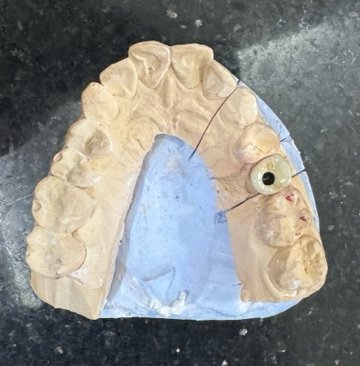
- Diagnostic Cast: A diagnostic cast is then fabricated from the impressions, serving as a physical model of the patient's oral anatomy. This cast forms the foundation for treatment planning and guide plate fabrication.
- Manual Measurement and Estimation: In the absence of CBCT data, clinicians rely on manual measurements and visual assessments using the diagnostic cast. This involves evaluating bone height, width, assessing anatomical landmarks, and estimating distances to vital structures.
- Fabrication of the Guide Plate: Using the diagnostic cast, a customized guide plate is meticulously crafted from acrylic resin. The design incorporates precise guide sleeves or channels aligned with planned implant positions, ensuring accuracy during surgery.
- Verification and Adjustment: Before surgery, the guide plate undergoes intraoral verification to confirm proper fit and alignment. Adjustments may be made to optimize accuracy and ensure the guide effectively directs implant drills.
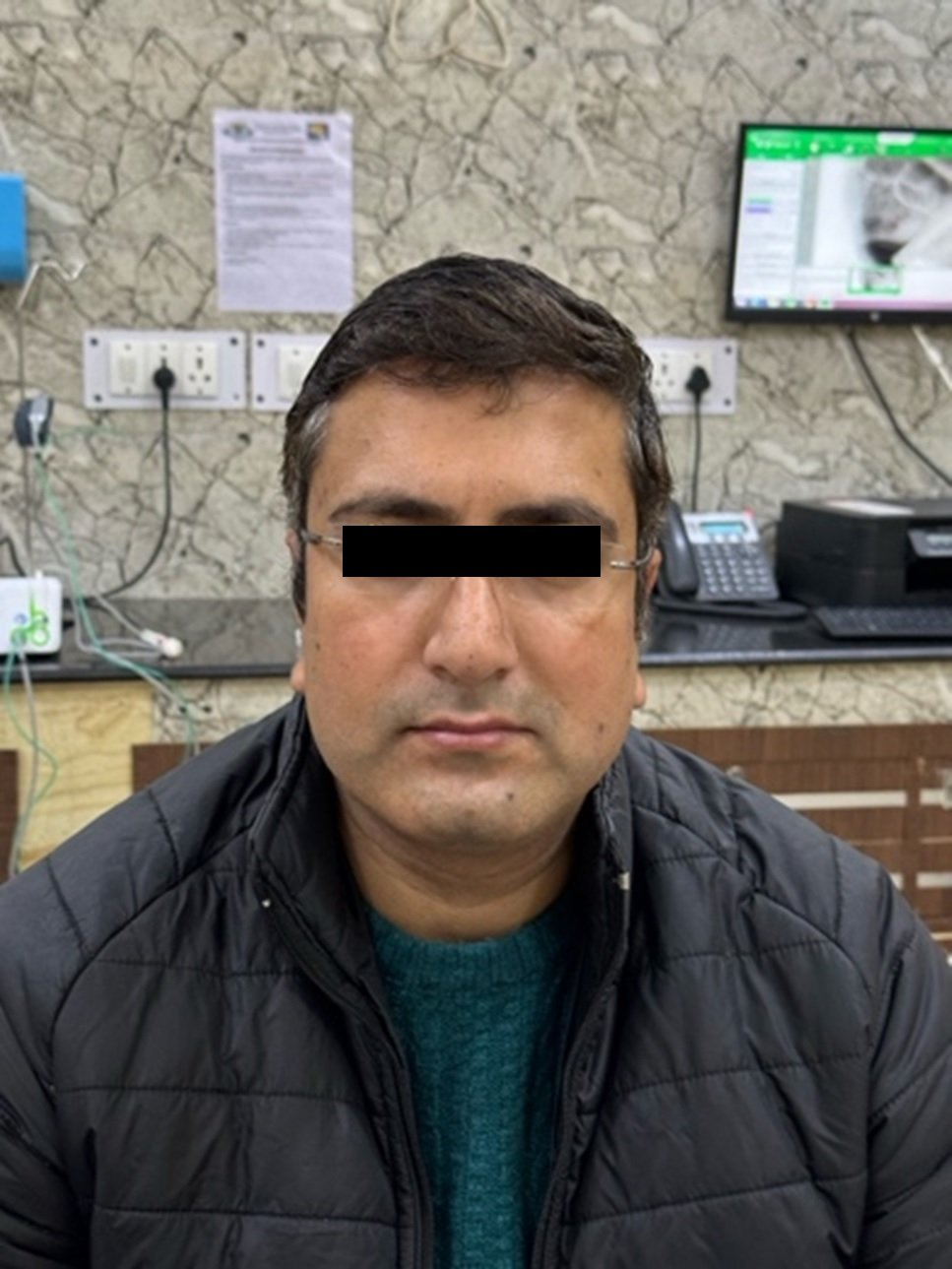
INTRA ORAL

EXTRA ORAL

GUIDE PLATE

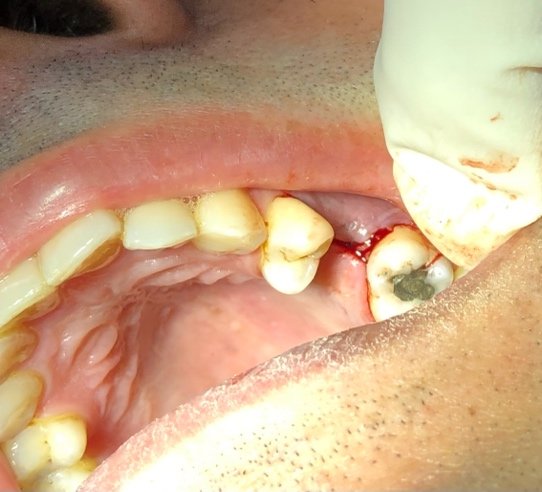
INCISION AND FLAP RAISED
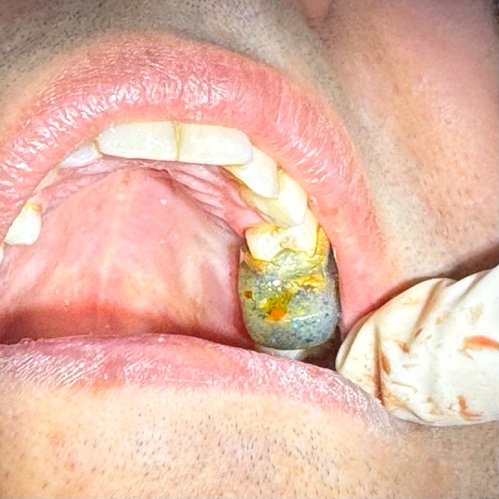
PLACEMENT OF GUIDE PLATE
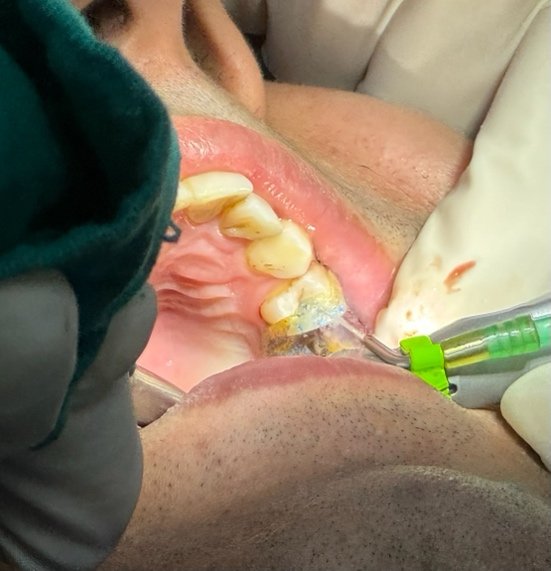
PILOT DRILL


IMPLANT PLACEMENT
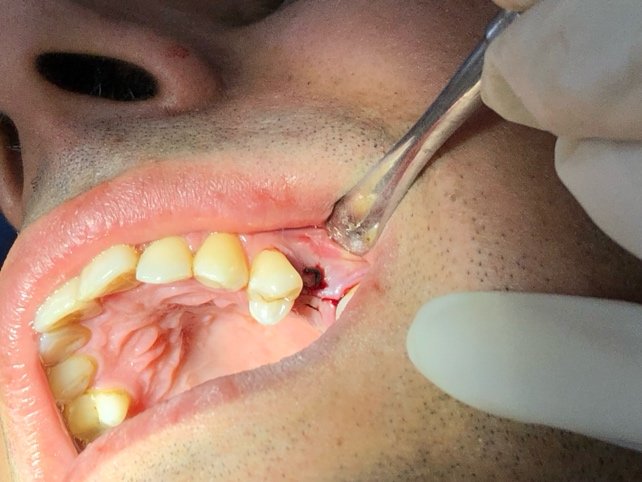
SURGICAL SITE SUTURED

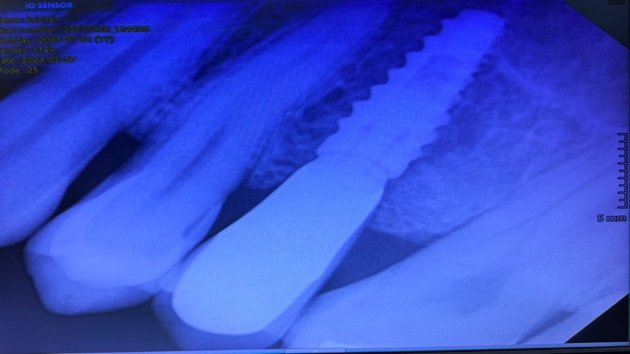
POST OPERATIVE RADIOGRAPH
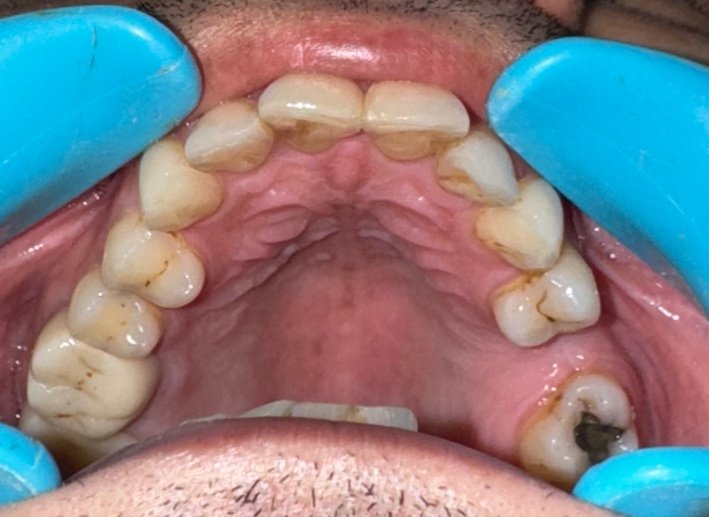
POST OPERATIVE VIEW (THREE MONTHS)
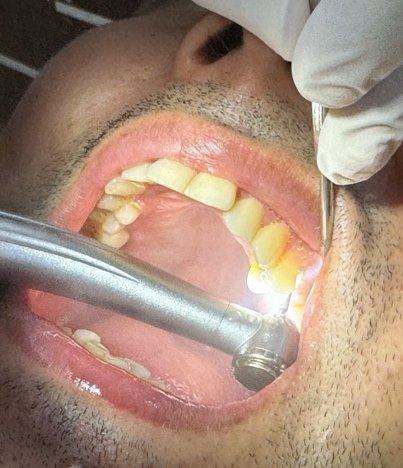
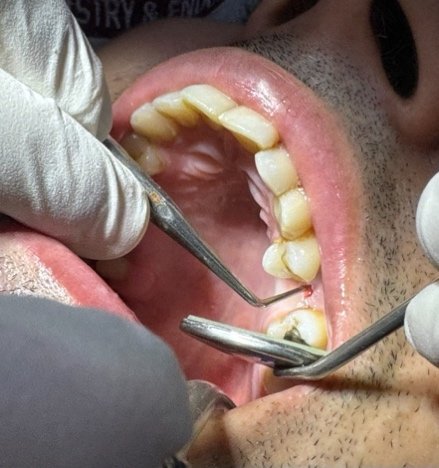

SECOND STAGE SURGERY
PROSTHETIC PHASE

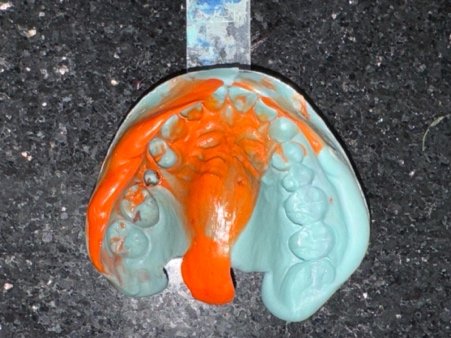
CLOSED TRAY TECHNIQUE FOR FINAL IMPRESSION

CEMENTATION
DISCUSSION
This case report demonstrates the successful application of a technique for creating customized implant guide plates without CBCT. While CBCT has become a standard tool in implant dentistry due to its ability to provide detailed information on bone anatomy and vital structures, its use can be limited by cost and accessibility.1 The approach described here offers a valuable alternative for specific scenarios.
The key advantage of this technique lies in its cost-effectiveness. Eliminating the need for CBCT imaging can significantly reduce treatment costs, making implant dentistry more accessible to patients with financial constraints. Additionally, for straightforward implant placements with predictable bone anatomy, this method can achieve sufficient accuracy for successful outcomes.3 The use of a diagnostic cast allows for a physical model of the patient's oral structures, facilitating treatment planning and guide plate design.4
However, it is crucial to acknowledge the limitations of this approach. The lack of detailed information on bone quality, density, and proximity to critical structures compared to CBCT can introduce potential for inaccuracies, particularly in complex cases.2,3 Careful patient selection is essential. This technique is best suited for patients with favourable bone anatomy and minimal risk factors like anatomical variations or proximity to vital structures.
Thorough preoperative planning and meticulous clinical expertise become paramount when using this method. Manual measurements and visual assessments on the diagnostic cast require a high degree of skill and experience from the clinician to ensure accurate implant placement. Additionally, intraoral verification of the guide plate is crucial to minimize the risk of surgical complications.3
While CBCT remains the gold standard for treatment planning in implant dentistry, the technique described in this case report offers a viable alternative for specific scenarios. Careful patient selection, meticulous planning, and dentist expertise are essential for successful outcomes. Future research could explore ways to further refine this technique, potentially including the use of digital workflows integrated with conventional impressions and diagnostic casts. This could offer a balance between cost-effectiveness and improved accuracy for a wider range of implant placements.
CONCLUSION
While creating customized guide plates without CBCT presents challenges, it remains a viable option in specific clinical scenarios. Careful patient selection and thorough preoperative planning are crucial to mitigate potential limitations and achieve favourable implant outcomes.
By adapting conventional techniques and emphasizing meticulous planning, dental professionals can successfully navigate the complexities of implant placement without relying on advanced imaging technologies, thereby expanding access to quality dental care.
REFERENCES
- Vieira DM, Sotto-Maior BS, de Souza Barros CA, Reis ES, Francischone CE. Clinical accuracy of flapless computer-guided surgery for implant placement in edentulous arches. International Journal of Oral & Maxillofacial Implants. 2013 Sep 1;28(5).
- Jain A, Shil M, Sreepradha C, Rai S, Kaur I, Banka A. A Review on Cone-Beam Computed Tomography and its Application in Dentistry. Journal of Pharmacy and Bioallied Sciences. 2024 Feb 1;16(Suppl 1):S38-40.
- Sium?Abel A, Keilig L, Dörsam I, Bourauel C. Accuracy of template?based guided dental implant placement—An in vitro comparison of different manufacturing methods. ClinicalOralImplantsResearch.2024Apr17.
- Chai J, Liu X, Schweyen R, Setz J, Pan S, Liu J, Zhou Y. Accuracy of implant surgical guides fabricated using computer numerical control milling for edentulous jaws: a pilot clinical trial. BMC oral health. 2020 Dec;20:1-2.
Disclaimer from Guident
The views and opinions expressed in articles published in Guident are solely those of the authors and do not necessarily reflect the views of the editors, the editorial board or the publisher, Ivory India. Guident does not endorse any product, technique or treatment described. Clinical content is intended for qualified dental and medical professionals and is not a substitute for individual clinical judgement. Guident, its editors and the publisher accept no liability for any consequence arising from the use of information published in the journal.
How to cite this article
Dr. Mukesh Kumar Goyal, Dr. Pitokali K Aye, Dr. Ananta Sharma. Creating Customized Guide Plate in Implant Without CBCT: A Case Report. Guident. 2024 Aug;17(9). Available from: https://ivoryindia.in/articles/implantology/creating-customized-guide-plate-in-implant-without-cbct-a-case-report.html