Viruses in Periodontal Diseases
(Senior Lecturer) Dr. T.K.Pal. (H.O.D) Department of Periodontics, Gurunanak Institute of Dental Science, Kolkata, India
Abstract
Periodontal diseases are infectious diseases, but the specific mechanism by which the tooth-supportive tissue is destroyed is not clearly understood..Viral infection impairs periodontal defenses, thereby permitting subgingival over growth of periodonto pathic bacteria. Gingival tissue plays a role in the maintenance of viral
load in vivo and that the shedding of viruses from periodontal sites during reactivation plays a role in virus transmission. Evidence suggests that virus-infected periodontitis lesions harbor elevated levels of periodonto pathic bacteria, including Actinobacill usactino mycetem comitans, Porphy romonas gingivalis, Dialisterpneumosintes, Prevotella intermedia, Prevotell anigrescens, and Treponema denticola. Understanding of roles of viruses in periodontal diseases will facilitate periodontal disease prevention and treatment.
Objective
The purpose of this review is to give an overview of the viruses involved in periodontal diseases, and to evaluate the evidence that viral infection plays a role in the development of periodontal diseases.
KEYWORDS:
Virus,Periodontitis,Virus-Bacterium-Host interaction
INTRODUCTION
Viruses are one of the smallest forms of microorganism (10-100 nm) which can only multiply inside living cells2 . consists of the nucleocapsid, which may be "naked," or "enveloped" within a lipoprotein sheath derived from the host cell membrane. Periodontal diseases are those diseases that affect one or more of the periodontal tissues: gingiva, periodontal ligament, cementum and alveolar bone2.
The most recent classification is based on the 1999 International Workshop for the Classification of the Periodontal Diseases organized by the American Academy of Periodontology 3, 4.Viral diseases of the periodontium are placed under non-plaque induced gingival lesions and they include herpetic gingivostomatitis, varicella zoster and others.Many bacterial infections in humans occur as superinfectionsof viral diseases. A well known example of this bacterial complication is influenza5.
Dental plaque is important in the pathogenesis of periodontitis. Experimental studies have shown that, oncean individual abstains from mechanical tooth-cleaningmicroorganisms start to colonize the tooth surfaces,clinical signs of gingivitis appear within a few days 6. The benefit of adjunctive antibiotic therapy to mechanical debridement supports the argument that bacteria play a majoretiological role in human periodontal diseas7.
Classification: Viruses are classified according to nucleic acid composition:
Deoxyribonucleic acid (DNA) or ribonucleic acid (RNA).

PATHOGENESIS OF VIRAL DISEASES
Viruses gain entry into the host through different routes which include:
- Inoculation (via the skin and mucosa) as in needle sticks injury, bites or accidental abrasions.
- Inhalation (via the respiratory tract) as in aerosol or droplet .
- Ingestion (via the gastrointestinal tract) as in the face-oral route and
- The genitourinary tract as in sexualactivity.
Once, the virus enters the host cell through direct local spread on epithelial and subepithelial surfaces, lymphatic spread, vascular spread, and central nervous system and peripheral nerve spread, it can interact with the host cell in two main ways namely permissive and nonpermissive mode.
- Permissive infection: There is a synthesis of viral components, their assembly and release with a consequent death of the host cell
- Nonpermissive infection: Here, the infection can result in cell transformation often with the integration of viral DNA into the host genome. There is viral replication within the cell but the cell remains alive. Examples are hepatitis Bviruses, herpes viruses and retroviruses infection 8.
HERPES SIMPLEX VIRUS INFECTION
Herpes simplex virus, are of two types: HSV-1 and HSV-2 are known to commonly cause skin and mucous membranes infections. Herpes simplex virus-1 infections occur in the oral cavity while HSV-2 infections occur in the genital area.
These viruses are carried in body fluids or in fluid from herpes lesions. For an infection to occur, the viruses must gain entry into the body of the uninfected persons through their skin or mucous membrane in the intraoral or genital area. Once the virus has contact with the cells of the mucous membranes or skin tissue, it tries to replicate in the cell nuclei. This can result in symptoms of inflammation and appearance of vesicles. After this initial infection, the virus is transported through the nerve cell to their sensory dorsal root ganglion where it becomes latent for a period oftime.
Autoinoculation, is process by which infected individuals infect other parts of their own body.This is uncommon because of the development of protective antibodies among affectedindividuals. The primary oral infection causes symptoms, which can be very painful, particularly in young children. This primary lesion iscalled primary herpetic gingivostomatitis, which is characterizedby the formation of vesicles on the gingival, lips, tongue andbuccal mucosa. The rupture of the vesicles results in painfulerosion and ulceration with yellowish membrane developmentbefore healing, but disappears within 3-14 days.
There is alsoassociated increased salivation and bad breath. Rarely, chills,myalgia, dysphagia, or hearing loss may occur9.Recurrences known as herpes labialis, whichusually affects the lips or the adjacent skin, are usuallymilder than the primary infections. It is usually caused by thereactivation of the latent virus. Following the primary HSVinfection, virions travel from the initial site of infection onthe skin or mucosa to the sensory dorsal root ganglion, wherelatency is established. When the dormant virus in the ganglionis activated, it begins to multiply again and moves down thetrigeminal nerve usually to the site of initial inoculation andinfects the epithelial cells causing a recurrent infection. Thisis considered as ganglion trigger theory.
The other, the skintrigger theory proposed by Hill and Blyth, holds that virus iscontinuously shed from neuronal endings and lesions developwhen the susceptibility of the skin is sufficiently permissivefor the development of a clinically apparent infection10.Reactivation of latent virus can be triggered by physicalinjury, trauma, surgery, sunlight, wind, cold, fever, immunesuppression, upper respiratory tract infection, emotional stressand physiological event like menstruation.
Varicella zoster virus (human herpes virus-3 (HHV-3)
VZV is responsible for two universal human diseases: varicella (chickenpox) in childhood and herpes zoster in aged and immuno compromised persons. VZV enters by inhalation and replicates in the mucosa of the respiratory tract.Dissemination occurs via blood stream and lymphatics and the virus multiplies in mononuclear leukocytes and capillary endothelial cells. Varicella is usually acquired during the first 5-10 years of life.
Varicella appears suddenly with or without prodormal fever and malaise. Vesicles and ulcers first appear in the mouth (usually on the palate and the tongue but also on the gingiva) followed by a cutaneous rash that spreads centrifugally from the head and the trunk. Lesions in the mouth are painful whereas lesions on the skin are painless but itchy, which may lead to secondary bacterial infection and permanents scars 11. Intraoral lesions are found if the third or second branch of the trigeminal ganglion is involved which may lead to alveolar bone necrosis 12.
Epstein,Barr virus
Epstein-Barr virus affects over 90% of humans,and is usually transmitted by oral secretions or blood. Resting memory B cells are the main site of persistence of EBV in the body 13 EBV infection in adults results in infectious mononucleosis. Most of the symptoms are attributed to the proliferation and activation of T cells in response to infection. Most common symptoms of infectious mononucleosis are fever, lymphadenopathy and pharyngitis. EBV has also been associated to otherdiseases such as cancers and auto-immune diseases 14. Oral hairy leukoplakia OHL is the main lesion associated to EBV. Clinically OHL appears as a raised, white, corrugated lesion that most often develops on the ventral-lateral aspect of the tongue and may be unilateral or bilateral
Kaposi sarcoma herpes virus
This is also known as HHV8 and has been identified in all forms of Kaposi,s sarcoma lesions. Kaposi,s sarcoma has been described in most oral regions, although the palate, gingiva,and tongue seem to be the most commonly affected sites15.
HUMAN CYTOMEGALOVIRUS
Cytomegalovirus or HHV-5 is a herpes virus that infects most persons. It is similar to other HHV that is, after infection, latency is established and reactivation is possible after conditions favorable to the virus. This infection is often subclinical and usually occurs in young children but may also be seen in adolescents and adult. It is common in the developing world especially among the low socioeconomic group. In infants, the virus is contracted through the placenta, during delivery or during breast feeding. Transmission occurs during adolescence during sexual activity.
Human cytomegalovirus is the most common cause of congenital and perinatal infections. HCMV infects many different epithelial cells, endothelial cells, smooth muscle cells, mesenchymal cells, hepatocytes, granulocytes and monocyte-derived macrophages 16 .HCMV is thus found in many body secretions including saliva, urine, semen and breast milk. HCMV infection, although generally subclinical, is responsible for cytomegalovirus inclusion disease and mononucleosis 16.
Human immunodeficiency virus:
The EC Clearinghouse on Oral Problems Related to HIV Infection and WHO Collaborating Centre on Oral Manifestations of the HIV classified periodontal diseases as lesions strongly associated with HIV infection17.The frequent routes of transmission of HIV are sexual contact, parenteral exposureto blood or mother to child transmission. The primary target of HIV is CD4+ helper T cells. HIV becomes incorporatedinto the DNA of the lymphocyte and become present forthe life of the cell. It may remain latent for a period but soon becomes active and cause cell death. A decrease in the number of T helper cell number occurs witha resultant loss in immune function. It is this reduction inimmune function that predisposes the individual to a numberof opportunistic infection including periodontal diseasesand some of the viral infection discussed above.
Four forms of HIV-associated periodontal disease have beendescribed: Linear gingival erythema, necrotizing ulcerativegingivitis (NUG), necrotizing ulcerative periodontitis (NUP),and necrotizing stomatitis. If left untreated, HIV‑associated periodontal disease may progress to life.threatening infections, such as Ludwig,s angina and cancrumoris.
PATHOGENIC MECHANISMS OF VIRUSES IN PERIODONTAL DISEASE
First, herpesviruses cause direct cytopathic effects on fibroblasts, keratinocytes, endothelial cells, inflammatory cells such as polymorphonuclear leukocytes, lymphocytes, macrophages, and possibly bone cells 18.These cells above are key constituents of inflamed periodontal tissue, thus herpesvirus-induced cytopathic effects may hamper tissue turnover and repair.
Second, herpesviral infection promotes loss of attachment and colonization of periodontopathic bacteria.Herpesvirus damagesepithelial cells and exposes the basement membrane and the surface of regenerating cells, thus providing new sites for bacterial binding18
Third, HCMV and EBV can infect and alter functions of monocytes, macrophages, and lymphocytes in periodontitis lesions 19.
Fourth, herpesvirus infections induce a proin flammatory response including expression of cytokines and chemokines 20 HCMV infection can up-regulate interleukin-1B and tumor necrosis factor alpha gene expression of monocytes and macrophages 17.
In turn, interleukin-1B and tumor necrosis factor alpha may up-regulate matrix metalloproteinase, down-regulate tissue inhibitors of metalloproteinase, and mediate periodontal bone destruction 17 EBV may act as a potent polyclonal B-lymphocyte activator, capable of inducing proliferation and differentiation of immunoglobulin-secreting cells, features associated with periodontal disease progression 17.Active EBV infection can also generate antineutrophil antibodies and neutropenia that may lead to increased bacterial over-growth 17
Finally, herpes viruses can produce tissue injury as a result of immuno pathologic responses 21 and immuno pathologic reactions have been implicated in the patho genesis of human periodontal disease .HCMV can induce cell-mediated immuno suppression by down-regulating cell surface expression of major histo compatibility complex class I molecules, thereby interfering with cytotoxic T-lymphocyte recognition .
In addition, HCMV sequesters chemokines, induces Fc receptors, interferes with induction of major histocompatibility class II antigens, inhibits natural killer cell activity, and can efficiently block the presentation of immediate early antigens, the first viral proteins to be produced .Moreover, HCMV can suppress antigen-specific cytotoxic T-lymphocyte functions, resulting in decreases in circulating CD4+ cells and increases in CD8+ suppressor cells, which in turn may lead to global impairment of cellmediated immunity 17.EBV may induce proliferation of cytotoxic T lymphocytes, the main purpose of which is to recognize and destroy virally infected cells, but may secondarily also hamper various aspects of the periodontal immune response 17 .
EBV-infected B lymphocytes may shed viral structural antigens that result in production of blocking antibodies, immune complex formation, and T-suppressor cell activation. Together, these mechanisms probably contribute to the ability of herpesviruses to persist in their hosts and may play a role in immunopathology of herpesviral diseases.
VIRUS-BACTERIUM-HOST RESPONSE INTERACTIONS IN PERIODONTITIS
 |
| Figure 1.Viruses in destructive periodontal disease. |
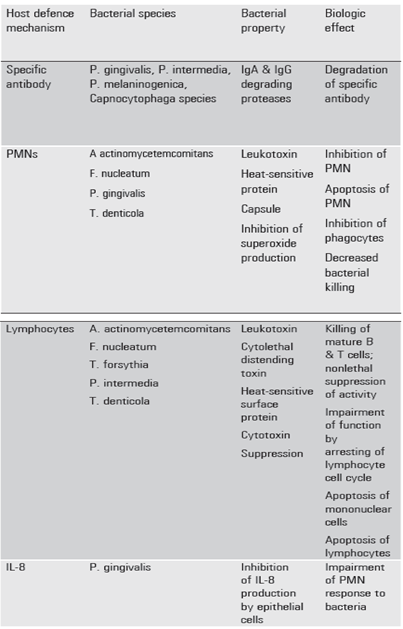
Periodontitis is a multifactorial disease involving bacteria, virus and host defense mechanism. Viral-bacterialinteractions explains the disease characteristics of destructive periodontal disease. Gingivitis induced by bacteria in dental plaque bacteria causes virus-infected inflammatory cells to enter the periodontium.Viral reactivation may occur spontaneously or as a result of various types of impairment of the host immune defense including HIV infection, pregnancy, hormonal changes, and psychosocial and physical stress. Alternate period of latency interrupted by periods of activation is responsible for the burstlike episodes of periodontitis disease progression.
It might be that periodontal tissue breakdown is contingent upon the simultaneous occurrence of several infectious disease events, including (i) adequate herpesvirus load (gingivitis level) in periodontal sites, (ii) activation of herpesviruses in the periodontium, (iii) inadequate protective antiviral cytotoxic T-lymphocyte response, (iv) presence of specific periodontal pathogenic bacteria, and (v) inadequate protective antibacterial antibody response. These five suggested pathogenic determinants may cause periodontitis individually or might come together in a detrimental constellation during periods of suppressed immune response.
ROLE OF ANTIVIRUS DRUGS
Antiviral agents such as acyclovir, ganciclovir, valacyclovir and famciclovir accelerate the healing of the lesion and reduce the duration of pain.These drugs must began early in treatment to be effective. They may be given by the intravenous route in the immunocompromised patients.These do not result in total eradication of the virus but greatly reduce their multiplication thus helping in the clinical improvement of the patient. Kaposi Sarcoma, being a vascular neoplasm respond to the chemotherapeutic agent especially vinblastine in the control of the lesion.
CONCLUSION AND PERSPECTIVES
Viruses in inflamed gingival tissue may enter to other body sites or shed into saliva and subsequently infect other individuals. Pauk et al. 22 concluded that exposure to infectious saliva is a potential risk factor for the HHV-8 infection among men who have sex with men. Contreras et al. 23 detected HHV-8 in 24% of gingival biopsy samples from HIV-seropositive individuals. Gingiva constitutes a reservoir for HSV 24. Maintaining gingival health by professional periodontal therapy and oral hygiene measures reduce the risk of transmissible viral disease.
Evidence implicate viruses play an important role in the pathogenesis of periodontal disease. These include the following:
- Presence of nucleic acid sequences of HCMV, EBV-1, and other herpesviruses in aggressive periodontitis lesions of children, adolescents, and adults.
- Association between herpesviruses and ANUG in malnourished children.
- Probable profound effect of herpesviral infection on periodontal defense cells.
- Potential of herpesviruses to augment the expression of tissue-damaging cytokines and chemokines in periodontal inflammatory cells.
- Increased frequency of periodontopathic bacteria in herpesvirus-positive periodontitis lesions.
- Association between periodontal HCMV-active infection and disease-active periodontitis.
REFERENCES
- Samaranayake L. Essential Microbiology for Dentistry. 4th ed. Missouri, USA: Elsevier Limited; 2012. p. 2735
- Novak MJ. Classification of diseases and conditions affecting the periodontium. In: Carranza,s Clinical Periodontology. 9th ed. Philadelphia: W.B Saunders Co.; 2002. p. 6472.
- Holmstrup P. Non‑plaque‑induced gingival lesions. Ann Periodontol 1999;4:2031.
- Mariootti A. Dental plaque induced gingival diseases. Ann Periodontol 1999;4:7.19.
- SethiS .Bacterial pneumonia.Managing a deadly complication of influenza in older adults with comorbid disease. Geriatrics 2002 57: 56.61.
- Loe H, Theilade E, Jensen SB .Experimental gingivitis in man.J Periodontol1965 36: 177,187.
- Herrera D, Sanz M, Jepsen S, Needleman I, Rolda´n S . A systematic review on the effect of systemic antimicrobials as an adjunct to scaling and root planing in periodontitis patients. J ClinPeriodontol2002 29: 136,160.
- Scully C, Samaranayake LP. Clinical Virology in Oral Medicine and Dentistry. Cambridge: Cambridge University Press; 1992. p. 3.
- Fatahzadeh M, Schwartz RA. Human herpes simplex virus infections: Epidemiology, pathogenesis, symptomatology, diagnosis, and management. J Am AcadDermatol 2007;57:73763.
- Hill TJ, Blyth WA. An alternative theory of herpes‑simplex recurrence and a possible role for prostaglandins. Lancet 1976; 1:397.9.
More references are availabe on request.
Disclaimer from Guident
The views and opinions expressed in articles published in Guident are solely those of the authors and do not necessarily reflect the views of the editors, the editorial board or the publisher, Ivory India. Guident does not endorse any product, technique or treatment described. Clinical content is intended for qualified dental and medical professionals and is not a substitute for individual clinical judgement. Guident, its editors and the publisher accept no liability for any consequence arising from the use of information published in the journal.
How to cite this article
Dr. Rajashree Ganguly. Viruses in Periodontal Diseases. Guident. 2015 Oct;8(11). Available from: https://ivoryindia.in/articles/periodontics/viruses-in-periodontal-diseases.html