With Crispr CAS9 Fighting Against the Dark Empire of Diseases
Department of Periodontology and Oral Implantology, K. D Dental College & Hospital Mathura
ABSTRACT
Clustered Regularly InterSpaced Palindromic Repeats is what CRISPR stands for. This is a protein that is programmable and can edit, eliminate, or turn the genome on or off. This is a modern technology that can have many potential applications and can change the future of oral health for the better. Genome editing technologies can be used to create mutations in the genomes based on a set of sequence-specific instructions, including, clustered regularly interspaced short palindromic repeats (CRISPR)-CRISPR-associated protein 9 (Cas9), transcription activator-like effector nucleases (TALENs), zinc finger nucleases (ZFNs), and homing endonucleases or meganucleases. CRISPR-Cas9 genome editing technology is very young, but it has emerged in recent years as a powerful tool in cancer therapy for its high efficiency and accuracy. The CRISPR-Cas9 system uses gene editing in cells, organs and animals to access entire genomes within a short period of time, both gene-editing for gain-of-function and gene-editing for loss-of-function. Methods of detection based on CRISPR/Cas by the near future may become simpler, more affordable, and faster. Here, we review the application of CRISPR-Cas9 genome editing in dentistry, as well as its general advantages and disadvantages.
KEYWORDS: CRISPR; Cas9; genome editing mechanism; dentistry; oral cancer; CRISPR-based nucleic acid detection.
INTRODUCTION
Clustered regularly interspaced short palindromic repeats (CRISPR) and CRISPR-associated (Cas) system codes for an adaptive immunity in prokaryotes to defend against invasive genetic elements, including viruses and plasmids. The system is composed of two genetic entities: CRISPR loci consisting of spacers and repeats and operons of cas genes. Transcription of CRIPSR loci yields a long transcript termed precursor CRISPR RNA (pre-crRNA) that is processed into small crRNAs of single spacer-repeat unit (mature crRNAs), whereas expression of the cas gene operons produces Cas proteins. Then, crRNAs and Cas proteins form nucleoprotein complexes that achieve the immunity by specifically recognizing invading genetic elements via sequence complementarity between the crRNA and its corresponding DNA sequence (protospacer) on invading genetic elements and targeting it for destruction.
The scramble for life changes in the DNA sequence of cancer cells have caused all cancers to emerge.1 There have been many deaths from oral cancer, especially in developing nations. Squamous cell carcinoma (OSCC) is the most common type of oral carcinoma.2,3 Many people with this disease die from a delayed diagnosis and inadequate treatment. The survival of patients with OSCC has improved recently due to technological advances and diagnostic accuracy. Failure to treat OSCC can be fatal because of local recurrence, lymph node metastasis, and distant metastasis.4,5 In order to combat the disease from the root, medical science needs to advance. First-ever treatment using CRISPR technology, called CRISPR-Cas9, is able to genetically modify cancer cells. Furthermore, CRISPR technology could also be utilized in dentistry for purposes other than treating oral cancer. However, despite having a long way to go before it can be used in clinics, this technology could have lasting effects in dentistry. It is named Clustered Regularly Interspaced Short Palindromic Repeats: clustered - a group of several discrete items that are close to each other, regularly – having a constant pattern, interspaced - the interval between two things, short – small distance from one end, palindromic – a stretch of DNA in which the sequence of nucleotides on one strand are in the reverse order to that of a complementary strand, repeats – recur. Gene editing is accomplished by making modifications to present diseased DNA sequences and genome-wide screening is done with CRISPR-Cas9. The CRISPR-Cas9 system is able to edit genes accurately inside cultures and in test animals, but also within humans, making it a potentially useful tool for modifying genes for therapeutic purposes. Additionally, CRISPR-Cas9 can be used as an immunotherapy tool to rapidly engineer immune cells and oncolytic viruses.6
HISTORICAL BACKGROUND
Researchers at Osaka University invented CRISPR in 1987 by accident while analyzing genes involved in phosphate metabolism in Escherichia coli.7,8 Other mutant strains of E.coli, Shigella dysenteriae, and Salmonella enterica have also shown repeated sequences. Table 1 summarizes key studies that led to the discovery of CRISPR-Cas9.
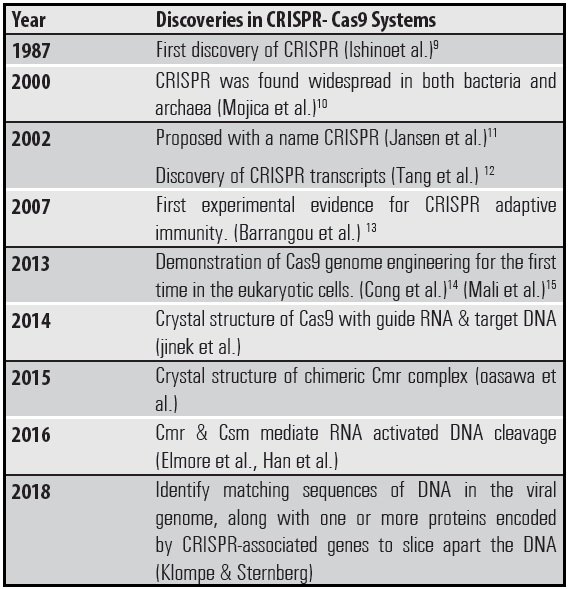
Table 1. key studies led to the discovery of CRISPR-Cas9
A substantial amount of research has been conducted using the CRISPR-Cas9 technique since its discovery, including gene selection and repression, animal model improvement, functional screening, and the development of novel therapeutics.10
CRISPR GENOME EDITING MECHANISM
CRISPR or clustered regularly interspaced short palindromic repeats-Cas9 are RNA-guided genome editing technologies, which have evolved from immune defense mechanisms that provide host protection against invaders, such as viruses and phages.13 CRISPR/Cas systems are classified into three categories17 (table 2). Type II CRISPR/Cas systems are most commonly used and contain three components: an endonuclease (Cas9), a CRISPR RNA (crRNA), and a transactivator (tracrRNA). A duplex molecule arising from the association of the crRNA and tracrRNA molecules is called guide RNA (gRNA). Synthetic fused chimeric single guide RNAs (sgRNAs) can be used to manipulate genomes, which simplifies the use of CRISPR/Cas9 for genome editing.18

Table 2. Various CRISPR/Cas systems have different signature endonucleases
The sgRNA is composed of a unique 20 base pair sequence followed by a short DNA sequence called the protospacer-adjacent motif (PAM), which is designed to meet the target DNA sequence.5,18 Cas9 is equipped with a special molecular marker, PAM, that defines the target genome from its own. Without PAM, the target DNA cannot be wound.18 Cas9 nuclease and sgRNA form a ribonucleoprotein (RNP) complex in the cell. Cas9 leads the RNP complex to the target DNA site. Cas9 produces an extremely precise double-strand break (DSB) so that sgRNA can bind to base-paired DNA sequences, causing them to become blunt ends.
Nonhomologous end joining (NHEJ) or homology-directed repair (HDR) are two endogenous mechanisms for fixing DSBs in eukaryotes depending on the cell's state and the presence of a template for repair. DSBs are accurately repaired by the HDR pathway by recombining donor DNA templates at the DSB site.(figure 1) NHEJ results in (insertions or deletions) of random base pairs which disrupt a target sequence unless a homologous repair template is readily available.19

Figure 1. CRISPR/Cas9 mechanism
Depending on the disease we are trying to treat, further gene editing can be performed. It is possible to correct genes, inactivate duplicated genes, ablate duplicated genes, insert or modify T cells by using various delivery mechanisms that are transplanted together back into the same patient.
With CRISPR/Cas9 technology, a desired target DNA sequence can be cleaved with very tight precision, and a sgRNA can be designed relatively easily. With the use of different sgRNAs, this technology has the potential to be multiplexed.20
APPLICATIONS OF CRISPR-CAS9 GENOME EDITING
There has been considerable interest in the CRISPR/Cas9 system as a powerful tool for treating disorders associated with DNA mutations, which has led to scientists becoming increasingly interested in it.
Cancer
In addition to being a threat to human health and life, cancer is a complex disease caused by genetic and epigenetic changes.21 CRISPR/Cas9 can be used to promote the production of therapeutic immune cells, such as chimeric antigen receptor T (CAR-T) cells, as well as a knockout of programmed cell death protein22 CRISPR/Cas9 therapy is best known for the production of CAR-T cells in cancer immunotherapy. These chimeric signaling domains are capable of enhancing T-cell activation and can recognize tumor-specific antigens via an extracellular single-chain variable fragment.22,33 Various malignancies, including leukemia and lymphoma as, have demonstrated successful treatment with these genetically modified T cells.24-26
The PD-1 protein and its ligands (PD-Ls) are important signals for negative immune regulation, especially on T-cells. Cancer Treatment in practice is more concerned about relieving disease symptoms and correcting morphologic defects in the heart, rather than eliminating the disease altogether.27 In a study recently published in Nature Medicine, Lu et al. examined the feasibility and safety of using CRISPR (Clustered Regularly Interspaced Short Palindromic Repeats)-engineered, patient-derived T cells to treat late-stage lung cancer. Gene-editing therapy holds great promise in treating a wide range of human diseases from cancer to genetic disorders. The introduction of the CRISPR technology, due to its simplicity and intrinsic programmability, has revolutionized the gene-editing field, and quickly surpasses both zinc-finger nuclease and transcription activator-like effector nuclease to become the method-of-choice for therapeutic gene editing. However, due to potential off-target effects, the safety of CRISPR-based therapy remains controversial. Recently examined the feasibility and safety of using CRISPR-engineered T cells to treat late-stage lung cancer. They demonstrated very low off-target editing rates and no severe treatment-related adverse events (AE), thus supporting its general safety for clinical use.
Cardiovascular Diseases
Cardiovascular disease treatment is primarily concerned with relieving disease symptoms and correct morphological defects in the heart without addressing potential genetic defects. The CRISPR/Cas9 technology makes it possible to analyze in-depth the molecular mechanisms of pathogenic CVD genes, gaining knowledge about the potential of gene therapy to improve specific gene functions. Genome editing has helped develop multiple treatment models for cardiovascular conditions.
Metabolic Diseases
A metabolic disease is a pathological condition characterized by metabolic disruptions, such as carbohydrates, proteins, and fats. Metabolic disorders, such as obesity, diabetes, and hyperlipidemia, result from both genetic and environmental factors.28 Applying genetic engineering to metabolic disease models like obesity, diabetes, and hyperlipidemia will move the field forward. White fat cells secrete leptin (Lept), which affects the regulating center of metabolism in the hypothalamus with the leptin receptor (LepR).29
Neurodegenerative Diseases
Neurodegenerative diseases (NDs), including Huntington‟s disease, Alzheimer‟s disease, and Parkinson‟s disease, are of special concern because they lack established diagnostic techniques or therapy.30,31 NDs appear to be caused by (potential pathogenic mechanisms) complicated interactions of several genetic factors; alone or together. As gene editing platforms emerge, it is feasible to study gene function related to developmental disorders.32
Viral Diseases
CRISPR technology is being used to treat infectious diseases, either by targeting host genes required by viruses or by altering viral genes necessary for cell replication. It has been reported that genome editing may aid in the development of HIV-resistant CD4+T cells by editing infection-related genes.33 Human papillomavirus (HPV) oncogenes E6 and E7 are strongly associated with cervical cancer and are implicated in malignant transformation. Therefore, genetic engineering to change those high-risk HPV genes may be a system for reversing cervical cancer in situ and can be a therapeutic option.
Blood disorders
CRISPR-Cas9 may carry the therapeutic potential for modifying the DNA of bone-marrow stem cells. As a result of NHEJ-mediated DSB repair, indels can lead to frameshift or nonsense mutations, which lead to truncated proteins that function either differently or not at all.34 Through the use of CRISPR-Cas9 gene editing, sickle cell disease and beta-thalassemia can be reversed.35 Clinical trials using CRISPR/Cas9 technology are currently underway in hematology for the treatment of leukemia, lymphomas, and multiple myeloma.36
Heritable diseases
Other animal disease models, such as those for hereditary deafness, Wilson's disease, Niemann-Pick disease, Laron disease, and Netherton syndrome, have been created through engineered nuclease editing of genomic modifications. Animal models will be used for research on disease mechanisms and for the development of treatments using genome editing technologies.33
CRISPR/Cas9 Technology in Dentistry
CRISPR technology can diagnose and treat oral disease by identifying faulty genes and pinpointing causative organisms. Additionally, CRISPR could assist with uncovering novel genes that counteract the tumor-promoting properties of genes that are responsible for causing oral cancer. CRISPR has been applied to dentistry in numerous ways to date, including:
Restorative Dentistry
The root cause of dental caries is streptococcus mutans.37 The oral cavity contains a normal flora, however, if the bacterial population exceeds a certain threshold, the disease process begins. To achieve a healthy, dynamic balance of the oral ecosystem, we should understand how to modulate the bacterial composition. Changing the composition of the bacterial colonies, especially an increasing accumulation of S. mutans resulting from dysbiosis. Eventually, this leads to dentinal demineralization, as well as dental caries.38 Antimicrobial strategies include a variety of approaches, including antibiotics, antimicrobial peptides (C16G2, which shows high efficacy against Streptococcus mutans)33, and lytic bacteria, a strategy to distinguish closely related microbes, and a method of finely tailoring microbial populations still remains to be developed.39 CRISPR/Cas technology has been used as an approach to creating antimicrobials, whose range of activity is designed by researchers based on the RNA-guided nucleases (RGNs). Furthermore, RNAi-based RGNs can be used to manipulate complex bacterial populations through selective knocking of specific strains.40
Dental Plaque
Role of Streptococcus Mutans 39
Major virulence factor of streptococcus mutans, glucosyltransferases (Gtfs), utilize sucrose to synthesize extracellular polysaccharides, which produce dental plaque biofilm. Biofilms serve as the structural foundation for plaque accumulation. Researcher Gong T et al. worked on designing and synthesizing self-targeting CRISPR arrays (containing gtf-encoding spacer sequences) and cloning them onto plasmids during his study. In order to generate desired mutants, these plasmids were transformed into UA159 (self-targeting). Therefore, biofilm formation was compromised, as extracellular polysaccharides synthesis was reduced and biofilm formation overall was decreased.
Role of Porphyromonasgingivalis 41
One of the most prevalent pathogens causing microbial dysbiosis is Porphyromonasgingivalis; this is a Gram-negative anaerobic bacteria. P. gingivalis clinical strains bear CRISPR arrays in approximately 95% of cases. There is a possibility that this genetic immune system of bacteria contributes to the process of modulation of chronic periodontitis in the oral cavity, and may protect itself in the periodontal pocket where bacteriophages are abundant and even out-number bacteria. The technology of CRISPR can therefore be an excellent tool that could be used by dental clinics in order to prevent new dental plaque formation and thereby prevent periodontitis.
Using CRISPR/Cas9 in the study of tumor therapies
Accurate gene editing can be used to treat diseases by knocking out endogenous disease-causing genes or inserting new protective genes, permanently altering genetic assemblies. Compared with the first generation of ZFN and second generation of TALEN, CRISPR/Cas9 allows easier acquisition of homozygous mutants and can simultaneously, efficiently, and conveniently introduce multiple mutations at different sites. Its other advantages include low cytotoxicity.22,23 Therefore, CRISPR/Cas9 has been widely investigated and applied. At present, CRISPR/Cas9 applications mainly focus on single-gene diseases, viral infections, and tumors. CRISPR/Cas9 is widely applied to study the mechanisms underlying the occurrence and development of different tumors and their clinical treatment. Similarly, this research focuses on topics such as tumor genes, construction of animal tumor models, screening of genes related to drug resistance, phenotypic correlation, and cancer gene therapy.24-26 The application concept of CRISPR/Cas9 in tumor treatment-related research is briefly summarized in Figure 2.

Figure 2. The application concept of CRISPR/Cas9 in tumor treatment
Salivary disorder
Prior studies have demonstrated that water-specific protein aquaporin 1 (AQP1) gene expression contributes greatly to the correction of salivary dysfunction after ionizing radiation therapy for cancer patients.46 Wang Z et al., used CRISPR/Cas9 system to promote AQP1 gene expression by constructing gRNA transcripts and cytomegalovirus (CMV) (endogenous promoter) as a template for homology-directed repair (HDR).47 He proposed replacing endogenous promoters can treat salivary gland dysfunction.47
CRISPR/Cas9 has been successfully used to target genes in many cell lines and organisms and may prove effective in successfully treating primary Sjogren's syndrome through the use of mesenchymal stem cells.48
In Chronic Pain
Numerous dentists are concerned about chronic pain caused by various orofacial diseases. A variety of drugs, ranging from NSAIDs to opioids, temporarily relieve symptoms, but the pain returns after the medication's effect has worn off. This gene has been shown to be mutated in some individuals, causing them to lose an ability to feel pain. A mutated gene reduces the transmission of pain signals by controlling specific molecules found on the cell surface of the neurons that are involved in the transmission of pain signals.53 Epigenetic markers can be edited using CRISPR technology to eliminate the events that trigger this process.
In the field of paediatric dentistry
In the case of oral-facial anomalies caused by genetic etiology, dentists cannot really change the genetic defect, but they can devise a treatment plan to alleviate the problem. By using CRISPR we can generate a normal genome sequence based on manipulated genetic structures. The CRISPR technique may in the future allow us to revise the genetic structure of a genome by identifying the defective genes.
CRISPR-Based COVID-19 Testing
People are becoming infected at a staggering rate due to the COVID 19 pandemic, individuals spread disease unknowingly while more people die each day. Currently, there is no single point-of-care test that can detect COVID 19 disease efficiently, quickly, and accurately. Present-day testing approaches, however, do not meet such needs. The CRISPR method, a nucleic acid-based molecular diagnostic based on clustered regularly interspaced short palindromic repeats (CRISPR), has gained considerable attention recently due to its simplicity, sensitivity, and specificity57 (Figure 3).

Figure 3. Diagrammatic presentation of CRISPR-Based COVID-19 Testing
CRISPR'S SHORTCOMINGS AND DISADVANTAGES
- CRISPR-Cas9 technology has made substantial advancements, however safety concerns are an important concern that requires further research.
- It is challenging and time-consuming to develop a CRISPR-Cas9 protocol.
- Designing sgRNA targets and target sites are not as straightforward as they sound.
- gRNAs typically have relatively high mismatch tolerance; Cas9, therefore, cleaves sequences that are almost identical to target genes (off-targeting),54
- Variability from patient to patient - Certain donors' serums are naturally contaminated with Cas9 antibodies, resulting in low editing efficiency and a serious immune storm for patients who receive CRISPR-Cas9 treatment.
- Even well-designed gRNA may disrupt gene sequences unintentionally in patients of different genetic backgrounds.
- The CRISPR-Cas9 technology has not been proven 100% universally applicable.55
- Highly experimental treatment involving severely ill patients may lead to unintended and unexpected results.56
- One of the biggest concerns about CRISPR is "Genetic Drive" - once the genes have been manipulated or incorporated, they sit within cells that can potentially be passed on to other organisms and generations to come.
- CRISPR, while it has the ability to treat various diseases, can be very expensive for poor people, so it cannot be the optimal treatment.
CONCLUSION
In addition to treating various diseases including oral cancer, CRISPR/Cas9 also provides a precise means of treating a broad variety of genetic anomalies. Using this technique, in vivo and in vitro can both be addressed. This technology successfully treats diseases from their roots in treating genes in many different ways. While it requires optimization (efficacy, safety, and specificity), it is very effective in treating diseases. This test is used in dentistry to identify faulty genes, causative organisms, and other factors contributing to various oral diseases discussed here. In these cases, CRISPR can modify the bacterial populations or genes of (causative) faulty or complex oral diseases or knock them out. Although some techniques have been developed for treating oral disorders, those techniques are still in infancy when applied in clinical practice, and that could lead to permanent changes in dentistry. Recently, the FDA approved a CRISPR test to diagnose the current COVID 19 pandemic, which has been spreading all over the planet. Results can be obtained within an hour using CRISPR to identify and link genetic sequences in samples. Through this method, mankind can achieve astounding goals through CRISPR from diagnosis to treatment.
REFERENCES
- Startton R., Campbell J, Futreal A, The cancer genome. Nature, 2009 April 9; 458(7239): 719–724.
- Parkin, M, Bray F, Ferlay J, & Pisani P. Estimating the world cancer burden: Globocan 2000. International Journal of Cancer Journal International du Cancer, 2001; 94(2): 153–156.
- Parkin D, Bray F, Ferlay J, & Pisani P. Global cancer statistics, 2002.CA: A Cancer Journal for Clinicians, 2005; 55(2): 74–108.
- Kiyosue T, Kawano S, Matsubara R, Goto Y, Hirano M, Jinno T et al. Immunohistochemical location of the p75 neurotrophin receptor (p75NTR) in oral leukoplakia and oral squamous cell carcinoma. International Journal of Clinical Oncology, 2013; 18(1): 154–163.
- P. Huang et al. Generation and characterization of a human oral squamous carcinoma cell line SCC-9 with CRISPR/Cas9-mediated deletion of the p75 neurotrophin receptor. Archives of Oral Biology, 2017; 82: 223–232.
- Martinez M, Puig P, Menendez P, Torres R, Rodriguez S. CRISPR/Cas9 for Cancer Therapy: Hopes and Challenges. Biomedicines, 2018; 6(105).
- Ishino Y, Shinagawa H, Makino K, Amemura M, Nakata A. Nucleotide sequence of the iap gene, responsible for alkaline phosphatase isozyme conversion in Escherichia coli, and identification of the gene product. J Bacteriol, 1987; 169: 5429– 5433.
- Han W & She Q. CRISPR History: Discovery, Characterization, and Prosperity. CRISPR in Animals and Animal Models, 2017; 1–21.
- Ishino Y, Krupovic M, Forterre P. History of CRISPR-Cas from encounter with a mysterious repeated sequence to genome editing technology. J Bacteriol, 2018; e00580-17.
- Mojica J, Diez C, Soria E, Juez G. Biological significance of a family of regularly spaced repeats in the genomes of Archaea, Bacteria and mitochondria. Mol Microbiol, 2000; 36: 244– 246.
- Jansen R, Embden D, Gaastra W, Schouls M. Identification of genes that are associated with DNA repeats in prokaryotes. MolMicrobiol, 2002; 43: 1565–1575.
- Tang H, Bachellerie P, Rozhdestvensky T, Bortolin L, Huber H et al. Identification of 86 candidates for small non-messenger RNAs from the archaeon Archaeoglobus fulgidus. Proc Natl Acad Sci USA, 2002; 99: 7536–7541.
- Barrangou R, Fremaux C, Deveau H, Richards M, Boyaval P et al. CRISPR provides acquired resistance against viruses in prokaryotes. Science, 2007; 315: 1709–1712.
- Cong L, Ran A, Cox D et al. Multiplex genome engineering using CRISPR/Cas systems. Science, 2013; 339: 819–823.
- Mali P, Yang L, Esvelt M, Aach J, Guell M, DiCarlo JE et al. RNA-guided human genome engineering via Cas9. Science, 2013; 339: 823–826.
- Huang, P, Tong, D, Sun, J, Li, Q, Zhang, F. Generation and characterization of a human oral squamous carcinoma cell line SCC-9 with CRISPR/Cas9-mediated deletion of the p75 neurotrophin receptor. Arch Oral Biol, 2017; 82: 223–232.
- Makarova S, Haft H, Barrangou R, Brouns J, Charpentier E, Horvath P, Moineau et al. Evolution and classification of the CRISPR-Cas systems. Nat. Rev. Microbiol, 2011; 9: 467–477.
- Jinek M, Chylinski K, Fonfara I, Hauer M, Doudna A, Charpentier E. A programmable dual-RNA-guided DNA endonuclease in adaptive bacterial immunity. Science, 2012; 337: 816–821.
- Chen S, Sun H, Miao K, Deng X. CRISPR-Cas9: from genome editing to cancer research. Int J Biol Sci, 2016; 12(12): 1427–1436.
- Lino A., Harper C, Carney P & Timlin, J. A. Delivering CRISPR: a review of the challenges and approaches. Drug Deliver, 2018; 25(1): 1234– 1257.
- Jakoˇci ¯ unas, T. Et al,. Multiplex metabolic pathway engineering using CRISPR/Cas9 in Saccharomyces cerevisiae. Metab. Eng, 2015; 28: 213–222.
- Torre A, Bray F, Siegel L, Ferlay J, Lortet J, Jemal A. Global cancer statistics, 2012. CA Cancer J Clin, 2015; 65: 87–108.
- Xia A et al,. Applications and advances of CRISPR-Cas9 in cancer immunotherapy. Journal of Medical Genetics, jmedgenet, 2018; 105422.
- Xia L, Wang C, Lu J, Lu J, Sun B. Chimericantigen receptor T (CAR-T) cell therapy for solid tumors: challenges and opportunities. Oncotarget, 2017; 8: 90521–31.
- Neelapu S et al., Chimeric antigen receptor T-cell therapy - assessment and management of toxicities. Nat Rev Clin Oncol, 2018; 15: 47–62.
- Maus V, Grupp A, Porter L, June H. Antibody-modified T cells: CARs take the front seat for hematologic malignancies. Blood, 2014; 123: 2625–35.
- Brudno N, Kochenderfer N. Chimeric antigen receptor T-cell therapies for lymphoma. Nat Rev Clin Oncol, 2018; 15: 31–46.
- Khalil N, Smith L, Brentjens J, Wolchok D. The future of cancer treatment: immunomodulation, CARs and combination immunotherapy. Nat Rev Clin Oncol, 2016; 13: 273–90.
- Reck, M. et al. Pembrolizumab versus chemotherapy for PD-L1-positive non-small-cell lung cancer. N. Engl. J. Med, 2016; 375: 1823–1833.
- O‟Rahilly S. Human genetics illuminates the paths to metabolic disease. Nature, 2009; 462: 307–314.
- Coppari R. & Bjørbæk C. Leptin revisited: its mechanism of action and potential for treating diabetes. Nat. Rev. Drug Disco, 2012; 11: 692–708.
- Nance A. Genetics of Huntington disease. Handb. Clin. Neurol, 2017; 144: 3–14.
- Wood B, Winslow R & Strasser D. Systems biology of neurodegenerative diseases. Integr. Biol. (Camb.), 2015; 7: 758–775.
- Fan C. et al. The role of gene editing in neurodegenerative diseases. Cell Transpl, 2018; 27: 364–378.
- Li H, Yang Y, Hong W, Huang M, Wu M, Zhao X, Applications of genome editing technology in the targeted therapy of human diseases: mechanisms, advances and prospects Signal Transduct. Target. Ther., 5 (2020), p. 1
- Wu J, Zhao X, Banaszak G, Gutierrez F, Keyvanfar K, Gao G, Quinones D, Kajigaya S, Young S Int J Oncol, 2018 Apr; 52(4): 1209-1223.
- Yannaki E, Stamatoyannopoulos G. Hematopoietic stem cell mobilization strategies for gene therapy of beta thalassemia and sickle cell disease. Ann N Y Acad Sci, 2010; 1202(1): 59–63.
- González E.; Martínez C, Garcia C, Vázquez P, Cervera J, Sanjuan A. CRISPR to fix bad blood: A new tool in basic and clinical hematology. Haematologica, 2019; 104: 881–893.
- Gao L, Xu S, Huang G, Jiang S, Gu Y, Chen F. Oral microbiomes: more and more importance in oral cavity and whole body. Protein Cell, 2018; 9(5): 488-500.
- He X, Lux R, Kuramitsu K, Anderson H, Shi W. Achieving probiotic effects via modulating oral microbial ecology. Adv Dent Res, 2009; 21(1): 53- 56.
- Gong, T et al, Genome editing in Streptococcus mutans through self-targeting CRISPR arrays. Molecular Oral Microbiology, 2018.
- Citorik J, Mimee M, Lu K. Sequence-specific antimicrobials using efficiently delivered RNAguided nucleases. Nat Biotechnol, 2014; 32(11): 1141-1145.
- Chen T & Olsen I. Porphyromonas gingivalis and its CRISPR-Cas system. Journal of Oral Microbiolog, 2019; 11(1): 1638196.
- Yirka B. Identified: 15 genes that trigger rapid growth of head and neck squamous cell carcinoma. Oral cancer news compiled by the oral cancer foundation March, 2020.
- Ludwig M. Et al. Using a genome-wide CRISPRCas9 knockout library to identify therapeutic combinations in oral cancer [abstract]. In: Proceedings of the American Association for Cancer Research Annual Meeting, 2017. 2017 Apr 1-5; Washington, DC. Philadelphia (PA): AACR; Cancer Res, 2017; 77(13 Suppl): Abstract nr 3198.
- Baum J et al. Aquaporin-1 gene transfer to correct radiationinduced salivary hypofunction. Handb Exp Pharmacol, 2009; 190: 403–18.
- Wang Z et al., CRISPR-Cas9 HDR system enhances AQP1 gene expression. Oncotarget, 2017; 8, (67): 111683-111696.
- Chen W, Yu Y, Ma J et al. Mesenchymal stem cells in primary Sjogren‟s syndrome: prospective and challenges. Stem Cells Int, 2018; 2018: 4357865.
- Mitsui S. N. et al. Novel human mutation and CRISPR/cas genome-edited mice reveal the importance of C-terminal domain of MSX1 in tooth and palate development. Sci Rep, 2016; 6: 38398.
- Vastardis H., Karimbux N., Guthua W, Seidman G & Seidman E. A human MSX1 homeodomain missense mutation causes selective tooth agenesis. Nat. Genet, 1996; 13: 417–421.
- Van R et al. CRISPR/Cas9-Mediated Genome Editing of Herpesviruses Limits Productive and Latent Infections. PLoS Pathog, 2016; 12(6): e1005701.
- Munzenmaier et al.: Genetic, epigenetic, and mechanistic studies of temporomandibular disorders and overlapping pain conditions. Molecular Pain, 2014; 10: 72.
- Thomas L. Using CRISPR to switch off pain gene becomes a possibility with new study. News Medical Life Sciences, Jan 7 2020.
- Tsai Q, Joung K. Defining and improving the genome-wide specificities of CRISPR-Cas9 nucleases. Nat. Rev. Genet, 2016; 17: 300–312.
- You L, Tong R, Li M, Liu Y, Xue J, Lu Y. Advancements and obstacles of CRISPR-Cas9 technology in translational research. Mol Ther Methods Clin Dev, 2019; 13: 359–370.
- Foulkes L, Soda T, Farrell M et al. LEGAL AND ETHICAL IMPLICATIONS OF CRISPR APPLICATIONS IN PSYCHIATRY. North Carol Law Rev, 2019; 97(5): 1359–1398.
- Ganbaatar U and Liu C (2021) CRISPR-Based COVID-19 Testing: Toward Next-Generation Point-of-Care Diagnostics. Front. Cell. Infect. Microbiol. 11:663949. doi: 10.3389/fcimb.2021.663949
Disclaimer from Guident
The views and opinions expressed in articles published in Guident are solely those of the authors and do not necessarily reflect the views of the editors, the editorial board or the publisher, Ivory India. Guident does not endorse any product, technique or treatment described. Clinical content is intended for qualified dental and medical professionals and is not a substitute for individual clinical judgement. Guident, its editors and the publisher accept no liability for any consequence arising from the use of information published in the journal.
How to cite this article
Dr. Saksham Kulshrestha, Dr. Shailandra Chauhan, Dr. Gaurav Singh. With Crispr CAS9 Fighting Against the Dark Empire of Diseases. Guident. 2022 Feb;15(3-4). Available from: https://ivoryindia.in/articles/periodontics/with-crispr-cas9-fighting-against-the-dark-empire-of-diseases.html