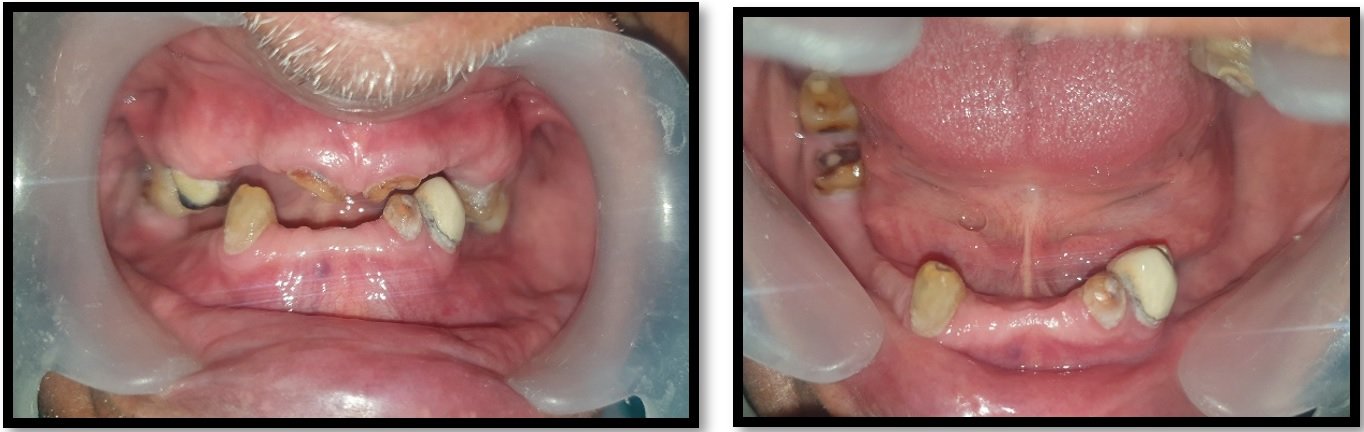
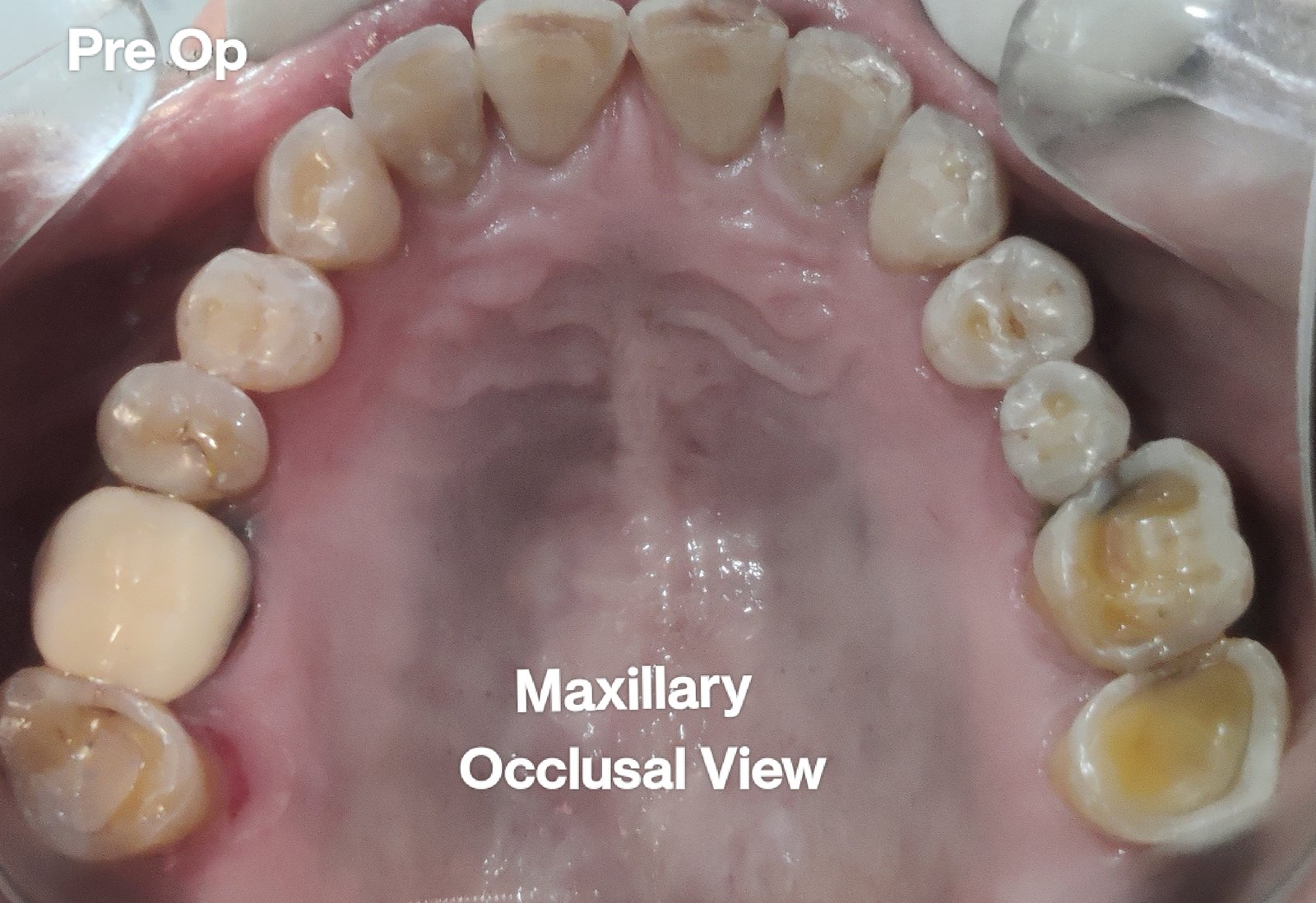
Prosthodontic Applications of 3D Printing Technology: State-of-the-ART and Future Prospects
Department of Prosthodontics and Crown & Bridge, K.D. Dental College & Hospital, Mathura, UP, India.
INTRODUCTION
Prosthodontics, a specialized field within dentistry, focuses on the restoration and replacement of missing teeth and oral structures. With the introduction of 3D printing technology, prosthodontics has undergone a significant evolution, offering new opportunities for precision, customization, and efficiency. This article aims to explore the current state-of-the-art applications of 3D printing in prosthodontics and discuss the promising future prospects of this ground-breaking technology.
STATE-OF-THE-ART APPLICATIONS
1. DIRECT RESTORATIONS:
Traditional methods of fabricating dental restorations, such as crowns, bridges, and veneers, often involved multiple steps and manual labour. However, 3D printing has streamlined this process, offering a more efficient and accurate alternative.
- Digital Impressions: Intraoral scanners capture detailed digital impressions of the patient's dentition, eliminating the discomfort and inaccuracies associated with traditional impression materials.
- Computer-Aided Design (CAD): Digital impressions are imported into CAD software, where prosthodontists can precisely design the restoration according to the patient's specific needs and anatomical considerations.
- Additive Manufacturing: Utilizing CAD data, 3D printers fabricate restorations layer by layer using biocompatible materials such as ceramics or resins, resulting in prostheses that exhibit exceptional accuracy and fit.
2. IMPLANT PROSTHODONTICS:
Dental implants have become a preferred treatment option for replacing missing teeth, offering superior stability and functionality compared to traditional removable prostheses. 3D printing technology has significantly enhanced the precision and efficiency of implant-based restorations.
- Surgical Guides: 3D-printed surgical guides provide precise guidance for implant placement, ensuring optimal positioning and angulation for successful osseointegration.
- Custom Abutments: Patient-specific abutments can be digitally designed and fabricated, ensuring a precise fit and optimal emergence profile for natural-looking restorations.
- Prosthetic Restorations: CAD/CAM technology enables the digital design and fabrication of prosthetic restorations, including crowns, bridges, and hybrid prostheses, which seamlessly integrate with dental implants to restore function and aesthetics.
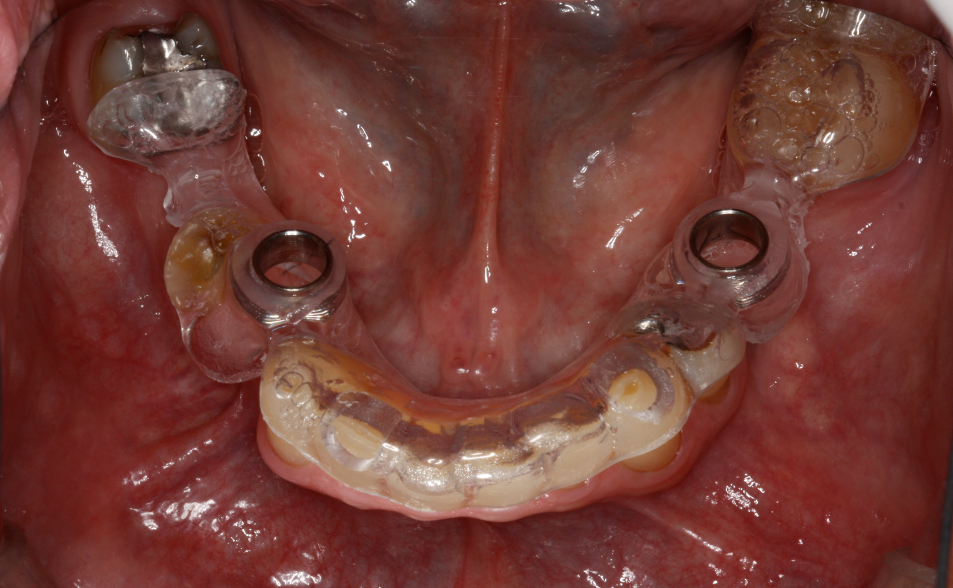
A tooth-supported CAD/CAM surgical guide seated on the teeth.
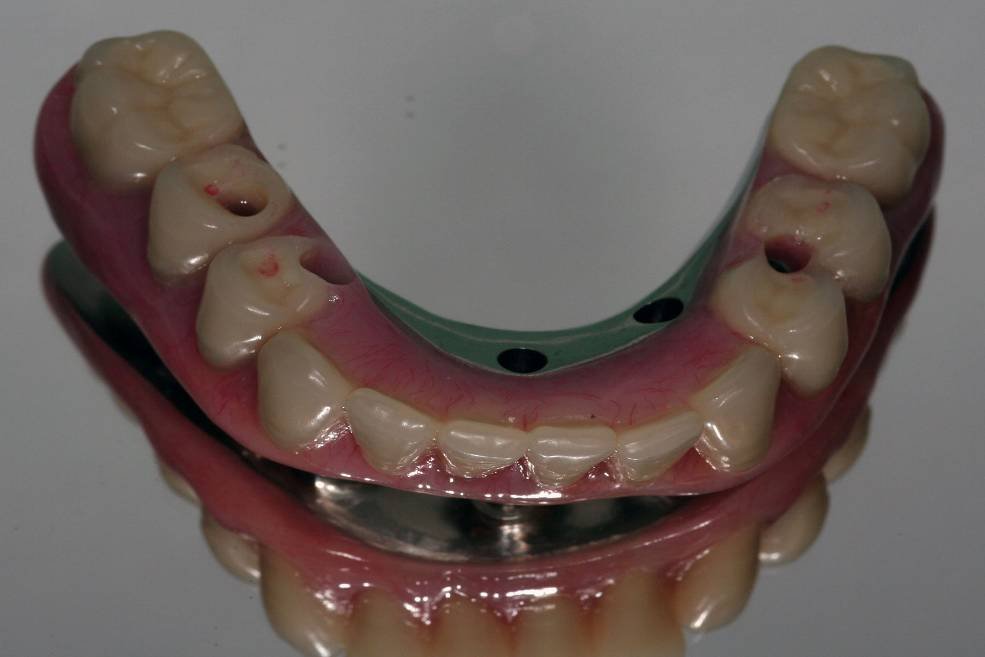
3D printed implant-supported screw-retained fixed dental prosthesis
3. REMOVABLE PROSTHESES:
Removable prostheses, such as complete and partial dentures, play a crucial role in restoring oral function and aesthetics for patients with extensive tooth loss. 3D printing technology offers several advantages in the fabrication of removable prostheses.
- Digital Workflows: Digital impressions and CAD/CAM technology streamline the design and fabrication process, reducing turnaround time and improving overall efficiency.
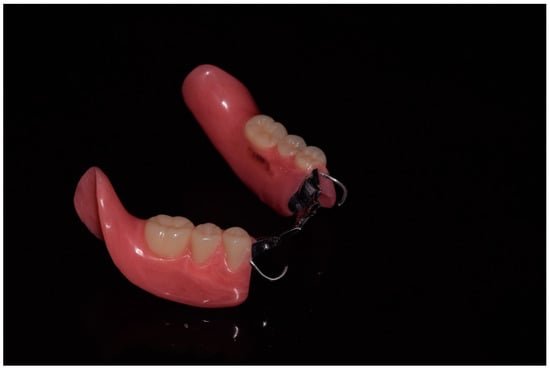
Digitally designed and manufactured cobalt chromium removable partial denture with wrought wire clasps
- Customization: 3D printing allows for the customization of denture bases, teeth arrangement, and occlusal schemes, ensuring a precise fit and optimal esthetics for each patient.
- Precision: Additive manufacturing ensures precise adaptation of the prosthesis to the underlying oral structures, minimizing discomfort and enhancing patient satisfaction.
4. ORTHODONTIC APPLIANCES:
Orthodontic treatment aims to correct malocclusions and achieve optimal dental alignment through the use of various appliances and techniques. 3D printing technology has revolutionized the fabrication of orthodontic appliances, offering greater precision and customization.
- Clear Aligners: Clear aligner therapy, such as Invisalign®, relies on 3D-printed aligner trays that are custom-made to gradually move the teeth into the desired position, providing a more discreet and comfortable alternative to traditional braces.
- Retainers: Post-treatment retainers can be digitally designed and 3D printed, ensuring a precise fit and optimal retention to maintain the results of orthodontic treatment.
- Models: Digital models of the patient's dentition, created using intraoral scans, serve as the foundation for treatment planning and appliance fabrication, allowing orthodontists to visualize treatment outcomes and make informed decisions.
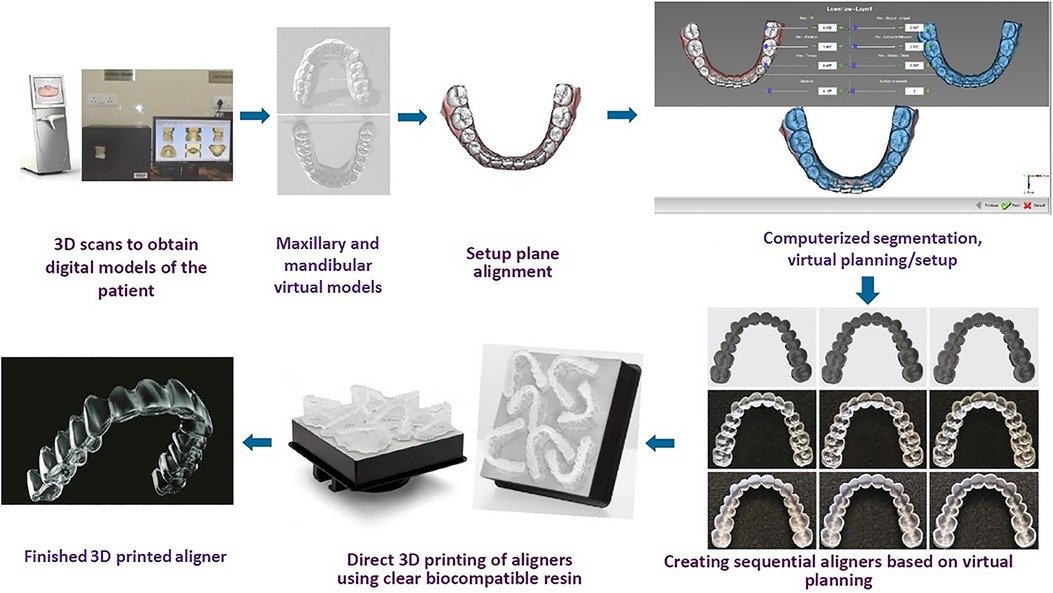
The key stages of laboratory procedure in the manufacturing of direct 3D-printed clear aligner.
FUTURE PROSPECTS
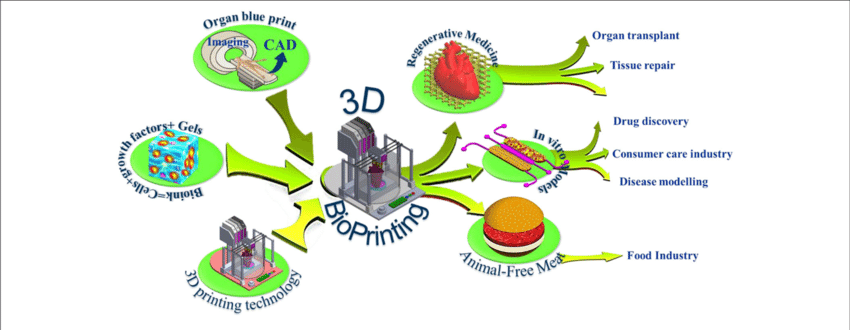
1. BIOPRINTING
Bioprinting technology holds promise for the fabrication of complex biological structures, including dental tissues and organs, using living cells and biomaterials.
- Dental Pulp Regeneration: Bioprinted scaffolds seeded with dental pulp stem cells may facilitate the regeneration of damaged dental pulp tissue, offering a potential alternative to conventional root canal therapy.
- Periodontal Tissue Engineering: Bioprinted constructs containing growth factors and stem cells could promote the regeneration of periodontal tissues, including bone, cementum, and periodontal ligament, for the treatment of periodontal disease and tissue defects.
2. NANOTECHNOLOGY
Integration of nanomaterials into 3D printing processes could lead to the development of advanced dental materials with enhanced properties, including improved mechanical strength, biocompatibility, and antimicrobial activity.
- Antibacterial Materials: Nanoparticles with antimicrobial properties may be incorporated into dental resins to reduce the risk of biofilm formation and secondary caries, enhancing the longevity of dental restorations.
- Enhanced Mechanical Properties: Nanofillers dispersed within dental polymers could improve mechanical properties such as fracture toughness and wear resistance, resulting in more durable and long-lasting prostheses.
3. ARTIFICIAL INTELLIGENCE
- Design Optimization: AI-driven design algorithms can automatically generate optimized designs for dental prostheses based on functional and esthetic criteria, reducing the need for manual intervention and improving efficiency.
- Quality Control: AI-based image analysis systems can identify and correct manufacturing defects in 3D-printed prostheses, ensuring high quality and accuracy while minimizing material waste and rework.
Artificial intelligence (AI) algorithms have the potential to optimize various aspects of 3D printing workflows in prosthodontics, from design optimization to quality control.
4. PATIENT-SPECIFIC TREATMENT PLANNING
Advances in imaging modalities and software algorithms enable the generation of personalized treatment plans tailored to individual patient characteristics, leading to more predictable treatment outcomes and improved patient satisfaction.
- Cone Beam Computed Tomography (CBCT): High-resolution CBCT scans provide detailed anatomical information for accurate diagnosis and treatment planning, allowing prosthodontists to visualize the patient's oral structures in three dimensions.
- Virtual Surgical Planning (VSP): Computer-guided VSP allows for precise implant placement and virtual simulation of complex procedures before actual surgery, reducing the risk of surgical complications and improving treatment efficiency.
CONCLUSION
The integration of 3D printing technology into prosthodontics has ushered in a new era of precision, efficiency, and customization, offering clinicians and patients alike unprecedented opportunities for improved treatment outcomes and patient care. Current applications of 3D printing in prosthodontics include direct restorations, implant prosthodontics, removable prostheses, and orthodontic appliances, each contributing to the advancement of dental practice. Looking ahead, promising future prospects such as bioprinting, nanotechnology, artificial intelligence, and patient-specific treatment planning hold the potential to further enhance the field of prosthodontics, paving the way for innovative solutions and transformative possibilities in oral healthcare.
REFERENCES
- Rajasekaran A and Chaudhari PK (2023) Integrated manufacturing of direct 3D-printed clear aligners. Front. Dent. Med 3:1089627. doi: 10.3389/fdmed.2022.1089627
- Akl, M.A.; Stendahl, C.G. Removable Partial Denture Frameworks in the Age of Digital Dentistry: A Review of the Literature. Prosthesis 2022, 4, 184-201.
- Son, K.; Lee, K.-B. A Novel Method for Precise Guided Hole Fabrication of Dental Implant Surgical Guide Fabricated with 3D Printing Technology. Appl. Sci. 2021, 11, 49.
- Turkyilmaz I, Nicoll R. State-of-the-art technology in implant dentistry: CAD/CAM. Implant Dentistry—A Rapidly Evolving Practice. 2011 Aug 29.
- Zarb GA, Hobkirk JA, Eckert SE, Jacob RF, Jacob RF, Mericske-Stern R Prosthodontic treatment for edentulous patients: Complete dentures and implant-supported prostheses. Elsevier Health Sciences 2012.
- Joda T, Brägger U, Gallucci GO Systematic literature review of digital three-dimensional superimposition techniques to create virtual dental patients. Int J Oral Maxillofac Implants 2015; 30:330–7.
- Gökçen-Röhlig B, Yilmaz B, Erdem A, Demirci M, Usumez A Digital workflow in fixed prosthodontics. J Prosthodont 2019; 28:285–92.
- Salmi M, Paloheimo KS, Tuomi J, Ingman T, Mäkitie A A digital process for additive manufacturing of dental arch models using high-resolution stereolithography. J Digit Imaging 2013; 26:662–9.
- Lim HP, Cuijpers VMJI, Fron Chabouis H The influence of 3D printing on the quality and accuracy of preformed metal crowns: A systematic review. J Dent 2018; 78:1–9.
- Gurbuz S, Özden FO, Mutluay AT Application of 3D printing technology in prosthodontics: A systematic review. J Prosthodont 2021; 30:411–21.
- Joda T, Ferrari M, Brägger U Monolithic implant-supported lithium disilicate (LS2) crowns in a complete digital workflow: A prospective clinical trial with a 2-year follow-up. Clin Implant Dent Relat Res 2017; 19:505–11.
- Yuzbasioglu E, Kurt H, Turunc R, Bilir H Comparison of digital and conventional impression techniques: Evaluation of patients'perception, treatment comfort, effectiveness and clinical outcomes. BMC Oral Health 2014; 14:10.
- Bae SY, Park JH, Kim C, Park EJ Accuracy of digital models fabricated by different prosthodontic digital workflows for fixed restorations: A systematic review and meta-analysis. J Prosthet Dent 2021; 125:693–702.
Disclaimer from Guident
The views and opinions expressed in articles published in Guident are solely those of the authors and do not necessarily reflect the views of the editors, the editorial board or the publisher, Ivory India. Guident does not endorse any product, technique or treatment described. Clinical content is intended for qualified dental and medical professionals and is not a substitute for individual clinical judgement. Guident, its editors and the publisher accept no liability for any consequence arising from the use of information published in the journal.
How to cite this article
Dr. Srishti Mishra, Dr. Shikha Shahi, Dr. Manesh Lahori. Prosthodontic Applications of 3D Printing Technology: State-of-the-ART and Future Prospects. Guident. 2024 Jul;17(8). Available from: https://ivoryindia.in/articles/prosthodontics/prosthodontic-applications-of-3d-printing-technology-state-of-the-art-and-future-prospects.html