Smart Smiles: CAD-CAM for Anterior Excellence- a Case Sereis
Department of Conservative Dentistry and Endodontics, Seema Dental College And Hospital, Rishikesh
ABSTRACT
The integration of CAD/CAM technology in restorative dentistry marks a pivotal evolution in achieving superior anterior aesthetics. This article highlights the benefits of CAD/CAM systems, which enable precision and efficiency in fabricating full-ceramic restorations. The clinical advantages include reduced treatment time, the potential for same-day restorations, and enhanced durability. The discussion emphasizes the role of materials such as lithium disilicate and zirconia-reinforced ceramics, alongside techniques like adhesive cementation and hydrofluoric acid etching, which ensure optimal bonding and longevity. Despite challenges like cost and equipment requirements, CAD/CAM systems set a new standard for excellence, blending technology, science, and artistry to achieve predictable and reproducible outcomes in anterior dental restorations.
INTRODUCTION
In today's world, dental health is viewed not only as a functional necessity but also as a critical aspect of aesthetics. Over recent years, the significance of aesthetics has grown considerably, leading to heightened expectations from patients regarding cosmetic dentistry. Achieving these aesthetic expectations demands more than a focus on visual appeal alone. Key elements such as material choice, preparation methods, cementation processes, and fabrication techniques play a vital role in ensuring the durability of aesthetic dental restorations. Simultaneously, maintaining professional oral care and enhancing patients' understanding of oral hygiene are equally essential for successful outcomes.1
Metal-supported ceramic systems have demonstrated consistent success in crown and bridge restorations.2 However, the limitations in biocompatibility and optical properties of metal-supported ceramics have prompted the exploration of alternative materials and systems3,4 leading to the emergence of dental ceramics as a highly preferred material in dentistry.
Restorations crafted using CAD (Computer-Aided Design) and CAM (Computer-Aided Manufacturing) technology from ceramic blocks, enhanced with advancements in technology, are becoming increasingly prevalent in dental practice. The dental CAD/CAM system comprises a scanner to capture detailed data, software to process and design the restoration, and a manufacturing unit to produce the final restoration. This system allows clinicians to evaluate tooth preparation and design restorations tailored to the desired treatment outcomes. Furthermore, the ability to adjust before proceeding to fabrication fosters seamless communication between clinicians and technicians, ensuring precision and meeting patient expectations.
The technique is typically time-efficient, eliminating the need for traditional impression materials and, in most cases, allowing the delivery of the final restoration during the same appointment.5
In this article, it is aimed to present a CAD/CAM anterior aesthetic case event using a full ceramic restoration
CASE REPORT 1
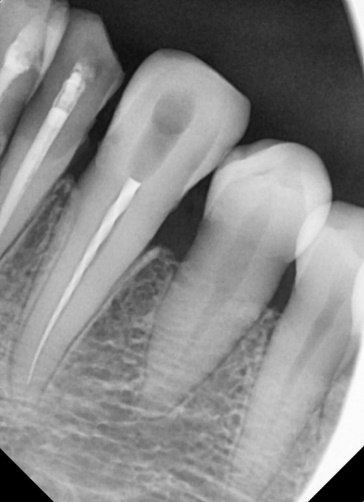
A 21-year-old male patient visited the Department of Conservative Dentistry And Endodontics with the complaint of discoloured anterior tooth. Based on clinical and radiographic evaluation, diagnosis made was previously endodontically treated tooth irt 21. The treatment plan then formulated was CAD CAM crown irt 21.
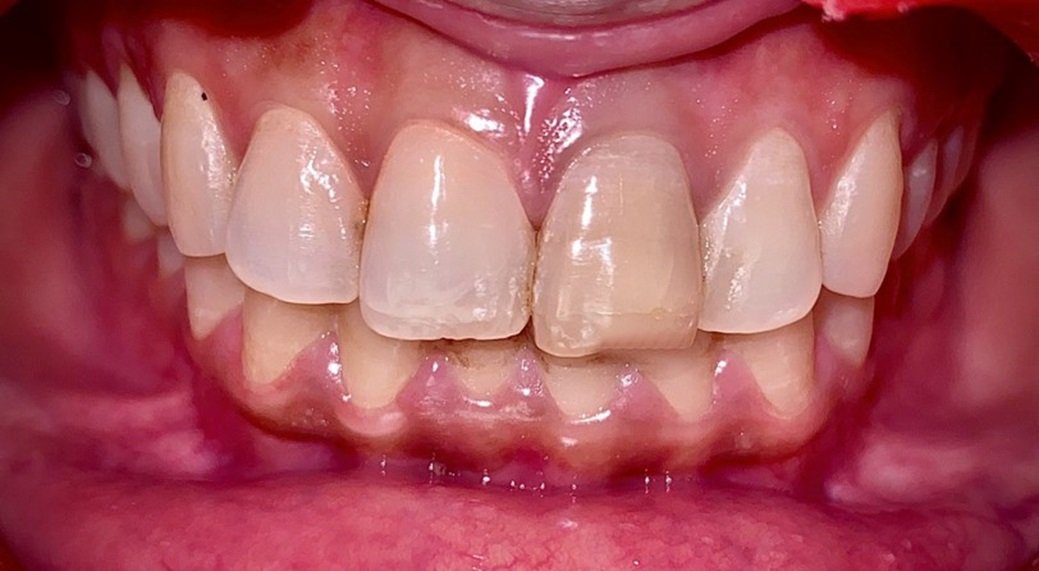
Pre Operative

Digital Impression after Crown Preparation

Computer Aided Manufacturing

Post Operative
CASE REPORT 2
A 32-year-old male patient visited the department of Conservative Dentistry And Endodontics with the complaint of dislodged prosthesis in upper front region. Based on clinical and radiographic evaluation, diagnosis made was previously endodontically treated teeth irt 11,21. The treatment plan then formulated was CAD CAM crown irt 11,21.

Pre Operative

Post Operative
DISCUSSION
While composite restorations can yield successful outcomes in the anterior region, they are prone to discoloration and fractures over time. For patients with high aesthetic demands, prosthetic rehabilitations present an excellent long-term treatment alternative. The ability to complete treatment in a short time, the reduced use of materials, and the ease of production make CAD/CAM systems the preferred choice for creating all-ceramic restorations.6
Due to their durability and versatility, CAD/CAM lithium disilicate glass ceramic and zirconium-reinforced lithium silicate ceramic blocks are widely utilized. However, for patients with severe bruxism, zirconia-based CAD/CAM ceramic blocks are recommended due to their superior mechanical resistance.7
The most important advantage of CAD/CAM high-strength glass ceramics is the ability of adhesive cementation.8 Adhesive cementation enhances the limited flexural strength of glass ceramics and reduces brittleness. When paired with adhesive cements with favorable physical properties, glass-ceramic restorations can resist high masticatory forces and deliver better clinical outcomes.9 In addition, hydrofluoric acid etching rather than sandblasting is very effective due to their high glass content, and they give more successful results in adhesive cementation compared to oxide ceramics.10 Roughening the porcelain with 5-9.5% hydrofluoric acid, etching the dental tissue with phosphoric acid, and applying a silane bonding agent ensures a strong bond between the adhesive resin cement and the feldspathic material.11
The advantage of CAD/CAM systems in the clinic is that they allow for same-day treatment by enabling both the design after the digital impression and the fabrication to be completed on the same day. However, the downside is that they are expensive and require specialized equipment.12 In these cases, the drawbacks have been overcome by the merits of CAD CAM Restorations.
CONCLUSION
The application of CAD/CAM technology in fabricating anterior crowns represents a significant advancement in restorative dentistry. It offers unparalleled precision, superior aesthetics, and enhanced functionality, meeting the demands of both clinicians and patients. Understanding and mastering this technology is imperative for delivering high-quality, predictable outcomes in anterior restorations. CAD/CAM systems not only streamline the workflow but also ensure reproducibility and longevity of restorations, setting a new standard for excellence in modern dental practice. By integrating these innovations into clinical practice, we can provide patient-centered care that blends science, technology, and artistry seamlessly.
REFERENCES
- Goldstein RE, Nimmons KJ, Daniels AH, Barnes C (2018) Maintenance of esthetic restorations. Ronald E Goldstein's Esthetics in Dentistry, pp. 1408-1429.
- Guess PC, Kuliš A, Witkowski S, Wolkewitz M, Zhang Y, et al. (2008) Shear bond strengths between different zirconia cores and veneering ceramics and their susceptibility to thermocycling. Dent mater 24(11): 1556- 1567.
- McLaren EA, White SN, Dentistry S (2000) Survival of In-Ceram crowns in a private practice: A prospective clinical trial. J Prosthet Dent 83(2): 216-222.
- Sadowsky S] (2006) An overview of treatment considerations for esthetic restorations: A review of the literature. J Prosthet Dent 96(6): 433-442.
- Sulaiman TA (2020) Materials in digital dentistry A review ] Esthet Restor Dent 32(2): 171-181
- ?Susic I, Travar M, Susic M (2017) The application of CAD/CAM technology in dentistry. IOP Conference Series: Materials Science and Engineering 200(1): 012020.
- Guess PC, Schultheis S, Bonfante EA, Coelho PG, Ferenez IL, et al. (2011) All-ceramic systems: laboratory and clinical performance. Dental Clinics 55(2): 333-352.
- Deniz DD, Aktas OUG, Güncü OÜMB (2019) CAD/CAM yüksek dayanimli cam seramikler CAD/CAM high strength glass ceramics. Yeditepe ] Dent 15(2): 224-230.
- Bindl A, Richter B, Mörmann WH (2005) Survival of ceramic computer-aided design/manufacturing crowns bonded to preparations with reduced macroretention geometry. Int ] Prosthodont 18(3): 219-224.
- Höland W, Frank M, Rheinberger V (1995) Surface crystallization of leucite in glasses. Journal of Non-Crystalline Solids 180(2-3): 292-307.
- ????Chen JH, Matsumura H, Atsuta M (1998) Effect of different etching periods on the bond strength of a composite resin to a machinable porcelain. Journal of Dentistry 26(1): 53-58.
- Fasbinder DJ, Dennison JB, Heys DR, Lampe K (2005) The clinical performance of CAD/CAM-generated composite inlays. ] Am Dent Assoc 136(12): 1714-1723.
Disclaimer from Guident
The views and opinions expressed in articles published in Guident are solely those of the authors and do not necessarily reflect the views of the editors, the editorial board or the publisher, Ivory India. Guident does not endorse any product, technique or treatment described. Clinical content is intended for qualified dental and medical professionals and is not a substitute for individual clinical judgement. Guident, its editors and the publisher accept no liability for any consequence arising from the use of information published in the journal.
How to cite this article
Dr. Nikita Gupta, Dr. Shubham Dalvi, Dr. Anil Dhingra. Smart Smiles: CAD-CAM for Anterior Excellence- a Case Sereis. Guident. 2025 Jan;18(2). Available from: https://ivoryindia.in/articles/endodontics/smart-smiles-cad-cam-for-anterior-excellence-a-case-sereis.html