Management of Tobacco Use and Dependence-a Dental Practitioners Perspective
Department of Orthodontics & Dentofacial Orthopedics, ESIC Dental College & Hospital, Sector 15, Rohini, Delhi, Department of Conservative Dentistry & Endodontics, Army Dental Centre (Research & Referral hospital), Dhaula Kuan, Delhi, Department of Oral & Maxilofacial Pathology, Himachal Institute of Dental Sciences, Paonta Sahib, Himachal Pradesh
Every year 31st may is celebrated globally as “WORLD NO TOBACCO DAY” to disclose the message of ill effects of tobacco consumption on health and to raise awareness against oral cancer. This article will highlight the risk factor for oral cancer in Indian population, as well as what is being done to educate the public and to prevent or intervene early in oral cancer. NAGALAND sets up the “first tobacco- free village” in the country.
INTRODUCTION
In India, tobacco use is very common. Tobacco is known as major risk factor for oral cancer. The age of initiation of tobacco use in India is 17 years, high among rural areas and teenagers nowadays. India has high incidence of oral cancer, about 40% of all cancers are associated with tobacco. Almost 1 million people die of oral cancer in India every year. Number of deaths may shoot up to 1.2 million by 2035. Currently, people in the 30-69 age group account for over two-third of cancer deaths in India, with less than a third of the patients surviving more than 5 years after diagnosis.TOBACCO – SINGLE GREATEST CAUSE OF PREVENTABLE DEATH GLOBALLY
Tobacco is consumed in variety of different ways, varied from smoked tobacco to smokeless tobacco. Use of tobacco, either by chewing or smoking can lead to many chronic diseases including detrimental effects on oral cavity.
The harmful effects do not end with the tobacco users. Non-smokers are affected by second hand smoke, also known as environmental tobacco smoke or passive smoking, which is smoke from other people’s cigarettes. Non-smokers are at risk of many health problems associated with smoking. It is potentially dangerous for children causing increased risk of respiratory diseases, asthma, sudden infant death syndrome (SIDS). In pregnant women, it will end up as still birth babies with birth defects like cleft palate, club foot, heart diseases.
HARMFUL CHEMICALS- THE SECRETS THEY KEEP…
SMOKED TOBACCO- There is more than 4000 harmful chemicals like Nicotine, Tar, Formaldehyde, Benzene, Carbon Monoxide and Hydrogen Cyanide in tobacco smoke. Due to its high content of nicotine, tobacco becomes addictive.
SMOKELESS TOBACCO- It mainly contains Betel Quid which consists of Betel leaf, Areca nut, few drops of lime, some flavouring and sweetening agents.

TOBACCO AND GENERAL HEALTH
Tobacco is tremendously harmful, no matter how it is being consumed. It has enormous effect on health.
1. Cardiovascular diseases
- Stroke
- Ischemic or Coronary Heart Disease
- Cerebrovascular Diseases
- Atherosclerotic Peripheral Vascular Disease
2. Respiratory diseases
- Chronic obstructive Pulmonary Disease
- Asthma
- Tuberculosis
3. Other diseases
- Peptic Ulcer
- Diabetes
- Cataract
- Acute Myeloid Leukaemia
- Rheumatoid Arthritis
- Inflammatory Bowel Disease
- Erectile Dysfunction
4. SKIN, NAILS, HAIRS
- Skin Discoloration
- Wrinkles
- Premature Ageing
- Yellow Staining of Fingernails
5. Smoking during pregnancy leads to
- Miscarriage/Abortion
- Still Birth
- Premature Delivery
- Ectopic Pregnancy
TOBACCO AND ORAL HEALTH
1. Dental caries
Tobacco contains high amount of caries promoting sugar like sucrose, fructose which enhance the growth of cariogenic bacteria on the root surface of teeth adjacent to which tobacco is placed.2. Tooth abrasion and tooth discoloration
3. Periodontitis
There are 5 folds to 20 folds increase risk of periodontal disease in smokers. Risk of alveolar bone loss is 7 times greater in smokers than non-smokers. Localized gingival recession and high rate of tooth loss is also major concern in these cases.4. Altered taste and smell & oral halitosis
5. Oral mucosal changes
Smoker’s palate, Smoker’s Melanosis, oral Candidiasis.Premalignant lesion
LEUKOPLAKIA- Most common form of potentially malignant disorder in oral cavity. The appearance may vary from uniformly white homogenous to speckled non-homogenous red and/or nodular lesions.
ERYTHROPLAKIA- A red fiery patch which cannot be characterized clinically or pathologically any other definable disease.
ORAL SUBMUCUS FIBROSIS- It is debilitating, potential malignant oral condition characterized by inflammation and progressive fibrosis of lamina propria and other deeper tissues resulting in stiffening of mucosa and reduced mouth opening.
6. Oral cancer
Tobacco use alone accounts for about 40% of all cancers in India. Oral Cancer is usually found on the Lip, Floor of the mouth, the ventrolateral surface of the tongue, gingiva, and oropharynx. In initial stages, it is asymptomatic generally reddish in appearance, may have granular or smooth surface, elevated or non elevated with <1mm in size, with intact surface epithelium not ulcerated, no bleeding and no indurations.TREATMENT OPTIONS
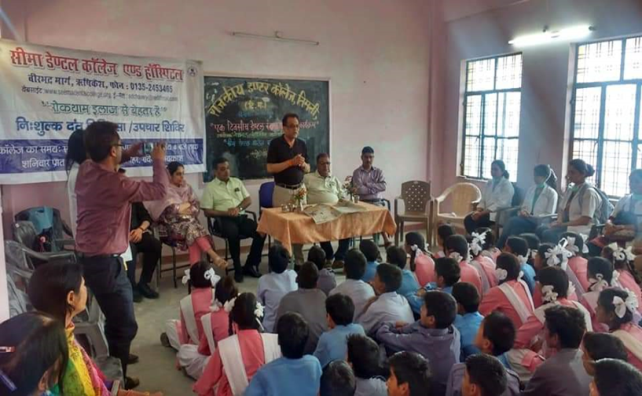
Fortunately, there are treatments that help people to counteract the disruptive effects of addiction. Several public health actions have been taken by WHO to control tobacco related oral diseases.TOBACCO CESSATION CLINICS is an initiative by the WHO and ministry of health of India. There are total 18 tobacco cessation clinics in India. The services offered at the clinic include behavioural counselling, medication, nicotine replacement therapy. The centres also intend the awareness among the general public through awareness programs, exhibitions, training programs for professionals.
NATIONAL CANCER CONTROL PROGRAM is also an initiative by WHO to control oral cancer. It is designed to improve the quality of life of cancer patients through early diagnosis and treatment.
- BEHAVIOURAL THERAPY includes multiple sessions of individual or group counselling, providing them skills training and providing social support as part of treatment.
- NICOTINE REPLACEMENT THERAPIES includes nicotine gum, the transdermal patch, nasal spray and inhaler. They are used to relieve withdrawal symptoms, because they produce less severe physiological alterations than tobacco based systems, and generally provide users with lower overall nicotine levels than they receive with tobacco.
- NON- NICOTINE THERAPIES includes Bupropion, an atypical antidepressant, is the first, and, so far, the only non-nicotine treatment licensed for smoking cessation.
- Assemble dental team to provide support to the tobacco cessation program and to determine the plan of action.
- Appoint a dentist or hygienist as team coordinator who will responsible for tracking band assessing the effectiveness of program for each patient.
- Work with hygienist to counsel patients concerning oral effects of tobacco use and benefits of quitting.
- Refer patients to the free helpline, for free coaching and information about local tobacco dependence treatment programs.
- Recommend and prescribe nicotine replacement products; varenicline (Chantix); bupropion (Zyban); or a combination of bupropion and nicotine replacement medication.
- ASK about tobacco use - every patient/every visit.
- ASSESS willingness to make a quit attempt.
- ADVICE to quit tobacco use.
- ASSIST in quit attempt – set a quit date, emphasize total abstinence, prompt support seeking, Provide supplementary material and recommend pharmacotherapy
- ARRANGE follow up
- Brief Advice – This consists of Advice to stop using tobacco, usually taking only a few minutes, given to all tobacco users, usually during the course of a routine consultation or interaction.
- Behavioral support – This involves support, other than medications, aimed at helping people stop their tobacco use. It can include all cessation assistance that imparts knowledge about tobacco use and quitting, provides support and teaches skills and strategies for changing behavior.
- Health Ministry proposes fine of RS 1000 on smoking in public places, ban on sale of loose cigarettes.
- In September 2014, health ministry of India issued a statement making it mandatory for cigarette manufacturing company to convey statutory warning against smoking on both sides of cigarette pack with graphic depiction of throat and mouth cancer & stating that it must covers at least 85% of packaging.
- On March 2016, the supreme court of India issued notice to the health ministry on a public interest litigation seeking the immediate enactment of plain packaging rules for cigarette and other tobacco products. The SC offered that colorful and attractive covers on tobacco products are more eyes catching and attract more tobacco users.
- Tobacco sale to minors punishable by law. The new act says that the punishment for those selling tobacco products to minors is seven years in jail and fine.
- Anti-tobacco advertisements in films, banners and campaigns.
- Last year, Sri Ramakrishna institute of oncology and research, Coimbatore, launched a mobile phone app called “Tobacco Cessation” and a helpline service to help people quit smoking.
- Anand MK, Role of general dental practitioners in smoking cessation programme IJCDS 2011; 2(3): 44-49
- World health organization(Tobacco and oral health – the approval of WHO) world health organization, Geneva
- K.H. Awan, Effects of tobacco use on oral health-an overview, annual dental university Malaya 2011; 18: 18-23
- Canadian dental hygienist association: Tobacco use cessation services and the role of the dental hygienist, CJDH 2004; 58(6): 1-20
- Tobacco and oral health- ash research report: 2014; 1-12
- Christen AC, Tobacco cessation, The dental profession and role of dental education JDED 2001; 65(4):368-374
- Lakhanpal M et al, Tobacco cessation and prevention activities in dental clinics, J adv med dent SCR 2013; 1(2):116-124
- Knoernschild KL, Tobacco use and oral health, American college of prosthodontia position statement 2015
- Vikneshan M, Ankola AV, Smokeless tobacco and its adverse effect on oral cavity- an overview, annals of dent spc 2014;2(2):64-69
ROLE OF DENTAL PROFESSIONALS
Dental professionals plays major role in diagnosing the chronic diseases and guiding the patient about ill effects of tobacco abuse. Dentists play unique role in identifying the particular symptoms and explaining the consequences to the patient associated with smoking and smokeless tobacco use.1. Behavioral interventions
2. Pharmacotherapy
NICOTINE REPLACEMENT THERAPY
Nicotine Replacement Therapy (NRT) is a method of substituting the nicotine in tobacco products by an approved nicotine delivery product so that the tobacco user does not have uncomfortable withdrawal symptoms upon stopping the tobacco product.
NON-NICOTINE REPLACEMENT THERAPY

INITIATIVES TAKEN BY HEALTH MINISTRY OF INDIA SO FAR…
REFERENCES
Disclaimer from Guident
The views and opinions expressed in articles published in Guident are solely those of the authors and do not necessarily reflect the views of the editors, the editorial board or the publisher, Ivory India. Guident does not endorse any product, technique or treatment described. Clinical content is intended for qualified dental and medical professionals and is not a substitute for individual clinical judgement. Guident, its editors and the publisher accept no liability for any consequence arising from the use of information published in the journal.
How to cite this article
Dr. Tanmay Mittal, Dr. Richa Gupta, Dr. Megha Mittal. Management of Tobacco Use and Dependence-a Dental Practitioners Perspective. Guident. 2020 May;13(6). Available from: https://ivoryindia.in/articles/general/management-of-tobacco-use-and-dependence-a-dental-practitioners-perspective.html