
Prevention of Oral Cancer - a Public Health Concern
Department of Public Health Dentistry, K. D. Dental College & Hospital, Mathura, UP
Oral cancer, also known as mouth cancer, is cancer of the lining of the lips, mouth, or upper throat. In the mouth, it most commonly starts as a painless white patch that thickens, develops red patches, an ulcer, and continues to grow. When on the lips, it commonly looks like a persistent crusting ulcer that does not heal, and slowly grows. Other symptoms may include difficult or painful swallowing, new lumps or bumps in the neck, a swelling in the mouth, or a feeling of numbness in the mouth or lips.1
RISK FACTORS OF ORAL CANCER
Cancer has been declared as one of the most common causes of mortality and morbidity with more than 10 million new cases and more than 6 million deaths each year worldwide. Risk factors include tobacco and alcohol use. Those who use both alcohol and tobacco have a 15 times greater risk of oral cancer than those who use neither. Other risk factors include HPV infection, chewing paan, and sun exposure on the lower lip. Oral cancer is a subgroup of head and neck cancers. Patients showing any of these symptoms like, a sore, irritation, lump or thick patch in their mouth, lip, or throat, a white or red patch, sore throat, difficulty chewing, swallowing, or speaking, difficulty in moving jaw or tongue, swelling of jaw that causes dentures to fit poorly or become uncomfortable for more than two weeks are recommended to see a dentist or a doctor.1
A risk factor is anything that increases a person’s chance of getting a disease such as cancer. Different cancers have different risk factors. Some risk factors, like smoking, can be changed. Others, like a person’s age or family history, can’t be changed. Oral cavity and oropharyngeal cancers are often grouped with other cancers in the head and neck area. These cancers often have many of the same risk factors. (Figure 1)14
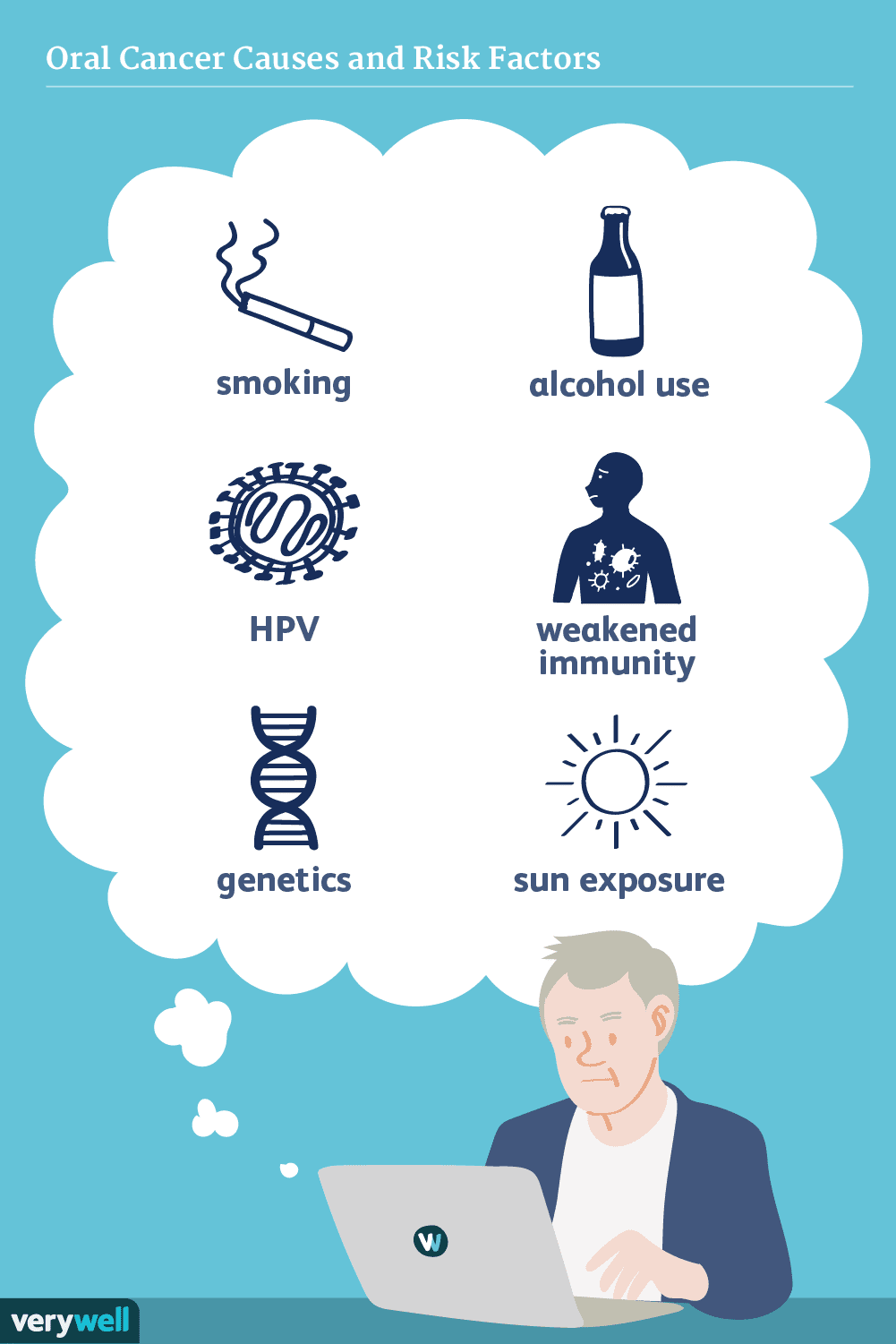
Figure 1: Risk factors of oral cancer
ROLE OF DENTISTS IN HELPING PATIENTS QUIT TOBACCO 4
The World Health Organization (WHO) estimated that 43% of all cancers are a consequence of tobacco use, alcohol consumption, unhealthy diets, unhealthy lifestyles, and infection. Of these, tobacco is the world’s most avoidable cause of cancer.2,3
Oral cancer is a subgroup of head and neck cancers. Patients showing any of these symptoms like, a sore, irritation, lump or thick patch in their mouth, lip, or throat, a white or red patch, sore throat, difficulty chewing, swallowing, or speaking, difficulty in moving jaw or tongue, swelling of jaw that causes dentures to fit poorly or become uncomfortable for more than two weeks are recommended to see a dentist or a doctor.1 Those who use both alcohol and tobacco have a 15 times greater risk of oral cancer than those who use neither. Other risk factors include HPV infection, chewing paan, and sun exposure on the lower lip. Cessation of smoking may halt disease progression and improve outcomes of periodontal therapy. The dental practice setting provides a unique opportunity to assist tobacco users in achieving tobacco abstinence.
In dental settings, brief counseling cessation interventions are more effective than usual care. Dentists have an important role in helping patients quit tobacco and, at the community and national levels, to promote tobacco prevention and control strategies. The roles are:
- Can see the harmful effects of tobacco in the mouth
- Are in an ideal position to counsel patients
- See children and youth as patients and can influence them to adopt a tobacco-free lifestyle
- Treat women of child bearing age and can inform them of the dangers of tobacco use during pregnancy.
- Can spend more time with patients and use this time to counsel tobacco users to quit
- Can reinforce messages given to patients by physicians and other caregivers about the dangers of tobacco use and the need to quit
- Can build their patients’ interest in discontinuing tobacco use by showing them the actual effects in the mouth
- Have a duty to promote oral health and healthy lifestyle among their patients.
- Can speak with authority in the community about the dangers of tobacco use; for example, the need to curb tobacco use in public and educate children about the dangers of tobacco use
- Can be effective advocates for tobacco control in the community.
Tobacco uses by dentists is a significant barrier to tobacco cessation counseling. Dentists can be role models by not using tobacco or by quitting successfully. Dentists must recognize that every interaction on tobacco use, however brief, can lead to a significant change in the patient's attitude and behaviour. Smokers can be helped to recognize that temporary abstinence is a small success that can lead to greater success in quitting.
Tobacco Intervention 4
A brief tobacco intervention:
- Takes only a few minutes
- Is practical for a busy office
- Assesses, diagnoses, educates, works with the patient
- Is preferred by patients
- Must encourage the patient and not be critical
Tobacco Cessation Services in India
The first formal tobacco cessation clinics in India were set up in 2002, as a joint initiative of the Ministry of Health and Family Welfare, Government of India and WHO. The initial phase involved the setting up of tobacco cessation clinics in India and developing models for cessation.
The purpose of these clinics was to develop intervention models for tobacco cessation for smoking and smokeless tobacco users, generate experience in the delivery of these interventions, and finally, to study the feasibility of implementing these interventions and their acceptance. The broad area of the services provided is summarized below:
- Tobacco Cessation Clinic (OPD based and Community based)
- Registration and documentation of tobacco use profile in detail
- Group counseling
- Individual counseling/Relatives counseling
- Carbon Monoxide (CO) monitoring
- Pharmacotherapy
- Regular follow up with brief counseling at each visit
- Telephone Counseling for the defaulters
- Postal letters to people who do not have access to telephone facility
- Home visits by social workers as and when required
- Interaction with quitters during educational programmes
- Felicitation of quitters/Distribution of certificates to quitters
- Research work is also conducted by different TCCs
- Educational Programmes
- Preparation and display of educational materials
TCC services are provided regularly at different parts of the country. The clinic activities include: -
Process Of Cessation - Interventional Strategies- the 5A’s 4
To give individual the best chance at a successful future, it is crucial that subjects quit their tobacco habit before they develop the diseases. However, it is always better that people should not start this deadly habit. If started health care providers must attempt to motivate a change.
The 5A’s are the evidence – based framework for structuring tobacco cessation in health care setting.
- Ask
- Advise
- Assess
- Assist
- Arrange
The Five A's for providers to use as a counseling tool: After the Behavioral Change Model has been assessed to determine a patient's willingness to quit, the health care provider should apply the Five A's to assist his/her client in staying tobacco free.
Step 1: ASK
ASK - Systematically identify all tobacco users at every visit. It should be put into the system that every patient/client at every clinic visit, tobacco-use status is queried and documented.
Step 2: ADVISE
“Strongly urge all tobacco users to quit”
Advise should be have:
- Clear Message: "I think it is important for you to quit tobacco now and I can help you." “Cutting down while you are ill is not enough”.
- Strong message: "As your clinician, I need to advise you that quitting tobacco smoking/smokeless is the most important thing you can do for your health and your baby's health." (Your health now and in future). The clinic staff and I will help you”.
- Personalized message: Tie tobacco use to current health /illness, and /or its social and economic cost, motivation level/readiness to quit, and /or the impact of tobacco use on children and others in the house hold.
It is always better that while advising to quit, the dentist must tell about benefits of quitting.
BENEFITS OF QUITTING 5
It is important to tell the client what are benefits of quitting. From the moment you finish smoking it only takes 20 minutes for your body to start undergoing beneficial changes (This is helpful while giving individual or group counseling).
20 Minutes:
- Blood Pressure drops to normal
- Pulse rate drops to normal
- Temperature of hands and feet increases to normal
8 Hours:
- Carbon-Monoxide level in blood drops to normal
- Oxygen level in blood increases to normal
24 Hours:
- Chance of heart attack decreases
48 Hours:
- Nerve endings start re-growing
- Ability to smell and taste is enhanced
2 Weeks to 3 Months:
- Circulation improves
- Lung function increases up to 30%
1- 9 Months:
- Coughing, sinus congestion, fatigue and shortness of breath decrease
- Cilia re-grow in lungs, increasing ability to handle mucus, clean the lungs, reduce infection
1 Year:
- Risk of coronary heart disease is half that of a smoker
Step 3: ASSESS
Assess: Determine willingness to make a quit attempt.
To be able to assist a client with tobacco cessation one needs to be able to assess client's willingness to commit to this change. Ask every tobacco user if he/she is willing to make a quit attempt at this time (e.g., within the next 30 days).
The stages of Readiness to change model is valuable model for assessing a person’s readiness to change a variety of behaviors. Cessation is explained as process, rather than a single discrete event and tobacco users through the steps of being ready, quitting and relapsing, an average of three to four times, before achieving long term success. Tobacco users will be in different stages of readiness when the health care provider sees them at different times, so readiness needs to be constantly re-evaluated.
The stages may be:
- Not ready (Pre contemplation)
- Unsure (Contemplation),
- Ready (Preparation)
- Action,
- Maintenance
Not ready (Pre contemplation) - These tobacco users are not seriously considering quitting in the next 6 months. They generally see the positive aspects of tobacco and do not like to acknowledge the disadvantages or have been discouraged by failure in past quit attempts. Encourage them to think about his/her tobacco use and invite them for any help. Offer them the written information.
Unsure (Contemplation) - These tobacco users are seriously considering quitting in the next 6 months. This group is particularly amenable to brief motivational interviewing. Explore relevant health effect of tobacco use and barrier to cessation. Find out other physical mental health issues of relevance and offer them help. Provide them the written information and tell them about support services.
Ready (Preparation) - These tobacco users are planning to quit in the next 30 days and have usually made a 24-hour quit attempt in the past year. This group is motivated to quit soon and is the group most likely to actually attempt to quit in the near future. This is a window of opportunity, which may only open for a short time, and is the group most likely to ask for help with quitting.
Action - These are former tobacco users who have quit in the last 6 months. This is when the risk of relapse is highest with about 75% of relapse occurring in this stage, most within the first week (National Health Committee, 1999). This is a period where support and strategies to prevent relapse are especially important (see relapse prevention). If relapse does occur it is important that this is not seen as a failure but a learning experience and a not uncommon part of the quitting process.
Maintenance - These are tobacco users who quit over 6 months ago. The non-tobacco use behavior is established and the threat of tobacco use gradually diminishes. The chances of relapse diminish over time- only about 4% of those who quit for more than two years ever go back to tobacco use.
If patient is willing to quit as the Health Care Provider:
- Praise him/her for his/her readiness to quit tobacco
- Help him/her set goals to maintain a tobacco free lifestyle
- Discuss an action plan to assist him/her in tobacco cessation
- Inquire about his/her support network
- Respond to his/her specific concerns about quitting tobacco
Assessment of Nicotine Dependence
After assessing willingness to quit, and is in state of Readiness (Preparation) to quit, at the counseling session, it is important to know the level of Nicotine addiction which can be measured by Fagerstrom Scoring.
Scoring has also been modified to assist in tailoring nicotine cessation advice to fit individual needs. Scoring is done as followed:
- A high level of addiction will rank between 7 and 10 points.
- A medium level of addiction will rank between 4 and 6 points.
- A low level of addiction will rank between 0 and 3 points
Breathe CO Level Analysis
Although, it has been used for verifying quitters (smoking) of their habit, but in practice it has been used as assessing tool / counseling tool for the client. This also helps us to determine which method of treatment can be given to the subject.
Step 4: ASSIST — Aid the patient to quit
WILLING TO QUIT 28
In tobacco users the motivational stage must be utilized properly. When they come for help they must be assisted with care.
Self Help:
- Various self-help interventions have been developed: Pamphlets, videotapes, audiotapes, hotlines/help lines, websites, provide a small increase in quitting rather than no intervention.
Behavioural and cognitive therapy:
- Behavioral and cognitive therapy is a short-term, focused approach for helping dependent individuals become abstinent from drug use.
- Attempts to help people:
- Recognize
- Avoid
- Cope
Discuss Past Quit Attempts:
While assisting the clinical, possessing a clear understanding of the client's past quit attempts can be a helpful tool. This information will assist in determining the skills a client will need to make this quit attempt successful.
Choose a Cessation Method:
COMMON CESSATION AIDS ARE
A. Non-Pharmacological Cessation Strategies:
- Tapering - Cut down the number of cigarettes/bidies smoked (or smokeless tobacco) each day until the client finds they are no longer using it. Tapering involves counting the number of cigarettes/bidies smoked each day and then reducing that amount by a fixed number over a given amount of time. This method involves setting a quit date by which the client will have tapered down to the point that they are no longer using tobacco
- Cold Turkey - Abruptly stopping all smoking. Best for clients who smoke two packs of cigarettes a day or less. Cold turkeys are the simplest and, for most people the easiest way to quit.
B. Pharmacological Methods:
The physician and patient must consider the potential risks of the different pharmacological methods of smoking cessation.28
- Nicotine Patch
- Nicotine Gum
- Nicotine Inhaler
- Bupropion
- Verenicline
WITHDRAWAL SYMPTOMS
More than 80% of smokers will experience symptoms of nicotine withdrawal. Cravings for tobacco and irritability are two of the most common symptoms. Withdrawal symptoms may be lessened or prevented by using NRT or bupropion. If people are not using pharmacotherapy, then cognitive and behavioral strategies can be used to assist in the early stage of the quit attempt. The worst of the physical symptoms are over within 2-3 days and most have passed after 10-14 days but can last up to 4 weeks. Some nicotine withdrawals are shown below:
- Depressed mood
- Insomnia
- Irritability, frustration, anger
- Anxiety
- Craving and difficulty in concentration
- Restlessness
- Decreased heart rate
- Increased appetite or weight gain
NOT WILLING TO QUIT 5
For patients not ready to make a quit attempt, the healthcare provider should provide a brief intervention designed to promote the motivation to quit and information about harmful effect of tobacco. The client may have fears concerns about quitting, or may be demoralized because of previous relapse. Such patients may respond to a motivational intervention enter venture designed to educate, reassure and motivate. The components of such motivational intervention build around the 5Rs: Relevance, risk, rewards, roadblocks and repetition.
- Relevance - Explain the relevance of quitting to the subject. Motivational counseling is more effective if context is relevant to the smoker, like harm of passive smoking to family members’ especially younger children.
- Risks - Clinician should highlight the health hazards that are more relevant to the tobacco uses. Both short term risks like and long-term risks should be properly explained.
- Rewards - Benefits of quitting all forms of tobacco use should be explained to the tobacco user. Improved health of self and other family members, better physical performance, saving of money and other relevant advantages should be explained to the patient.
- Repetition - Physician should give assurance to the patient that because of chronic nature of tobacco dependence relapses in the initial phases are common and multiple attempts may have to be made before a subject is able to quit tobacco. Repeat motivational counseling should be provided at each contact.
- Roadblocks - Barriers that the patient may face in his/her quit attempt should be identified. Withdrawal feature, fear and concern associated with quitting, depression, lack of social support, enjoyment of tobacco is some of the barriers that the patient may face in its attempt.
Step 5: ARRANGE
Arrange - Schedule a follow-up contact
Time- Follow up contact should occur soon after the quit date, preferably during the first week. A second follow up contact is recommended within the first month. Schedule further follow up contact as indicated. Follow up visits after advice to quit has been shown to increase the likelihood to successful long-term abstinence. Follow up by nurse, community workers, other health workers, doctors can be effective. Letters /Phone calls may be more cost effective than follow up visits at the clinic.
Action during follow up contact:
- Congratulate success
- Review problems and progress
- If tobacco use has occurred, review circumstances and elicit recommitment to total assistance
- Remind patient that a relapse can be used as a learning experience.
- Assess pharmacotherapy use and problems.
- Encourage social support and use of support services.
- Relapse is a normal occurrence.
- Empathies and reframe as learning experience explore reasons for relapse.
- Help build motivation to reach the stage of readiness to try again.
While dealing the follow up, the quitters have some common problems and a solution should be given to them. The common problems and solutions are described below:
- Lack of support for cessation - Schedule follow-ups or telephone calls with the patient.
Help the patient identify sources of support within the environment (appropriate organization that offers cessation counseling or support).
- Negative mood or depression- If significant, provide counseling, prescribe appropriate medications, or refer the patient to a specialist.
- Strong or prolonged withdrawal symptoms- If the patient reports prolonged craving or other withdrawal symptoms consider extending the use of an approved pharmacology or adding/combining pharmacologic medications to reduce strong withdrawal symptoms.
- Weight gain - Recommend starting or increasing physical activity after a physician's clearance. Emphasize the importance of a healthy diet. Reassure the patient that weight gain in normal.
- Flagging motivation/feeling deprived - Reassure the patient that these feelings are common. Recommend rewarding activities. Probe to ensure that the patient is not engaged in periodic tobacco use. Emphasize that beginning to smoke (even a puff) will increase urges and make quitting more difficult.
RELAPSE PREVENTION 10
Relapse prevention strategies aim to assist people to avoid or cope with high-risk smoking situations. Such strategies also aim to prevent a lapse form occurring or if it occurs form becoming a full relapse to smoking.
Suggested strategies are:
- Identify high-risk tobacco use situations and important triggers
- Plan coping strategies in advance
- Consider lifestyle changes that may reduce the number of high-risk situations encountered, e.g., stress management, reduction in alcohol consumption
- Encourage patients to have a plan for how to deal with a slip to prevent it becoming a full relapse
Components of relapse intervention:
During relapse prevention, a patient might identify a problem that threatens his or her abstinence. It is important to remember the reasons wanted and need to stop tobacco. The first few days to weeks after quitting will be the hardest. It is important to use self-discipline and most effective techniques to avoid giving in to the cravings. What some people find helpful when urges come include:
- A few deep breaths and let them out slowly.
- Thinking about the most important reasons helping to stop tobacco.
- Not letting negative thoughts dominate the thinking.
- Use a coping strategy.
- Focusing the attention away from the urge. Usually peak and subside within 5 to 10 minutes.
- Going to a place where smoking is not permitted.
- Seeking support from a non-tobacco user friend.
- Using a low-calorie substitute for oral stimulation.
- Delaying the use of tobacco for another hour
LEVELS OF PREVENTION FOR ORAL CANCER 11
Cancer prevention is defined as action taken to lower the chance of getting cancer, consequently lowering the number of new cases of cancer in a population and hopefully decreasing the number of deaths caused by cancer.
Primary prevention aims to decrease the incidence of oral cancer through changing behaviors that may directly contribute to the development of oral cancer. Primary prevention includes but is not limited to cessation of smoking, reduced alcohol consumption, and improved nutrition.
While primary prevention is the gold standard to battling oral cancer, behavioral change takes time and is not always easy to achieve, and hence secondary prevention such as detection of malignant or potentially malignant lesions becomes a key player. Secondary prevention also encompasses HPV vaccination, diagnosis, and treatment of erythroplakia and leukoplakia as well as chemoprevention.
Tertiary prevention is indicated when the patient has previously had cancer which was treated in its acute clinical phase. Tertiary prevention seeks to soften the impact caused by the disease on the patient’s function, life expectancy, and quality of life.
A. PRIMARY PREVENTION 11,12,13
The goal of primary preventive measure is to increase public awareness regarding the risk factors and aims at changing the behaviors of public. The main aim is to spread the devastating effects of the disease, make public confirmation regarding curability of the disease and to spread the role of helpful screening techniques and its advantages in fighting oral cancer. Health education intervention was able to start off a desirable behavioral change in the community because of which oral self-examination programs should be encouraged and practiced.
Tobacco Hazards - A plethora of research has been conducted on whether behaviors such as tobacco smoking, alcohol consumption, and betel quid and gutka chewing have a causal effect in developing oral cancer. High usage of tobacco in combination with high consumption of alcohol poses a much greater risk for oral cancer than using either substance alone.
Diet - Nutrition and physical activity are also quite high up on the list of determinants for risk of cancer. Unhealthy diets and lack of physical activity are linked to higher risk of cancer in general.
Exposure to Sun - Chronic and prolonged exposure to sun is another behavioral aspect that may raise the risk of oral cancer. Extended UVB radiation in combination with UVA produces mutations in DNA. Failure to repair these mutations results in tumor formation.
Human papillomavirus infection - The potential association between HPV and oral and oropharyngeal cancer first originated, in 1983. Prior to that, between 1974 and 1977, it was suggested that the HPV viruses could be responsible for cervical cancer. HPV strains can bring
about oral epithelial transformations which may grow into oral cancer.
Barriers to Primary Prevention
Primary prevention undeniably decreases risk for oral cancer, and the preventive measures needed to support individuals in maintaining their primary prevention behavior are readily available.
B. SECONDARY PREVENTION 13,14
Secondary prevention includes procedures that detect and treat pre-clinical pathological changes and thereby control disease progression.
Screening - Screening would be one example of secondary prevention. Screening encompasses the application of a relatively easy and inexpensive test to people in order to categorize them as potentials for developing cancer or not. Hence, screening for diagnosis and treatment of precancerous lesions such as leukoplakia, erythroplakia, and lichen planus which may turn into oral cancer is the first line of defense against oral cancer when it comes to secondary prevention.
Treating Chronic Infections - Primary diseases caused by infection may progress to secondary illnesses such as cancer, if not properly treated. Viral infections are the commonest among cancer-triggering infections. Greatest attention was given to the human papillomavirus (HPV-16) which causes genital and oral warts and is primarily classified as sexually transmitted.
Secondary Chemoprevention - The success of chemoprevention depends on the risk group, exposure factors, family history, genetic makeup, age, toxicity, biomarkers, complicated health issues, and cost versus efficiency.
Chemoprevention is the use of synthetic or natural agents in the suppression or prevention of cancer. Chemoprevention can be further sub classified into three categories: micronutrient, molecular targeting, and green chemoprevention.
Green chemoprevention is a term used to coin interventions that utilize derivatives of natural compounds such as curcumins, resveratrol, green tea extract, luteolin, soybeans, and pomegranate. All these aforementioned plant products have antioxidant properties secondary to the inherent polyphenols present in them. Polyphenol is a subgroup of phytochemicals which inhibit cancer development through different strategies, constrain the intracellular oncoprotein signaling along with the PKC/RAS/MPK or p13-kinase/AKT pathways, downregulate the pro-proliferative anti-apoptotic transcription factors NF-Kb and AP-1, and upregulate the carcinogen-detoxifying enzymes and DNA repair proteins.
C. Tertiary Prevention 15
Tertiary prevention is the most complicated stage with lesser chances to prevent the disease but rather extends the tactics and methods to pause the disease development, control its progression, reverse its effects, and avoid its reoccurrence.
Genetic Screening and Counseling- Genetic counseling is essential preventative mean for, namely, patients with past or current history of any type of cancer, patients who were treated for oral cancer, patients with precancerous lesions, patients with great exposure to oral cancer risk factors, and patients with family history of oral cancer.
Chemoprevention, Oncolytic Therapy, and Immunotherapy- Chemoprevention using compounds of natural or synthetic origins is given to reduce the risk of developing cancer and halt the transformation of precancerous lesions to cancer. Tertiary chemoprevention involves genomic representations and deep understanding for the cell cycle and the process of carcinogenesis.
Oral Cancer Prevention and Immunosuppression - The prevention of oral cancer has become an increasing challenge in immunosuppressed patients. Regular oral checkups pre- and post-hematopoietic stem cell transplant (HSCT) and the administration of immunosuppressives are considered an initial step to prevent oral cancer.
Barriers to Secondary and Tertiary Preventions
Secondary and tertiary preventions are challenging in some cases. However, applying the best practices to reduce the effect of the risk factors for cancer development is warranted. Chemoprevention with micronutrients can be characterized with substantial toxicity and poor long-term efficacy. In some cases, the chemoprevention reversal effect for OPL (oral premalignancy) doesn’t correlate to complete cancer prevention. Other barriers also include dose toxicity, tolerance, cost-effectiveness, pre-existence of other chronic diseases, and availability of treatment. Furthermore, the lack of specific biomarkers for oral cancers and the limited clinical trials in this field are some of the major challenges encountered.36
GLOBAL INITIATIVES IN THE PREVENTION OF ORAL CANCER
1. The Crete Declaration on Oral Cancer Prevention 2005 - A commitment to action16
The participants of the 10th International Congress on Oral Cancer which took place 19-24 April 2005 in Crete, Greece, welcomed the initiative to analyze the evidence on oral cancer and the implications for prevention and public health programmes.
In particular, the following areas of work should be strengthened:16
(a) Provision of systematic epidemiological information on prevalence of oral cancer and cancer risks in countries, particularly in the developing world.
(b) Promotion of research into understanding biological, behavioral and psychosocial factors in oral cancer, emphasizing the inter-relationship between oral health and general health
(c) Integrating oral cancer information into national health surveillance systems which record chronic diseases and common risk factors
(d) Dissemination of information on oral cancer, prevention and care through every possible means of communication
(e) Active involvement of oral health professionals in oral cancer prevention through control of risk factors such as tobacco, alcohol and diet
(f) Training of primary health workers in screening and provision of first-level care in oral cancer
(g) Access to health facilities and provision of systems for early detection and intervention, oral health care and health promotion for the improvement of quality of life of people affected by oral cancer.
The participants support the efforts of the WHO Oral Health Programme aiming at coordination and inter- country sharing of experiences in prevention and oral health care of people affected by oral cancer.
WHO Framework Convention on Tobacco Control (FCTC) 17
The WHO Framework Convention on Tobacco Control (WHO FCTC) is the first treaty negotiated under the auspices of the World Health Organization. The WHO FCTC is an evidence-based treaty that reaffirms the right of all people to the highest standard of health. The WHO FCTC represents a paradigm shift in developing a regulatory strategy to address addictive substances; in contrast to previous drug control treaties, the WHO FCTC asserts the importance of demand reduction strategies as well as supply issues.
The WHO FCTC was developed in response to the globalization of the tobacco epidemic. The spread of the tobacco epidemic is facilitated through a variety of complex factors with cross-border effects, including trade liberalization and direct foreign investment.
The “Parties to this Convention are determined to give priority to their right to protect public health”; the WHO FCTC is a global trend-setter.
Price and tax measures to reduce the demand for tobacco, and non-price measures to reduce the demand for tobacco, namely:
- Protection from exposure to tobacco smoke;
- Regulation of the contents of tobacco products;
- Regulation of tobacco product disclosures;
- Packaging and labeling of tobacco products;
- Education, communication, training and public awareness;
- Tobacco advertising, promotion and sponsorship; and,
- Demand reduction measures concerning tobacco dependence and cessation.
For this to materialize, the drive and commitment, which was so evident during the negotiations, a spread to national and local levels should be done so that the WHO FCTC becomes a concrete reality where it counts most, in countries.
The Parties to this Convention,17
- Determined to give priority to their right to protect public health,
- Recognizing that the spread of the tobacco epidemic is a global problem with serious consequences for public health that calls for the widest possible international cooperation and the participation of all countries in an effective, appropriate and comprehensive international response,
- Reflecting the concern of the international community about the devastating worldwide health, social, economic and environmental consequences of tobacco consumption and exposure to tobacco smoke,
- Seriously concerned about the increase in the worldwide consumption and production of cigarettes and other tobacco products, particularly in developing countries, as well as about the burden this place on families, on the poor, and on national health systems,
- Recognizing that scientific evidence has unequivocally established that tobacco consumption and exposure to tobacco smoke cause death, disease and disability, and that there is a time lag between the exposure to smoking and the other uses of tobacco products and the onset of tobacco-related diseases,
- Acknowledging that there is clear scientific evidence that prenatal exposure to tobacco smoke causes adverse health and developmental conditions for children,
- Deeply concerned about the escalation in smoking and other forms of tobacco consumption by children and adolescents worldwide, particularly smoking at increasingly early ages,
- Alarmed by the increase in smoking and other forms of tobacco consumption by women and young girls worldwide and keeping in mind the need for full participation of women at all levels of policy-making and implementation and the need for gender-specific tobacco control strategies,
- Deeply concerned about the high levels of smoking and other forms of tobacco consumption by indigenous people,
- Seriously concerned about the impact of all forms of advertising, promotion and sponsorship aimed at encouraging the use of tobacco products,
- Recognizing that cooperative action is necessary to eliminate all forms of illicit trade in cigarettes and other tobacco products, including smuggling, illicit manufacturing and counterfeiting,
- Acknowledging that tobacco control at all levels and particularly in developing countries and in countries with economies in transition requires sufficient financial and technical resources commensurate with the current and projected need for tobacco control activities,
- Recognizing the need to develop appropriate mechanisms to address the long-term social and economic implications of successful tobacco demand reduction strategies,
- Mindful of the social and economic difficulties that tobacco control programmes may engender in the medium and long term in some developing countries and countries with economies in transition, and recognizing their need for technical and financial assistance in the context of nationally developed strategies for sustainable development,
- Conscious of the valuable work being conducted by many States on tobacco control and commending the leadership of the World Health Organization as well as the efforts of other organizations and bodies of the United Nations system and other international and regional intergovernmental organizations in developing measures on tobacco control,
- Emphasizing the special contribution of nongovernmental organizations and other members of civil society not affiliated with the tobacco industry, including health professional bodies, women, youth, environmental and consumer groups, and academic and health care institutions, to tobacco control efforts nationally and internationally and the vital importance of their participation in national and international tobacco control efforts,
- Recognizing the need to be alert to any efforts by the tobacco industry to undermine or subvert tobacco control efforts and the need to be informed of activities of the tobacco industry that have a negative impact on tobacco control efforts,
- Recalling the preamble to the Constitution of the World Health Organization, which states that the enjoyment of the highest attainable standard of health is one of the fundamental rights of every human being without distinction of race, religion, political belief, economic or social condition,
- Determined to promote measures of tobacco control based on current and relevant scientific, technical and economic considerations,
- Recalling that the Convention on the Elimination of All Forms of Discrimination against Women, adopted by the United Nations General Assembly on 18 December 1979, provides that States Parties to that Convention shall take appropriate measures to eliminate discrimination against women in the field of health care,
Bloomberg Global Initiative to Reduce Tobacco Use 18
The implementation of the Bloomberg Global Initiative to Reduce Tobacco Use (BGI) in the South-East Asia Region began in February 2007. Four countries from the South-East Asia (SEA) Region – Bangladesh, India, Indonesia and Thailand – were selected as priority countries under the Initiative. Both human and financial supports have been provided to these countries to strengthen capacity for tobacco control of both the public and private sectors at the national level.
WHO provided technical assistance to all four BGI countries in the Region to ensure progress towards establishing effective national coordination mechanisms, structure for tobacco control, capacity building and surveillance system as well as in achieving the objectives of the initiative. SEARO has also ensured an active engagement of governments and nongovernmental organizations (NGOs) in the Bloomberg Grant Mechanism.
The objectives of Bloomberg Global Initiative to Reduce Tobacco Use were – 19
- To enhance knowledge and understanding of the Bloomberg Global Initiative to reduce tobacco use.
- To enhance team spirit among all the Bloomberg staff in country and regional offices for effective development and implementation of the Bloomberg Initiative.
- To discuss coordination mechanisms between BGI countries, the Regional Office and other Bloomberg Partners.
- To review the progress of implementation of the Bloomberg Initiative in the Region during the year 2007.
- To discuss the Bloomberg Initiative’s regional and country work plans for 2008.
Activities in the Bloomberg Global Initiative 19
The Bloomberg Initiative to Reduce Tobacco Use is implemented though its partner organizations.
- Campaign for Tobacco-Free Kids - Washington, USA
- Create a Global Advocacy Center
- Implement grant programs to support in-country tobacco control advocacy International
- Union Against Tuberculosis and Lung Disease - Paris, France
- Implement grant programs to initiate in-country tobacco control measures
- Create global resource center for effective anti-tobacco advertisements
- Support measures to prevent tobacco smuggling
- Operate Regional Center on tobacco control
- Refines and optimizes tobacco control programs to help smokers stop and prevent children from starting.
- CDC Foundation - Atlanta, USA
Measure the current burden of tobacco and status of tobacco control in high burden low income and middle-income countries through creation of a global adult tobacco survey World Health.
- Organization Tobacco- Free Initiative - Geneva, Switzerland
Supports public sector efforts to pass and enforce key laws and implement effective policies, in particular to tax cigarettes, prevent smuggling, change the image of tobacco, and protect workers from exposure to other people’s smoke.
- Johns Hopkins Bloomberg School of Public Health-
- Expand training and economic studies, with particular focus on China
- Analyze, refine and optimize tobacco control interventions
CONCLUSION
Cancers are the most common cause of death in adults. Oral cancer is any malignant neoplasm which is found on the lip, floor of the mouth, cheek lining, gingiva, palate or in the tongue. Oral cancer is among the top three types of cancers in India. Reduction in consumption of the main risk factors including tobacco and alcohol products is effective for reducing the incidence of oral cancer. The most widely used pharmacotherapy for managing nicotine dependence and withdrawal is therapeutic use of nicotine containing medications. NRT products take a number of forms: gum, transdermal patch, nasal spray, oral inhaler, and tablet. Cancers detected at early stages can be treated more successfully. Delay in diagnosis has effect on cancer related morbidity and mortality. Therefore, screening and early clinical diagnosis help to provide more safe and cheap treatments. Awareness of health care providers has a great impact on early diagnosis. Primary prevention is aimed at reducing the incidence of the disease and protecting healthy people from developing oral cancer. The preventive approach is quite clear and dentists, along with other primary health care professionals, have excellent opportunities to contribute. Secondary prevention focuses on the detection of the disease at an early stage of its natural history. An early action will lead to healing or minimization of damage, ultimately reducing mortality. The goal of tertiary prevention is to reduce the possibility of the appearance of new oral cancer and help the patient to minimize the side effects of oncological therapy. Oral cancer and, in particular, its treatment can cause problems in the daily maintenance of oral health and reduce the quality of life for survivors. The awareness of public and clinicians of the risk factors and early signs of oral cancer has a great impact on prevention of oral cancer. In addition, better understanding of molecular pathways in the development of oral cancer improves prevention and early detection. Much work still has to be done to identify strategies to decrease morbidity and mortality rates of oral cancer.
REFERENCES
- Oral cancer, www.who.int, accessed on 03/06/2022.
- Hari Ram, Jayanta Sarkar, Hemant Kumar, Rituraj Konwar, M. L. B. Bhatt, Shadab Mohammad. Oral cancer: risk factors and molecular pathogenesis, Journal of Maxillofacial. Oral Surgery, 2011; 10(2):132–137.
- Soussan Irani. New Insights into Oral Cancer—risk factors and prevention: a review of literature, International Journal of Preventive Medicine, 2020; 11(1): 182-190.
- O. Kujan, A.M. Glenny, R. Oliver, N. Thakker, P. Sloan. Screening programmes for the early detection and prevention of oral cancer, The Cochrane Library, 2008; 1(4): 1-16.
- National Guidelines for Tobacco Cessation, Ministry of Health & Family Welfare, Government of India, accessed on 17/5/2022.
- Counseling your patients about Tobacco Cessation: The 5A’s, http://www.acog.org/About-ACOG/ACOG-Districts/District-II/Smoking Cessation-The-5-As, accessed on 17/5/2022.
- Sabiha Shaheen Shaik, Dolar Doshi, Srikanth Reddy Bandari, Padma Reddy Madupu, Suhas Kulkarni. Tobacco use cessation and prevention – a review, Journal of Clinical and Diagnostic Research. 2016, 10(5):13-17.
- Toolkit for delivering the 5A’s and 5R’s brief tobacco interventions in primary care, www.who.int, accessed on 18/5/2022.
- Umesh Wadgave and L Nagesh. Nicotine Replacement Therapy: An Overview, International Journal of Health Sciences, 2016; 10(3): 425-435.
- Susan E. Collins, Katie Witkiewitz, Megan Kirouac. Preventing relapse following smoking cessation, Current Cardiovascular Risk Reports, 2010; 4(6): 421–428.
- Ahmed Mohamed Malki, Samira Bou Raad, and Rasha Abu-El-Ruz. Prevention of oral cancer, Development of Oral Cancer, 2017; 20(1): 193-217.
- Alice M. Horowitz, Harold S. Goodman, Janet A. Yellowitz, Parivash A. Nourjah. The need for health promotion in oral cancer prevention and early detection, Journal of Public Health Dentistry, 1996; 56(6): 319-30.
- Sharon D’souza, Veeranjaneyulu Addepalli. Preventive measures in oral cancer: An overview, Biomedicine & Pharmacotherapy, 2018; 107 (1): 72–80.
- R. Sankaranarayanan. Chemoprevention of Oral Leukoplakia with Vitamin A and Beta Carotene: an assessment, Oral Oncology, 1997; 33(4): 231-236.
- Kristen Conrad Marquardt and Ronald Ross Watson. Polyphenols and Public Health, University of Arizona Mel and Enid Zuckerman College of Public Health, 2022; 3(1): 9-15.
- The Crete Declaration on Oral Cancer Prevention 2005 - A commitment to action, https://screening.iarc.fr/doc/orh_crete_declaration_april0; accessed on 25/5/2022.
- WHO Framework Convention on Tobacco Control, www.who.int, accessed on 25/5/2022.
- Bloomberg Global Initiative to Reduce Tobacco Use, www.who.int, accessed on 25/5/2022.
- M. Jonathan. Samet, Heather Wipfli. The Bloomberg Global Initiative to reduce tobacco use, Mexico Public Health, 2007; 49(2): 321-314
Disclaimer from Guident
The views and opinions expressed in articles published in Guident are solely those of the authors and do not necessarily reflect the views of the editors, the editorial board or the publisher, Ivory India. Guident does not endorse any product, technique or treatment described. Clinical content is intended for qualified dental and medical professionals and is not a substitute for individual clinical judgement. Guident, its editors and the publisher accept no liability for any consequence arising from the use of information published in the journal.
How to cite this article
Dr. Ratna Priya, Dr. Navpreet Kaur, Dr. Roopali Gupta. Prevention of Oral Cancer - a Public Health Concern. Guident. 2022 Oct;15(11-12). Available from: https://ivoryindia.in/articles/general/prevention-of-oral-cancer-a-public-health-concern.html


