Titanium: A Metal Allergen of Growing Significance
K.D Dental College and Hospital, Mathura, India
INTRODUCTION
Titanium (pronounced /tai’ teiniem) initially referred to as “space age metal” has revolutionized dentistry. With the development of new processing methods—such as lost-wax casting, computer-aided machining and electric discharge machining—has expanded titanium’s useful range of applications in biomedical devices. Today, titanium and titanium alloys are used for the fabrication of prosthetic joints, surgical splints, stents and fasteners, dental implants, dental crowns and partial denture frameworks. Titanium was discovered in England by William Gregor in 1791 and named by Martin Heinrich Klaproth for the Titans of Greek Mythology.
Dental implants are generally made of commercially pure titanium or titanium alloy. One aspect of titanium and alloy is that they are osteophilic (“osteo” – bone; “philic” – loving) and therefore very biocompatible. The pH of saliva varies from 5.2 to 7.8. Teeth, restorations, or any prosthesis including dental implants in the oral cavity have to function in one of the most inhospitable environments in the human body. They are subject to larger temperature and pH variations than most other parts of the body. Corrosion, the graded degradation of materials by electrochemical attack, is of concern particularly when dental implants are placed in the hostile electrolytic environment provided by the human mouth. Allergic reactions may occur from the presence of ions produced from the corrosion of implants. Also many patients report worsening of health after placement of titanium implants. The reactions are not necessarily local, but appear in other parts of the body.
With the rise of oral implantology and democratization of techniques employing devices made of titanium, it becomes increasingly difficult to deny the obvious : the allergy to titanium is a reality.Presented by a clever marketing as a material with excellent biocomptatibility in addition to its ability to integrate with the bone (osseointegration). Even if many professionals say that’s impossible, there is indeed an allergy to titanium.
All metals in contact with a biological environment undergo corrosion which leads to the formation of metallic ions that may trigger the immune system by forming complexes with endogenous proteins. Therefore, in order for Ti to tempt an allergic reaction, it must have antigenic characteristics 4. The occurrence of an allergy to titanium could be responsible for successive unexplained cases of failure of dental implants in some patients (known as “cluster patients”). It has been reported that the risk of an allergy to titanium is increased in patients who are allergic to other metals.
TYPES OF ALLERGIES
An allergy may be defined as acute immunological responses that occur when coming into contact with a known antigen. Allergy can either be an immediate humoral response (as a result of antibody/antigen complexes of type I, II, and III reactions) or delayed (type IV) cell-mediated response1.
Type I Allergy- known as immediate sensitivity, is characterized by interactions between an allergen and IgE present on the surface of mastocytes inducing histamine and other vasopeptide leakage. This is sometimes associated with atopy. This type of allergy may manifest clinically by acute reaction of anaphylaxis, which can represent a life-threatening condition. Type I allergy also causes urticarial reactions on the skin, in the form of erythematous plaques or papules, accompanied by pruritus or tingling sensations.
Type II allergy, known as cytotoxic, or antibody-dependent hypersensitivity, consists of an autoimmune cytotoxic reaction involving IgG and IgM and is encountered, for example, in acute transplant rejection or autoimmune haemolytic anaemia.
Type III allergy, or immune complex disease, is due to precipitation of immune complex formed by antigen-IgG in the blood vessel walls and can induce vasculitic lesions, manifesting in the form of the Arthus reaction, glomerulonephritis associated with streptococcal throat infection or systemic lupus erythematosus.
Type IV delayed-type hypersensitivity known as delayed-type hypersensitivity, or cell-mediated immune memory response, antibody-independent or contact allergy, is by far the most frequent type of allergy. It is defined as a cell-mediated delayed sensitization reaction (mediated by Langerhans cells and T-lymphocytes), and occurs after exposure to allergens for between ten days and several years. Type IV sensitization is induced by repeated contact of an allergen with skin or mucosa, and follows several steps . In the first step, a hapten penetrates through the skin or through the epithelium of the mucosa, and combines with endogenous proteins to form an antigenic molecule: the allergen. This allergen is captured by the Langerhans cells, which present it to the T-lymphocytes, which become sensitized and thereafter carry on their surface a specific receptor to the allergen. These lymphocytes are known as “memory lymphocytes”, and are able to recognize the allergen. Following another contact, the allergen binds to the specific receptor of the memory lymphocytes, which multiply and produce a set of cytokines. An allergic cellular inflammatory reaction takes place within 48 to 72 hours, and is responsible for the clinical manifestations of type IV allergy . Type IV allergy is more frequently encountered in the skin than in the oral mucosa. This has been explained by the fact that Langerhans cells are about ten times more numerous in the layers underlying the skin than in those underlying the oral mucosa. Another reason is the rich network of capillary vessels which characterizes oral mucosa vascularization and which, in turn, eliminates the allergens more quickly from the area .Clinically, it may manifest as chronic transplant rejection, or more often as chronic dermatitis (eczema). Allergy types I, III and IV may manifest in the orofacial region.6.
Type IV Allergy is typically associated with implant-related allergic reaction which is investigated using skin-testing (in vivo), by lymphocyte transformation testing (LTT), and by leukocyte migration inhibition testing (in vitro)4. This involves an induction phase in which antigen-specific T cells are sensitized and an effector phase in which antigens activate sensitized T lymphocytes and cytokines are released to recruit macrophages7.Allergy due to titanium might be accountable for the failure of implants in some cases. In such types of cases, an allergy assessment is suggested to exclude problems related with titanium implants1.

Pathogenesis of Type IV Allergy
Titanium and zirconium are highly reactive metals, and when exposed to fluid media or air they quickly develop a layer of titanium dioxide (TiO2) or zirconium dioxide (ZrO2). This layer of metal dioxide forms a boundary at the interface between the biological medium and the metal structure and prevents further deterioration of materials. It produces passivation of the metal, determining the degree of biocompatibility and the biological response to the implant. Any rupture of the oxide layer may produce corrosion of these metals and affect biocompatibility1.
Patients might also find themselves getting easily confused or distracted, and they might also become more forgetful. These and other symptoms could worsen the patient's irritability, which is another symptom in itself. The impaired mental abilities are combined with and made worse by severe physical incapacity, which often prevents patients from going about their day-to-day activities. The symptoms are often accompanied by migraines and muscle pains5.
ORAL MANIFESTATIONS OF ALLERGY
Patients with an oral allergy demonstrate various clinical features such as burning or tingling sensations, generally associated with swelling, oral dryness, or loss of taste, or occasionally more common signs and symptoms (eg, headache, dyspepsia, asthenia, arthralgia, myalgia, etc).Allergy in the oral cavity manifests as erythema of the oral mucosa, labial edema, or purpuric patches on the palate, mouth ulcers, hyperplastic gingivitis, depapillation on the tongue, angular cheilitis, perioral eczematous eruption, or lichenoid reactions.
Type I allergy may appear clinically in the orofacial region, in the acute form as swelling, may involve the upper respiratory tract, and be dangerous for the patient. In serious conditions, it may convert to urticarial reactions with or without tingling sensations confined to a small area in the oral or pharyngeal cavity1.
Type III allergy in the buccal area can take the form of aphthous ulcerations of the oral mucosa or, in more serious cases, the form of erythema multiforme, with large ulcerations of the oral mucosa found in association with typical skin lesions.6.
Type IV allergy may manifest clinically by eczema, angular cheilitis , erythema of the oral mucosa, hyperplastic gingivitis , perioral dermatitis . Clinical lesions are generally localized next to structures containing the allergen, as illustrated by lichenoid reactions just in front of amalgam fillings containing mercury , or the mucosa of the palate next to a prosthesis containing methacrylate resin.
The most frequent manifestation is a lichenoid reaction characterized by oral lichen planus–like lesions. The lesions may be reticular, atrophic, erosive, or plaque like and usually about the eliciting implant. Lichenoid reactions have been reported in association with dental amalgams and gold.9

Erthemya of tongue

Angular chelitis

Lichenoid Reaction

Contact Chelitis
TITANIUM: A NEW ALLERGEN
Titanium is a metal used in medical and dental fields, because of its properties of strength,corrosion resistance behaviour and excellent biocompatibility due to the formation of oxide layer on its surface. In oral and maxillofacial surgery, titanium alloys are used for ostheosynthesis plates used in traumatology or maxillofacial surgery, and for dental implants .Titanium has been used in cast dental prostheses since the 1970s. Equipment is available to cast titanium into single-and multiple-unit-crown and- bridge frameworks, implant-supported structures and partial or full denture bases.
Also titanium has been used for both endosseous and subperiosteal implants. Endosseous implants have taken the form of rods, posts and blades made of either pure titanium or titanium alloys8, Titanium is used most often in the form of “commercially pure” titanium (cpTi: grade I to IV alloys). CpTi contains trace elements (N, C, H, Fe, O, Al, V), that can represent 1% of its volume, and can enhance its mechanical properties and resistance to fracture. In implantology, titanium is used also in the form of an alloy (grade V titanium):Ti-6Al-4V, Nitinol (Ti-Ni), Ti-Co or titanium-zirconium, especially in cases where narrow implants are recommended.

Titanium Bridge Framework

Titatnium Dental Implant
ALLERGY TO TITANIUM : REVIEW OF LITERATURE
The signs most associated with an allergic reaction to titanium are those that are caused by a resulting condition, chronic fatigue syndrome (CFS). CFS is characterized by sudden and persisting bouts of tiredness, decreased mental faculties, and physical weakness. . Since titanium is widely recognized as a biocompatible metal, there are few — if any — allergic symptoms caused by skin contact.

Chronic Fatigue syndrome
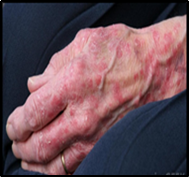
Rashes on skin
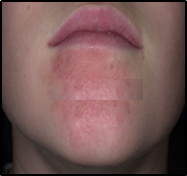
Facial Eczema
The first cases in which delayed sensitivity to titanium was suspected, with a local
granulomatous reaction, have been described in patients wearing a cardiac pacemaker. In these cases, the diagnosis of a titanium allergy was made with, respectively, a positive patch test with a little square of the pacemaker placed in artificial perspiration , and a positive intra-dermal reaction to an elute of the surface of the pacemaker.
The case of a patient with facial eczema suggestive of type IV allergy to titanium following the placement of a mandibular dental implant has been reported . In this case, an allergy to titanium was diagnosed by the combination of clinical signs (appearance of eczema within a few weeks of implant placement), and a positive blood test (LTT). The diagnosis of allergy to titanium was confirmed by the disappearance of eczema following removal of the implants.
More recently, it has been demonstrated that clinically-relevant hypersensitivity to titanium can occur following exposure to titanium . In that study,56 patients had developed severe health problems (muscle and joint pain, chronic fatigue syndrome, neurological problems, depression, or acne-like facial inflammation) after receiving Ti-based dental implants, orthodontic braces or endoprostheses. The authors used the MELISA test, which had proved effective in the diagnosis of hypersensitivity to metals as well as patch tests. Of the 56 patients tested with MELISA, 37.5% were positive, 28.5% ambiguous and 33.9% negative to titanium. Among the 33.9% negative to titanium, 57.9% showed lymphocyte reactivity to nickel or other metals. All 54 patchtested patients were negative to titanium. Following removal of the implants, a remarkable clinical improvement was noticed and among the 15 retested patients this clinical improvement correlated with normalisation of MELISA reactivity.
In a prospective study over a three-year period , 1500 patients with dental implants were monitored. In that study, an allergy to titanium was diagnosed on the basis of clinical signs of an allergy appearing following implant placement, or on the basis of an unexplained failure of the implant, and a patch test positive for titanium, tested in the form TiO2, or for a titanium metal powder in aqueous solution. The results of this study show that 0.6% (1/800) of patients with dental implants have a patch-test positive for titanium, but 0% (0/35) of the patients without implants have this result. The epicutaneous tests are positive in 50% (8/16) and 62.8% (5/8) of the patients who show signs, respectively, of an allergy following implant placement, and unexplained early failure of one or more implants.
In patients having allergies to one or more metals (nickel, chromium, cobalt, gold or
mercury), 5.3% (1/19) have a patch test positive for titanium. The rate of corrosion is higher with titanium-aluminium vanadium implants, which may have an influence on the prevalence of allergic reactions.
All these reports reflect the difficulty in evaluating suspected titanium hypersensitivity. It is known that the epicutaneous tests used in the diagnosis of an allergy to titanium are still not very sensitive, and there is no standardized valid patch-test preparation for this. Moreover, the lack of concordance between the results of patch-tests and blood tests (MELISA) is illustrated in the above study .Given the difficulties of diagnosing a titanium allergy, studies probably underestimate the true prevalence of titanium allergies in patients having dental implants.
DIAGNOSIS OF A TITANIUM ALLERGY
The above studies demonstrate that titanium can induce clinically relevant hypersensitivity and other immune dysfunctions in certain patients chronically exposed to this metal.Titanium should no longer, therefore, be considered biologically inert. In implantology, it is reasonable to say that allergy testing for titanium is indicated in some cases.
BEFORE IMPLANT PLACEMENT
It has been shown that many patients suffer from multiple allergies, and that people with a history of allergy to metals or jewellery have a greater risk of developing a hypersensitivity reaction to a metal implant .
Furthermore, although titanium allergy has a low prevalence rate, for patients with a
previous history of allergies, it may be advisable to carry out a metal allergy assessment and allergy testing before placing permanent implants, in order to avoid a failure of the implant due to an allergic reaction to titanium.
AFTER IMPLANT PLACEMENT
The failure of implants has been widely studied, and the main causes of dental implant
failure are infection and overload . However, some failures are difficult to explain, such as spontaneous rapid exfoliation of the implant, or the successive failure of implants in the same patients, known as “cluster phenomenon”, without any infection or overload risk factor identified.
An allergic reaction can be reasonably suspected after dental implant placement, on the
basis of signs or symptoms associated with allergy, such as rash, urticaria, pruritus, swelling in the orofacial region, oral or facial erythema, eczematous lesions of the cheeks, or hyperplastic lesions of soft tissue (the peri-implant mucosa) . In these cases, allergy testing should be performed.
TESTS AVAILABLE FOR THE DIAGNOSIS OF AN ALLERGY TO TITANIUM
- Epicutaneous tests (patch tests): After applying different allergens on the back of the patient, the consequences of the allergens are evaluated, preferably after 48 and 72 hours for the majority of allergens (gold can react late so it can be tested after 10 days). In the positive test for an allergen, the area of skin related to the tested allergen will showed erythematous reactions, vesicles, and etching. Patch tests are limited in use due to their poor sensitivity, which has been demonstrated for approximately 75% of type IV metal allergies. Lack of standardization for certain metals like titanium may limit the use of a patch test.1,6. Some authors have suggested that 0.1% and 0.2% titanium sulfate solution and 0.1% and 0.2% titanium chloride are successful reagents for the skin-patch tests and could be a valuable alternative to the titanium oxide normally used for patch testing, but so far no study related to dental implants allergies has used the method.10
- Type I allergy can be diagnosed by a skin test (prick test) which involves intradermal inoculation of the allergen. It is analyzed within 15 to 30 minutes. Red, papular, and/or vesicular reactions of the skin may appear in positive test conditions. Prick tests are not recommended for testing of allergy related to a dental material in the oral cavity. Frequently, type IV allergy is associated with dental materials in the oral cavity 1. A blood test can help in the diagnosis of a type IV allergy.6,10
- In vitro testing with the lymphocyte transformation test (LTT) measure lymphocyte proliferation following contact with an allergen is based on the tritiated thymidine incorporation by lymphocytes.10. It has been used to detect hypersensitivity leading to both local and systemic effects resulting from dental allergies, in particular in the optimized version of LTT known as MELISA (Memory Lymphocyte Immuno Stimulation Assay) .6
MELISA TEST PROCEDURE
Professor Skejdahl who developed the Melisa test, says that 4% of patients tested by the Melisa protocol proved intolerant or allergic to titanium. Thus before doing any procedure related to Titanium MELISA test should be done.
Taking action once the implant is fixed, is like trying to extinguish the fire while the entire house burns. Indeed, the implant once integrated with the bone, it is no longer possible to extract as you would for a natural tooth. If it remains possible, the removal of an osseointegrated implant has a high cost to the bone.3
MELISA is a non-invasive blood test for diagnosing metal allergies. It requires a blood sample to be sent to a licensed laboratory. Blood samples must arrive to the laboratory within 24 hours after the blood has been drawn, and at 48 hours latest. White blood cells (lymphocytes) are isolated and tested against allergens chosen according to the patient’s history and current and/or future exposure to metals. Some of the lymphocytes, so-called memory cells, remember past exposure to metal ions (and other allergens).
The blood is incubated for five days. Normally, memory cells are inactive as they circulate in the blood. If, however, the remembered foreign substance, or antigen, such as a metal ion, reappears in the blood, memory cells become active in an attempt to fight it; starting to divide and enlarge.
This lymphocyte reaction is measured by two separate technologies: one based on the uptake of radioisotope by dividing lymphocytes and the other evaluation by microscopy. The level of reactivity is measured as a Stimulation Index (SI).
If lymphocytes do not divide or enlarge when exposed to metal salts, then the test is negative. If an increased number of growing lymphocytes (lymphoblasts) appear, then the immune system is sensitized to the tested metal, and the results are positive.
A value over 3 generally indicates a positive reaction to a given allergen. The results are available within 10-14 days.
Metal-induced responses are strictly specific, meaning that patients with a positive reaction to inorganic mercury might test negative to other mercury compounds such as methyl mercury, phenyl mercury and ethyl mercury, or the other way around.11
CORROSION AND DENTAL IMPLANTS
Corrosion is the deterioration of a metal due to interaction (electrochemical attack) with its environment, which results in the release of ions into the surrounding microenvironment .Passivating metals like titanium, vanadium, zirconium, niobium, and tantalum, resist corrosion due to the formation of a surface oxide layer. A recent review of the literature demonstrated that corrosion may become one of the factors for dental implant failure.
All of the metallic materials used in implants in tissues are accountable, to a certain degree, to corrosion due to variations in the internal electrolyte environment. When metal particles/ions are released from the implant surface, they can migrate systemically, remain in the intercellular spaces near the site where they were released, or be taken up by macrophages. The presence of metallic particles in peri-implant tissues may not only be due to a process of electrochemical corrosion, but also to frictional wear, or a synergistic combination of the two. Moreover, mechanical disruption during insertion, abutment connection, or removal of failing implants have been suggested as possible causes of the release of particles from metal structures. The release of particles/ions from the implant into the surrounding biological compartment, their biodistribution in the body, and their final destination are issues that lie at the center of studies on biocompatibility and biokinetics. The potential toxicity and biological risks associated with ions and/or particles released due to corrosion of metallic implants is a health concern for patients with prostheses (orthopedic and/or dental) due to the long duration that these implants stay inside the body. The corrosion products formed as a result of metal–environment interactions have an effect on the biocompatibility and long term stability of the prostheses/implants.
CONCLUSION
No metal or alloy is completely inert in vivo. All metals will undergo a slow removal of ions from the surface, largely because of local and temporal variations in microstructure and environment. The current massive use of these metal biomaterials in the biomedical field renders it necessary to have detailed knowledge not only of their early effects (short term failure), but also of their long term effects, with consideration that these materials remain inside the patients over long periods of time, sometimes throughout their entire life. The potential risk of corrosion and the possible detrimental consequences of its by-products are significant issues of clinical importance. The biologic effect of the corrosion of dental implants is an important health issues associated with any metal prosthesis in the body. The presence of ions/particles and their potential local biological effects around metallic devices might affect implant outcome. A sensitive and precise test which will help to determine titanium hypersensitivity should be developed.
REFERENCES
- Allergy related to dental implant and its clinical significance ; TP Chaturvedi, Clin Cosmet Investig Dent;PMC- 2013, Aug, 2013
- Metal Allergies due to Dental Implant ; Jack Lemons January 2011.
- Titanium dental implants : allergy is a reality; Estelle Vereeck;;International Scientific Society for Promotion of Knowledge about Isoelastic Materials in IntraOsseous Surgery , November-2008,
- Is Titanium Sensitivity Associated with Allergic Reactions in Patients with Dental Implants? A Systematic Review, Fawad Javed, PhD;* Khalid Al-Hezaimi, MSc; Khalid Almas, MSc; George E. Romanos, 2011,Wiley Periodicals;med. dent.
- What Are the Signs of an Allergic Reaction to Titanium? (Wise Geek)
- Titanium: A New Allergen ;Laurence Evrard Stomatology and Maxillo-facial Surgery Department Hospital Erasme. Intech Open Access Publisher, 2011
- Metal Implant Allergy Bilal Mahmood, MD, Warren C. Hammert, MD( 2015 ASSH, Published by Elsevier.
- Titanium applications in dentistry; jada.ada.org Vol. 134, March 2003)
- Cutaneous and Systemic Hypersensitivity Reactions to Metallic Implants;Juliana L. Besko-Plluska, Jacob P. Thyssen. Peter C. Schalock- 2011; 22
- Titanium Allergy: A Literature Review (Manish Goutam, Chandu Giriyapura, Sunil Kumar Mishra, Siddharth Gupta) Indian J Dermatol. 2014 Nov-Dec.
- Alberto Sicilia,Susana Cuesta,Gerardo Coma,Ignacio Arregui,Cristina Guisasola,Eduardo Ruiz,Antonio Maestro ; Clin. Oral Impl. Res. 19, 2008 / 823–835; Titanium allergy in dental implant patients: a clinical study on 1500 consecutive patients
- Wang RR, Fenton A. Titanium for prosthodontic applications: a review of the literature. Quintessence Int 1996;27:401-8.
- Titanium and titanium alloys as dental materialsLautenschlager EP, Monaghan P. Int Dent J 1993;43:245-53.
- . McCracken M. Dental implant materials: commercially pure titanium and titanium alloys. J Prosthodont 1999;8:40-3.
- Weblinks : www.melisatest.com
Disclaimer from Guident
The views and opinions expressed in articles published in Guident are solely those of the authors and do not necessarily reflect the views of the editors, the editorial board or the publisher, Ivory India. Guident does not endorse any product, technique or treatment described. Clinical content is intended for qualified dental and medical professionals and is not a substitute for individual clinical judgement. Guident, its editors and the publisher accept no liability for any consequence arising from the use of information published in the journal.
How to cite this article
Dr. Manesh Lahori, Dr. Arjun Jawahar Sharma, Dr. Neelansh Sikri Department of Prosthodontics. Titanium: A Metal Allergen of Growing Significance. Guident. 2015 Aug;8(9). Available from: https://ivoryindia.in/articles/general/titanium-a-metal-allergen-of-growing-significance.html