Management of Traumatic Dental Injuries in Children: A Report of Two Clinical Cases
Dentonic Oral Surgery Implant Centre Rajbagh, Srinagar, J&K
ABSTRACT
Traumatic dental injuries (TDIs) in school-aged children are commonly encountered, often involving the maxillary anterior teeth due to falls during school activities. Prompt and appropriate management can preserve the affected teeth and restore function and esthetics without the need for extraction. This report presents two pediatric cases treated in our clinic, emphasizing conservative management through splinting, pulp therapy, and restorative techniques.
INTRODUCTION
Children frequently experience falls during play or physical activities, leading to dental trauma, particularly to the maxillary incisors. These injuries may be accompanied by lip lacerations and facial bruising. Timely intervention and appropriate conservative treatment can prevent tooth loss and support favorable long-term outcomes. This report outlines the diagnosis and treatment of two such cases managed successfully without extraction.
CASE REPORT 1
Patient Profile:
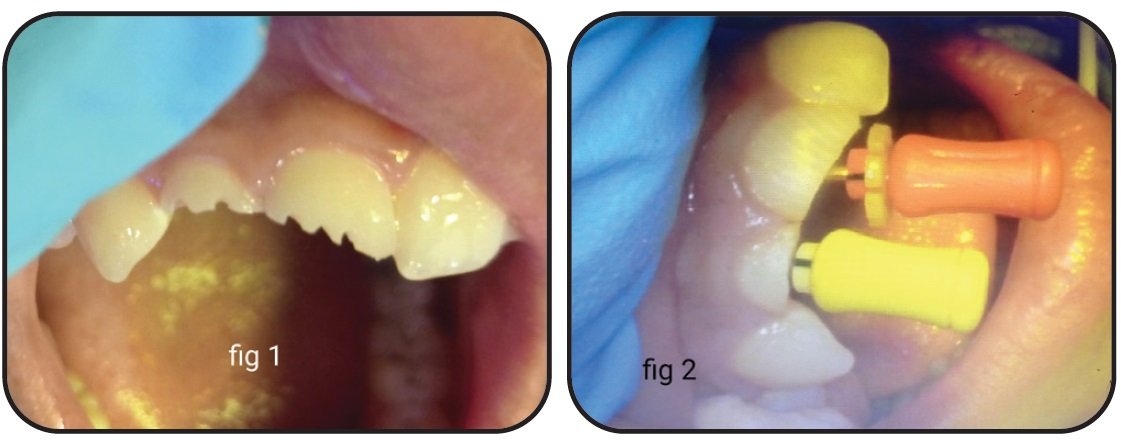
A school-aged child presented to the clinic following a fall during physical education class, with trauma to the anterior maxillary region. The patient exhibited a lip tear, facial bruising, and fractures of the central incisors, with one tooth demonstrating exposed pulp.
Clinical Findings:
- Fracture of maxillary central incisors
- Pulp exposure in one incisor
- No signs of alveolar bone fracture
- Positive vitality test in one tooth; negative in the other
- No signs of root fracture on radiographic evaluation
Management and Treatment Plan:
- Immediate First Aid: Wound cleaning and suturing of lip tear.
- Initial Stabilization: Splinting performed using periodontal splinting technique to immobilize affected teeth and control inflammation.
- Endodontic Treatment: Pulpectomy and root canal treatment in the severely fractured incisor with pulp exposure.
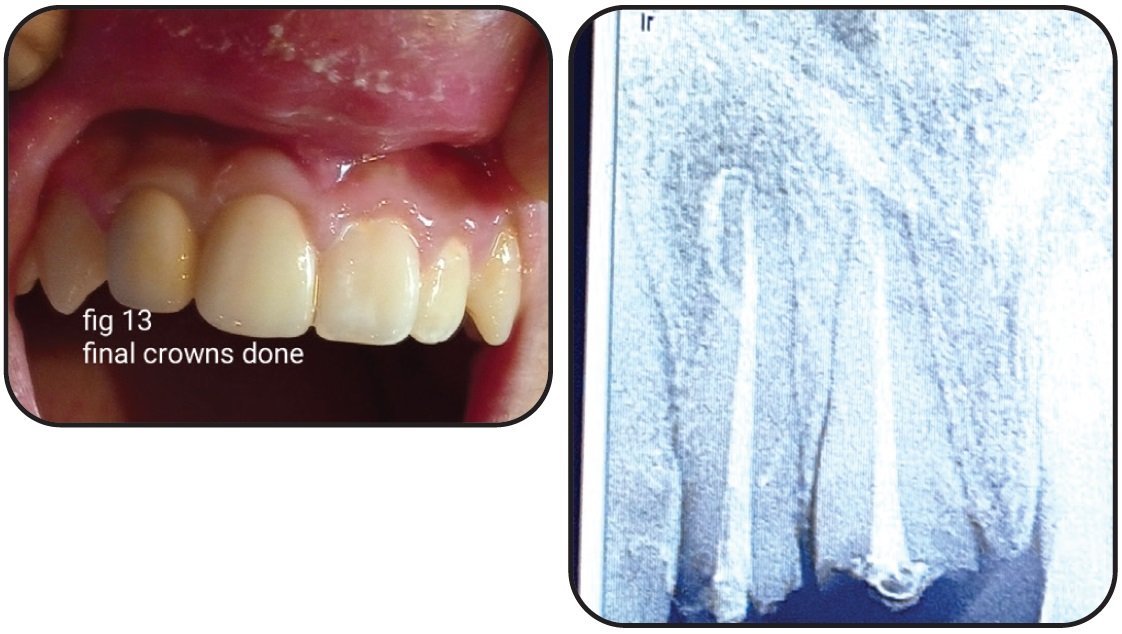
- Restorative Procedure: The fracture margins were etched and bonded. Final composite restoration was done as the child had reached the developmental stage sufficient for definitive treatment.
- Follow-up: Clinical and radiographic evaluation at 1, 3, and 6 months showed stable results with healthy periapical tissues.


CASE REPORT 2
Patient Profile:
A younger child presented with similar trauma sustained during school activity. The injury involved both maxillary central incisors with one showing significant structural loss but no pulp exposure.
Clinical Findings:
- Fractured upper central incisors
- No pulp exposure
- Minor lip contusion
- Positive vitality in both teeth
Management and Treatment Plan:
- Initial First Aid and Cleaning: Assessment and wound care.
- Splinting: Orthodontic splinting was applied for initial stabilization.
- Restorative Approach: Due to the patient’s age and incomplete jaw growth, provisional restorations using composite were applied after etching and bonding.
- Monitoring: Periodic follow-up was advised to assess tooth vitality, eruption changes, and occlusion.


DISCUSSION
Trauma to the anterior teeth in children requires a delicate balance between immediate care and long-term planning. Factors such as age, growth potential, pulp status, and extent of damage influence treatment decisions. Splinting offers immediate stabilization and helps manage inflammatory response. Endodontic intervention is necessary when pulp exposure occurs, while restoration depends on the patient’s developmental stage.
In both cases, extraction was avoided, and conservative treatment ensured preservation and function of the teeth. Provisional restorations are recommended in younger children to accommodate future growth and development.
CONCLUSION
Early intervention, appropriate stabilization, and tailored restorative strategies can successfully manage anterior tooth trauma in children. These cases highlight the importance of preserving natural teeth, supporting growth, and maintaining esthetics and function during the critical developmental years.
Disclaimer from Guident
The views and opinions expressed in articles published in Guident are solely those of the authors and do not necessarily reflect the views of the editors, the editorial board or the publisher, Ivory India. Guident does not endorse any product, technique or treatment described. Clinical content is intended for qualified dental and medical professionals and is not a substitute for individual clinical judgement. Guident, its editors and the publisher accept no liability for any consequence arising from the use of information published in the journal.
How to cite this article
Dr. Muhammad Shafie. Management of Traumatic Dental Injuries in Children: A Report of Two Clinical Cases. Guident. 2025 Apr;18(5). Available from: https://ivoryindia.in/articles/implantology/management-of-traumatic-dental-injuries-in-children-a-report-of-two-clinical-cases.html