Management of Upper Removable Prosthesis Failure with Monoimplants: A Case Report
Dentonic Oral Surgery Implant Centre Rajbagh, Srinagar, J&K
ABSTRACT
This case report describes the successful management of a 35-year-old Non-Resident Indian (NRI) patient who experienced recurrent prosthesis dislodgement, leading to embarrassing situations. The patient was referred to our clinic by a family friend. Upon examination and history-taking, it was observed that the patient had a reverse anterior bite that had subsequently resulted in damage. Consequently, a removable prosthesis was provided, which proved to be more of a liability than a source of pleasure. In an effort to restore the patient's confidence and improve aesthetics, a treatment plan was devised involving the utilization of Monoimplants from Switzerland. The patient underwent the implant procedure and achieved enhanced charm and confidence within a three-day timeframe.
Keywords: removable prosthesis, prosthesis failure, reverse anterior bite, Monoimplants, aesthetic rehabilitation, case report
INTRODUCTION
Dental prosthesis failure can lead to significant functional and aesthetic challenges for patients. This case report presents the successful management of a 35-year-old NRI patient who encountered repeated dislodgement of an upper removable prosthesis, causing embarrassment and discomfort. The patient's reverse anterior bite had contributed to the initial damage, necessitating the provision of a removable prosthesis. However, this treatment approach proved to be ineffective and burdensome. To address the patient's concerns and restore their confidence, a decision was made to utilize Monoimplants from Switzerland, resulting in a swift and successful outcome.
CASE PRESENTATION
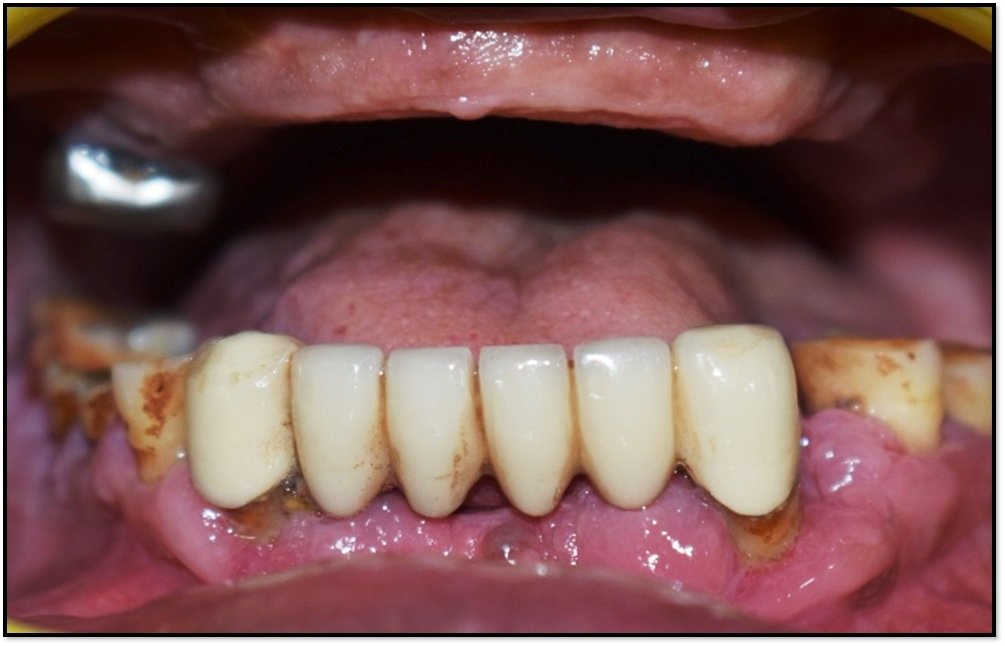
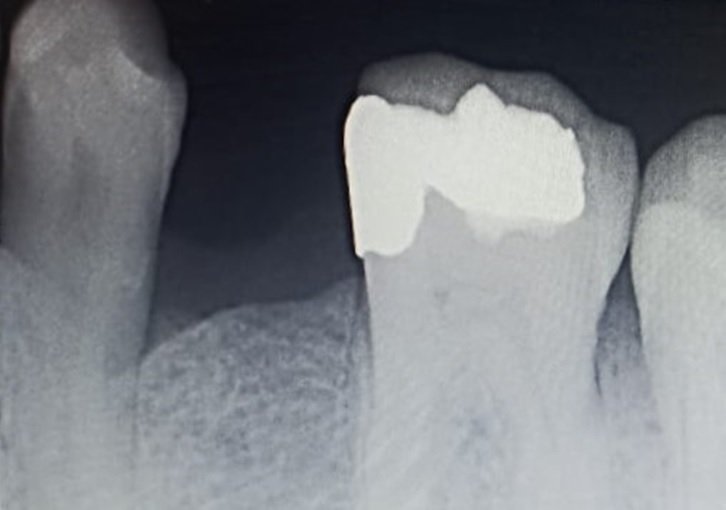
A 35-year-old NRI patient presented to our clinic with a chief complaint of recurrent prosthesis dislodgement in the upper front area, leading to embarrassing situations. The patient was referred by a family friend who was aware of the dental concerns. Comprehensive examination and detailed history-taking revealed a reverse anterior bite as the underlying cause of the initial damage. Consequently, a removable prosthesis was provided, aiming to restore function and aesthetics. However, the patient experienced ongoing challenges, as the removable prosthesis proved to be more of a liability than a source of pleasure.


TREATMENT PLAN
To address the patient's functional and aesthetic concerns, a multidisciplinary treatment plan was developed. The plan involved the placement of Monoimplants from Switzerland, which offered reliable performance and enhanced aesthetics. The patient was informed about the advantages of Monoimplants and their potential to provide a long-term solution.
TREATMENT PROCEDURE
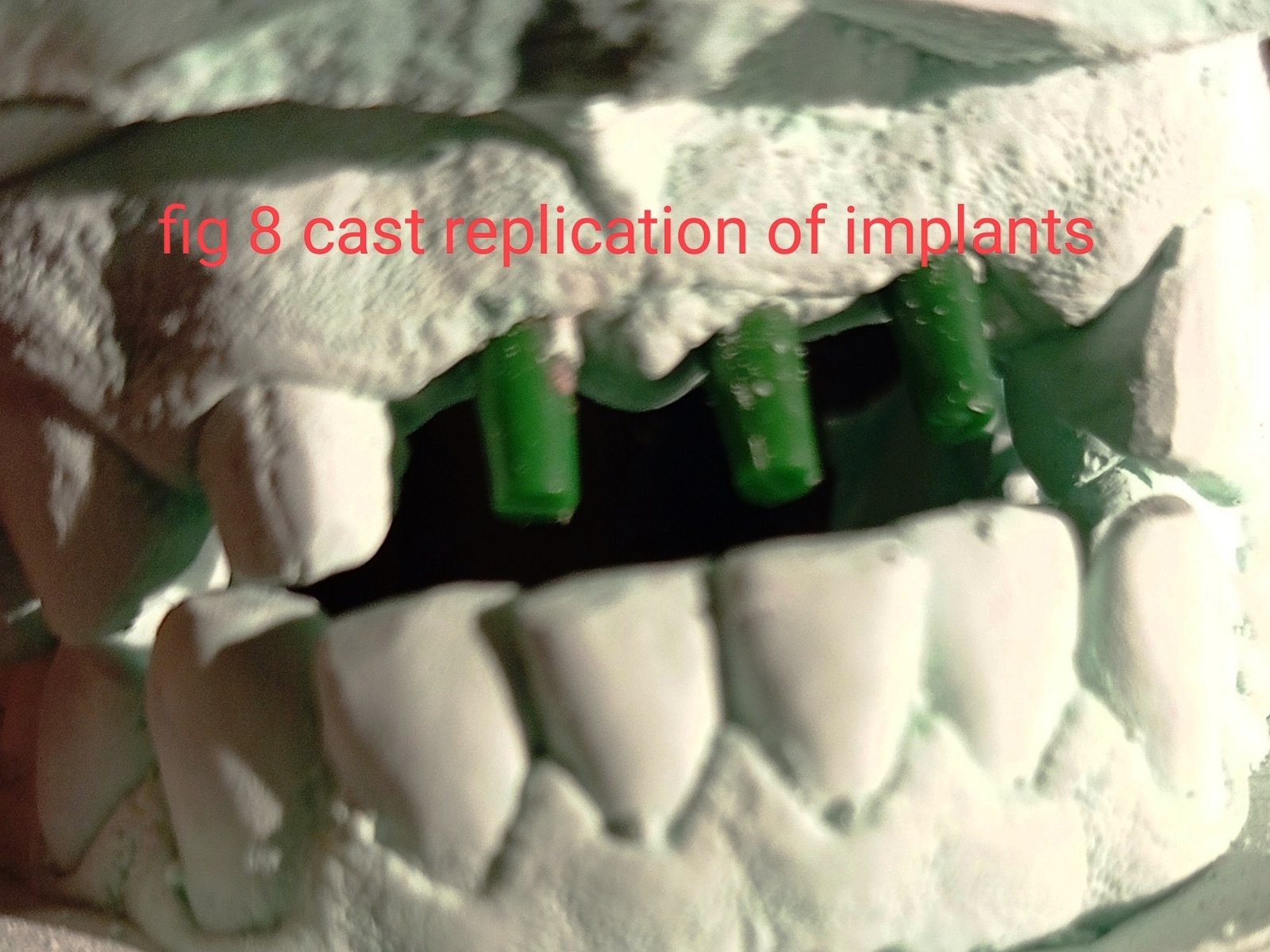
Under local anesthesia, the implant procedure was performed following established surgical protocols. A total of 3 Monoimplants were placed strategically in the upper arch to provide adequate support for the prosthetic restoration. Impressions were taken, and a customized prosthesis was fabricated to optimize both function and aesthetics. The patient was closely monitored during the healing period to ensure optimal implant integration and tissue response.




RESULTS
Within a three-day timeframe, the patient experienced a remarkable transformation in terms of charm and confidence. The Monoimplants not only provided superior stability but also improved the patient's overall oral function and appearance. The recurrent prosthesis dislodgement was completely resolved, eliminating any further embarrassment for the patient.

DISCUSSION
The management of upper removable prosthesis failure requires careful consideration of the underlying etiology and the selection of an appropriate treatment modality. In this case, the patient's reverse anterior bite and subsequent damage necessitated an alternative approach. The utilization of Monoimplants from Switzerland offered several advantages, including enhanced stability, improved aesthetics, and a long-lasting solution. The successful outcome in this case highlights the importance of individualized treatment planning and the incorporation of innovative techniques to achieve optimal patient satisfaction.
CONCLUSION
This case report demonstrates the successful management of upper removable prosthesis failure using Monoimplants in a 35-year-old NRI patient. The utilization of these implants provided a reliable and aesthetically pleasing solution, eliminating the recurrent dislodgement of the prosthesis. The outcome not only restored the patient's confidence but also improved their overall oral function. Further studies and long-term follow-up are warranted to validate the efficacy and durability of this treatment approach in similar cases.
Acknowledgments: The authors would like to express their gratitude to the patient for their consent to publish this case report. Additionally, we acknowledge the support and contributions of the dental team involved in the patient's treatment.
Conflict of Interest: The authors declare no conflicts of interest related to this case report.
Disclaimer from Guident
The views and opinions expressed in articles published in Guident are solely those of the authors and do not necessarily reflect the views of the editors, the editorial board or the publisher, Ivory India. Guident does not endorse any product, technique or treatment described. Clinical content is intended for qualified dental and medical professionals and is not a substitute for individual clinical judgement. Guident, its editors and the publisher accept no liability for any consequence arising from the use of information published in the journal.
How to cite this article
Dr. Muhammad Shafie. Management of Upper Removable Prosthesis Failure with Monoimplants: A Case Report. Guident. 2023 Jul;16(8). Available from: https://ivoryindia.in/articles/implantology/management-of-upper-removable-prosthesis-failure-with-monoimplants-a-case-report.html