Open Sesame - a Review on Bite Opening Mechanics
Terna Dental College and Hospital, Nerul, Navi Mumbai, Terna Dental College and Hospital, Nerul, Navi Mumbai, A.B Shetty Memorial Institute of Dental Sciences, Mangalore, Department of Orthodontics
INTRODUCTION
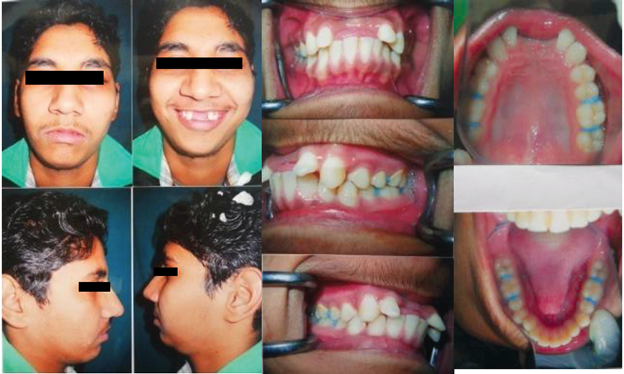
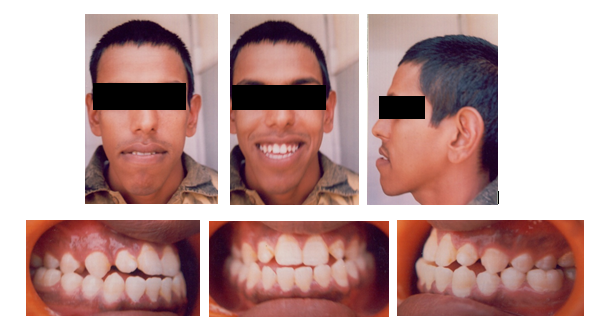
Deep bite is one of the most common malocclusions seen in children as well as adults. It is an elusive occlusal characteristic that is most difficult to correct orthodontically, and often relapses following orthodontic correction. The success of an orthodontic treatment often comes down to how the deep overbite is corrected. Optimal treatment of deep overbite requires a proper diagnosis, a careful treatment plan, and an efficient appliance design.
NEED FOR BITE OPENING
It is important to open the bite before retraction of the anterior teeth is carried out. It is known that attempting over jet reduction before proper overbite control can cause excessive anterior contact and posterior condylar displacement. It is also required to establish a normal vertical overlap of the anterior teeth, which are major determinant of functional occlusal relations. Deep over bite may cause improper functioning of the anterior teeth leading to premature wearing out, periodontal problems like gingival recession and mobility. Moreover a deep overbite also makes the smile esthetically less pleasing.
SELECTION OF MECHANICS
Dental bite opening can be achieved by, true intrusion of anterior teeth, extrusion of posterior teeth or a combination of both. Decision may be taken on the basis of a number of factors like Smile line, Lip length, Lip tone, Inter labial gap, Freeway space etc. According to Robert keim whatever is the primary reason for deepbite, the cardinal rule in our decision making must be based on lip smile line relative to anterior dentition.
In case of skeletal deep bite, the selection of mechanism depends on whether the growth is completed or not. In some cases a surgical correction might be required depending on the severity of the skeletal involvement.
EXTRUSION MECHANICS
Extrusion of the posterior teeth to level the curve of spee is a commonly used method indicated in growing children especially in cases with average to low Mandibular plane angle. On average, a 1-mm molar extrusion results in 2 to 2.5 mm of bite opening in the incisor region. However it leads to increase in the lower facial height, Steepening of the occlusal plane causes downward backward rotation of mandible and may worsen the class II skeletal relationship. Also its long term stability is questionable, unless suitable growth occurs at the condyles to compensate for the rotation of the mandible.
Anterior Bite Plate:
It is routinely used as an adjunct to fixed orthodontic appliance in growing children with low Mandibular plane angle. It allows differential eruption of the posterior teeth to take and leads to opening of the bite. It also can bring about intrusion of the lower incisors simultaneously depending on the inclines of the bite plane. The advantage is that mandibular arch can be bonded simultaneously. However it depends on compliance of the patient to be successful. Rick-A-Nator a fixed bite plane can also be used provided the lower anteriors have a favourable inclination.
Reverse curve wires:
Reverse curve nickel titanium wire are effectively used to open the bite in cases with presenting with deep curve of spee. When a reverse curve arch wire is introduced, two equal and opposite moments will be produced as it is two couple system. If the moments are not equal, as the system tries to come into equilibrium vertical forces are created. They deliver mild intrusion forces on the anterior segment and cause extrusion of the buccal segment.
Inclusion of second molars:
Extrusion of second molars brings about a greater bite opening in the incisor region. Second molars are extruded by keeping molar tube more gingivally. 1 mm of extrusion of both upper and lower molars will be lead to backward rotation of the mandible. Hence inclusion of the second molars in the fixed appliance treatment should be done with caution in high mandibular plane angle cases.
Extraction of second molars
: Extraction of second molars have been advocated by many authors in non skeletal class II div I cases with horizontal growth pattern. Extraction of second molars tends to open the bite as opposed to premolars due the wedge effect shifting posteriorly. Also it allows for distalization of first molars which further contributes to the opening of bite.
Tip back bends:
Mild second order bend given mesial to the molar tube causes distal tipping of the molars elevating their mesial marginal ridges and leading to opening of the bite. Also these tip back bends tend to have a mild intrusive force on the anterior teeth. It is generally indicated in growing patients with a forward growth rotation, having mild arch length tooth material discrepancy.
INTRUSION MECHANICS
Intrusion of anterior teeth will simplify control of vertical dimension. Patients exhibiting large interlabial gaps, large incision-stomion distance, short upper lips, high gingival smile lines, and large lower facial height especially need intrusion of incisors. Even in deep bite patients with balanced skeletal and soft tissue components, the objective should be to maintain the relationship, which again makes intrusion the treatment of choice. According to Proffit the optimum force for intrusion is 15-25 gm.
BITE OPENING IN PEA WITH INTRUSION ARCHES:
Intrusion can be accomplished in two ways with intrusion arches. One with continuous archwire that bypasses the premolars and canine teeth and the other with segmented base arch wire in which there is no connection along the arch between the anterior and posterior segments and an auxiliary depressing arch is used.
PRINCIPLES OF INTRUSION
The lowest magnitude of force capable of intruding must be used. Heavier forces do not increase the rate of intrusion but increases the chances of root resorption and side effects on the anchor teeth.
There should be single point contact in the anterior region. Single point of contact or force application allows the force system acting at both the incisor point and buccal tubes to be known which makes it a statically determinant system
Intrusive forces should pass through the center of resistance of tooth/teeth to be intruded to prevent any labial or lingual rotation.
Selective intrusion should be used wherever necessary. Use of continuous arch wire to align in cases with large vertical difference between the incisors or between incisors and canines should be avoided.
There should be control on the reactive unit as it alters the plane of occlusion of the buccal segment.
Extrusive mechanics such as employing class II or class III elastics should be avoided in patient who needs genuine intrusion
Ricketts utility arch
: This auxiliary archwire was developed by Ricketts according to the biomechanical principles described by Burstone . It is constructed with 0.016" x0.022” Blue elgiloy . It consists of molar segments, posterior and anterior vertical arms, vestibular segments and an anterior segment. Intrusion of the anterior teeth can be produced either with a gable bend or tip back bend of 300 to 450 in the molar segment. On activation it produces 50-75 gms on the incisors for intrusion. Placement of buccal root torque (30 to 40 o) on the lower molars is recommended for obtaining cortical anchorage. This leads to lingual tipping of molars crowns and can be counterbalanced by expanding the wire in the molar region. As the anterior segment is engaged in the brackets, this force system is statically indeterminate. Additionally 5 to 10o labial root torque may also be given in the lower incisors.
A modification of the utility arch that can also be used to simultaneously retract, torque, and intrude the maxillary incisors is the Translation Arch. It is also made from 0.016" x0.022” Blue elgiloy and has anterior segment inserted into incisor brackets and two buccal segments inserted into gingival first molar tubes.
Burstones intrusion arch
: It is made of 17 x 25 TMA wire primarily with the aim of delivering constant low forces. The anterior segment of the wire is not engaged into the bracket, but tied to the anterior brackets with a piggy back, making the force system statically determinate. A modification of this arch is the Burstone intrusion spring. These springs are also made of 0.017”x 0.025” TMA wire. The upper and lower arches are leveled and aligned and a rigid SS wire, preferably 0.017”x 0.025” dimension is engaged. The intrusion springs is usually made with a helix. The wire is bent gingivally mesial to the molar tube .The mesial end is bent in hook and is engaged onto the main archwire distal to the lateral incisors. The mesial end of the spring lies passively at the height of the mucobuccal fold and the spring is activated by pulling the hook down and engaging in onto the archwire. Reinforced of anchorage with TPA and lingual holding arch may be required.
Connecticut intrusion arch :
The CTA was developed in 1998 in the Connecticut dental school by Nanda essentially for intrusion. It is available preformed in 0.016x 0.022 and 0.017x0.025” for maxillary and mandibular arches with varying anterior dimensions. The arch is made from special NiTi developed at the dental school. The CTA’s basic mechanism for force delivery is a V bend that lies just anterior to the molar brackets. When the arch is activated, a simple force system results, consisting of a vertical force in the anterior region and a moment in the posterior region. The intrusion arch has a point contact at the incisors. The CIA’s point of force application is anterior to the center of resistance, which results in flaring of the incisors . A tight cinch-back prevents the incisor flaring during intrusion and produces some retraction during molar tip back
Ksir arch :
The K-SIR (Kalra Simultaneous Intrusion and Retraction) archwire is a modification of the segmented loop mechanics of Burstone and Nanda. It is made of 019“x.025" TMA archwire with closed U-loops 7mm long and 2mm wide. A 90° bend is placed in archwire at level of U-loops.This centered 90° V-bend creates two equal and opposite moments that counter tipping moments produced by activation forces. An off-centered 60° V-bend is placed about 2mm distal to U-loop. This V-bend creates greater moment on molar, increasing molar anchorage and resultant intrusion of the anterior teeth. In addition 20° anti-rotation bends are placed in archwire just distal to U-loops to prevent the buccal segments from rolling mesiopalatally.
Three piece intrusion arch :
(Introduced by Shroff, Lindhauer and Burstone, AJO 1995)
It is useful in situations where a continuous intrusion arch is contraindicated. Application of continous arch in cases of flared incisors tends to further worsen the axial inclination due to the counter clockwise moments produced. The three piece intrusion arch shifts the point of force application distally closer to the centre of resistance of the anterior segment.
It consists of posterior anchorage segment, anterior segment with an extension, Intrusive cantilever spring. Instead of a continuous arch wire a separate tip back cantilever spring of 0.017 X 0.025 TMA is activated on the buccal segments. The anterior wire segment made of 0.021 X 0.025 SS is ligated and bent gingivally distal to the lateral incisors and bent again horizontally creating a step of 3 mm. The distal part ends in a hook around the distal end of canine brackets for engagement of elastics. This appliance design allows the application of the intrusive force to get true intrusion of the incisors along their long axes.
Reverse Curve TMA with T loop:
Introduced by James Hilger, it is usually made with 19 x 25 TMA wire in a 0.022 slot. The “T” loop TMA archwire could be more accurately described as an asymmentrcal “T” loop as the distal extension of the loop is one third longer than the mesial. This asymmentrical design allows us to create step-up from cuspids to the incisors, which helps in intrusion. Bite opening of upto 8-10mm in 3-4 months has been reported. Activation of the “T” LOOP is by pinching the anterior portion of the loop closed & opening the distal extension of the loop. This creates a step up in the archwire of around 1-5mm depending on the bite opening desired. The anterior section is placed first, followed by the posterior segmnent.
Lingual Brackets:
Bonding lingual brackets on the lingual surface of the maxillary incisors is another efficient to open the bite in some cases. Precise placement is not necessary, because the brackets are used only as fixed bite planes. The lingual brackets (ORMCO 7 th gen) consists of bite planes which convert the biting force generated into intrusive components against the maxillary incisors, passing close to their centers of resistance, and against the mandibular incisors, with a line of action in front of the centers of resistance. It is useful in cases in which the initial overjet must be less than 4mm. In patients with more severe overjets, the mandibular incisors will not close on the lingual brackets, and the therapeutic effect on the deep bite will be lost. Advantages of this technique are that no anchorage in the form of other tooth or miniscrews is required. Esthetics, comfort, and efficiency are further benefits of this simple technique.
Intrusion with Mini screws:
Intrusion with the miniscrews offers the possibility of true intrusion of anterior teeth. It eliminates the problem of controlling unwanted movement of anchor teeth as the anchorage is taken from the implant/screw. It can be accomplished by application of light continuous forces generated from a superelastic NiTi coil spring or E chains. In maxillary arch, two miniscrews of 1.2 mm diameter and 6 mm length are usually placed distal to the lateral incisors. In the Mandibular arch one mini screw in the midline between central incisors is the site of choice. Miniscrews can also be used as anchorage for an implant supported intrusion arch. In such situations the screws are placed in the buccal region between the premolar and the first molar.
Advantages of this technique over the others are minimization of undesirable side effects, although some change in axial inclination may be noted. Therefore when absolute intrusion is needed in non-growing patients, miniscrews is the method of choice.
BITE OPENING IN BEGGS
Begg Technique is universally acknowledged for its efficient bite opening mechanics. A distinctive feature is that all the six anterior teeth are intruded together. It uses the principle of an assymetrical V bend called anchor bends or bite opening bends. Moment generated by the anchor bend in the molar tube is automatically balanced by the generation of intrusive force on anteriors, and extrusive force on the molars in order to establish equilibrium. This force acts away from the long axis and centers of resistance and the teeth undergo varying amounts of intrusion and labial crown-lingual root tipping. Class II elastics are given to counteract this tendency. Class II elastics also aid in bite opening by causing extrusion of the lower molars. Important parameters for effective bite opening are Location of anchor bends, Degree of anchor bends and role of class II elastics and Archwire size variation. Anchor bends in 0.016² arch wire of 45o generated approximately 35 gm of force for active intrusion. In conventional beggs the resultant of forces of class II elastics and anchor bend passes behind the COR causing a moment resulting in uncontrolled tipping with intrusion. In Refined begs: Instead of class II elastics, class I elastics are used; hence the resultant passes close to the center of resistance. Consequently, the moment is reduced and rotational effect is decreased resulting in controlled tipping and intrusion. Also, different inclinations of anterior teeth would require different combinations of the intrusive and elastic forces – as the teeth become less proclined, the direction of the resultant will have to be successively changed to a more vertical orientation.
STABILITY
According to Burzin and Nanda intrusion of maxillary incisors was found to be a stable procedure. Stability of deep overbite correction is dependent on the specific nature of its correction, growth, neuromuscular adaptation. According to Simon & Joondeph, proclination of incisors and a clockwise rotation of the occlusal plane during treatment contributed significantly to relapse. Stability of bite opening with posterior extrusion was also controversial. Stability of bite opening also depends on growth, patient’s age, muscle strength, adaptation and nature of original malocclusion.
CONCLUSION
Often, the common methods employed to treat deep overbites overlook the underlying problem, resulting in some degree of relapse during the post treatment period .To successfully treat vertical malocclusions, it is important for the clinician to have a good understanding of the etiological factors that lead to development of these malocclusions. No two patients are the same, even if they present with the similar features. So, choice of appliance for each patient should be individualized as the mechanics required for such correction may vary from patient to patient.
REFERENCES
- Nanda R. Correction of deep overbite in adults. Dent Clin North Am 1997;41:67-87.
- 2. Burstone CR. Deep overbite correction by intrusion. Am J Orthod 1977;72:1-22.
- Davidovitch M, Rebellato J. Two-couple orthodontic appliance systems utility arches: a two-couple intrusion arch. Semin Orthod 1995;1:25-30
- Dake ML, Sinclair PM. A comparison of the Ricketts and Tweed-type arch leveling techniques. Am J Orthod Dentofacial Orthop 1989;95:72-8.
- Braun S, Marcotte MR. Rationale of the segmented approach to orthodontic treatment. Am J Orthod Dentofacial Orthop 1995; 108:1-8.
- Burstone CJ. The mechanics of the segmental arch technique.Angle Orthod 1966;36:99-120
- Alexander RG. The Alexander discipline, contemporary concepts and philosophies. Glendora, Calif: Ormco; 1986.
- Proffit WR, Fields HW. Contemporary orthodontics. St Louis:Mosby; 2000. p. 242.
- Björk A. Prediction of mandibular growth rotation. Am J Orthod1969;55:585-99
- Engel G, Comforth G, Damerall JM, Gordon J, Levy P, McAlpine J, et al. Treatment of deep-bite cases. Am J Orthod 1980;77: 1-13.
- Tweed CH. Clinical orthodontics. St Louis: C. V. Mosby; 1966.p. 2-82.
- Romeo DA, Burstone CJ. Tip-back mechanics. Am J Orthod.1977;72(4):414–421
- Van Steenbergen E, Burstone CJ, Prahl-Andersen B, Aartman IH. The role of a high pull headgear in counteractingside effects from intrusion of the maxillary anterior segment. Angle Orthod. 2004;74:480–486.
- Simultaneous Intrusion and retraction of anterior teeth – Varun Kalra; JCO; Sept 1998.
- Segmented approach to simultaneous intrusion and space closure: Biomechanics of the three-piece base arch appliance – Burstone, Shroff, Lindauer; AJO; Feb 1995.
- Begg Orthodontic Therapy and Technique – P. R. Begg
- Refined Begg’s for Modern Times – Dr. V. P. Jayade
Disclaimer from Guident
The views and opinions expressed in articles published in Guident are solely those of the authors and do not necessarily reflect the views of the editors, the editorial board or the publisher, Ivory India. Guident does not endorse any product, technique or treatment described. Clinical content is intended for qualified dental and medical professionals and is not a substitute for individual clinical judgement. Guident, its editors and the publisher accept no liability for any consequence arising from the use of information published in the journal.
How to cite this article
Dr. Rachel Thomas, Dr. Shailesh Sheneva, Dr. U.S Krishna Nayak. Open Sesame - a Review on Bite Opening Mechanics. Guident. 2014 May;7(6). Available from: https://ivoryindia.in/articles/orthodontics/open-sesame-a-review-on-bite-opening-mechanics.html