Retention in Orthodontics: Strategies, Challenges, and Long-Term Stability
Department of Orthodontics and Dentofacial Orthopedics, Akola Maharashtra
Introduction
Orthodontic treatment is a long-term commitment aimed at correcting dental and skeletal irregularities to achieve a functional and aesthetic smile. However, post-treatment stability remains a major concern, as teeth have a natural tendency to relapse. Retention plays a crucial role in preserving orthodontic outcomes by maintaining tooth positions and preventing unwanted shifts. This review explores different retention strategies, the challenges faced, and factors affecting long-term stability.
Retention Strategies
Retention approaches in orthodontics are broadly categorized into fixed and removable retainers:
- Fixed Retainers
- Consist of bonded wires attached to the lingual surfaces of anterior teeth.
- Ideal for cases with high relapse risk, such as lower incisors.
- Require meticulous oral hygiene maintenance.
- Removable Retainers
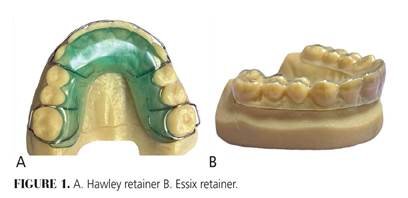
- Hawley Retainers: Traditional acrylic and wire retainers offering durability and adjustability.
- Essix Retainers: Clear plastic retainers providing aesthetic appeal but prone to wear.
- Vacuformed Retainers: Similar to Essix, these are commonly used for night-time retention.
Challenges in Retention
- Patient Compliance
- Removable retainers are effective only when worn consistently, and poor patient adherence leads to relapse.
- Biological Factors
- Age-related changes, occlusal forces, and periodontal remodeling can influence stability despite retention.
- Material Durability
- Retainer breakage or wear affects effectiveness and may require replacement.
- Long-Term Follow-Up
- Many patients discontinue follow-ups after orthodontic treatment, leading to undetected retention failures.
Factors Affecting Long-Term Stability
Several factors influence the success of retention over extended periods:
1. Growth Changes
Craniofacial development continues after orthodontic treatment, especially in younger patients. Skeletal shifts may result in minor occlusal changes affecting retention.
2. Periodontal and Occlusal Adaptations
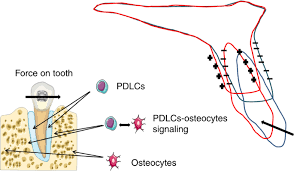
Orthodontic forces gradually remodel the periodontal structures; however, post-treatment adaptations may lead to minor positional shifts over time.
3. Genetic and Environmental Influences
Genetic predispositions, habits like tongue thrusting, and parafunctional activities (e.g., bruxism) impact retention stability.
Retention Protocols and Recommendations
To ensure long-term stability, orthodontists must establish personalized retention protocols:
- Continuous Wear Schedule – Patients should follow a structured retainer wear schedule during the initial post-treatment phase.
- Gradual Retainer Reduction – Over time, wear frequency may be reduced to night-time retention only.
- Regular Follow-Ups – Scheduled check-ups allow assessment of retainer fit and effectiveness.
- Patient Education – Orthodontists should educate patients on the importance of retention and the consequences of non-compliance.
Conclusion
Retention is an essential phase of orthodontic treatment, ensuring the longevity of corrected dental positions. While various retention strategies exist, long-term stability depends on factors like compliance, biological influences, and follow-up care. Orthodontists must educate patients on the importance of retention and establish personalized retention protocols to mitigate relapse risks.
For further reading, refer to key publications such as:
- Proffit WR, Fields HW, Sarver DM. Contemporary Orthodontics.
- Little RM. The Irreversible Nature of Lower Incisor Crowding After Orthodontic Treatment.
- Millett DT, Doubleday B. Retention and Stability in Orthodontics.
Disclaimer from Guident
The views and opinions expressed in articles published in Guident are solely those of the authors and do not necessarily reflect the views of the editors, the editorial board or the publisher, Ivory India. Guident does not endorse any product, technique or treatment described. Clinical content is intended for qualified dental and medical professionals and is not a substitute for individual clinical judgement. Guident, its editors and the publisher accept no liability for any consequence arising from the use of information published in the journal.
How to cite this article
Dr. Yash Santosh Goenka, Dr. Sameer Parhad, Dr. Utkarsha Gudadhe, Dr. Rajesh Ramdasji Kambe Dental College Kanheri. Retention in Orthodontics: Strategies, Challenges, and Long-Term Stability. Guident. 2025 May;18(6). Available from: https://ivoryindia.in/articles/orthodontics/retention-in-orthodontics-strategies-challenges-and-long-term-stability.html