Halloysite Nanotubes and its Applications
Department of Prosthodontics Ame, s Dental College & Hospital, Raichur, India
ABSTRACT
In nanotechnology different nano materials are used like carbon nanotubes, nanofluids, nanoparticles, nanoemulsions, nanocapsules, etc the results of these nano materials are not considered safe for humans and for the environment as well due to their toxic effects. Halloysitenanotubules (HNTs) are naturally occurring environmental friendly nanotubules and are cost effective.These are formed by face weathering of aluminosilicate minerals having definite ratio of aluminum, silicon, hydrogen, and oxygen. HNTs have high mechanical strength and modulus. Due to these properties halloysites are considered ideal for various applications. They are also used in the fabrication of high quality white-ware ceramics. Due to easy dispersability in polymer matrix, abundant availability and biocompatibility, HNTs are also used in different dental materials. This review article gives a detailed description of various applications of Halloysites in dentistry.
Keywords: Halloysites, Nanoparticles, Nanotubes, Applications, Prosthetics, Dentistry.
INTRODUCTION
Halloysite was first described by Berthier in the year 1826 as a dioctahedral 1:1 clay mineral of the kaolin group.1 The Halloy sites are a kind of aluminosilicate clay with a chemical composition of Al2SiO5(OH)4. H2O and are mined from natural deposits in countries like China, New Zealand, America, Brazil, and France.2 Halloysite is a two-layered aluminosilicate, with hollow tubular structure in the sub micrometer range.3 The particles of halloysite can adopt a variety of morphologies, the most common of which is the elongated tubule1. Recently it has reported that HNTs have typical dimensions of 10-50nm in outer diameter, 5-20nm inner diameter, 2-40nm in length.2 Structural forms of HNTs.
Structural forms of HNT:
Halloysites may be platy fibers tubular or cylindrical particles of different dimensions. Halloysite’s layer silicate and crystal structure are formed by two building blocks: (i) sheets of corner sharing [SiO4] tetrahedra and (ii) sheets of edge sharing [AlO6] octahedral. In the [SiO4] sheets the tetrahedra share three corners and the unbounded tetrahedral apices are all pointing along the same direction. Within the octahedral sheet,only two-third of the existing octahedra sites are filled by aluminium. It is alluded to be a dioctahedral layer(term normally used in mineralogy). The layers building up the final structure are composed by one of each of these sheets so that the crystal structure of halloysite is described as 1:1 dioctahedral layer silicate. The water molecules are sitting between two consecutive layers create a very little difference in the relative orientation between neighbouring layers might give rise to the differences in the symmetry of the final structure. This structure of Halloysite illuminates near likeness with structure of kaolinite and experimentally it is difficult to distinguish between them.2 In actual fact, the structure of halloysite (7A) is equivalent to a disordered kaolinite structure. Halloysite has the same theoretical chemical composition as kaolinite except for its higher water content. The ideal formula for halloysite-(7 A Ê) and halloysite-(10 A Ê) is Al2Si2O5(OH)4.nH2O where n = 0 and 2, respectively (Bailey, 1980; Guggenheim & Eggleton, 1988)2
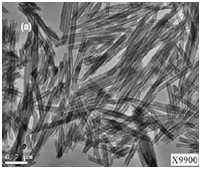

Fig1.TEM IMAGES OF HALLOYSITES NANOTUBES (COURTESY OF DR. BING ZHANG)
HISTORY
The name `halloysite’ was coined by Berthier in the year 1826, in honor of Omalius d’Halloy who originally discovered it, for a mineral identified in a sample from LieÁge (Belgium). In order to avoid confusion between the terms halloysite’, `metahalloysite’, and `hydrated halloysite’, Mehmel (1935) proposed that the name `halloysite’ for the fully hydrated mineral. Hendricks in the year 1938 proposed `hydrated halloysite’ for the same mineral, while Alexander et al. (1943) and later Faust (1955) suggested `endellite’ (after one of the discoverers), a name favoured by Bradley (1945). The dehydrated phase was termed `metahalloysite ’by Mehmel (1935), and `halloysite’ by Alexander et al. (1943). MacEwan (1947) suggested that the hydrated and dehydrated forms of halloysite are end-members of a series, differing in their degree of hydration. He proposed the name `halloysite’ for the material with a d001 spacing of 10 A Ê, and `metahalloysite’ for the dehydrated endmember (with a 7 A Ê spacing). Later, Brindley (1961) and Grim (1968) proposed halloysite-(10 A Ê) and halloysite-(7 A Ê) to indicate the state of hydration. These terms were also recommended by Churchman & Carr (1975) who,following MacEwan (1947), agreed to a continuum of hydration states. Although this nomenclature is now generally accepted, the possibility of confusing halloysite-(7 A Ê) with kaolinite remains. Recently,Hart et al. (2002) suggested the name kaolinite for 1:1 dioctahedral clay minerals with a platy particle morphology, and halloysite when the particles are cylindrical or tubular.1,6
APPLICATIONS
HALLOYSITE FOR CORROSION PREVENTION2
Corrosion of metals is a serious technological problem,and a variety of methods such as cathodic protection, insulating coatings, and corrosion inhibition has been developed to overcome it. An inhibitor-enhanced coating is one of the most effective methods. Different type of inorganic corrosion inhibitors includes chromates, phosphates, molybdates, and nitrites are available. Drawbacks related to these inorganic inhibitors is their toxicity. Therefore, an introduction of nature friendly corrosion inhibitors for protective coatings is important.2
Halloysite nanotubes used for active release of corrosion inhibitors. In this approach corrosion coatings composed of hybrid sol-gel films were doped within Halloysite nanotubes so they were able torelease entrapped corrosion inhibitors in a controllableway.Asilica-zirconia-based hybrid filmcan beused as an anti corrosion coating deposited on aluminiumalloy.Halloysite nanotubes with inner voidsloaded by corrosion inhibitors (2-mercaptobenzothiazole) and outer surfaces covered layer-by-layer with polyelectrolyte multilayers were introduced into the hybrid films. These sol-gel films with the nano containers provide long-term corrosion protection in comparison with the undoped sol-gelfilm. In this approach corrosion trigger the releaseof corrosion inhibitor in controllable manner. Exertionof the inner Halloysite nanotube lumen used as a storage vacuoles for the corrosion inhibitor offersa novel way of fabricating composite. Leakage of the loaded inhibitor from the interior of halloysite can be prevented by modification of outer surface of 2-mercap to benzothiazole-loaded halloysite nanotubes with deposition of alternating polyelectrolyte multilayer (poly(allylamine hydrochloride)/poly(styrene sulfonate). Function of the polyelectrolyte shell is to provide the release of the encapsulated inhibitor in controllable manner with the change in pHof surrounding environment around the HTN, and that,s why inhibitor directly releases in the corrosion pit2.
BENZOTRIAZOLE FOR ANTICORROSION2
Halloysite nanotubes with dimension of 50 nm diameter and ca. 1, um length used as containers for the loading, storage, and sustained release of benzotriazole. Extended controlled release can be achieved by formation of the stoppers at tube openings. Benzotriazole release time in water was in range from 10 to 100 h depending on the stopper formation at the cylinder ends. Entrapment of benzotriazole into clay within nano or microscale encapsulating systems drastically improves anticorrosion performance.2
HALLOYSITE FOR THERMAL RESISTANCE2
Thermal stability and fire retardancy of the nanocomposites remarkably heightened by the incorporation of HNTs. Normally HNTs are used in the manufacture of high quality ceramic and white-ware. In recent time, HNTs are being attempted to utilize as nanofiller in co-occurence with various polymers like natural rubber, nitrile rubber and polypropylene. Halloysite nanotubes have an effect on the fire performance of the composites, by developing thermal insulation barrier at their surface during burning. This created barrier either retard the burning without stop or more often double the total burning time.2
HALLOYSITE FOR CELLULAR RESPONSE2
Biocompatibility of Halloysite is crucial for its potential application in biopolymer composites, bone implants, controlled delivery of biomolecules, and for in vivo protective coatings. Quantitatively trypan blue and MTT (Methyl tetrazolium salt) measurements performed with different origins cell line (cervical adenocarcinoma, HeLa, or breast cancer cells,MCF-7 cell line) suggest a model systems to measure the functions with respect to nanotubes concentration and incubation time. These studies also indicate that halloysite
exhibits a high level of biocompatibility and very low cytotoxicity, which renders it to be to a good candidate for house hold materials and medicine.2
HALLOYSITE AS A POTENTIAL DRUG DELIVERY VEHICLE2,4
Efficacy of drug is improved by delivering the drug at intended site at a predefined rate. These days, Halloysites have been recognized as potential carrier for loading of cationic agents either by chemisorptions on its polyanionic faces or by entrapment into its hollow lumen or core Halloysite because of their abundance and various surface properties are a good candidate for the drug loading.
a. Bilayered alignment gives HTNs a cylindrical shape.
b. The inner and outer faces of tubular walls of halloysite nanotubes carries a net negative charge so it function as polyvalent anion.
c. Halloysite nanotubes with amphoteric edges give negative charge at high pH and positive charge at low pH.
d. Unusual shape and charge distribution of halloysites favours in face to edge attachment in aqueous suspension at slightly alkaline pH and facilitates binding particularly of cations to unreacted faces.2,4
HALLOYSITE FOR IMMOBILIZATION2,4
Due to a specificity of Halloysite nanotubes, these can be used for immobilization matrices. To reuse silver nanoparticles they are immobilized onto the different supports like clay minerals, carbon nanotubes, HNTs and polymeric materials. The silver nanoparticles were immobilized onto the HNTs by in situ reduction of AgNO3 by the polyol process. This immobilized matrix of silver nanoparticles was used for the reduction of aromatic nitro compounds. Macro cyclic complexes like Iron (III) and manganese (III) metalloporphyrins are important. Due to their crystal shape and geometry, HTNs can immobilize metalloporphyrins. by stirring/reflux or by under2,4
HALLOYSITE NANOTUBE FOR POLYMERIZATION REACTIONS2
Halloysite nanotubes are used as catalytic support in different polymerization as well as various biological processes because of following reasons:
a. Halloysite nanotube improves the catalytic activity of different molecular species.
b. Halloysite enhances the separation of catalyst well as it improves the recovery of catalyst from reaction media.
c. Halloysite due to their ionic interaction, facilitate the recycling as well as improve the disposal of catalyst.
d. Halloysite has a definite tubular diameter which allows the entrance of molecules with specific sizes. This caters the shape and size selectivity to the catalyst2
HALLOYSITE NANOTUBES AS FILLER FOR VARIOUS NANOCOMPOSITES2,4
Halloysite nanoparticles are used an additive for improving the mechanical performance of polymers,specifically for strengthening and toughening of epoxies. There are many benefits associated with HNTs to be used as filler in polymer based composites.
a. HNTs have low surface charges so there will be no intercalation and exfoliation needed compare to other two dimensional nano clays fillers such as Montmorillonites (MMTs). So they provide ease in processing when mixed with other polymers to give homogeneous particle dispersion.
b. Modifications at the surfaces of HNTs provide an opportunity to expand the basal spacing of HNTs by the intercalation of inorganic and organic compounds in their inter layers, which further enhance possibility to produce a homogeneous mixture of HNTs with polymers during blending.
c. Surface modification of HNTs enhances their wet ability and bond formation with different polymers.
d. Expansion of base layers provides HNTs exfoliation.
e. HNTs are comprised of siloxane and hydroxyl groups, which gives HNTs potential for the formation of hydrogen bonds and hence improve dispersion.
f. Larger luminal diameter of Halloysite nanotubes can accommodate different polymermolecules which further offer polymeric composites.2,4
HALLOYSITES IN DENTISTRY
- Heat activated denture base resins are currently considered best for fabrication of denture prosthesis due to their various suitable physical and mechanical properties. Though PMMA is considered to be the most commonly used material in the field of prosthodontics, it has its own drawbacks that is low strength of the material including low impact strength and low fatigue strength. To overcome these drawbacks several methods were used such as use of metal wires, metal plates or incorporating various other organic and inorganic fibres into them, but again they had their own problems including tissue irritation, increased production time, difficulties in handling etc.5
- The advantages of this material includes good biocompatibility, harmless, economic and can be simply processed. Owing to their extraordinary electrical, mechanical and thermal properties they are used as additives to various materials5
REFERENCES
- Joussein E, Petit S, Churchman J. Halloysite clay minerals – areview. Clay Minerals 2005;40:383-426.
- Deepak R and Agrawal YK. Multifarious applications of halloysite nanotubes: a review. Rev Adv Mater Sci 2012; 30:282-295.
- Viviana Vergaro, Elshad Abdullayev. Cytocompatibility and Uptake of Halloysite Clay Nanotubes 2010, 11, 820–826
- Muhammad JSand Hafiz Muhammad A.Escalating applications of halloysite nanotubes.JChilChemSoc 2015; 60(2):2949-2953.
- Reham M Abdallah. Evaluation of polymethyl methacrylate resinmechanical properties with incorporated halloysite nanotubes. J Adv Prosthodont 2016; 8:167-171.
- Luciana Guimaraes, Andrey N, Enyashin, gotthardscifert and He lio A. Duarte. “Structural ,Electronic,and mechanical properties of single walled halloysite nanotube models” J. Phys. Chem C 2010, 114, 11358-11363.
- Singh B. & Mackinnon I.D.R. (1996) Experimental transformation of kaolinite to halloysite. Clays and Clay Minerals, 44, 825-834.
- Qi Chena, Yong Zhao A, Weidong W, Tao Xub, Hao Fong. Fabrication and evaluation of Bis-GMA/TEGDMA dental resins/composites containing halloysite nanotubes. Dental materials 2012; 28:1017-1019.
- Singh B. & Gilkes R.J. (1992) An electron optical investigation of the alteration of kaolinite to halloysite. Clays and Clay Minerals, 40, 212ÿ229.
- Sheen JA, Aman A, Viram U, Aditi G.Evaluation of the mechanical properties of high impact denture base resin with different polymer to monomer ratios: An In vitro study.Ind J Dental Sci 2017; 9(2):67-72.
- Ayad NM, Badawi MF, Fatah AA.Effect of Reinforcement of High impact acrylicresin with zirconia on some physical and mechanical properties. Rev ClinPesqOdontol 2008; 4(3):145-151.
- Takahashi H. (1958) Structural variations of kaolin minerals. Bulletin of the Chemical Society of Japan, 31, 275ÿ282.
- E.W. Hope and J.A. Kittrick. Surface tension and the morphology of halloysite. The American mineralogist, vol 49, july-august 1964;859-866.
- Slansky E. (1983) Halloysite in a weathered profile at Port Macquarie, New South Wales. Transactions of the Royal Society of South Australia, 107, 177ÿ185.
- Tae J.W., Jang B.S., Kim J.R., Kim I. & Park D.W. (2004) Catalytic degradation of polystyrene using acid-treated halloysite clays. Solid State Ionics, 172, 129ÿ133.
- Sudo T. & Yotsumoto H. (1977) The formation of halloysite tubes from spherulitic halloysite. Clays and Clay Minerals, 25, 155ÿ159.
- Swineford A., McNeal J.D. & Crumpton C.F. (1954) Hydrated halloysite in Blue Hill shale. National Academia Sciences ÿ National Research Council Publications, 327, 158ÿ171.
Disclaimer from Guident
The views and opinions expressed in articles published in Guident are solely those of the authors and do not necessarily reflect the views of the editors, the editorial board or the publisher, Ivory India. Guident does not endorse any product, technique or treatment described. Clinical content is intended for qualified dental and medical professionals and is not a substitute for individual clinical judgement. Guident, its editors and the publisher accept no liability for any consequence arising from the use of information published in the journal.
How to cite this article
Dr. Bibi Fathima, Dr. Sunil Dhaded. Halloysite Nanotubes and its Applications. Guident. 2018 Jul;11(8). Available from: https://ivoryindia.in/articles/prosthodontics/halloysite-nanotubes-and-its-applications.html