Insight in to Complete Esthetics with Flexible Denture
Peoples College of Dental Sciences & Research Centre, Bhopal, Madhya Pradesh, India
ABSTRACT
When it comes to dentures the most common source of agony is a bad fit. It`s something that`s hard to avoid. There`s now a new wave of soft dentures, or flexible dentures, that promise to eliminate the problems associated with hard acrylic liners. They require no adhesive, will adjust to irregularities in your mouth, and stay in place even under harsh chewing conditions. This case report presents the basic laboratory steps to fabricate the flexible denture in a patient with severe bony undercut in the labial aspect of maxillary residual alveolar ridge.
Key Words: Complete Denture, Flexible denture, Soft Denture.
INTRODUCTION
While some people can wear dentures without a single complaint, most denture wearer feel some discomfort while chewing foods. Even slight shifts back and forth can translate into serious gum problems over time. Reasons for discomfort and denture misfit are related to the ever- changing conditions in the mouth. As you age, gum tissue shrinks along with the jawbone. Hard dentures don’t adjust to new shapes and hence most long- time denture wearer end up using some form of adhesive to increase stability while wearing their dentures.1-3
Novel means managing undercuts in other areas of the mouth have the possibility of adaptation for use in undercut areas in posterior region. Abrams1 reported on the use of resilient lining material supported by a harder but flexible base extended into the undercut area. Such a bilaminate periphery may be too thick in situations where the width of the vestibule is limited. This procedure is usually limited to shallow undercuts and does not affect the border seal.
A flexible denture is really just a traditional denture with a flexible resin coating as the last inner coating. It’s the flexible resin that locks into the undercuts and act as a buffer between your gums and the hard base. Flexible denture offers superior flexibility, transparency for optimal aesthetics, and stress crack resistance.
CASE REPORT
A 62 year old male patient reported to the Department of Prosthodontics with the chief complains of an ill fitting denture. The patient was a denture wearer for the past 15 years; within this span his denture was repaired thrice. Medical history revealed that there was no underlying systemic disorder.
On intraoral examination there was a bilateral undercut (fig 1) present adjacent to the labial frenum in the maxillary arch. A treatment plan of fabricating an implant supported denture was explained to the patient but was overruled due to the patient`s anxiety towards surgery. As there was bilateral undercuts and repeated fracture of previous denture an alternative treatment option with flexible denture was given to the patient and he was ready for the same.
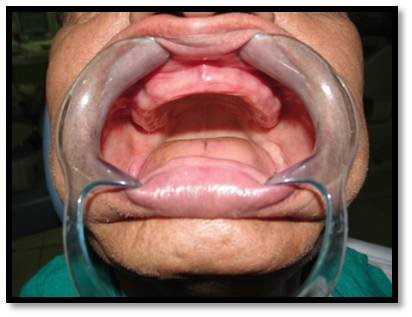
Figure 1: Bilateral undercut adjacent to the labial frenum

Figure 2: Metal flask with channels and attached wax sprue
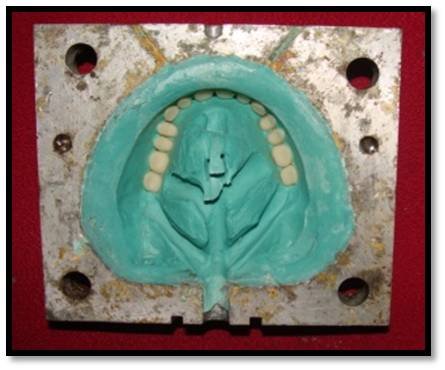
Figure 3: Flask and dewaxing
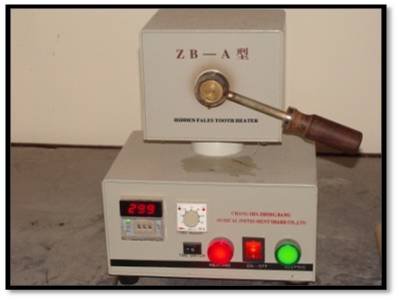
Figure 4: Heating and injection machine with cartridge inserted.
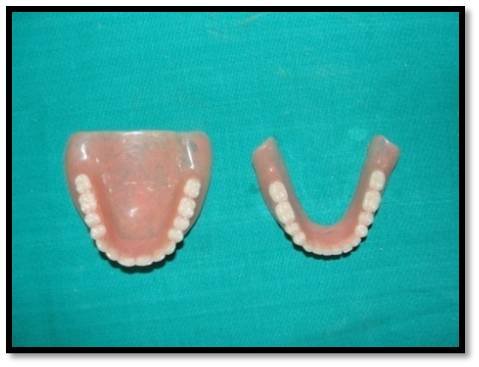
Figure 5: Final fabricated denture
PROCEDURE
- After an acceptable jaw relation in centric relation, maxillary cast in mounted using a spring bow (Hanau Springbow, no. 010328000) on a Hanau 96 H2 articulator and the articulation is done.
- Select the shade, mold, and arrangement of the acrylic resin artificial teeth ( Primapan XL Brulon) using pre extraction records, such as photographs, if available. To achieve retention of the artificial teeth to perforate the acrylic resin teeth using steel cylindrical burs.
- Fabricate and verify the trial arrangement according to conventional procedures for the fabrication of the complete denture.
- After try in of wax up dentures, flasking is done with dental stone. Sprue wax sticks (7mm) to build the injection sprues. On full upper dentures (fig 2), attach the sprue to the posterior border of the denture and make sure the sprue is sufficiently wide. Extend the sprue over the palate area to allow adequate flow of the material throughout the palate area and the same thickness for the lower denture.
- Place the flask (fig 3) in the boiling water for 4 to 6 minutes to soften the wax. Loosen the bolts on the flask and remove the Metal Flask Brackets. Apply the thin layer of the separating media all over except over the teeth.
- Heating and injection: oven (fig 4) must be switched on with the Cartridge ( Lucitone FRS) Sleeve in place and set to 5750 F at least 15 minutes prior to processing.
- Heat cartridge: Silicone Spray on a Cartridge. Using hat resistant gloves, insert the cartridge into the cartridge sleeve. Set timer for 17 minutes. Cartridges removed prior to 17 minutes may not properly inject. Inject: After heating for 17 minutes, turn off heat lamps, and then assemble the warm flask halves with brackets and the Injection Insert. Place this flask assembly in front of the Success Injection System.
- Bench cool the flask assembly for 5 minutes before deflasking. Caution should be used when handling the hot cartridge sleeve, Injection Insert, and used cartridge. Deflask carefully and remove the sprues with a cut off disk.
- Finishing and Polishing: Denture (fig 5) should be finished and polished using normal procedure for acrylics. A sharp carbide bur can be used for bulk reduction. Use a bur followed by coarse pumice for finishing. Polish with Tripoli and high shine. Do not finish to less than 2mm thickness.
DISCUSSION
A flexible denture offers an interim solution that allows the patient to resume daily activities dentures made of flexible materials prevent peak forces and, thereby, preserve more regenerated osseous tissue than hard acrylic resin dentures. They require no adhesive, will adjust to irregularities in the mouth, and stay in place even under harsh chewing conditions.4
Both clinical and laboratory procedures to facilitate flexible dentures fall easily within the scope of general prosthetic practice, and no special equipment is needed. Implications for the patients are minimal.5 Patient Comfort is more in case of flexible denture because it can be made very thin, reducing the bulk required for strength in acrylic base materials. The thinness yields more sensation and the flexibility of the material absorbs a portion of the shock of movement under mastication. The gingival tissue is gently stimulated under mastication, and unnatural stresses on the remaining teeth are substantially reduces. Which is biocompatible i.e. monomer free and hypo allergic.
This flexible denture is made up of a resin which contains superpolyamides (a very pure nylon) that will not deteriorate chemically when it comes into contact with the fluids, bacteria, and physical environment of the mouth. This resin is a biocompatible nylon thermoplastic with unique physical and esthetic properties.
CONCLUSION
Flexible dentures are aesthetically more pleasing and easily acceptable by the patients. These dentures as compared to conventional dentures are much thinner and can be used as substitute to patients allergic to polymethyl methacrylate. They can be preferred in bony undercut cases with very much reduction in denture sore-mouth.
REFERENCES
- Abrams S. A technique for using maxillary anterior soft- tissue undercuts in denture placement: a case report. J Can Dent Assoc 2002;68:301-4.
- Matsumura H, Kawasaki K. Magnetically connected removable sectional denture for a maxillary defect with severe undercut: a clinical report. J Prosthet Dent 2000;84:22-6.
- Jaggers JH, Boyd M. Bilaterally hinged complete denture for a severely undercut maxillary arch. Solution to a problem. J Prosthet Dent 1979;41:373-6.
- Meijer GJ, Wolgen PJ. Provisional flexible denture to assist in undisturbed healing of the reconstructed maxilla. J Prosthet Dent 2007;98:327-8.
- Lowe LG. Flexible denture flanges for patients exhibiting undercut tuberosities and reduced width of the buccal vestibule: A clinical report. J Prosthet Dent 2004;92(2):128-31.
Disclaimer from Guident
The views and opinions expressed in articles published in Guident are solely those of the authors and do not necessarily reflect the views of the editors, the editorial board or the publisher, Ivory India. Guident does not endorse any product, technique or treatment described. Clinical content is intended for qualified dental and medical professionals and is not a substitute for individual clinical judgement. Guident, its editors and the publisher accept no liability for any consequence arising from the use of information published in the journal.
How to cite this article
Dr. Benaiffer Agrawal Dr. Sunil Kumar Mishra Dr. Anup Mangal Department of Maxillofacial Prosthodontics and Implantology. Insight in to Complete Esthetics with Flexible Denture. Guident. 2018 Aug;11(9). Available from: https://ivoryindia.in/articles/prosthodontics/insight-in-to-complete-esthetics-with-flexible-denture.html