Prosthetic Rehabilitation of a Flabby Ridge with Modified Impression Technique-a Case Report
Department of Prosthodontics, Pt. B.D Sharma University of Health Sciences, Rohtak, India
ABSTRACT
A flabby or fibrous ridge is a superficial area of mobile soft tissue that affects the alveolar ridges of the maxillary or mandibular arches. It happens when the alveolar bone is replaced by hyperplastic soft tissues, notably in the maxillary anterior region of long-term denture wearers. The presence of displaceable denture-bearing tissues complicates complete denture fabrication. Such flabby ridges, if not adequately handled, have a negative impact on the support, retention, and stability of a complete denture.
Keywords: Flabby ridge, Mobile tissue, Selective impression technique, Window technique.
INTRODUCTION
The aim of complete denture prosthodontics is to restore function, aesthetics, and comfort by replacing the missing dental and alveolar structures with a stable prosthesis. A movable soft tissue found on the superficial aspect of the alveolar ridge is known as a flabby ridge. The reported prevalence has varied but has been demonstrated in up to 24% of edentulous maxillae and 5% edentulous mandibles.1 Flabby ridge primarily appears when an edentulous ridge opposes natural teeth and when it occurs in the anterior part of the maxilla is considered a characteristic of the combination syndrome.
It's been a challenge to get a precise impression that doesn't deform unduly mobile tissues and allows for a passive fit of the denture.2 Flabby ridges are easily displaced under occlusal forces due to poor support, resulting in compromised denture retention as a consequence of loss of peripheral seal. The mobile tissue might be distorted as a result of the forces applied during the impression-making process. The denture's stability may suffer as a result, and both function and appearance may be severely compromised. Mucosal hyperplasia and loosely distributed fibrous connective tissue, as well as more dense collagenised connective tissue, are the typical components of these "flabby ridges." Various levels of metaplastic cartilage and/or bone have also been documented in soft tissue.
To rule out the difficulties created by flabby ridges, several impression techniques have been proposed.3,4,5,6,7 In the window technique, two separate impression materials such as low viscosity elastomeric impression material for the normal tissues and impression plaster for the flabby tissues are used. A mucostatic impression material like impression plaster is used as it produces little or no pressure. The purpose of this article is to explain a flabby ridge impression technique that employs impression plaster/low viscosity polyvinyl siloxane impression material that is widely available in general dentistry.
CASE REPORT
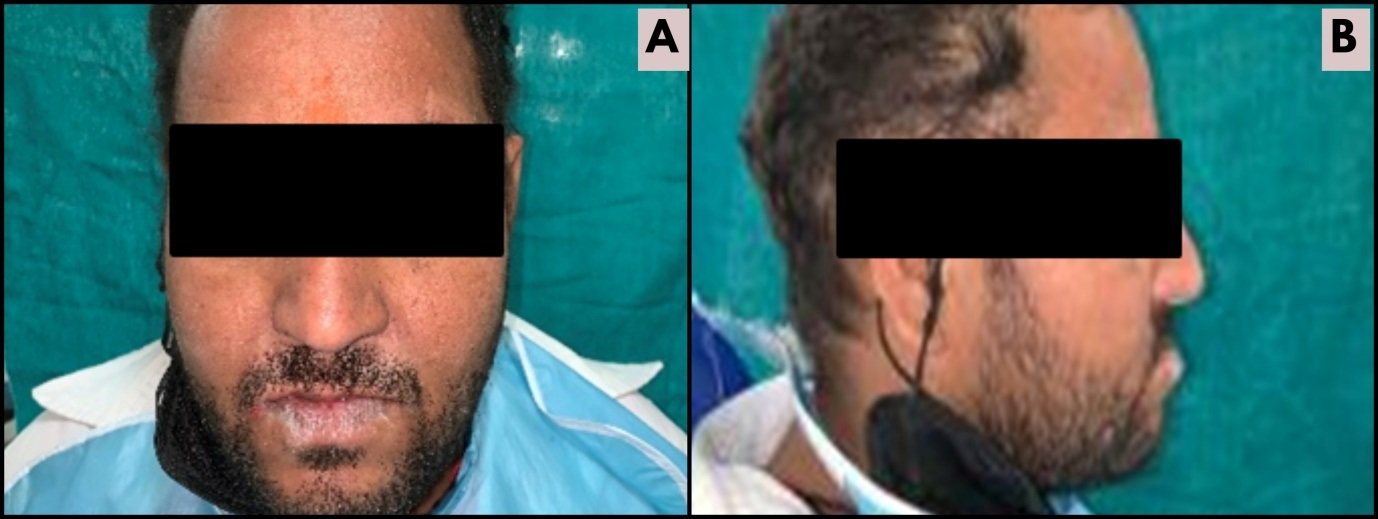
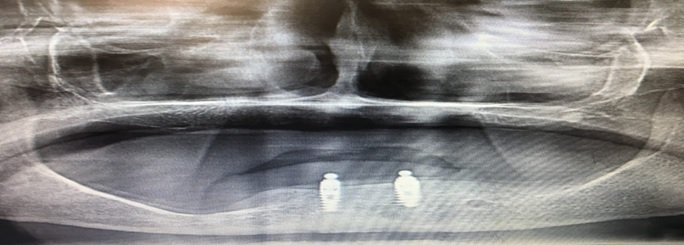
A 60-year old male patient visited the Department of Prosthodontics with the chief complaint of loose complete denture. The patient had been edentulous for the last 6 years and had previous two sets of complete dentures. Existing dentures were ill-fitting when checked intra-orally. He reported difficulty in speaking as well as eating food with the existing set of dentures. The patient had no history of any past medical or systemic illness.
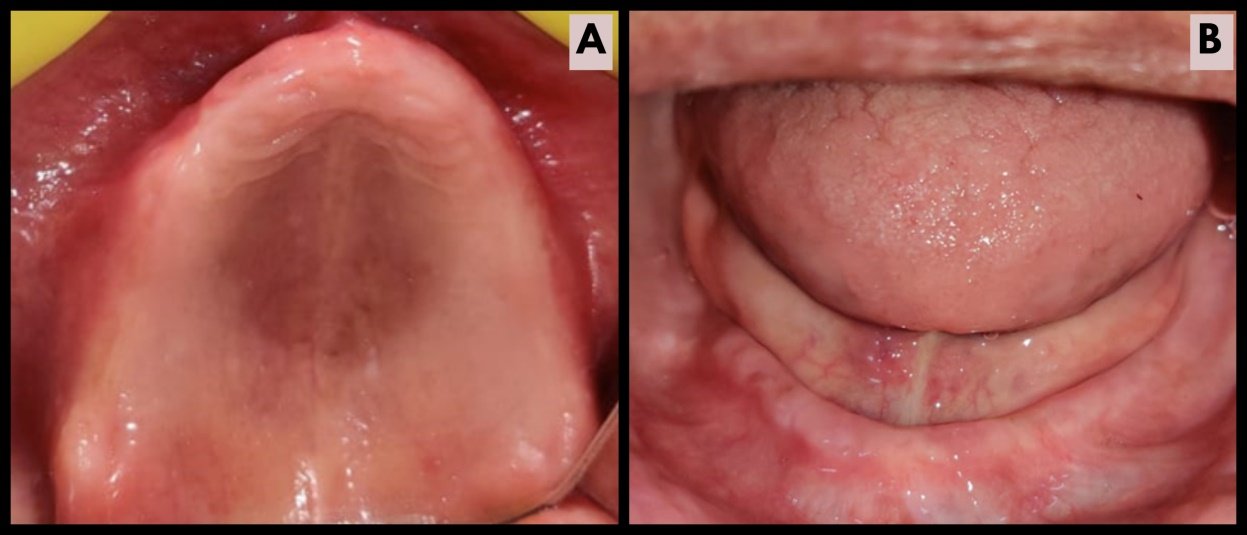
On intraoral examination, completely edentulous upper and lower arches were present with an area of flabby tissue in the maxillary anterior region extending from one canine region to another canine region. When using the blunt end of the mouth mirror to pressurize the flabby tissue, blanching was seen (Figure 1). The patient was offered various treatment options such as implant-supported dentures, pre-prosthetic surgical removal of flabby tissue, etc. The patient, on the other hand, dismissed the possibilities and preferred the conventional method of denture fabrication. As a result, all alternative treatment options were ruled out, and the final treatment plan included the adoption of the maxillary arch window impression technique. Finally, the treatment plan was explained to the patient and informed consent was obtained.

Figure 1. Tissue blanching on pressure application
TECHNIQUE
Step 1: Preliminary impression using Selective Pressure Impression Technique
The first modification for the management of flabby tissue is in making a primary impression. A preliminary impression of both maxillae and mandibular edentulous arches was made using irreversible hydrocolloid impression material (Dentalgin; Prime Dental Products, Mumbai, India) using a stock tray. Impressions were poured in dental plaster and primary casts were obtained. On this primary cast, now again an impression is made with impression compound (Pyrax Impression Compound, Uttarakhand) using stock tray was made according to the static position of the cast as tissues are not compressible on the cast (Figure 2A). Now, the impression was heated and softened all over the area of the impression compound except for the flabby tissue area to take the advantage of both mucocompressive and mucostatic (on the flabby ridge) techniques on the soft tissue inside the oral cavity and one more primary cast was made using this impression (Figure 2B).

Figure 2. A) Impression made on the primary cast with impression compound, B) Impression with selective impression technique
Step 2: Secondary impression using modified window technique
A marking pencil was used to mark the extension of the flabby area on the maxillary primary cast. A wax spacer (Modelling Wax, Deepti Dental Products, India) was adapted over the maxillary arch. Over it, a special tray was fabricated using auto-polymerizing acrylic resin (DPI cold cure; Dental Products of India, Mumbai, India) with the tray handle over the rugae area to allow an anterior window and expose the excessively movable tissue and the borders were reduced to 2mm short of the sulcus. A low-fusing impression compound (DPI Pinnacle, Tracing Sticks Dental Products of India, Ltd) was used to perform the border moulding. In the region of flabby tissue, a window was prepared in the custom tray using a round and fissured bur. After this, the window area in the special tray was sealed with wax just to contain the wash impression material (Figure 3).
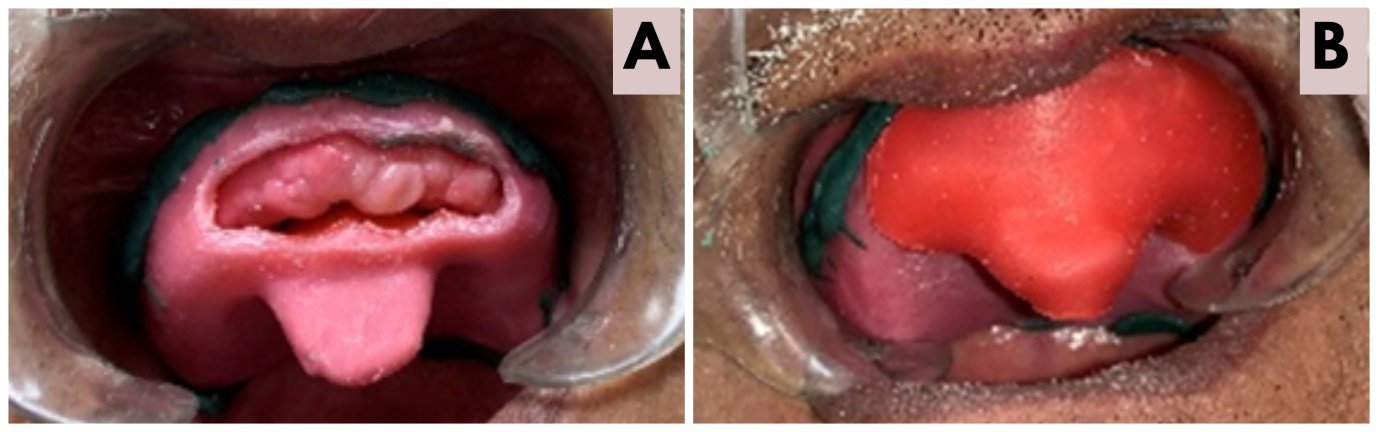
Figure 3. A) Modified impression tray, B) Wax coverage of the exposed area of the tray
The borders and tissue surface of the special tray were coated with tray adhesive, which was allowed to dry for 10 minutes before loading the tray with elastomeric impression material to produce a chemical bond between the impression material and the tray. Wash impression was made by using light body elastomeric impression material (GC Flexceed Impression Material). Then, wax was removed from the window area and the wash impression material was cut in the window region exposing the flabby tissue again (Figure 4).

Figure 4.A) Removal of wax, B) The wash impression was cut at the flabby ridge area to relax the tissue completely
After this, the relaxed flabby tissue area was recorded using impression plaster. Impression plaster was applied with a painting brush in a proper consistency so that it wouldn’t run out of the area. A layer of separating medium was applied over the plaster part of the impression before pouring it (Figure 5).

Figure 5. A) Coverage of the relaxed flabby tissue with mucostatic impression material, B) Final wash impression of the maxillary and mandibular arch
A master cast was poured from the impression (after beading and boxing of the impression) and a record base was fabricated for the jaw relation procedure. Following try-in, a maxillary conventional complete denture was made with good retention and stability (Figure 6).
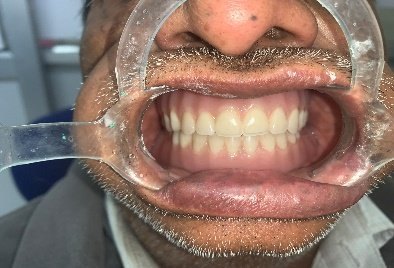
Figure 6. Insertion of final denture prosthesis
DISCUSSION
The provision of a stable retentive denture requires a precise impression of the edentulous ridge and functional sulcus. It is necessary to use an impression method that compresses the non-flabby tissue and at the same time not displacing the flabby tissue to obtain maximum support. The elastic rebound of flabby fibrous soft tissue causes instability, loss of denture retention, and displacement during the function. Several impression techniques have been proposed to rule out this problem caused by flabby ridges while causing the least amount of tissue displacement possible.
Coventional impression techniques used to record such flabby tissue result in dentures that are usually unretentive and unstable. Creating windows/holes or wax relief reduces hydraulic pressure while making the impression of flabby areas, thereby eliminating hypermobile tissue distortion/displacement. Using these options while making impressions can help record flabby tissue in its anatomic or undistorted state.8 This case report describes how to use the selective impression and the window impression technique to record the flabby tissue in its natural state. This promotes oral tissue health while also ensuring proper retention, stability, and support for the prosthesis.
CONCLUSION
Flabby tissue poses a challenge while rehabilitation of completely edentulous patients. In such circumstances, surgical excision and dental implant treatments are options, but they may not be possible for patients having a medical illness or who are unable to afford the treatment. The flabby ridge can be efficiently treated without any further visits to the clinical practise by implementing minor improvements in current impression techniques and newly released materials with enhanced physical and handling capabilities.
REFERENCES
- Chiplunkar J, Tumbil M, Chethan MD, Nandeeshwar DB, Patel D. Management of flabby ridge case: An arduous task in undergraduate practice. Int J Oral Health Sci.2018;8:104-8.
- Lynch C.D.Allen P.F.Management of the flabby ridge: using contemporary materials to solve an old problem.Br Dent J.2006; 200: 258-261.
- Osborne J. Two impression methods for mobile fibrous ridges. Br Dent J.1964;117:392-4.
- Watson RM. Impression technique for maxillary fibrous ridge. Br Dent J.1970;128:552.
- Freeman SP. Impressions for complete dentures. J Amer Dent Asso.1969;79:1173-86.
- Khan Z, Jaggers J, Shay J. Impressions of unsupported movable tissues. JADA.1981;103:590-92.
- Devlin H. A method for recording an impression for a patient with a fibrous maxillary alveolar ridge. Quint Int.1985;6:395–7.
- Allen F. Management of the flabby ridge in complete denture construction. Dent Update.2005;32: 524-8.
Disclaimer from Guident
The views and opinions expressed in articles published in Guident are solely those of the authors and do not necessarily reflect the views of the editors, the editorial board or the publisher, Ivory India. Guident does not endorse any product, technique or treatment described. Clinical content is intended for qualified dental and medical professionals and is not a substitute for individual clinical judgement. Guident, its editors and the publisher accept no liability for any consequence arising from the use of information published in the journal.
How to cite this article
Dr. Aman Duhan, Dr. Divya Dahiya, Dr. Sujata Chahal. Prosthetic Rehabilitation of a Flabby Ridge with Modified Impression Technique-a Case Report. Guident. 2021 Aug;14(9). Available from: https://ivoryindia.in/articles/prosthodontics/prosthetic-rehabilitation-of-a-flabby-ridge-with-modified-impression-technique-a-case-report.html