
Prosthetic Rehabilitation of Partially Dentate Patient with Mandibular Cast Partial Denture and Maxillary Single Complete Denture: A Case Report
Department of Prosthodontics and Crown & Bridge, K.D. Dental College & Hospital, Mathura, UP, India
ABSTRACT
The loss of teeth not only affects oral health but also significantly impacts emotional well-being. Rehabilitating partially edentulous patients, especially in Kennedy Class I and Class II situations, poses challenges. In such cases, fixed partial dentures are not recommended due to the absence of distal abutments. Fixed prostheses also have limitations, such as dependency on sound abutment teeth and suitability for short-span bridges. Therefore, treatment planning often includes options such as implants or removable partial dentures.
However, in cases where extensive bone loss or uncontrolled systemic diseases contraindicate implants, acrylic or cast partial dentures are preferred treatments. These prosthetic solutions cater to the patient's oral condition, offering functional and aesthetic benefits while addressing specific dental health challenges.
INTRODUCTION
Tooth loss is a physiological and pathophysiological process which may led to edentulism in patients. Edentulousness, the loss of teeth, leads to biomechanical and aesthetic challenges. Muscle tone in mastication may diminish, causing atrophy and reduced chewing power. Esthetic and functional issues may induce nervous habits, affecting digestion, speech, and facial expression. While complete denture (CD) wearers have decreased, partially edentulous patients have increased due to heightened awareness and preventive dental care.
The Kennedy classification is a system used in dentistry to categorize partially edentulous arches based on the location and extent of missing teeth, aiding in the design of RPDs. It includes four main classes: class I (bilateral edentulous areas posterior to the remaining natural teeth), class II (a unilateral edentulous area posterior to the remaining natural teeth), class III (a unilateral edentulous area with natural teeth remaining both anterior and posterior to it), and class IV (a single, bilateral edentulous area located anterior to the remaining natural teeth). Rehabilitating Kennedy Class I and II partially edentulous patients poses challenges.
In such situation, fixed partial denture is not advised because of absence of distal abutment. Also fixed prosthesis has some limitations like good abutment tooth, short span bridges. Therefore, treatment often includes planning for Removable Partial Dentures (RPD), Cast Partial Denture (CPD) and Implants. But in some situation, because of more bone loss and uncontrolled systemic diseases, implant is contraindicated. Acrylic partial denture or Cast partial denture is the treatment of choice for such patients. Cast partial denture is composed of retainer and precision attachment. Cast partial denture is preferred over acrylic denture base because of its accuracy, durability, resistance to distortion, inherent cleanliness and reduced bulk. . In this case report, partially edentulous patient with Kennedys Class I mandibular arch is restored with cast partial denture and maxillary single complete denture.
CASE REPORT
A 55 year old female patient reported to the department with the chief complaint of missing teeth in her upper front and back tooth region and lower back region of the jaw since 10 yrs and upper mobile tissue in front tooth region.
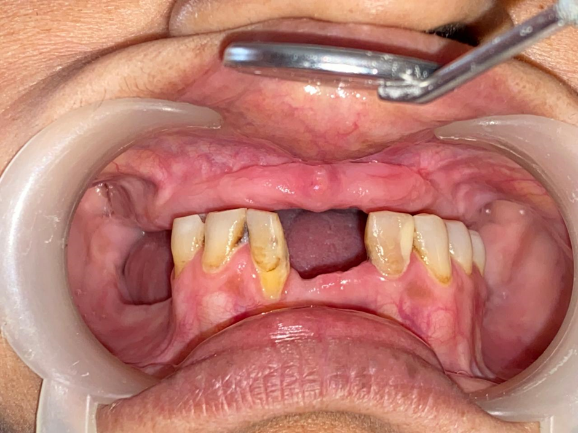
Fig 1: Intraoral frontal view

Fig 2: Intraoral mandibular
On examination, no teeth were present in maxillary arch and 31,36,37,41,45,46,47 were missing in mandibular arch, also flabby tissue was present with respect to maxillary anterior tooth region.
Various treatment plans were discussed with the patient but as per the financial constraints of the patient, lower cast partial denture and upper conventional single complete denture was planned. Given figures shows the pre operative view-
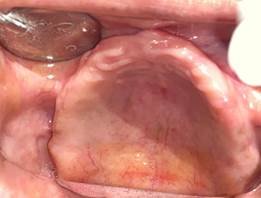
Fig 3: Intraoral Maxillary
Fig 4: Flabby Tissue
Primary impression was made using alginate and primary cast was poured. Double spacer was given with respect to maxillary anterior region and mandibular primary cast was used for surveying and for planning CPD design , then intraoral mouth preparation was done as per the design for mandibular cast partial denture. Double embrasure rest seat were made on 34,35 and mesial rest seat was made on 44, guide planes were given on distal abutment teeth. Then Border molding was done and secondary impression was made using light body ( anterior flabby region ) and zinc oxide eugenol ( posterior region) simultaneously for maxillary arch and dual impression technique was used for mandibular arch (fig. 5,6)
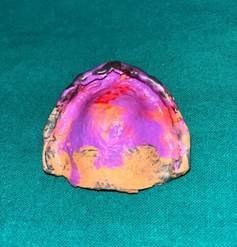
Fig 5: Maxillary Secondary
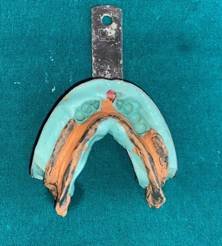
Fig 6: Mandibular Secondary
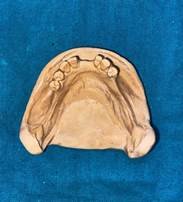
Fig 7: Mandibular Master Cast
Then metal frame was made on mandibular secondary cast , the following design was made (fig 8, 9) having mesh type minor connector and lingual plate from premolar to premolar to gain extra retention and to support remaining teeth and Double Embressure rest was given on 34,35 and mesial rest on 44, proximal plate and infrabulge Y clasp was given distal abutment teeth .
Fig 8: CPD Framework
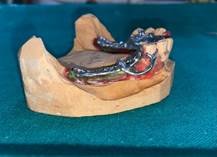
Fig 9: Lateral View
A fitting of the cast partial framework was performed to assess fit and comfort for the patient (fig 10).
Jaw relation was recorded ,then try -in was done and patient was evaluated for esthetics , Speech was also assessed . After the denture had been processed, denture insertion was done (fig 11) and post insertion instructions were given.
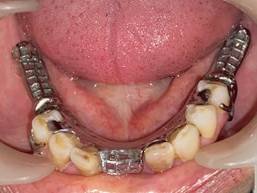
Fig 10: Metal framework Try-in intraoral
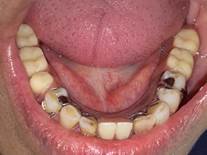
Fig11(a): Post insertion intraoral
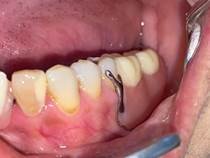
Fig11(b): Lateral View
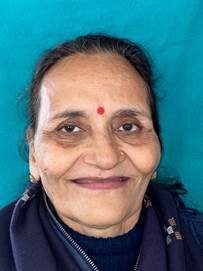
Fig11(c): Pre operative view
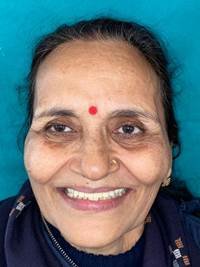
Fig11(d): Post operative view
The patient was recalled after 1 week and then after 6 months to check for any problems that may have developed. However, the patient was found to have adapted well to the prosthesis.
DISCUSSION :
A maxillary conventional complete denture and mandibular cast partial denture were the treatment of choice for this particular case because of their excellent retention, stability ,durability and resistance to distortion over removable cast partial denture. Alternative options for treatment consisted of implant supported denture for maxillary arch and implant supported fixed partial denture or tooth supported fixed partial denture for mandibular arch but patient but as per the financial constraints of the patient, and also the patient was not willing to undergo any surgical procedure this treatment option was justified.
CONCLUSION
Restoring a partially edentulous mouth has always been a challenge for most of the clinicians. Cast partial dentures are one of the most viable treatment options available for the patients with few missing teeth in whom the fixed or implant supported prosthesis are contraindicated whether due to underlying medical disorders or the local condition of the oral cavity. Therefore, proper treatment planning is an integral part of rehabilitating such patients, keeping in mind their aesthetic and functional needs.
REFERENCES
- Stewart’s clinical REMOVABLE PARTIAL PROSTHODONTICS Forth Edition.
- McCracken’s REMOVABLE PARTIAL PROSTHODONTICS Eleventh Edition.
- Shrestha S, Sah S. Esthetic Rehabilitation with a Cast Partial Denture. J CMS Nepal. 2016;12(4):189-92.
- Malik SS, Khuswaha NS, Avasthi A. Designing of Cast Partial Denture-A Review. Ann. Int. Med. Den. Res. 2020; 6(1):DE04-DE11
- Neha Alone et al Rehabilitation of Partially Edentulous Patients with Cast Partial Denture: A Case Report, J Res Med Dent Sci, 2022, 10 (12): 163-166.
- Bansod AV, Pisulkar SG, Sathe S, Beri A, Dahihandekar C. Prosthetic Rehabilitation of a Partially Dentate Patient With a Maxillary Cast Partial Denture and Mandibular Overdenture: A Case Report. Cureus. 2022 Aug 31;14(8):e28652.
Disclaimer from Guident
The views and opinions expressed in articles published in Guident are solely those of the authors and do not necessarily reflect the views of the editors, the editorial board or the publisher, Ivory India. Guident does not endorse any product, technique or treatment described. Clinical content is intended for qualified dental and medical professionals and is not a substitute for individual clinical judgement. Guident, its editors and the publisher accept no liability for any consequence arising from the use of information published in the journal.
How to cite this article
Dr. Sanskriti Tomar, Dr. Shikha Shahi, Dr. Abhinav Agarwal. Prosthetic Rehabilitation of Partially Dentate Patient with Mandibular Cast Partial Denture and Maxillary Single Complete Denture: A Case Report. Guident. 2025 Jun;18(7). Available from: https://ivoryindia.in/articles/prosthodontics/prosthetic-rehabilitation-of-partially-dentate-patient-with-mandibular-cast-partial-denture-and-maxillary.html


