
Recreating Occlusal Plane Using Custom-Made Broadricks Occlusal Plane Analyzer
Department of Prosthodontics, Crown & Bridge and Implantology, K.D. Dental College and Hospital, Mathura UP.
ABSTRACT
The preparation and execution of rehabilitation of an annihilated occlusion is one of the most psychologically and technically challenging tasks that a prosthodontist faces. Proper occlusal plane control is a critical factor in full mouth rehabilitation scenarios. When restorations are applied to a tooth arrangement that already has tipped, rotated or supraerupted teeth, excursive interferences may be introduced, resulting in undesirable consequences. In the ideal natural dentition, the curve of Spee allows for harmony between the anterior teeth and condylar guidance. When posterior restorations are planned in diagnostic castings and afterwards, an instrument called the "Occlusal plane analyzer" has been utilised to aid the Prosthodontist in developing an initial mandibular occlusal plane that is congruent with the Spee curve as well as guidelines for the actual tooth preparations. Many semiadjustable articulator manufacturers do not provide such occlusal plane analyzers for use along with their instruments. This article shows how to build and utilise a custom made occlusal plane analyzer with a semiadjustable articulator to identify the proper Spee curve for the occlusal plane.
INTRODUCTION
Full mouth rehabilitation does not mean to just restore the worn out or decayed teeth with restorations that merely restore it's form and function but it also requires correction of the occlusal plane that wil be harmonious with the oral musculature and TMJ and thereby increase the longetivity of the restoration along with correcting the relationship between teeth and TMJ.The curvature of the arch in three dimensions, including the curve of Spee and the curve of Wilson as well as the placement of the teeth, must be determined for treatment to be successful.
Direct analysis on natural teeth through selective grinding, indirect analysis of facebow mounted casts with properly set condylar paths, and indirect analysis using the Pankey-MannSchuyler (PMS) method with the Broadrick's occlusal plane analyser (BOPA) are the three most commonly used methods for establishing an acceptable plane of occlusion. When it is confirmed that all or most of the posterior teeth require restoration, the PMS approach with BOPA provides a simple and practical way for identifying the preliminary occlusal plane on diagnostic cast.2
According to the Glossary of Prosthodontic Terms 9, plane refers to a flat surface defined by three points whereas occlusal plane refers to the average plane established by the incisal and occlusal surfaces of the teeth; generally, it is not a plane but represents the planar mean of the curvature of these surfaces.1
Rotation, tilting, and extrusion of teeth can lead to pathological changes in the Spee curve. When the dentition is restored to such an altered occlusal plane, posterior protrusive interferences may be introduced. The masseter and temporalis muscles in the mandibular elevator, in particular, have been found to exhibit aberrant activity as a result of such interferences.3,4
This can be avoided by retracing Spee's curve via the mandibular condyle such that it allows posterior disocclusion on mandibular protrusion. When the angle of condylar guidance exceeds the curve of Spee, posterior disocclusion occurs.3 The Broadrick Occlusal Plane Analyzer, also known as the Broadrick flag, allows the regeneration of the Spee curve in accordance with anterior and condylar guidance, permitting total posterior tooth disclusion on mandibular protrusion. Its application requires good functional and aesthetic positioning of the mandibular incisors. If the anterior guidance is not adequate, it must be refined before using the Broadrick flag.5,6
Broadrick's Occlusal Plane Analyzer is a flag-like component affixed superiorly to an articulator's upper portion. To generate the occlusal plane, the technique employs Monson's spherical theory of occlusion. Monson postulated that the anteroposterior curve is part of a three-dimensional sphere, the centre of which is placed in the glabella region. According to Monson1,2, the radius of this curve is approximately 4 inches (10.4 cm). For analyzing occlusal plane using this method, a compass is used to draw two intersecting arcs with a four-inch radius, with the centres of rotation at the canine cusp tip and the distobuccal cusp tip of the second molar.
It aids in the identification of the cusp tips of the posterior teeth. Furthermore, it can show how much tooth reduction or porcelain addition is required to idealise the occlusal plane.2
The purpose of this article is to fabricate a custom made occlusal plane analyzer with a semiadjustable articulator to identify the proper Spee curve for theocclusal plane.
FABRICATION OF BOPA
The BOPA comes along with only few articulator systems like the Denar Anamark Fossae (Teledyne Waterpik, Ft Collins, Colo) and all Hanau articulator models (Teledyne Waterpik). A custom built acrylic resin BOPA may be fabricated for those manufacturers of semiadjustable articulators who do not supply such occlusal plane analyzers for use with their instruments.2
The 5 components of Broadrick's Occlusal Plane Analyzer are7:
- Flat card.
- Holding stops for the card
- A compass with graphite leads
- A scribe's knife.
- Graph paper
- First, wax blocks were made such that they seat on the upper member of articuclator with stability (Fig 1). The height of these wax blocks was kept a little higher than the thumbscrews that attached mounting plate and orbital indicator so that the flat card can seat into these wax blocks without being displaced (Fig 2).
- A 4*4 inch wax sheet was also cut to be fabricated as the flat card / flag (Fig 3). Since modelling wax can easily be deformed in shape, it was ensured that it stays completely flat by placing it between two flat surfaces before investing it (Fig 4).
- A 2mm provision was made in the wax blocck, wide enough so that the flat card can easily slide into it and stay stable in it’s position (Fig 5, 6).
- Both the wax patterns i.e. card holding stops (Fig 7) & flat card (Fig 8) were positioned in a flask filled with plaster & invested using a 3 pour technique. After the plater had set for 1 hour, it is dewaxed by placing the flask in boiling water for not more than 5 minutes. After dewaxing, the two halves of the flask were separated and the molten wax was flushed out with clean hot water. After cooling, two coats of seperating medium were applied on the stone surface and the dewaxed mold was packed with heat cure resin. Packing was continued until all flash was eliminated and curing was done using long curing cycle. Acrylic replaced all the wax, assuming the shape of Broadrick’s device (Fig 9, 10).
- The flag/ card was slid into the vertical slots in the card holding stops and the entire assembly was secured to the upper member of articulator (Fig 11). A graph paper of similar size was affixed on either side of the card and plane analyzation was done utilizing the 4 inch radius concept (Fig 12).

Fig 1 & Fig 2
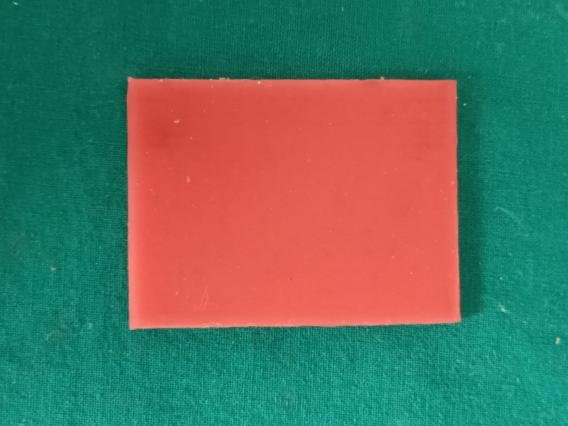
Fig 3
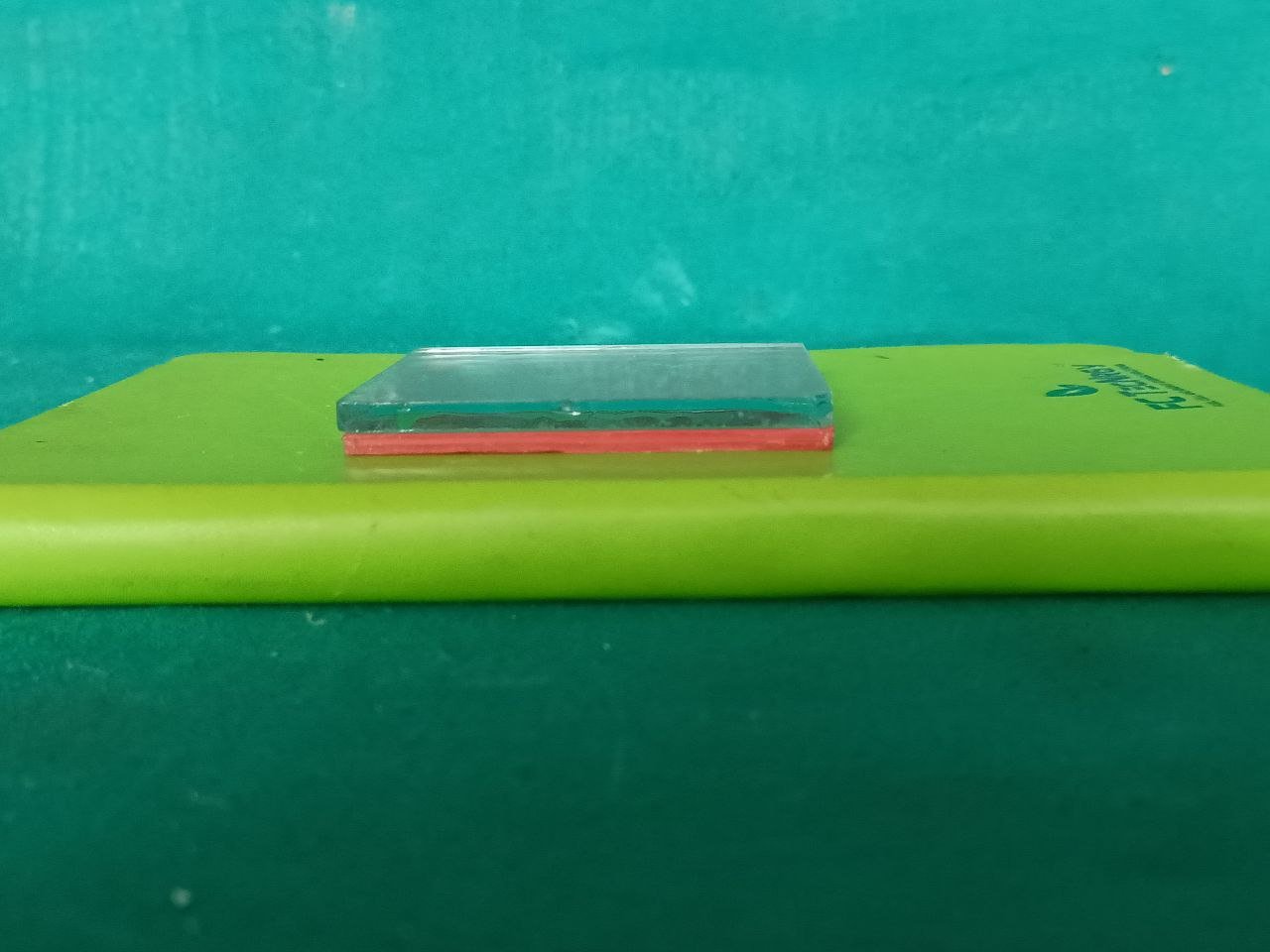
Fig 4

Fig 5 & Fig 6
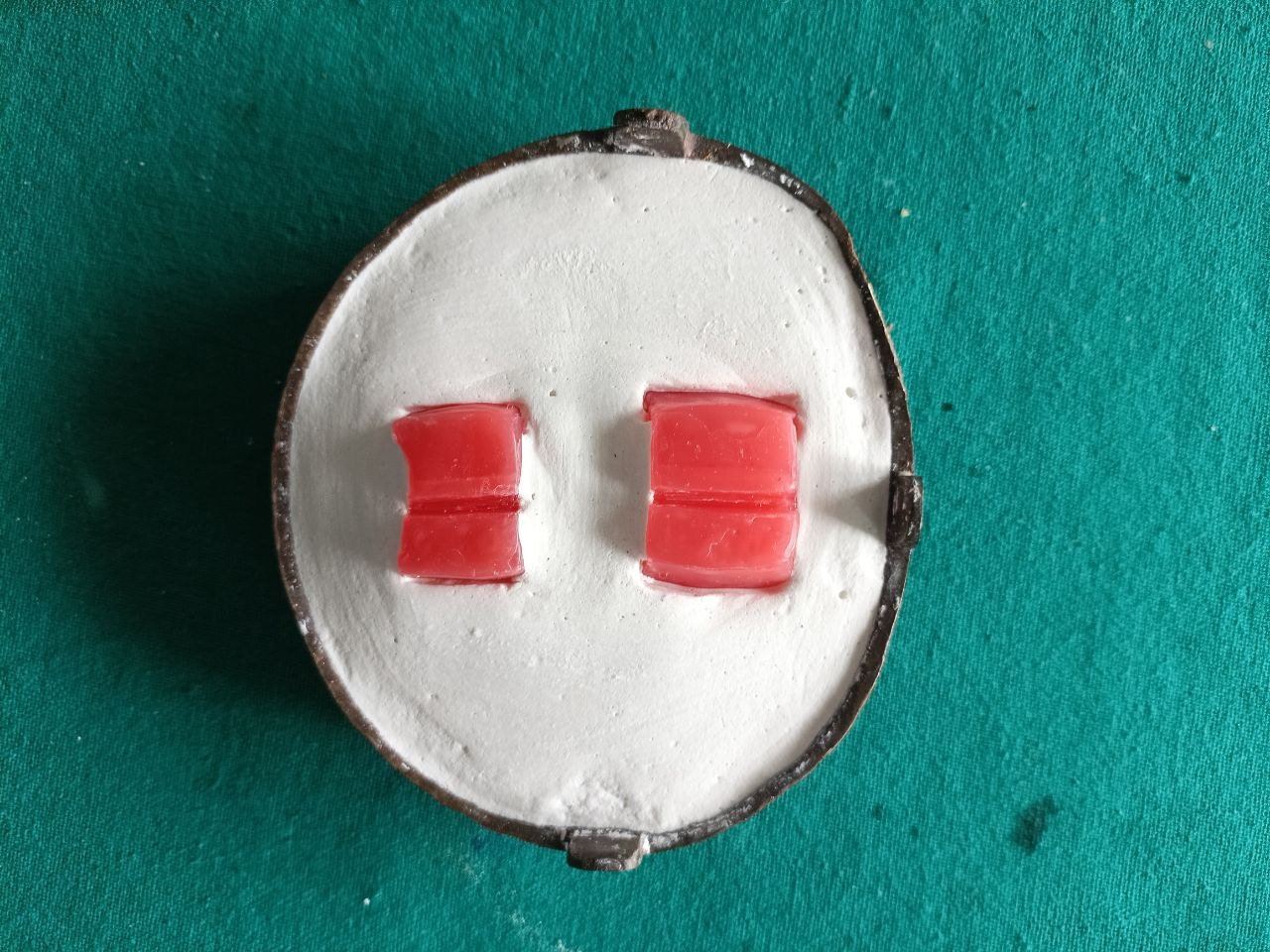
Fig 7
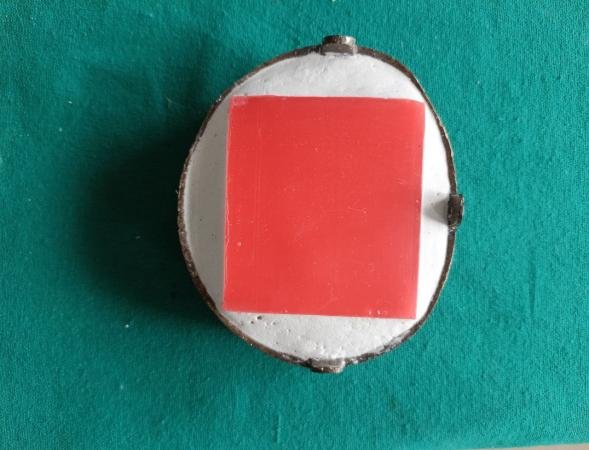
Fig 8
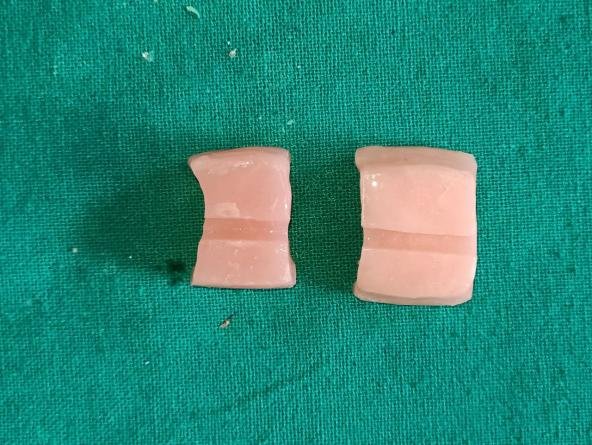
Fig 9
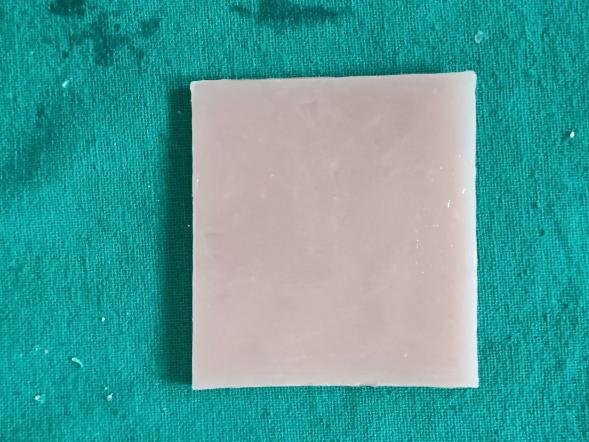
Fig 10
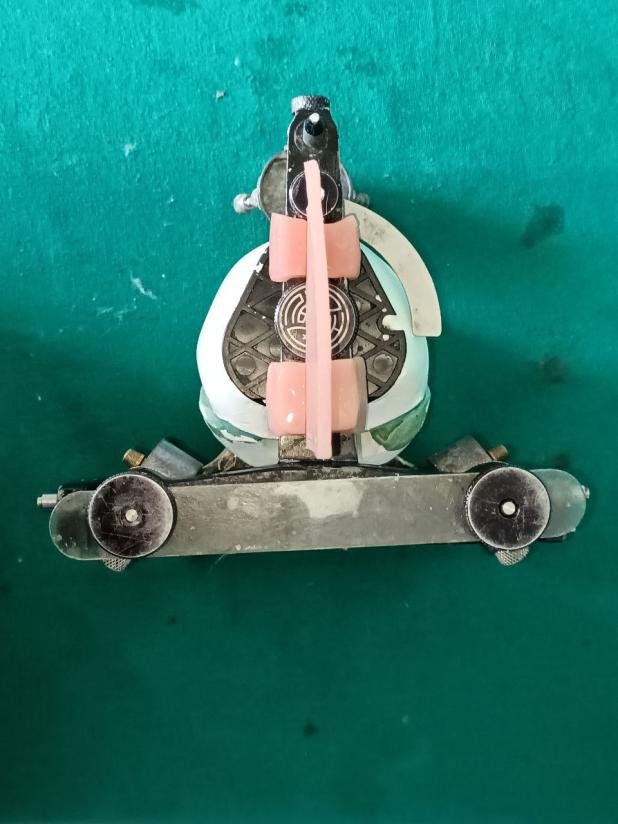
Fig 11

Fig 12
DISCUSSION
Dr. Lawson Broadrick devised an instrument in 1963 to help evaluate optimal position and orientation of the posterior occlusal plane and called it Broadrick's occlusal plane analyser. Its goal was to allow for the restoration of the Curve of Spee in accordance with anterior and condylar guidance.8 It indicates the most likely position of the Spee curve's centre, however, it should not be considered fixed or inflexible.
The design of the occlusal plane must meet both aesthetic and functional requirements as well. Compromise can be made by changing the radius of the curve's length. A conventional 4-inch curve would result in a flat posterior curve in patients with a retrognathic mandible, creating posterior protrusive interferences. Such "low" mandibular posteriors would also result in maxillary tooth extrusion. The crown-to-root ratio would be less than optimal if the maxillary posterior teeth were returned to this low occlusal plane. As a result, when a class II skeletal relationship occurs, a 3.75 inch curve is more acceptable. In patients with a class III skeletal connection, a 4 inch curve would result in a steep posterior curve, leading to additional posterior interferences. So for such instances, a 5 inch radius would be more appropriate.5
To acquire the same outcome, the centre of the curve can also be changed. The centre should always be drawn along the long arc drawn from the anterior survey point, although it can be changed in either an anterior or posterior direction from the junction of this arc with the arc drawn from the posterior survey point. This change will not influence the position of the anterior survey point, which is significant when the position of the mandibular anterior teeth is aesthetically and clinically appropriate.5
The angle of the condylar guidance should not be less than the curve of Spee, as this would introduce posterior protrusive interferences.5
CONCLUSION
BOPA aids the prosthodontist in the creation of an initial mandibular occlusal plane in diagnostic casts, and later, as a reference for actual tooth preparations and in creating correct contours of the definitive restorations. The rehabilitation of harmonious occlusal plane can have a significant impact on the short- and long-term success of a restorative procedure. The less posterior interference caused by the reconstruction, the fewer problems patients will have with their teeth, muscles, and TMJ. It is extremely useful when treating patients requiring full mouth rehabilitations since establishing the occlusal plane is the first step towards a functionally and aesthetically acceptable remedy, which directly would affect the patient's quality of life.
REFERENCES
- The Glossary of Prosthodontic Terms, 9 th Edition.
- Bedia SV, Dange SP, Khalikar AN. Determination of the occlusal plane using a custom-made occlusal plane analyzer: A clinical report, Journal of Prosthetic Dentistry. 2007; 98(5):348-352.
- Manvi S, Miglani S, Rajeswari CL, Srivatsa G, Arora S. Occlusal Plane Determination using Custom Made Broadrick Occlusal Plane Analyser: A case control study, International Scholarly Research Network Dentistry. 2012.
- Williamson EH, Lundquist DO. Anterior guidance: its effect on electromyographic activity of the temporal and masseter muscles. J Prosthet Dent 1983; 49:816-23
- Lynch CD, McConnell RJ. Prosthodontic management of the curve of Spee: Use of the Broadrick flag. J ProsthetDent. 2002; 87:593-7.
- Chokalingam S, Rao Gururaj. Broadrick’s Occlusal Plane Analyzer. IOSR-JDMS, 2014, 54-58.
- W.M Corporation, Restorative oral health (U.S.A, WhipMix Corporation-West, 2008
- Chaturvedi S, Verma AK, Ali M, Shah M. Full Mouth Rehabilitation using a custom-made broadrick flag: A case report, International Journal of Case reports and images. 2012; 3(5):41-44.
Disclaimer from Guident
The views and opinions expressed in articles published in Guident are solely those of the authors and do not necessarily reflect the views of the editors, the editorial board or the publisher, Ivory India. Guident does not endorse any product, technique or treatment described. Clinical content is intended for qualified dental and medical professionals and is not a substitute for individual clinical judgement. Guident, its editors and the publisher accept no liability for any consequence arising from the use of information published in the journal.
How to cite this article
Dr. Mehr Yazdani, Dr. Siddharth Sisodia, Dr. Manesh Lahori. Recreating Occlusal Plane Using Custom-Made Broadricks Occlusal Plane Analyzer. Guident. 2023 Jun;16(7). Available from: https://ivoryindia.in/articles/prosthodontics/recreating-occlusal-plane-using-custom-made-broadricks-occlusal-plane-analyzer.html


