Corticobasal Implants-a Treatment Modality for Full Mouth Rehabilitation in Systematic Lupus Erythematosus Patient: A Case Report
V.K Dental Bangalore
INTRODUCTION
Systemic lupus erythematosus (SLE) is a chronic, autoimmune, inflammatory disease with multiple organ involvement and a broad spectrum of clinical manifestations, including mucocutaneous, cardiac, renal, pulmonary, and musculoskeletal complications. Orofacial structures and functions may be adversely affected in the presence of SLE. The most frequent complaints include xerostomia and burning mouth syndrome, while desquamative gingivitis, marginal gingivitis, and periodontitis are among common findings. Additionally, immunosuppressive therapy, including corticosteroids and cytotoxic agents, poses a risk of inducing osteoporosis and altered immune response, with an increased susceptibility to oral infections. Together, these complications can be a primary concern in dental treatment procedures owing to inability to maintain oral hygiene and risk of implant failure. Implant therapy for systemically compromised patients with limited bone could present a challenge that requires the expertise of an interdisciplinary team to ensure a successful and predictable result. In this case report, uneventful placement of basal dental implants (MonoImplants) and successful prosthetic rehabilitation of a patient with SLE was presented, and specific considerations with which a dentist should be familiar when treating such patients were pointed out.
PREVALENCE AND ETIOLOGY
Middle aged women between the age of 40-60yrs are affected about 10 times more frequently than men with sex ratio 10:1. More than 40% of patients with SLE experience oral lesions. Therefore, prevention and management of oral diseases is of crucial importance. SLE patients exhibited more tooth loss than healthy population. Pathogenesis of SLE includes deposition of autoimmune antibody complexes in the connective tissue of various organs with subsequent immune response. The immunological pathway of SLE resembles the one that develops during periodontitis and peri-implantitis. Therefore, it is possible that SLE aggravates the periodontal and peri-implants diseases and may result in a higher possibility of implant loss compared to healthy people. Possible impact of oral autoimmune diseases on the oral epithelium that might affect implant success, also due to the difficulty of everyday oral hygiene, leading to bone absorption around the implant. Osseointegration is affected, amongst other aspects, by the quality of the bone, as well as the atraumatic healing of the surgery site. Normally, the oral mucosa acts as a barrier and protects the alveolar bone from the oral cavity’s bacteria. However, if the oral mucosa is problematic, as when the patient suffers from autoimmune diseases with oral manifestations, the sealing may be disturbed and there is a higher possibility of tissue infection, which can undermine the long term implant survival.
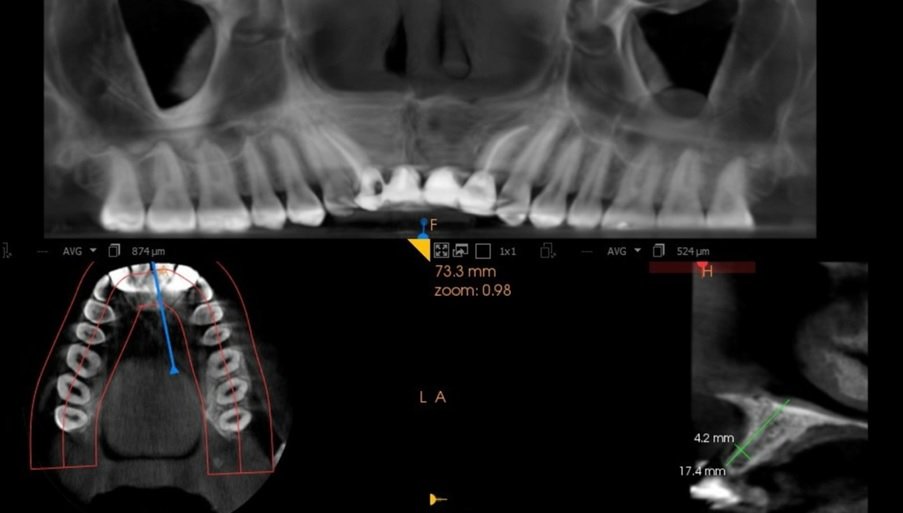
CASE REPORT OF A 50-YEAR OLD FEMALE WITH MULTIPLE DECAYED TEETH, MOBILE TEETH WITH PERIODONTAL INVOLVEMENT
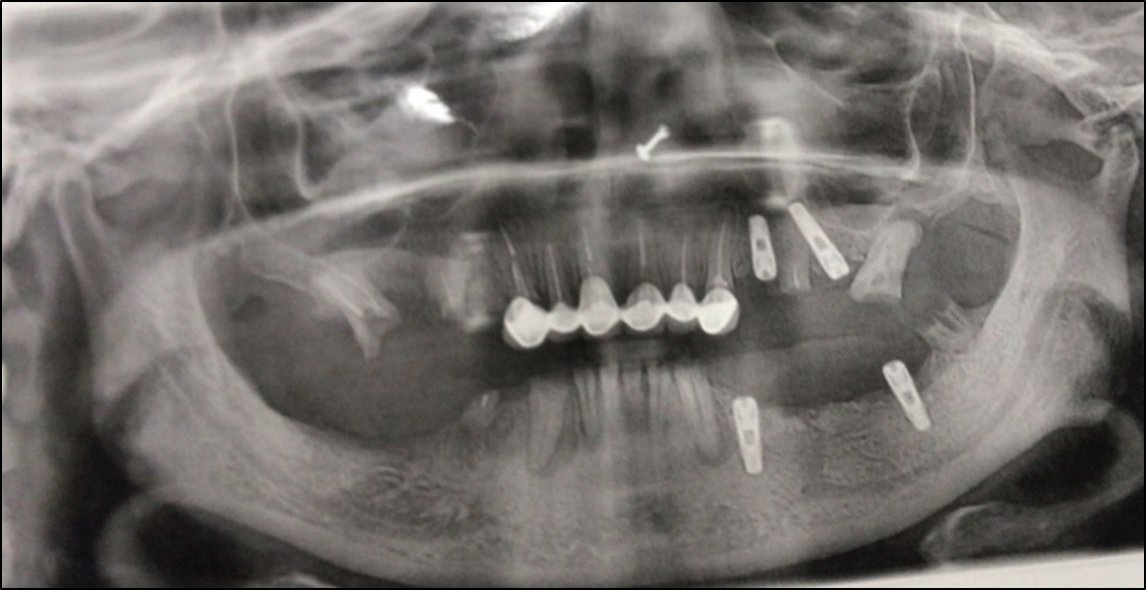
Fig 1

Fig 2

Fig 3

Fig 4

Fig 5

Fig 6

Fig 7

Fig 8
DISCUSSION
The presence of SLE may impair orofacial structures and functions in various ways. Major complaints include xerostomia, burning and tingling of oral mucosa, and painful mucosal lesions. Furthermore, decreased salivary flow can lead to periodontal disease in patients with SLE. Patients with these systemic conditions present a multifactorial challenge for dental treatment due to advanced carious lesions, missing teeth, lack of adequate bone quality and quantity, in addition to the secondary effects of their medications. Use of systemic drugs SLE such as corticosteroids and nonsteroidal anti-inflammatory drugs may account for worsening this situation and may result in osteoporosis that can eventually produce negative effects on osseointegrated dental implants.
DISADVANTAGES OF CONVENTIONAL IMPLANT THERAPY
- Conventional implants will end up in decreased primary stability of the implants as the bone mineral density is significantly reduced in osteoporosis with patients suffering with SLE. More specifically, bone formation is diminished as osteoblasts are reduced in number and are less active and bone absorption is increased as osteocytes lead to apoptosis and osteoclasts are overactive.
- Rehabilitation of severely resorbed maxillary and mandibular bone requires the aid of grafting procedures. It is a life challenging task to rehabilitate such patients using conventional implant therapy.
- Rough surface design of the conventional implants increases bacterial adhesion leading to periimplantitis and further causing implant failure.
- Wider osteotomies created with conventional implants leads to remodelling at higher pace and delayed healing.
ADVANTAGES OF BASAL IMPLANT THERAPY
- Unlike conventional implants, Basal implant therapy does not require any augmentation procedures like bone grafting and sinus lifting as basal implants derive anchorage from the basal cortical bone.
- Due to highly polished smooth surface implants prevents the adhesion of bacteria to the surface of the implant.
- By virtue of single piece design of the implants, there is no submucosal micro gap formation, further decreasing the bacterial colonization and the sub mucosal bacterial load.
- Thin emergence profile of implants therefore, eventually reduced surface area for bacterial colonization.
- Minimal invasive procedure of the implant placement provides maximum remodelling and better healing leading to implant success creating an adequate epithelial seal necessary for the bone to adapt adequately, thus achieving osseointegration.
- Sharp self-cutting threads are engaged into highly mineralized and dense cortical bone which is infection and resorption free zone, away from the site of bacterial attack and thereby reducing the chances of peri-implantitis.
CONCLUSION
Systemic lupus erythematosus is a multisystem autoimmune disease with a wide spectrum of clinical presentations, partly linked to treatment-related adverse effects, but also related to the disease itself. Basal implant therapy is probably the best treatment modality when planning for prosthetic rehabilitation of immunocompromised patients. In our study, no remarkable bone loss around the implants was seen in the patient during the 12-month follow-up. The minimally invasive flapless, key hole technique with immediate loading offers a perfect solution for almost all patients looking for immediate and permanent fixed rehabilitation.
Disclaimer from Guident
The views and opinions expressed in articles published in Guident are solely those of the authors and do not necessarily reflect the views of the editors, the editorial board or the publisher, Ivory India. Guident does not endorse any product, technique or treatment described. Clinical content is intended for qualified dental and medical professionals and is not a substitute for individual clinical judgement. Guident, its editors and the publisher accept no liability for any consequence arising from the use of information published in the journal.
How to cite this article
Dr. Prachi Gupta, Dr. Abhinav Garg. Corticobasal Implants-a Treatment Modality for Full Mouth Rehabilitation in Systematic Lupus Erythematosus Patient: A Case Report. Guident. 2023 Nov;16(12). Available from: https://ivoryindia.in/articles/implantology/corticobasal-implants-a-treatment-modality-for-full-mouth-rehabilitation-in-systematic-lupus-erythematosus.html