Comparison of Pain Perception Between Two Pre-Injection Techniques: Pre-Cooling over Topical Anaesthetic Application During Infiltration Anaesthesia in Children
Department of Pedodontics and Preventive Dentistry, Government Dental College, Thiruvananthapuram, Kerala, India
ABSTRACT
Aim: This study aimed to compare pain perception of two pre-injection techniques; pre-cooling and topical anesthetic application during infiltration anesthesia in children aged 6-8 years. Methodology: The present study was a hospital-based, Observational study which consisted of 60 subjects who were divided into two groups the ice pre-cooling group and the topical anesthetic group. Pain sensation perceived by the subjects was assessed both subjectively and objectively using Wong Baker FACES Scale and SEM Scale respectively during infiltration anesthesia. The data were analyzed by independent t-test. The Pearson correlation method was used to assess the scales.
Results: The mean Wong Baker FACES Scale scores were 1.07 ± 1.26 and 5.67 ± 1.67 during needle penetration for the pre-cooling and topical anesthetic group respectively. SEM scale showed mean scores of 1.13 ± 1.01 for the pre-cooling group and 4.53 ± 1.43 for the topical anesthetic group. The difference was statistically significant (p < 0.001).
Conclusion: The excellent outcomes of the present study are indicative that pre-cooling is a promising pre-injection technique that should be routinely used in pediatric dental practice. However clinical studies with a larger sample to be conducted worldwide is necessary to popularise this technique among general dentist. As pediatric dentists, we should endeavor for painless dental treatment.
Keywords: Pre-cooling, benzocaine, topical anesthetic, pain perception, pre-injection technique.
INTRODUCTION
In pediatric dentistry, effective pain control is essential for optimal dental treatment. Dental anxiety or fear forms an important barrier in accepting and tolerating treatment in children. Proper pain control during treatment may help the child to overcome this barrier and in turn, create dentist-child trust which also ensures his/her cooperation in future visits.1 Therefore, a pleasant dental treatment in children warrants adequate local anesthesia and effective pain control. However, pain caused due to needle insertion during local anesthesia is anxiety-provoking in children.1
Several techniques have been tried to control pain caused by needle pricks during the administration of local anesthesia. Over the years topical anesthetics have gained popularity among dentists worldwide and this is the most common method of pre-injection technique that is currently in use.1 However, these agents lack bio-adhesion and hence tend to spread in the oral cavity and this diminishes their anesthetic effect. They also have an unpleasant taste that causes discomfort and reduces patient compliance.2 Moreover, there have been reports of allergic reactions to several components used in different topical anesthetic agents.3 Another factor to consider about these agents is that their effects are enhanced when the mucosal surface is dry; therefore, surfaces should be adequately dried before administration. This is often a difficult task to achieve especially in young children. These factors urge the need to invent new and more effective agents and techniques for topical anesthesia.
Literature suggests that the use of cold temperatures for analgesia (Cryoanesthesia) has been in medical practice for thousands of years. The first written account was given by Hippocrates where he described snow from high places being applied to wounds for pain control. Several studies show that cryoanesthesia is more efficient when compared to topical anesthetics in relieving needle prick pain. This may be because cold acts on all the cells while topical anesthetics act only on nerve cells.5 The mechanism of action of precooling is a conduction block similar to that of local anesthesia. It is found that below 100 c, larger myelinated fibers stop conducting nerve impulses.5
Precooling is being used routinely in medical procedures such as venipunctures, immunizations, etc, but till now it's not very popular in dentistry.6 When administered in a way acceptable for children (like ice popsicles in the present study), it can very well become a game changer in pediatric dental practice.
This study aims to find how pre-cooling the injection site fairs against using topical anesthetics as a pre-injection technique for dental treatments in children.
MATERIALS AND METHODS
This observational study included 60 children in the age group of 6-8 years who met the inclusion criteria: (1) Patients with Frankl rating scores of 3 and 4. (2) No history of specific phobia related to dental settings or post-traumatic stress disorders. (3) Patients who were physically and medically fit. (4) Parents who were willing to give consent to participate and children from whom assent could be obtained.
In this study, the children undergoing infiltration anesthesia in the maxillary anterior region were split into two groups based on the pre-injection technique that they received. Group 1 received topical anesthetic gel (Benzocaine 20%) and Group 2 received Pre-cooling with ice popsicle. In group 1, the buccal mucosa of the tooth to be treated was dried using cotton balls for 30 seconds and then a topical 20% Benzocaine gel (pea-sized approximately 0.25gm) was applied using a toothette for 1 minute. The procedure was followed by an infiltration of 0.6ml of 2% lignocaine with 1:200,000 epinephrine. In group 2, the injection site was precooled with an ice popsicle for approximately the same duration as the toothette before infiltration anesthesia.
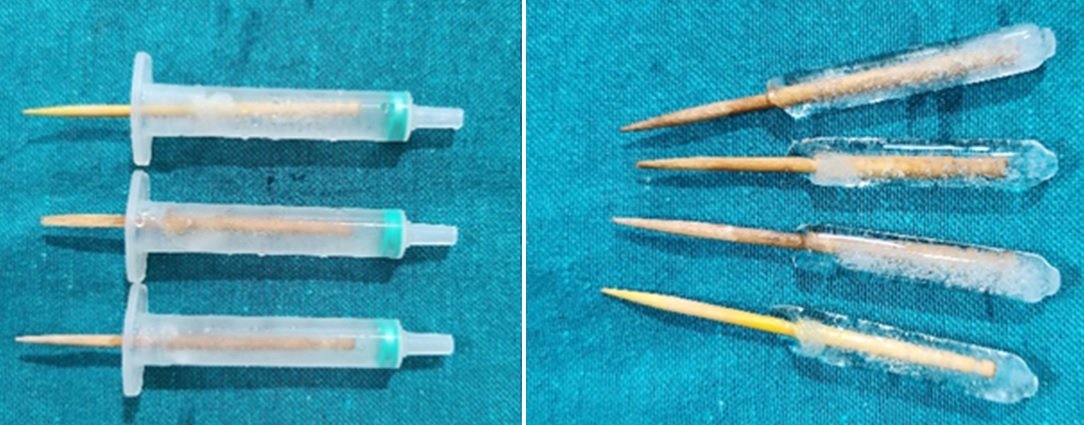
Figure 1: Ice Popsicles prepared using a 2ml syringe
Ice popsicles were made by filling a sterile syringe with distilled water. In this study, ice was applied to the buccal mucosa only for 1 minute after isolating the area posteriorly and inferiorly with cotton rolls. During infiltration anesthesia, a dentist blind to the study assessed the patient’s reaction during injection to obtain objective scores using an SEM scale. Subjective scores were also taken from patients after the injection using the Wong Baker FACES scale. The child was assessed using the scales again during the dental procedure.

Figure 2: Wong Baker FACES Scale

Table 1: SEM Scale

Figure 3: Subjective measurement from the child
The values were subjected to statistical analysis, using SPSS version 25. The comparison of quantitative variables between the two groups was analyzed by unpaired t-test. Pearson correlation was used to find the correlation between the scales.
RESULT
The study was done among 60 children, 30 males and 30 females in the age group of 6 to 8 years. Both the study groups were comparable in sociodemographic factors like age, gender, socioeconomic status, and BMI. The mean Wong Baker FACES Scale scores were 1.07 ± 1.26 and 5.67 ± 1.67 during needle penetration for the pre-cooling and topical anesthetic group respectively.

SEM scale showed mean scores of 1.13 ± 1.01 for the pre-cooling group and 4.53 ± 1.43 for the topical anesthetic group. The data were analyzed using unpaired t-test and the difference was statistically significant (p < 0.001).

In the present study, Sound Eye Motor Scale scores showed a strong positive correlation (r = 0.912) with Wong Baker FACES Scale. Moreover, BMI showed a mild positive correlation (r = 0.252) with pain perception as assessed by Wong Baker FACES Scale.

Graph 1: Correlation of Wong Baker FACES Scale with SEM Scale.
DISCUSSION
Cryoanesthesia is the application of cold to block the conduction of pain sensations by nerves.8 Application of ice produces a condition called “cold-induced neuropraxia.”8 by decreasing the activation threshold of nerves and the conduction velocity of pain signals.8 It also causes vasoconstriction resulting in decreased tissue blood flow, tissue metabolism, oxygen utilization, and inflammation.9 Though anesthesia produced by precooling is of very short duration it is sufficient to reduce the pain and discomfort caused by the penetration of a needle.9
Chilakamuri et al stated that the discomfort from ice contact is time-dependent, and the threshold is subjective. They suggested an ice application time of 2-5 minutes.8 Aminabadi and Farahani recommend a 2-minute application because 5 minutes of ice application although accepted by adults and teenagers would not be tolerated by children.7 A 1-minute contact with ice was used in the present study to improve patient acceptance even better.
The onset of action for topical anesthetic agents ranges from 1 to 5 minutes. In this study, 20% benzocaine gel was used which had an onset of action of <1 minute. Hence 1 min application of topical anesthetic was used.
To quantify pain we need to factor in parameters like self-report and psychological, behavioral, and physiologic responses i.e., recognition of pain relies heavily on the verbal expression of pain by the child as well as the interpretation by the caregiver.10 Champion et al.11 suggested that a composite measure would be ideal, including self-report and one or more of these other approaches.
According to Chilakamuri et al, the self-report measure represents the gold standard for assessing children's pain, and it can be used for children aged over 6 years.8 This also becomes a testimony of his acceptance or defiance. Nonverbal expression of pain is also an important source of information for observers, through infancy as well as childhood.12 Interpretation of behavioral changes can augment or replace self-report in situations where the child is too distressed because of emotional or situational factors and cannot use a self-report scale accurately.12
In the present study, self-reported pain scores were recorded using Wong Baker facial image scale. The scale is easy to use, repeatable, and has shown a significant positive correlation. Since the school-aged children who participated in this study were in the stage of concrete operations, it was an excellent measure to evaluate self-reported pain in this age group.8,13
The patient's behavior was evaluated for pain perception using the SEM scale by the operator. SEM scale considers the Sound, Eye, and Motor components of patients' response to stimulation and was used because it enables the assessment of the relationship between pain and the reactions that the sensation of pain generates in the patient's eyes, bodily movements, and verbal expressions of discomfort.14 It can also record the degree of intensity of pain sensation.9
In the present study both the scales used showed a strong positive correlation with a Pearson correlation of 0.912. This indicates that the children were able to accurately rate their pain levels in the Wong Baker FACES Scale and that the observer was also able to replicate the same by means of the SEM Scale. Another reason for the strong correlation could be that only children with a positive Frankl behavior rating were included in the study.
The results of the present study showed that pre-cooling the injection site significantly reduced the pain and anxiety perceived by pediatric patients as compared to topical anesthetics. The difference in mean pain scores among the study groups were 4.6 and 3.4 for Wong Baker FACES Scale and SEM Scale respectively.
The results of the present study are supported by other studies conducted previously by Harbert et al15, Aminabadi et al7 and Kuwahara et al16, who also found similar results.
The effect of topical anesthetic gel was found to be unreliable in the present study. More time was needed to convince children for the application of topical gel as compared to ice popsicles. A few children even demanded for ice popsicles in their subsequent dental visit, which showed that a child can relate to the concept of ice popsicles in alleviating pain in a better manner when compared to a topical gel since ice popsicles are already popular among children.
CONCLUSION
The findings of the present study can be summarized as follows,
- The pain perception in the pre-cooling group was significantly lower when compared to the topical anesthetic group.
- Patient acceptance was more for the ice popsicle compared to the topical anesthetic.
Considering the observations of the present study, it can be concluded that pre-cooling the injection site is a possible alternative to the use of topical anesthetic gel in young children. It proves to be an easy, reliable, and cost-effective method of pain-free local anesthetic administration. However, there were isolated instances in the study where even pre-cooling the site did not alleviate pain entirely. Hence, the scope for finding a unique alternative is still open for fellow researchers. Meanwhile, more clinical studies with a larger sample should be conducted to popularize this technique among general dentists. As pediatric dentists, we should endeavor for painless dental treatment for children.
REFERENCES
- VAFAEI A, RAHBAR M, DADKHAH R, RANJKESH B, ERFANPARAST L. Children’s Pain Perception and Behavioral Feedback during Local Anesthetic Injection with Four Injection Site Preparation Methods. Maedica (Bucur) [Internet]. 2019 Dec [cited 2022 Oct 5];14(4):343–9. Available from: https://www.ncbi.nlm.nih.gov/pmc/articles/PMC7035436/
- Hindocha N, Manhem F, Bäckryd E, Bågesund M. Ice versus lidocaine 5% gel for topical anesthesia of oral mucosa – a randomized cross-over study. BMC Anesthesiology [Internet]. 2019 Dec 16 [cited 2022 Mar 29];19(1):227. Available from: https://doi.org/10.1186/s12871-019-0902-8
- Amado A, Sood A, Taylor JS. Contact Allergy to Lidocaine: A Report of Sixteen Cases. Dermatitis [Internet]. 2007 Dec [cited 2023 Feb 20];18(4):215–20. Available from: https://journals.lww.com/01206501-200712000-00007
- Evans PJD. Cryoanalgesia.: The application of low temperatures to nerves to produce anesthesia or analgesia. Anesthesia [Internet]. 1981 Nov [cited 2022 Oct 5];36(11):1003–13. Available from: https://onlinelibrary.wiley.com/doi/10.1111/j.1365-2044.1981.tb08673.x
- Bansal D, Mahajan M, Mathur S. A comparative evaluation of ice and topical anesthetic gel in the reduction of pain before the injection: A clinical trial. SRM J Res Dent Sci [Internet]. 2020 [cited 2022 Mar 28];11(1):6. Available from: http://www.srmjrds.in/text.asp?2020/11/1/6/280373
- Tirupathi SP, Rajasekhar S. Effect of precooling on pain during local anesthesia administration in children: a systematic review. J Dent Anesth Pain Med. 2020 Jun;20(3):119–27.
- Aminabadi NA, Farahani RMZ. The Effect of Pre-cooling the Injection Site on Pediatric Pain Perception during the Administration of Local Anesthesia. The Journal of Contemporary Dental Practice [Internet]. 2009 May [cited 2022 Mar 28];10(3):43–50. Available from: https://www.thejcdp.com/doi/10.5005/jcdp-10-3-43
- Chilakamuri S, SVSG N, Nuvvula S. The effect of pre-cooling versus topical anesthesia on pain perception during palatal injections in children aged 7–9 years: a randomized split-mouth crossover clinical trial. J Dent Anesth Pain Med [Internet]. 2020 Dec [cited 2022 Mar 28];20(6):377–86. Available from: https://www.ncbi.nlm.nih.gov/pmc/articles/PMC7783376/
- Jayasuriya NSS, Weerapperuma ID, Amarasinghe MGCK. The use of an iced cotton bud as an effective pre-cooling method for palatal anesthesia: A technical note. Singapore Dental Journal [Internet]. 2017 Dec 1 [cited 2022 Mar 28];38:17–9. Available from: https://www.sciencedirect.com/science/article/pii/S0377529117300950
- Arif-Rahu M, Fisher D, Matsuda Y. Biobehavioral measures for pain in the pediatric patient. Pain Manag Nurs. 2012 Sep;13(3):157–68.
- Champion G, Goodenough B, CL von, W T. Measurement of pain by self-report. In: Measurement of Pain in Infants and Children. 1998. p. 123–60.
- Stinson JN, Kavanagh T, Yamada J, Gill N, Stevens B. Systematic review of the psychometric properties, interpretability and feasibility of self-report pain intensity measures for use in clinical trials in children and adolescents. Pain [Internet]. 2006 Nov [cited 2023 Feb 15];125(1):143–57. Available from: https://journals.lww.com/00006396-200611000-00018
- Mohiuddin I, Setty J, Srinivasan I, Desai J. TOPICAL APPLICATION OF LOCAL ANAESTHETIC GEL VS ICE IN PEDIATRIC PATIENTS FOR INFILTRATION ANAESTHESIA. Journal of Evolution of Medical and Dental Sciences. 2015 Sep 14;4:12934–40.
- Kumari K, Kaur G, Arora SS, Pandher PK, Singh R, Bhat RA. To compare the effect of ice and the lignocaine gel in reducing pain of needle prick before palatal nerve block. Oral Surg [Internet]. 2021 Feb [cited 2023 Feb 15];14(1):23–8. Available from: https://onlinelibrary.wiley.com/doi/10.1111/ors.12498
- Harbert H. Topical ice: a precursor to palatal injections. J Endod. 1989 Jan;15(1):27–8.
- Kuwahara RT, Skinner RB. Emla versus ice as a topical anesthetic. Dermatol Surg. 2001 May;27(5):495–6.
- Vafaei A, Rahbar M, Dadkhah R, Ranjkesh B, Erfanparast L. Children’s Pain Perception and Behavioral Feedback during Local Anesthetic Injection with Four Injection Site Preparation Methods. Maedica (Bucur). 2019 Dec;14(4):343–9.
- Adriani J, Zepernick R. Clinical Effectiveness of Drugs Used for Topical Anesthesia. JAMA [Internet]. 1964 May 25 [cited 2022 Nov 2];188(8). Available from: http://jama.jamanetwork.com/article.aspx?doi=10.1001/jama.1964.03060340009003
Disclaimer from Guident
The views and opinions expressed in articles published in Guident are solely those of the authors and do not necessarily reflect the views of the editors, the editorial board or the publisher, Ivory India. Guident does not endorse any product, technique or treatment described. Clinical content is intended for qualified dental and medical professionals and is not a substitute for individual clinical judgement. Guident, its editors and the publisher accept no liability for any consequence arising from the use of information published in the journal.
How to cite this article
Dr. Danu Dayakar P S, Dr. Digesh Balachandran, Dr. Rita Zarina A. Comparison of Pain Perception Between Two Pre-Injection Techniques: Pre-Cooling over Topical Anaesthetic Application During Infiltration Anaesthesia in Children. Guident. 2023 Nov;16(12). Available from: https://ivoryindia.in/articles/research/comparison-of-pain-perception-between-two-pre-injection-techniques-pre-cooling-over-topical-anaesthetic.html