Full-Mouth Rehabilitation with Immediate Corticobasal Implants in a Young Adult with Severe Drug-Associated Dental Destruction: A Case Report
Dentonic Oral Surgery Implant Centre Rajbagh, Srinagar, J&K
ABSTRACT
Background: Substance use disorders may be associated with severe deterioration of oral health, including extensive dental caries, periodontal destruction, tooth loss and compromised aesthetics. In young patients who have completed de-addiction therapy, rapid restoration of oral function and aesthetics may have substantial psychosocial importance.
Case Presentation: A 29-year-old male presented with severely compromised dentition following a 12-year history of illicit drug use. The patient reported having completed de-addiction therapy and wished to restore his smile before attending his younger sister's forthcoming wedding. Clinical examination revealed extensively destroyed and non-restorable maxillary teeth, with a visibly compromised smile and general facial appearance. Following clinical and radiographic assessment, a staged full-mouth rehabilitation plan was formulated. The first phase involved extraction of 10 non-restorable maxillary teeth followed by immediate placement of 10 corticobasal implants.
Treatment: The maxillary rehabilitation was performed using an immediate-loading corticobasal implant protocol. The treatment strategy was selected to permit rapid transition from a severely compromised dentition to a functional and aesthetic prosthetic rehabilitation while minimising the duration of edentulism. No routine systemic antibiotic was prescribed before or after surgery in this individual case, based on the treating clinician's assessment and surgical protocol. Post-operative care included povidone-iodine (Betadine) mouth rinses and nutritional supplementation with protein powder. The patient reported minimal post-operative discomfort and returned unused analgesic medication approximately 24 hours after the procedure.
Conclusion: This case illustrates the potential role of corticobasal implantology in the rapid rehabilitation of patients with severely compromised dentitions where conventional staged implant rehabilitation may require a prolonged treatment period. The case also highlights the importance of careful patient selection, comprehensive treatment planning and consideration of psychosocial objectives when restoring oral function and aesthetics in young adults recovering from substance use disorders.
Keywords: corticobasal implants; basal implants; immediate loading; full-mouth rehabilitation; dental implantology; tooth loss; substance use disorder; oral rehabilitation; case report.
1. INTRODUCTION
Severe dental destruction in young adults can have consequences extending beyond oral health. Extensive tooth loss and an unaesthetic smile may adversely affect confidence, social interaction and quality of life, particularly when the patient is attempting to re-establish social and family relationships following recovery from substance use.
Substance use may be associated with poor oral hygiene, dietary disturbances, xerostomia, periodontal disease, traumatic habits and delayed access to dental care. The resulting dental destruction can sometimes be extensive despite the patient's relatively young age.
Conventional implant rehabilitation frequently involves a sequence of tooth extraction, healing, implant placement, osseointegration and subsequent prosthetic rehabilitation. Depending on the clinical circumstances, this approach may require an extended treatment period.
Corticobasal implantology represents an alternative implant rehabilitation concept in which implants are designed to engage the mechanically stronger cortical bone. Immediate functional rehabilitation may therefore be considered in appropriately selected cases.
The present case describes the management of a young adult with severely compromised maxillary dentition following a prolonged history of illicit drug use, in whom rapid aesthetic and functional rehabilitation was considered particularly important because of an imminent family event.
2. CASE PRESENTATION
A 29-year-old male presented to the clinic seeking comprehensive dental rehabilitation. The patient reported a history of illicit drug use extending over approximately 12 years. He had subsequently undergone de-addiction therapy and reported that he was no longer using the substances.
The immediate motivation for seeking dental treatment was highly personal and time-sensitive. The patient wished to attend his younger sister's forthcoming marriage with an acceptable smile and improved facial appearance.
The patient provided an open history of his previous substance use and attributed the progressive deterioration of his dentition to the prolonged period of drug use and associated neglect of oral health.
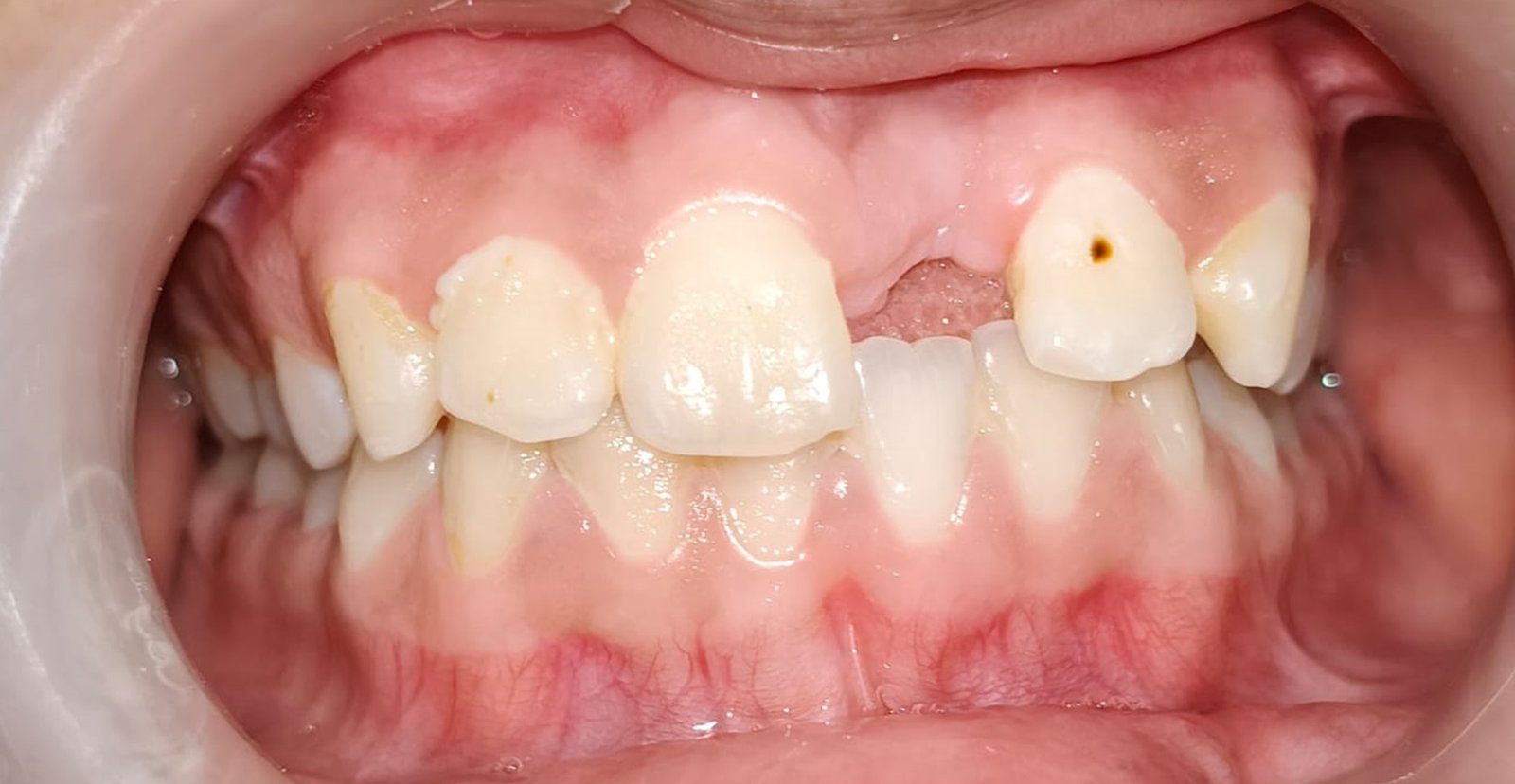
At presentation, the patient had a visibly compromised dentition with multiple grossly destructed and non-restorable teeth. His facial appearance was described clinically as tired and somewhat sunken, although he maintained a contemporary hairstyle and continued to engage socially.
The patient's chief concern was not limited to pain or mastication. Restoration of his smile was an important component of his perceived return to normal social and family life following de-addiction.

3. CLINICAL ASSESSMENT AND TREATMENT PLANNING
A comprehensive clinical examination was performed, supplemented by appropriate radiographic assessment.
The maxillary dentition contained multiple teeth considered to have a poor or hopeless prognosis and unsuitable for predictable long-term restoration.
After discussion of the available treatment options, including the anticipated treatment duration associated with conventional approaches, the patient elected to proceed with a rapid implant-supported rehabilitation strategy.
The treatment was planned in two principal phases because of the extent of dental destruction and the requirement for multiple extractions.
The first phase involved rehabilitation of the maxillary arch.
The proposed treatment consisted of:
- Extraction of 10 non-restorable maxillary teeth.
- Immediate placement of 10 corticobasal implants.
- Immediate or early prosthetic rehabilitation according to the primary stability achieved and the treating clinician's protocol.
- Subsequent rehabilitation of the remaining arch as a second treatment phase.
The patient was counselled regarding the nature of the procedure, potential benefits, limitations, risks and alternative treatment approaches. He expressed a clear preference for a rapid rehabilitation pathway because of the forthcoming family event.
4. SURGICAL PROCEDURE
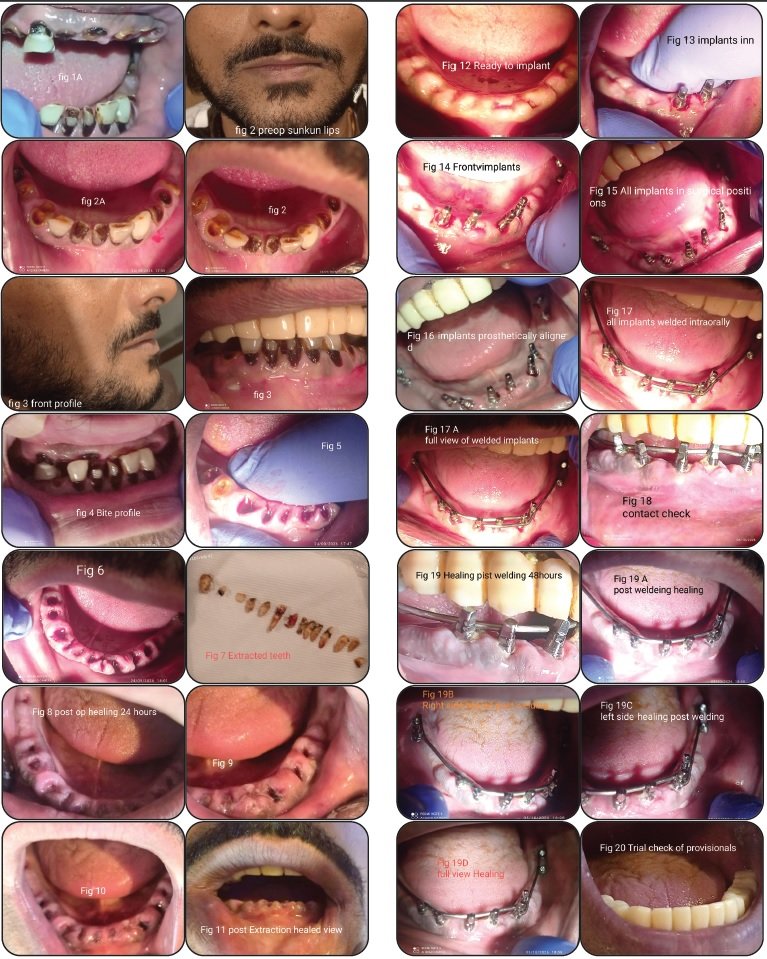
Ten severely compromised maxillary teeth were extracted.
Following extraction and preparation of the implant sites, 10 corticobasal implants were placed according to the principles of the selected corticobasal implant system and the available cortical bone anatomy.
The implant positioning and surgical protocol were determined clinically and radiographically with the objective of obtaining adequate primary stability and establishing an appropriate foundation for subsequent prosthetic rehabilitation.
The procedure was completed without any reported major intra-operative complication.

5. PERI-OPERATIVE MANAGEMENT
An unusual feature of this case was the absence of routine systemic antibiotic administration in the peri-operative period.
The patient did not receive prophylactic or post-operative systemic antibiotics as part of this particular treatment protocol. This decision was based on the treating clinician's individual assessment and should not be interpreted as evidence that antibiotic therapy is unnecessary for implant surgery generally.
The patient was instructed to use povidone-iodine (Betadine) mouth rinses several times daily during the immediate post-operative period.
Nutritional supplementation with protein powder was also recommended as part of the clinician's supportive nutritional advice during recovery.
Analgesic medication was prescribed for post-operative pain control. Interestingly, at approximately 24 hours following the procedure, the patient returned the unused analgesic tablets, reporting that he had experienced little or no significant post-operative pain.
No significant early post-operative complication was reported.

6. OUTCOME
The patient demonstrated an unexpectedly comfortable early post-operative course. He reported minimal discomfort and did not require the prescribed analgesic medication.
The immediate clinical objective was to restore the patient's ability to present socially with an improved smile within the limited time available before his sister's wedding.
Long-term clinical and radiographic follow-up is essential for assessing implant stability, peri-implant tissue health, prosthetic function and maintenance.

7. DISCUSSION
The present case demonstrates a particularly challenging combination of factors: severe dental destruction in a young adult, a history of prolonged substance use, recent completion of de-addiction therapy and a strong psychosocial requirement for rapid aesthetic rehabilitation.
The patient's motivation was noteworthy. His decision to seek treatment was closely associated with his desire to participate confidently in an important family occasion. This illustrates how dental rehabilitation can represent more than restoration of mastication alone. For patients recovering from substance use disorders, restoration of appearance and oral function may form part of a broader process of social reintegration.
The principal clinical consideration in this case was treatment time.
A conventional implant rehabilitation pathway can involve multiple surgical and prosthetic stages and may require a prolonged period before definitive functional rehabilitation. In contrast, corticobasal implantology is based on the engagement of strategically important cortical bone and may permit immediate or early loading when appropriate primary stability and biomechanical conditions are achieved.
This characteristic can be particularly relevant in selected situations where the patient's clinical and psychosocial circumstances make prolonged edentulous periods undesirable.
However, the present case should not be interpreted as evidence that corticobasal implants are universally superior to conventional implant systems. Treatment selection must be individualised according to bone anatomy, systemic health, occlusal conditions, periodontal status, patient compliance, implant stability and clinician experience.
Another notable feature was the decision not to administer routine systemic antibiotics. Although the patient experienced an uncomplicated early recovery, his outcome cannot be used to establish that antibiotics are unnecessary in implant surgery. Antibiotic prescribing should be based on contemporary evidence, patient-specific risk factors, the extent of surgery, infection risk and the clinician's established protocol.
Similarly, the patient's history of prolonged drug use should not be interpreted as having produced a protective effect or enhanced immunity. The uncomplicated recovery observed in this individual may simply represent the outcome of his particular biological status, surgical management and post-operative course.
The case nevertheless raises an important clinical question: Can strategically planned immediate cortical implant rehabilitation provide a valuable treatment pathway for selected patients requiring urgent restoration of oral function and aesthetics?
Further prospective clinical research and appropriately designed comparative studies are required to establish the long-term clinical performance, complication profile and patient-reported outcomes associated with different immediate-loading implant approaches.
8. CLINICAL SIGNIFICANCE
This case highlights several considerations relevant to clinical implant practice:
- Patient motivation matters. Psychosocial objectives can be an important component of treatment planning when they are appropriately balanced against biological and prosthetic considerations.
- Treatment time can influence treatment selection. In carefully selected cases, immediate rehabilitation may reduce the period during which a patient remains without functional teeth.
- Cortical anchorage may provide an alternative treatment concept. Corticobasal implantology may be considered where appropriate cortical anatomy and primary stability permit.
- Individualised planning is essential. A treatment approach suitable for one patient cannot automatically be generalised to all patients with severe dental destruction.
- Substance-use history requires careful assessment. Previous substance use should be documented as part of the patient's medical and social history, while current systemic health, nutritional status, compliance and relapse risk should be considered when planning comprehensive rehabilitation.
- Long-term follow-up is critical. Immediate post-operative comfort does not establish long-term implant success. Clinical, radiographic and prosthetic follow-up are required.
9. CONCLUSION
This case demonstrates the potential of corticobasal implantology as a rapid rehabilitation option for a young patient presenting with extensive, non-restorable dental destruction and a compelling need for early restoration of aesthetics and function.
The patient's recovery from substance use and his motivation to restore his smile before an important family event provided a strong psychosocial impetus for treatment. Immediate extraction and placement of corticobasal implants offered a treatment pathway designed around this limited timeframe.
The case reinforces the principle that implant treatment should be biologically sound, individually planned and responsive to the patient's functional and psychosocial needs.
Corticobasal implantology may offer an important treatment option in carefully selected situations where rapid rehabilitation is clinically appropriate. Its use, however, should be guided by evidence, case selection, implant stability, surgical expertise and long-term follow-up rather than urgency alone.
Patient Perspective
The patient's principal objective was to regain a natural-looking smile and attend his younger sister's wedding with confidence following completion of his de-addiction programme. The rapid improvement in his oral condition was associated with considerable personal satisfaction.
Disclaimer from Guident
The views and opinions expressed in articles published in Guident are solely those of the authors and do not necessarily reflect the views of the editors, the editorial board or the publisher, Ivory India. Guident does not endorse any product, technique or treatment described. Clinical content is intended for qualified dental and medical professionals and is not a substitute for individual clinical judgement. Guident, its editors and the publisher accept no liability for any consequence arising from the use of information published in the journal.
How to cite this article
Dr. Muhammad Shafie, Dr. Mateen Shafie. Full-Mouth Rehabilitation with Immediate Corticobasal Implants in a Young Adult with Severe Drug-Associated Dental Destruction: A Case Report. Guident. 2026 Sep;19(10). Available from: https://ivoryindia.in/articles/implantology/full-mouth-rehabilitation-with-immediate-corticobasal-implants-in-a-young-adult-with-severe-drug-associated.html