Full-Mouth Implant-Supported Rehabilitation in a Young Adult Recovering from Polysubstance Use: A Case Report
Dentonic Oral Surgery Implant Centre Rajbagh, Srinagar, J&K
ABSTRACT
Background: Extensive tooth loss in young adults recovering from substance use disorders can adversely affect oral function, appearance, self-confidence and social reintegration. Comprehensive dental rehabilitation may contribute to restoring oral health and quality of life.
Case Presentation: A 35-year-old male patient, recently recovering from prolonged polysubstance use, presented with extensive tooth loss and multiple residual root fragments. The patient reported approximately 12 years of dependence on multiple substances. Following a patient-centred consultation, rehabilitation of the maxillary arch was completed. Encouraged by the improvement, the patient consented to mandibular rehabilitation. After appropriate medical assessment and removal of the residual root fragments, mandibular implants were placed and rigidly stabilised using an intraoral welding technique. The mandibular rehabilitation was completed within 10 days of the commencement of the described treatment phase, with the restoration designed to harmonise with the maxillary arch.
Conclusion: This case highlights the role of comprehensive implant-supported rehabilitation and patient-centred treatment planning in addressing severe dental deterioration in a young adult recovering from substance use. Long-term follow-up is necessary to assess implant survival and prosthetic outcomes.
Keywords: Polysubstance use; full-mouth rehabilitation; dental implants; intraoral welding; implant-supported prosthesis.
INTRODUCTION
Substance use disorders may be associated with significant oral health problems, including extensive tooth loss, impaired oral hygiene and delayed access to dental care. The resulting functional and aesthetic consequences can adversely affect confidence and social participation.1
Implant-supported rehabilitation may offer a fixed restorative solution for selected patients with extensive tooth loss. Intraoral welding has been described as a method of rigidly splinting implants to support stabilisation during immediate or early prosthetic rehabilitation.2-4
This case reports the comprehensive rehabilitation of a young adult recovering from prolonged polysubstance use, focusing on sequential full-mouth rehabilitation and mandibular implant stabilisation using intraoral welding.
CASE PRESENTATION
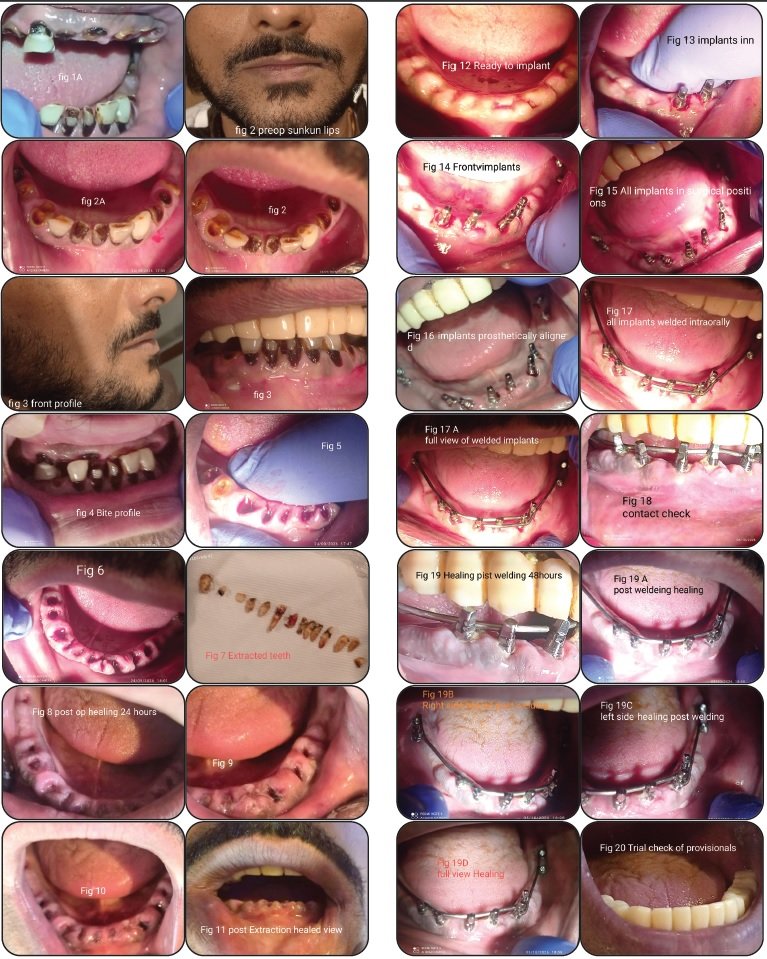
A 35-year-old male patient presented with extensive loss of natural dentition and multiple residual root fragments. He reported a 12-year history of polysubstance use and had recently entered recovery. His primary concerns included his appearance, oral function and desire to resume normal social life.
The initial consultation explored his expectations and motivation for treatment. Following clinical examination and appropriate medical assessment, a comprehensive rehabilitation plan was established.
Maxillary Rehabilitation
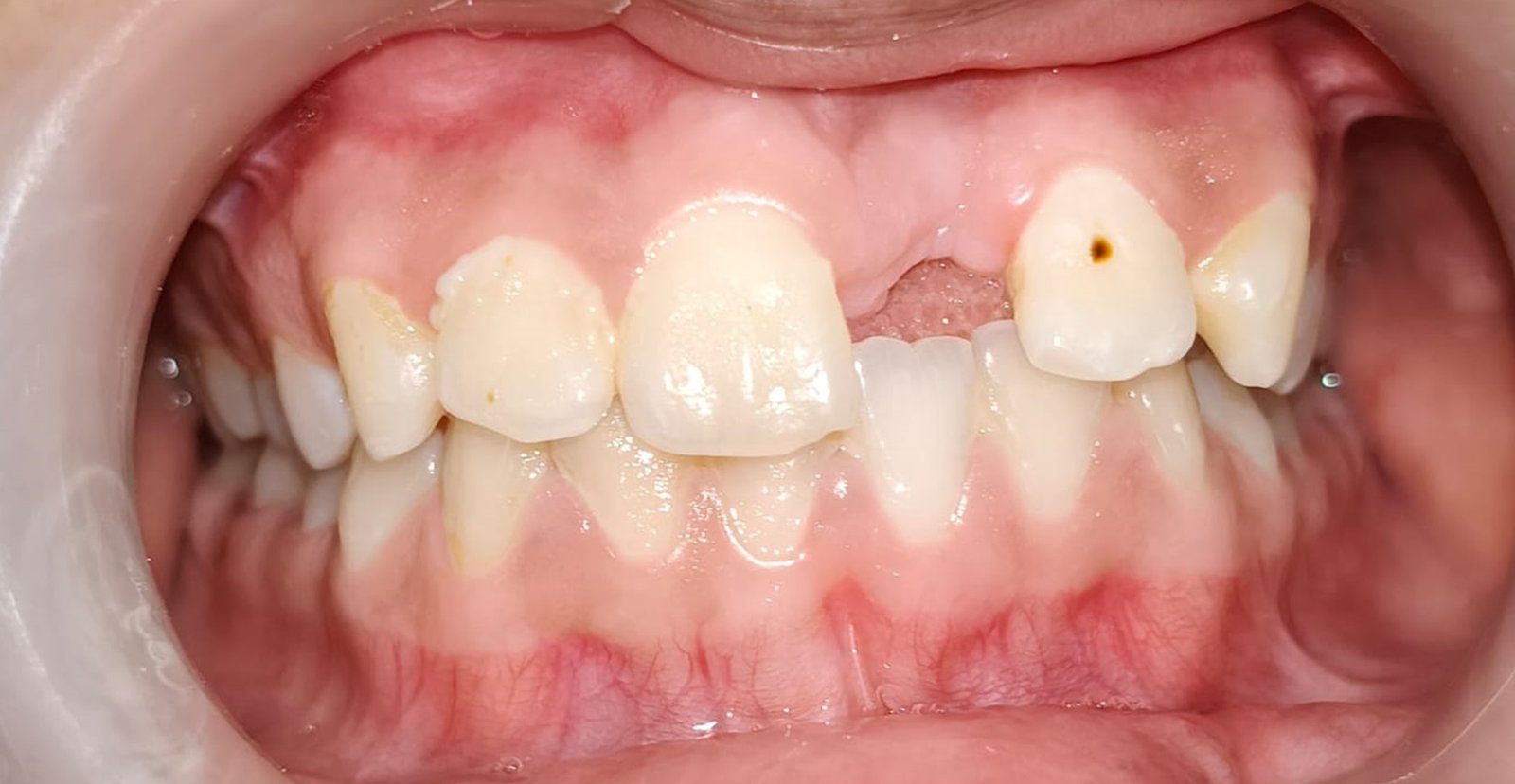
The maxillary arch was rehabilitated first. The improvement in appearance encouraged the patient to proceed with treatment of the mandibular arch.
Mandibular Rehabilitation
After reviewing the patient's medical and clinical parameters, the residual mandibular root fragments were removed. The surgical stages were organised to allow healing of the extraction sites before the subsequent implant-related procedure, with the intention of facilitating a controlled operative field for intraoral welding.
Mandibular implants were subsequently placed and rigidly splinted using an intraoral welding technique. The mandibular prosthetic rehabilitation was completed within 10 days of the commencement of the described treatment phase, with the restoration designed to match the previously rehabilitated maxillary arch.
The number and dimensions of implants, insertion torque values, prosthetic materials and exact interval between extraction and implant placement should be added from the original clinical records.

DISCUSSION
This case demonstrates the importance of a patient-centred approach to comprehensive dental rehabilitation in a young adult recovering from polysubstance use. Treatment planning addressed the patient's functional and aesthetic concerns while involving him in decisions regarding the rehabilitation sequence.
Substance use may be associated with oral disease through multiple behavioural and systemic pathways. Accordingly, medical assessment, oral hygiene instruction, preventive care and long-term maintenance are important components of treatment. Dental rehabilitation should complement, rather than replace, appropriate addiction recovery support.1
Intraoral welding has been described as a technique for rigidly connecting implants to improve mechanical stabilisation in selected immediate or early-loading protocols. Its suitability depends on implant stability, bone conditions, framework design and occlusal management.2-4
Although the mandibular rehabilitation was completed within 10 days, this timeline does not establish complete osseointegration or long-term implant success. The exact surgical sequence and prosthetic loading protocol must be documented clearly. Follow-up assessments should include peri-implant tissue health, prosthetic integrity, radiographic bone levels and patient-reported outcomes.
The principal limitation of this report is the absence of detailed quantitative clinical findings and documented long-term follow-up in the information currently available.
CONCLUSION
Comprehensive implant-supported rehabilitation may help address functional and aesthetic challenges in young adults recovering from substance use disorders. This case describes sequential maxillary and mandibular rehabilitation, with intraoral welding used to stabilise the mandibular implants. The patient's engagement in treatment planning highlights the value of a patient-centred approach. Long-term clinical and radiographic monitoring is required to establish the durability and success of the treatment.
REFERENCES
- Shekarchizadeh H, Khami MR, Mohebbi SZ, Virtanen JI. Oral health behavior of drug addicts in withdrawal treatment. BMC Oral Health. 2013;13:11.
- Avvanzo P, Fabrocini LA, Ciavarella D, Avvanzo A, Lo Muzio L, De Maio RA. Use of intraoral welding to stabilize dental implants in augmented sites for immediate provisionalization: a case report. J Oral Implantol. 2012;38(1):33-41. doi:10.1563/AAID-JOI-D-10-00047.
- Marchesi M, Ferrari C, Superbi S, Jimbo R, Galli S. Modified protocol of the intraoral welding technique for immediate implant-supported rehabilitation of the edentulous maxilla. Implant Dent. 2015;24(1):110-116. doi:10.1097/ID.0000000000000189.
- Degidi M, Nardi D, Piattelli A. Immediate loading of the edentulous maxilla with a final restoration supported by an intraoral welded titanium bar: a case series of 20 consecutive cases. J Periodontol. 2008;79(11):2207-2213. doi:10.1902/jop.2008.080141.
Disclaimer from Guident
The views and opinions expressed in articles published in Guident are solely those of the authors and do not necessarily reflect the views of the editors, the editorial board or the publisher, Ivory India. Guident does not endorse any product, technique or treatment described. Clinical content is intended for qualified dental and medical professionals and is not a substitute for individual clinical judgement. Guident, its editors and the publisher accept no liability for any consequence arising from the use of information published in the journal.
How to cite this article
Dr. Muhammad Shafie, Dr. Mateen Shafie. Full-Mouth Implant-Supported Rehabilitation in a Young Adult Recovering from Polysubstance Use: A Case Report. Guident. 2026 Nov;19(12). Available from: https://ivoryindia.in/articles/implantology/full-mouth-implant-supported-rehabilitation-in-a-young-adult-recovering-from-polysubstance-use-a-case-report.html