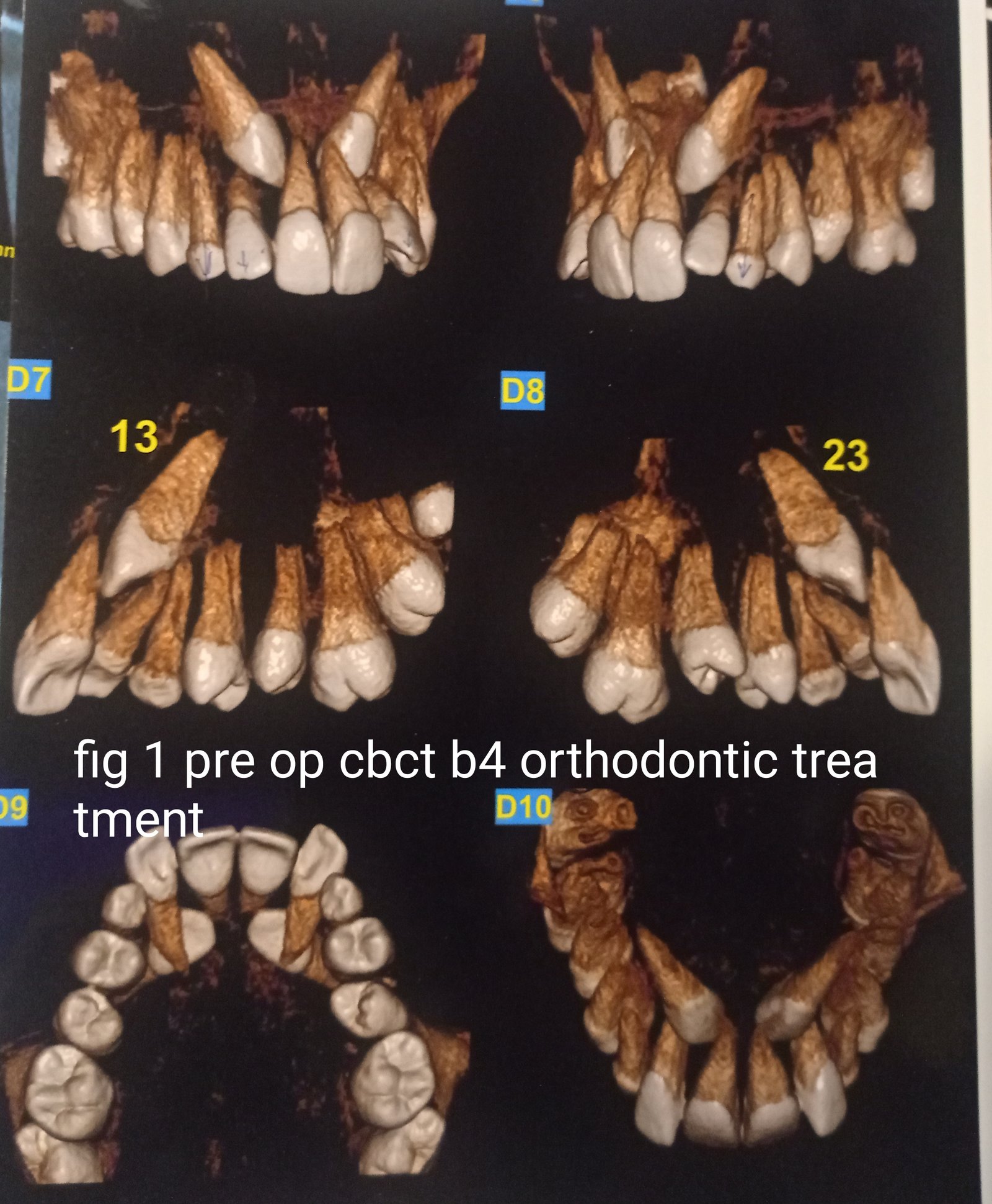
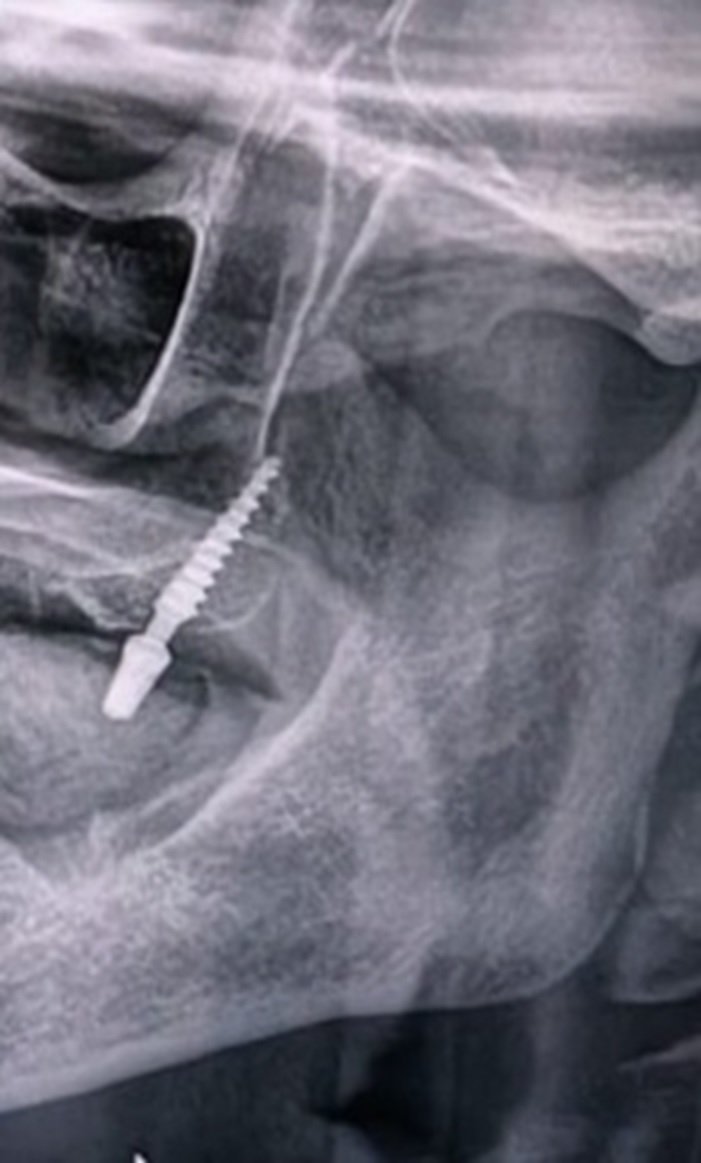
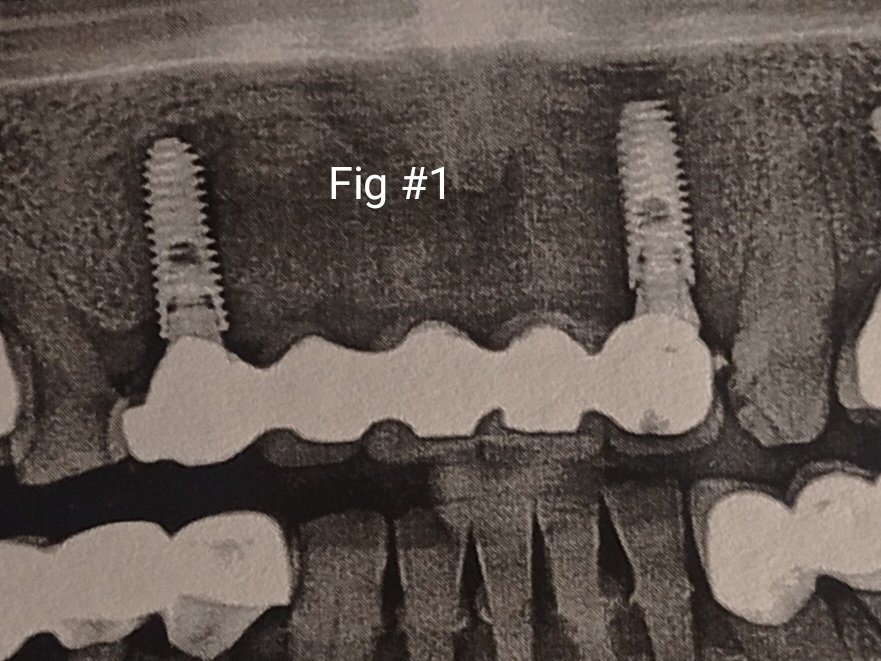
Hybrid Implantology Approach: Integrating Corticobasal with Conventional Implants to Fulfill Patientcentric Demands
Dentonic Oral Surgery Implant Centre Rajbagh, Srinagar, J&K
Abstract:
This case report highlights a strategic combination of cortico-basal and conventional implantology to restore oral function without compromising a patient's professional schedule. A working female patient with missing posterior bridges and no prior prosthesis requested an immediate solution that would not interfere with her work obligations. By synchronizing delayed loading conventional implants with immediate loading cortico-basal implants, we achieved a functional, esthetic, and time-sensitive restoration. This case emphasizes the evolving role of cortico-basal implantology as a dynamic and patient-friendly modality.
Introduction:
Dental implantology has evolved significantly with advancements such as cortico-basal implants, which offer immediate loading capabilities. This case demonstrates how cortico-basal implants can complement conventional implants, especially in scenarios where patient needs and time constraints must be respected without compromising clinical outcomes.
Case Description:
CASE-1
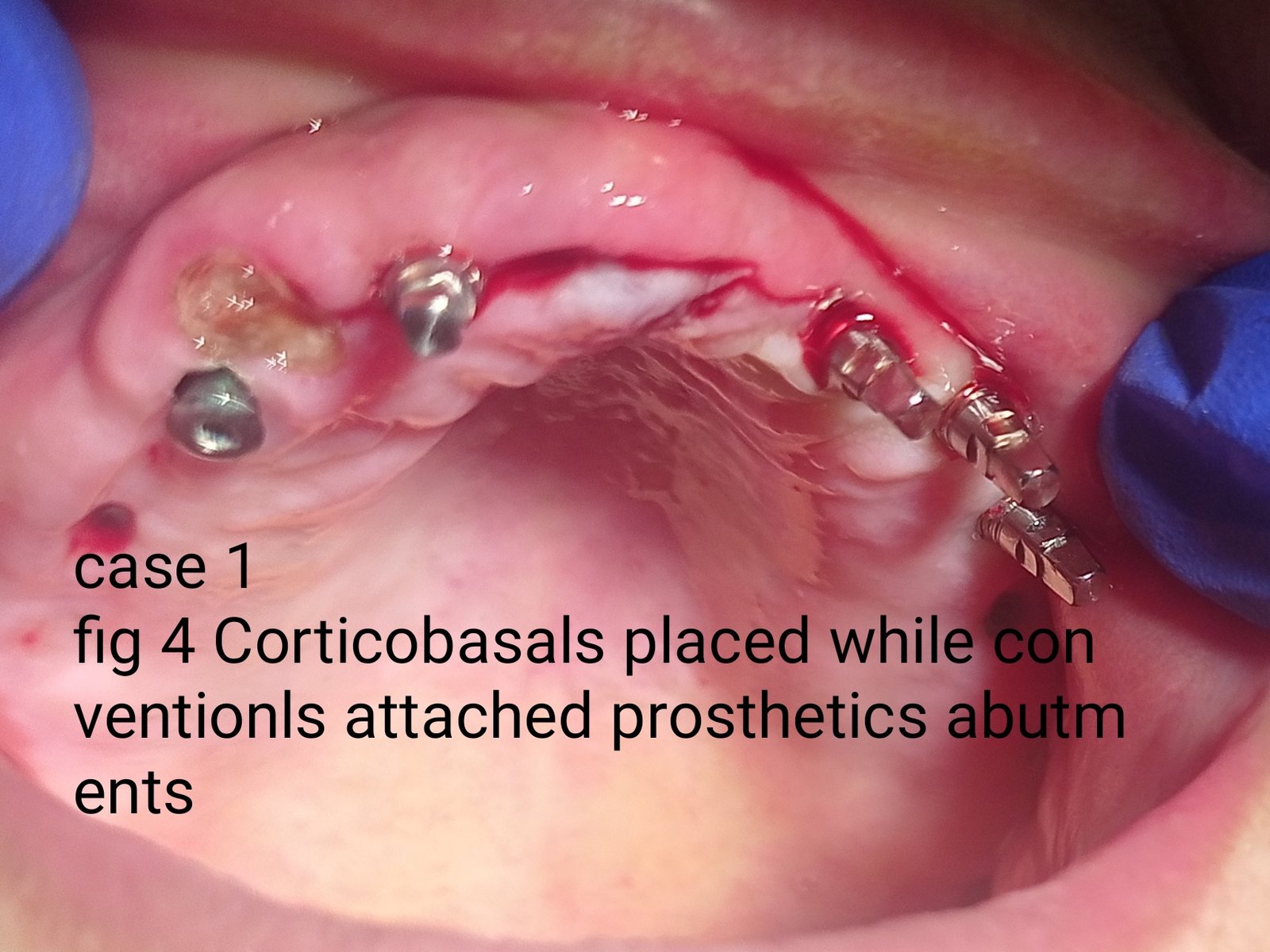
A female patient, professionally active and highly concerned about work absences, presented with missing posterior teeth due to fallen bridges. She had not undergone any prosthetic rehabilitation and was keen to avoid any period without teeth.
After clinical evaluation and radiographic analysis, the treatment plan was designed in two phases:
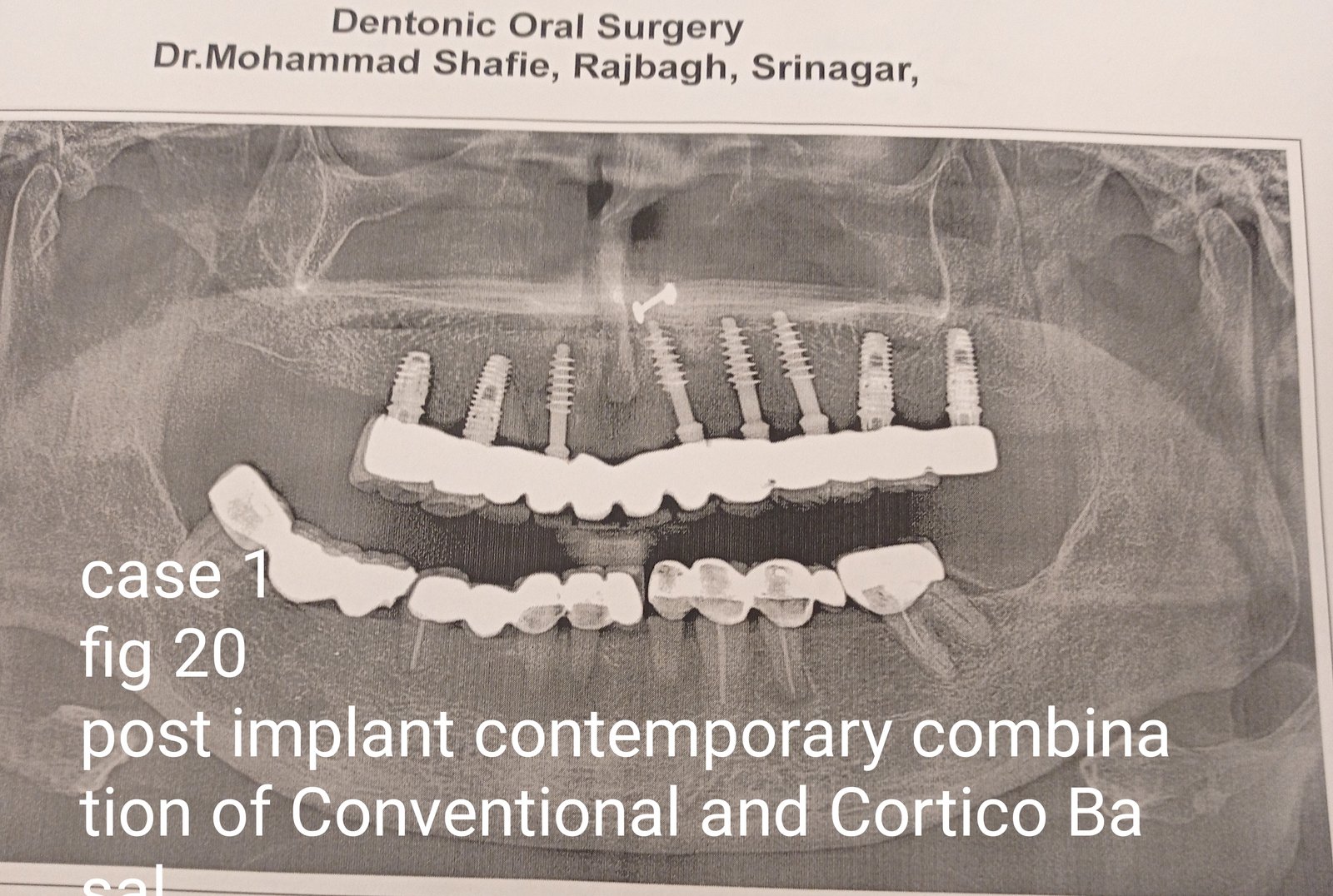
- Phase I: Placement of bilateral distal conventional implants, with a healing period of three months to ensure osseointegration.
- Phase II: Scheduling cortico-basal implant placement on a Friday (post-healing), followed by follow-up on Saturday, and delivery of the final prosthesis on Sunday.
This carefully synchronized plan ensured that the patient maintained her work schedule without disruption while also benefiting from immediate functional and esthetic rehabilitation.



CASE-2
This case represents another contemporary approach combining cortico-basal and conventional implantology to achieve optimal functional and esthetic outcomes with minimal patient visits. The patient, an inmate referred by the jail superintendent, expressed a strong desire for a fixed prosthetic solution requiring the least number of sittings, considering logistical and security constraints.
Clinically, the patient retained some anterior teeth that could temporarily maintain function and appearance. Bilateral distal conventional implants were strategically placed and allowed a healing period of three months to ensure proper osseointegration. The patient was then recalled after this period for completion of the treatment.
Following the extraction of the remaining lower teeth, cortico-basal implants were placed on the same day. Immediate impressions were taken, followed by a trial prosthesis the next day. Within 48 hours, the patient received a final fixed prosthesis supported by the integrated combination of conventional and cortico-basal implants. This hybrid protocol once again demonstrated the versatility and efficiency of cortico-basal implantology, particularly in time-sensitive and logistically challenging cases.


Discussion:
Cortico-basal implants utilize the basal cortical bone, enabling immediate loading and enhanced primary stability. By aligning their functional readiness with that of conventionally integrated implants, clinicians can offer hybrid solutions for complex cases with strict time constraints. This approach not only respects the patient’s lifestyle but also reflects a scientifically sound strategy to deliver optimal outcomes.
Conclusion:
Cortico-basal implantology is a valuable tool in the modern clinician’s arsenal. When used judiciously alongside conventional methods, it provides flexibility, predictability, and satisfaction for both patient and practitioner. This case underscores the importance of learning and incorporating cortico-basal dynamics in everyday practice — truly a “smile-generating technology.”
Disclaimer from Guident
The views and opinions expressed in articles published in Guident are solely those of the authors and do not necessarily reflect the views of the editors, the editorial board or the publisher, Ivory India. Guident does not endorse any product, technique or treatment described. Clinical content is intended for qualified dental and medical professionals and is not a substitute for individual clinical judgement. Guident, its editors and the publisher accept no liability for any consequence arising from the use of information published in the journal.
How to cite this article
Dr. Muhammad Shafie. Hybrid Implantology Approach: Integrating Corticobasal with Conventional Implants to Fulfill Patientcentric Demands. Guident. 2025 Jun;18(7). Available from: https://ivoryindia.in/articles/implantology/hybrid-implantology-approach-integrating-corticobasal-with-conventional-implants-to-fulfill-patientcentric.html