Management of Failed Orthodontic Treatment and Bilaterally Impacted Canines with Corticobasal Implantology in an Adolescent Patient
Dentonic Oral Surgery Implant Centre Rajbagh, Srinagar, J&K
ABSTRACT
This case report highlights the management of a 10th-grade female student who suffered from failed orthodontic intervention for bilaterally impacted canines. After prolonged and unsuccessful treatment, which resulted in significant psychological distress, corticobasal implantology was employed to restore function and esthetics without further invasive surgery or damage to adjacent teeth.
INTRODUCTION
Impacted canines are a relatively common orthodontic challenge, often requiring coordinated surgical and orthodontic approaches. Improper planning and execution can lead to prolonged treatment, esthetic deficits, and psychological trauma, especially in young patients. Corticobasal implantology offers an alternative solution for rehabilitation when conventional approaches fail or are unsuitable.
CASE PRESENTATION
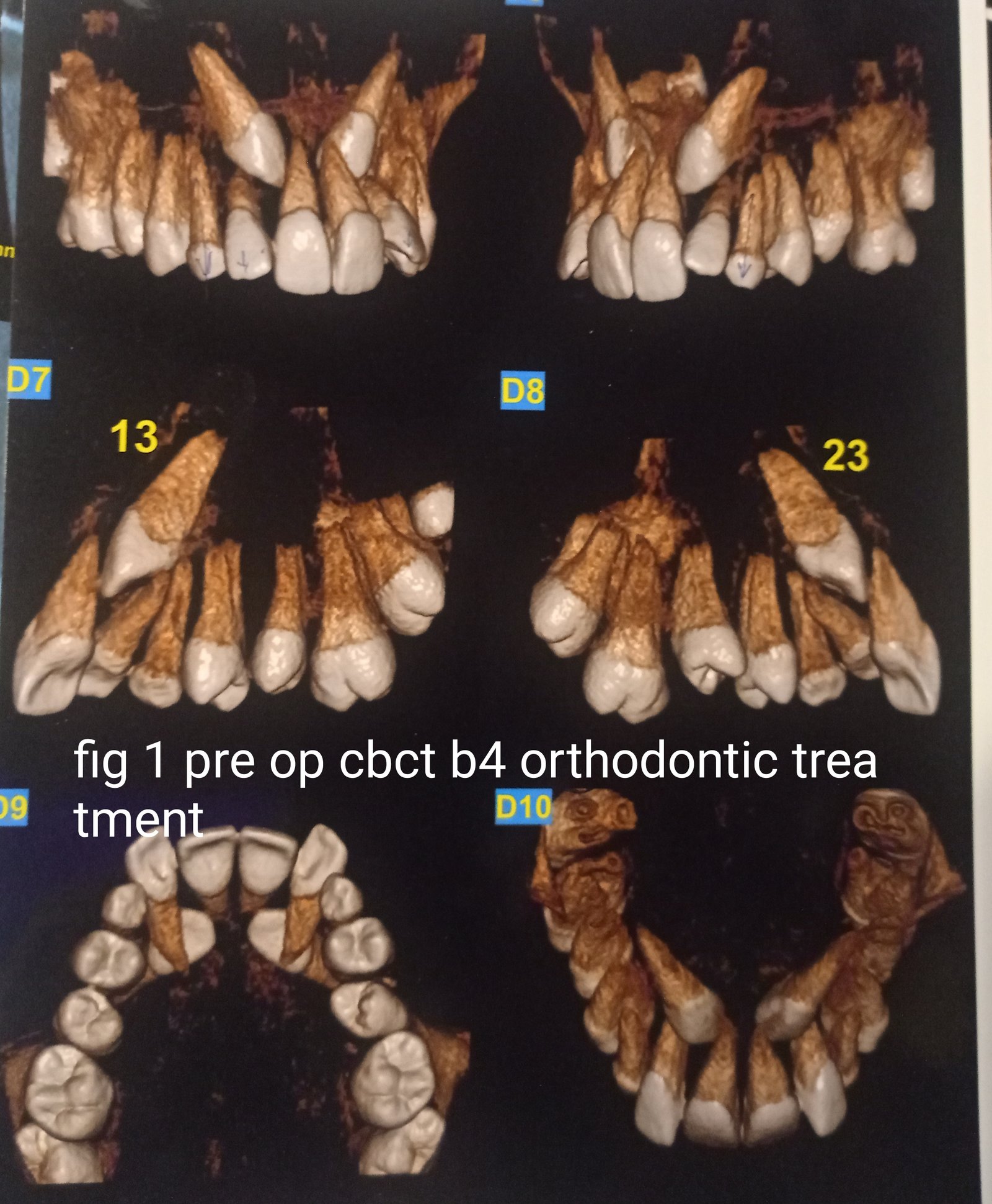
A female student in the 10th standard presented with a history of orthodontic treatment initiated two years prior, while she was in the 8th standard. The patient initially sought orthodontic care due to misalignment of her anterior teeth. Cone Beam Computed Tomography (CBCT) imaging revealed bilaterally impacted permanent canines with over-retained, firm, non-carious deciduous canines.
The orthodontist recommended extraction of the retained deciduous canines, promising that the permanent canines would be orthodontically guided into position. Following extraction and appliance placement, treatment continued for two years without the anticipated eruption or movement of the impacted canines.
At the end of this period, the patient and her parents inquired about the persistent edentulous spaces. The orthodontist was unable to provide a satisfactory explanation and subsequently referred the patient to an oral surgeon for surgical removal of the impacted canines. The proposed plan further involved prosthetic rehabilitation of the resulting defects with fixed partial dentures, necessitating preparation of adjacent healthy teeth.
This treatment sequence caused considerable distress to the patient and her family. The psychological impact was profound, as the adolescent expressed significant depression and loss of confidence.

CLINICAL MANAGEMENT
The patient’s grandfather, upon learning of this situation, brought her for a second opinion. The primary treatment objective was to address the prolonged edentulous spaces and restore the patient’s self-esteem without subjecting her to further invasive surgical procedures or sacrificing adjacent natural teeth.
After thorough assessment, a treatment plan involving corticobasal implants (monoimplants) for immediate functional and esthetic rehabilitation was proposed. The advantages—including the avoidance of additional bone grafting or orthodontic traction—were explained to the patient and her family in detail. Reassured by the minimally invasive nature and predictability of this option, they consented to proceed.
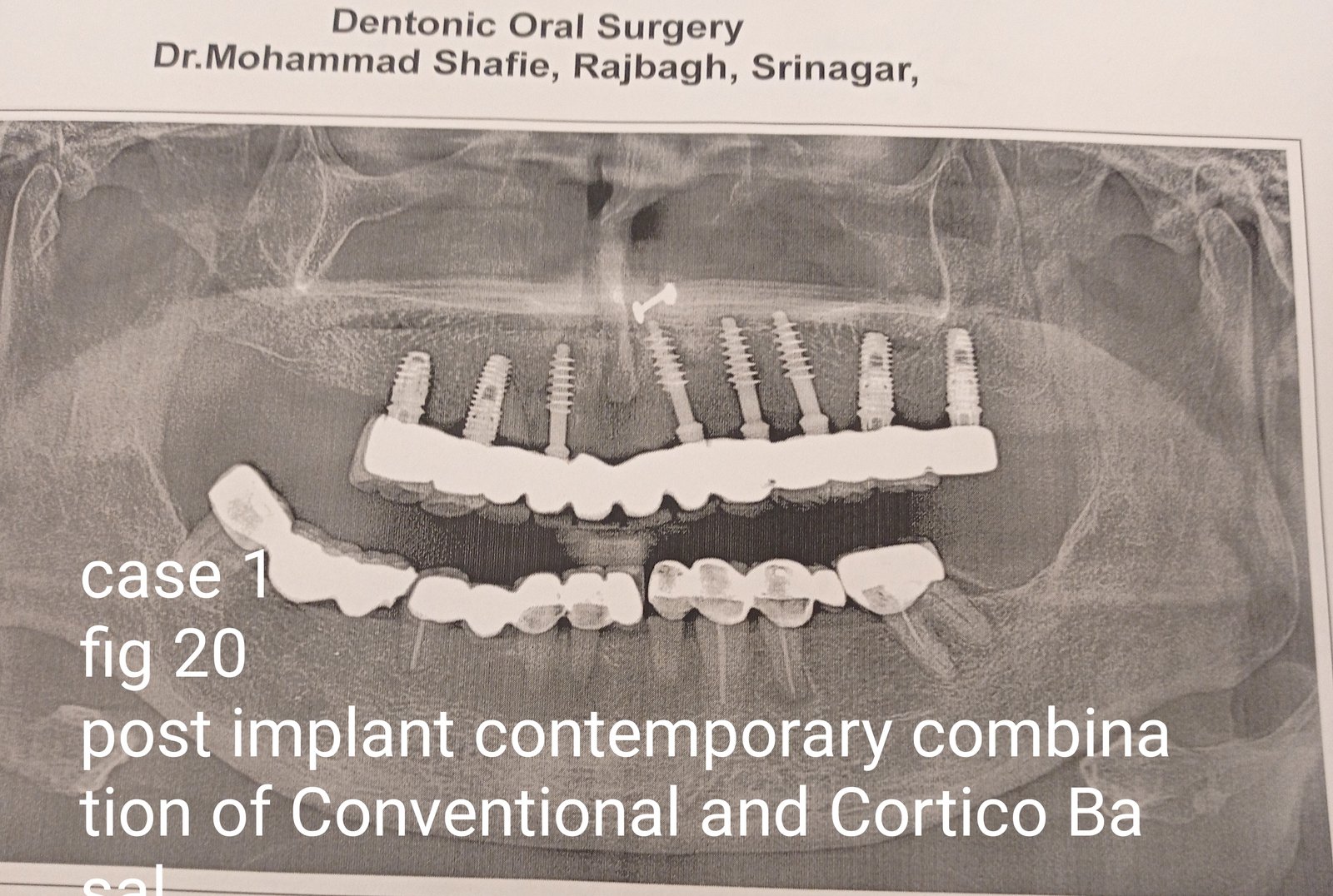
Within 48 hours, corticobasal implants were placed in the edentulous spaces left by the extracted deciduous canines, followed by immediate loading with provisional restorations.


OUTCOME
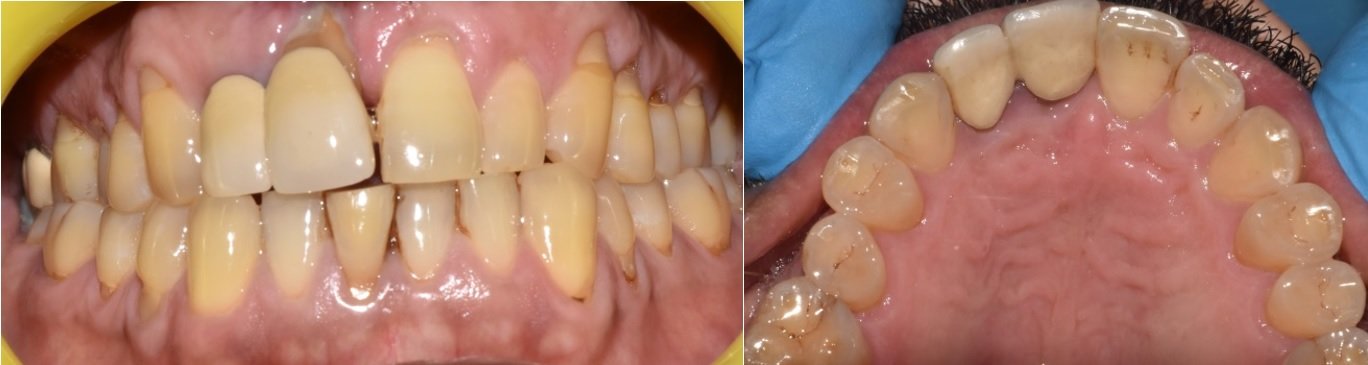
The patient tolerated the procedure well and demonstrated rapid psychological recovery. She expressed marked improvement in confidence and emotional well-being upon delivery of the final restorations. The esthetic outcome restored her smile and resolved the functional deficit created by prior failed treatment.


DISCUSSION
This case underscores the potential consequences of improper treatment planning in young patients with impacted canines. Conventional orthodontic-surgical approaches require meticulous execution and patient-centered communication. When these fail, corticobasal implantology can offer an effective alternative—especially in situations where patients cannot endure further surgical trauma or where time constraints preclude prolonged therapy.
Corticobasal implants utilize the basal cortical bone, enabling immediate loading and functional rehabilitation without the need for bone grafting. This approach can be transformative for patients facing psychological distress due to prolonged unsuccessful treatment.
CONCLUSION
This case demonstrates that corticobasal implantology is a viable, life-changing solution for managing edentulous spaces resulting from failed orthodontic treatment. Early interdisciplinary consultation and evidence-based planning are essential to prevent such adverse outcomes. In this adolescent patient, corticobasal implants restored oral function, esthetics, and psychological well-being within 48 hours, affirming the technique’s relevance in contemporary dental practice.
Disclaimer from Guident
The views and opinions expressed in articles published in Guident are solely those of the authors and do not necessarily reflect the views of the editors, the editorial board or the publisher, Ivory India. Guident does not endorse any product, technique or treatment described. Clinical content is intended for qualified dental and medical professionals and is not a substitute for individual clinical judgement. Guident, its editors and the publisher accept no liability for any consequence arising from the use of information published in the journal.
How to cite this article
Dr. Muhammad Shafie. Management of Failed Orthodontic Treatment and Bilaterally Impacted Canines with Corticobasal Implantology in an Adolescent Patient. Guident. 2025 Jul;18(8). Available from: https://ivoryindia.in/articles/implantology/management-of-failed-orthodontic-treatment-and-bilaterally-impacted-canines-with-corticobasal-implantology-in.html