Management of a Systemic Lupus Erythematosus Patient with Full-Mouth Implant Rehabilitation: A Case Report
Dentonic Oral Surgery Implant Centre Rajbagh, Srinagar, J&K
ABSTRACT
Background:
Systemic Lupus Erythematosus (SLE) is a chronic autoimmune disorder that presents significant challenges in dental rehabilitation due to systemic complications, impaired healing, and associated psychological distress.
Case Presentation:
We report a case of a young male patient with SLE who presented with mutilated dentition, poor oral hygiene, and severe depression. Previous management with removable prostheses was unsuccessful. After multidisciplinary consultation with his physician and psychiatrist, the patient underwent full-mouth implant rehabilitation using an “All-on-6” protocol in both arches.
Outcome:
Following rehabilitation, the patient demonstrated improved oral function, esthetics, and confidence. Importantly, his psychological condition improved, leading to better compliance with systemic therapy for SLE.
Conclusion:
Implant-supported rehabilitation in SLE patients, when carefully coordinated with medical supervision, not only restores oral function but also contributes to psychological recovery and systemic treatment compliance.
Keywords:
Systemic Lupus Erythematosus, Implantology, Full-Mouth Rehabilitation, Depression, Psychosocial Health
INTRODUCTION
Systemic Lupus Erythematosus (SLE) is a multisystem autoimmune disease that predominantly affects young adults, with manifestations involving skin, joints, kidneys, nervous system, and oral tissues. Oral involvement may include mucosal lesions, periodontal destruction, and tooth loss, which significantly impair function and quality of life.1,2
Edentulism in medically compromised patients exacerbates psychosocial distress, leading to anxiety, depression, and poor compliance with systemic therapy.3 Implant-supported prosthetic rehabilitation offers superior outcomes compared to removable dentures, improving mastication, esthetics, and psychological well-being.4 However, surgical considerations must include immune status, systemic medications (e.g., corticosteroids, immunosuppressants), and delayed wound healing.5
This case highlights the successful management of a young male SLE patient through full-mouth implant rehabilitation, emphasizing the multidisciplinary role of dentistry in systemic and psychological health.
CASE PRESENTATION
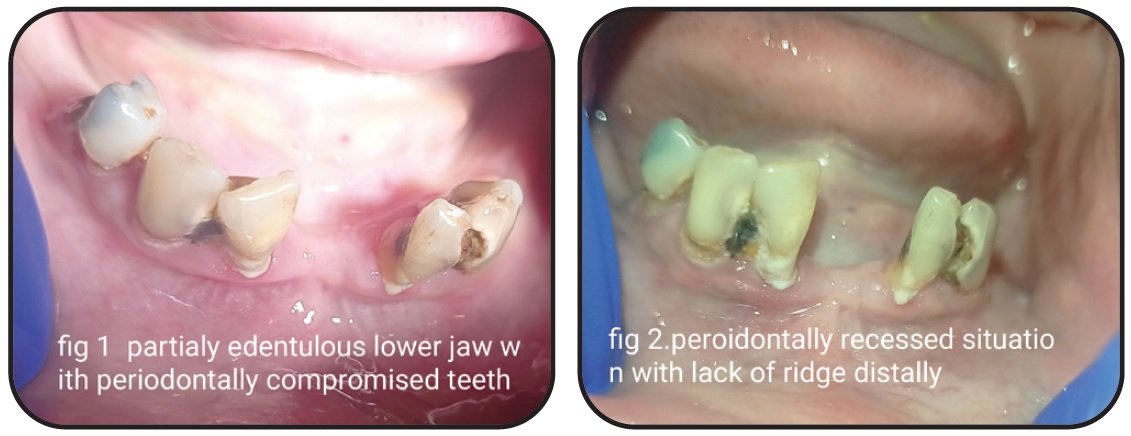
A young, unmarried male diagnosed with SLE presented with severely mutilated teeth, poor oral hygiene, and complaints of low self-esteem, depression, and social withdrawal. He expressed difficulty in communication and displayed visible psychological distress.
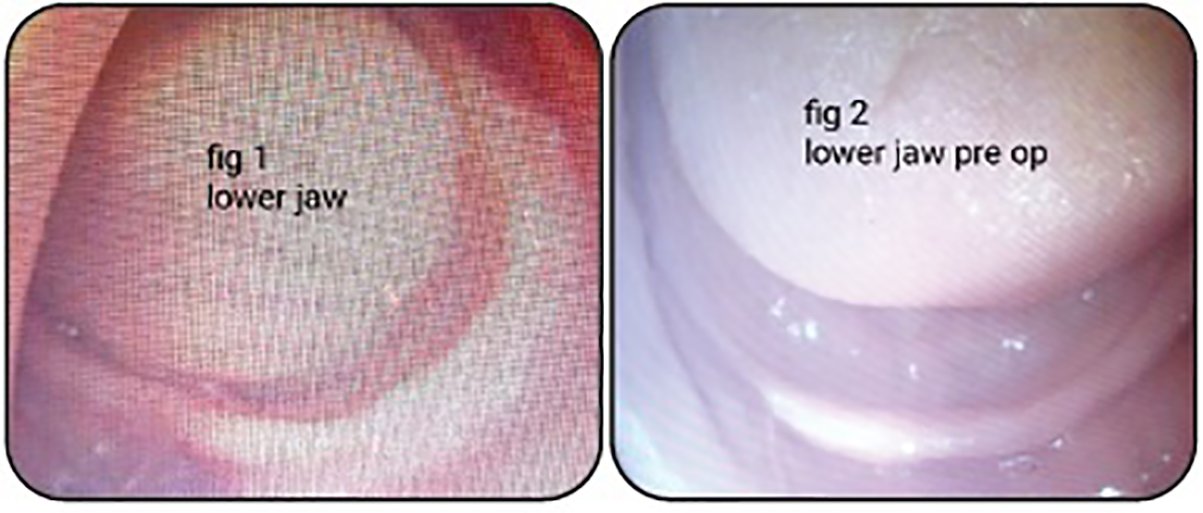
The patient was referred by his cousin, a medical surgeon, following advice from a psychiatrist that oral rehabilitation may help reduce his depression and improve compliance with systemic therapy. He reported dissatisfaction with removable upper and lower dentures provided previously by a local dentist, which he rarely wore due to discomfort and poor function.
Medical History:
The patient was under systemic treatment for SLE, including immunosuppressants and corticosteroids, with close physician supervision. No contraindications for implant placement were noted at the time of dental evaluation.
MANAGEMENT
A multidisciplinary plan was developed in coordination with his physician to ensure safe surgical intervention. Considering his age, psychosocial needs, and systemic condition, full-mouth rehabilitation with implant-supported prostheses was selected.
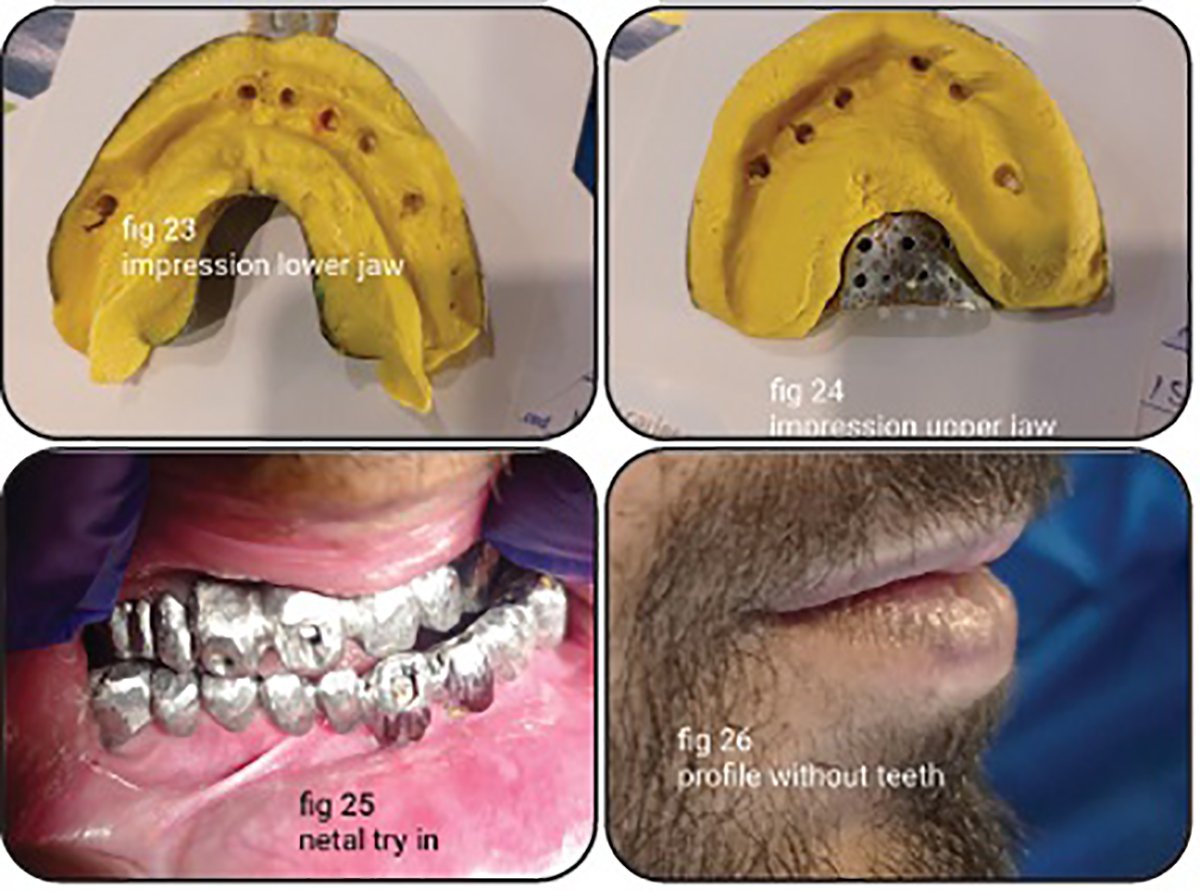
- Treatment protocol: “All-on-6” implant-supported fixed prosthesis for both maxilla and mandible.
- Approach: Conventional flap surgery with careful attention to asepsis, healing, and stress management.
- Timeline: Over 2–3 months, the implants were placed, integrated, and restored with definitive prostheses.



Post-treatment outcome:
- Restoration of esthetics, mastication, and phonetics.
- Significant reduction in depressive symptoms and anxiety.
- Improved self-confidence; patient reported willingness to engage in social activities and even agreed to marriage.
- Notably, his psychiatrist and physician reported better compliance with SLE therapy after oral rehabilitation.
DISCUSSION
SLE poses significant challenges for implantology due to compromised healing and systemic therapy interactions.6 However, with adequate planning and medical collaboration, implants can be placed successfully in such patients.
In this case, beyond the functional and esthetic success, the psychological recovery was remarkable. The patient’s improved mental health enabled better compliance with systemic treatment, illustrating the holistic benefits of implantology.
Psychological well-being and oral rehabilitation are interdependent. Studies suggest that implant-supported prostheses significantly improve quality of life, mood, and social interaction compared to conventional dentures.7,8 This case demonstrates the critical importance of a multidisciplinary approach involving dentistry, medicine, and psychiatry for comprehensive patient care.
Patient Perspective
"Before this treatment, I was hopeless and avoided meeting people. I did not like wearing the dentures I was given. After the implant treatment, I feel confident again, I smile without hesitation, and I am looking forward to getting married. My health has also improved as I am taking my medicines regularly."
CONCLUSION
Full-mouth implant-supported rehabilitation in medically compromised patients with SLE is not only feasible but also transformative when carried out with a multidisciplinary approach. Beyond restoring oral function, it plays a critical role in psychological recovery and systemic health improvement.
This case highlights the broader impact of implantology, proving that dental interventions can influence both mental health and systemic disease management.
REFERENCES
- Rahman A, Isenberg DA. Systemic lupus erythematosus. N Engl J Med. 2008;358:929–939.
- Lourenço SV, de Carvalho FR, Boggio P, et al. Lupus erythematosus: clinical and histopathological study of oral manifestations and immunohistochemical profile of the inflammatory infiltrate. J Cutan Pathol. 2007;34(7):558–564.
- Greene BL, McNeeley SG. Psychosocial issues in patients with systemic lupus erythematosus. Rheum Dis Clin North Am. 1994;20(1):151–160.
- Pjetursson BE, et al. A systematic review of the survival and complication rates of implant-supported fixed dental prostheses. Clin Oral Implants Res. 2012;23 Suppl 6:22–38.
- Diz P, Scully C, Sanz M. Dental implants in the medically compromised patient. J Dent. 2013;41(3):195–206.
- Chambrone L, et al. Dental implants in patients with autoimmune diseases: a systematic review. Int J Oral Maxillofac Surg. 2018;47(3):356–368.
- Awad MA, et al. Oral health status and treatment satisfaction with mandibular implant overdentures and conventional dentures: a randomized clinical trial. Int J Prosthodont. 2003;16(4):390–396.
- Allen PF, McMillan AS. A longitudinal study of quality of life outcomes in older adults requesting implant prostheses and complete removable dentures. Clin Oral Implants Res. 2003;14(2):173–179.
Disclaimer from Guident
The views and opinions expressed in articles published in Guident are solely those of the authors and do not necessarily reflect the views of the editors, the editorial board or the publisher, Ivory India. Guident does not endorse any product, technique or treatment described. Clinical content is intended for qualified dental and medical professionals and is not a substitute for individual clinical judgement. Guident, its editors and the publisher accept no liability for any consequence arising from the use of information published in the journal.
How to cite this article
Dr. Muhammad Shafie. Management of a Systemic Lupus Erythematosus Patient with Full-Mouth Implant Rehabilitation: A Case Report. Guident. 2025 Sep;18(10). Available from: https://ivoryindia.in/articles/implantology/management-of-a-systemic-lupus-erythematosus-patient-with-full-mouth-implant-rehabilitation-a-case-report.html