Facial Attractiveness: An Overview for Orthodontists
Department of Orthodontics and Dentofacial Orthopedics, Akola Mah, Department of Orthodontics and Dentofacial Orthopedics, Rural Dental College PIMS Loni, Maharashtra
INTRODUCTION
Facial attractiveness plays a pivotal role in orthodontic diagnosis and treatment planning. While orthodontics traditionally focuses on functional occlusion, the growing emphasis on aesthetics has made facial harmony a central concern. Patients often seek treatment not just for dental alignment but for improved facial appearance, making it essential for orthodontists to understand the multifactorial nature of facial attractiveness.
DEFINING FACIAL ATTRACTIVENESS
Facial attractiveness is influenced by a combination of symmetry, proportion, and harmony among facial features. Key determinants include:
- Facial symmetry: Often perceived as a sign of health and genetic fitness.
- Golden ratio (1:1.618): Historically used to define ideal facial proportions.
- Vertical and horizontal proportions: Distances between eyes, nose, lips, and chin affect perceived attractiveness.
- Profile balance: The relationship between the nose, lips, and chin is critical in orthodontic assessment.
Clinical tools such as the esthetic line (Ricketts), Holdaway ratio, and facial angle measurements help quantify these attributes during diagnosis.
ORTHODONTIC TREATMENT AND ITS IMPACT
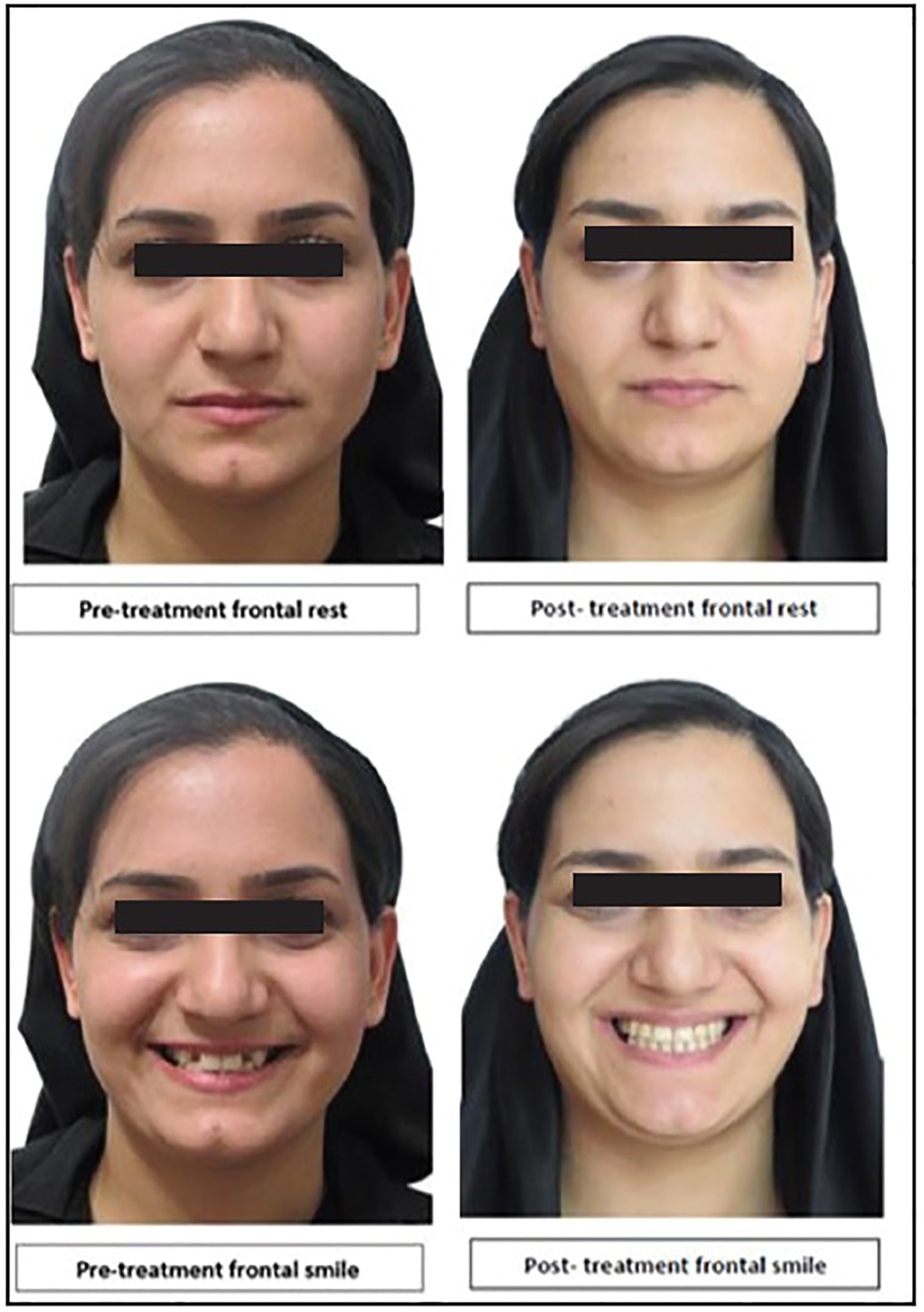
A systematic review published in the European Journal of Orthodontics analyzed 20 studies and found that orthodontic treatment improved facial attractiveness ratings by approximately 9% compared to untreated controls. Interestingly, combining orthodontics with orthognathic surgery yielded an additional 5.5% improvement in perceived attractiveness.
“Orthodontic treatment has a clinically weak effect on facial attractiveness when compared to no treatment.” — Kouskoura et al.
This suggests that while orthodontics contributes to aesthetic enhancement, its impact may be modest unless combined with surgical interventions.
PERCEPTION DIFFERENCES: ORTHODONTISTS VS. LAYPEOPLE
A study conducted in Dakshina Kannada, India, revealed that orthodontists and laypeople often perceive facial profiles differently. Using silhouette evaluations, researchers found:
- Orthodontists preferred profiles with ideal skeletal and dental relationships.
- Laypeople showed more tolerance for minor asymmetries and deviations.
- Gender-based preferences varied, with different standards for male and female profiles.
This highlights the importance of aligning clinical goals with patient expectations and cultural norms.
THEORIES OF FACIAL ATTRACTIVENESS
Two dominant theories guide the understanding of facial aesthetics:
- Evolutionary theory: Suggests that attractive faces signal health and reproductive fitness.
- Cognitive averaging theory: Proposes that average features are perceived as more attractive due to familiarity and ease of processing.
These frameworks help orthodontists appreciate the psychological and social dimensions of facial attractiveness.
CLINICAL IMPLICATIONS FOR ORTHODONTISTS
Orthodontists must integrate aesthetic evaluation into every stage of treatment planning. Key considerations include:
- Soft tissue analysis: Beyond skeletal correction, attention to lip posture and smile arc is vital.
- Age and gender norms: Facial attractiveness standards vary across demographics.
- Cultural sensitivity: Beauty ideals differ globally; treatment goals should reflect patient values.
- Patient-centered care: Understanding the patient’s aesthetic desires is crucial for satisfaction.
CONCLUSION
Facial attractiveness is a nuanced and dynamic concept that extends beyond dental alignment. For orthodontists, mastering the principles of facial aesthetics is essential—not only for clinical excellence but for delivering care that resonates with patients’ self-image and social confidence.
REFERENCES
- Kouskoura T, Ochsner T, Verna C, Pandis N, Kanavakis G. The effect of orthodontic treatment on facial attractiveness: a systematic review and meta-analysis. European Journal of Orthodontics. 2022;44(6):636–649. Read the study
- Paul RK, Raju AS, Sunil PC, et al. Facial Attractiveness: An Orthodontic Perspective. Scholars Journal of Dental Sciences. 2015;2(2A):119–121. Access the article
- Mohammed A, Shetty A, Nayak USK, et al. Perception of facial profile attractiveness by orthodontists and general public in Dakshina Kannada population. Nitte University Journal. 2017. View the paper
Disclaimer from Guident
The views and opinions expressed in articles published in Guident are solely those of the authors and do not necessarily reflect the views of the editors, the editorial board or the publisher, Ivory India. Guident does not endorse any product, technique or treatment described. Clinical content is intended for qualified dental and medical professionals and is not a substitute for individual clinical judgement. Guident, its editors and the publisher accept no liability for any consequence arising from the use of information published in the journal.
How to cite this article
Dr. Yash Santosh Goenka, Dr. Sameer Parhad, Dr. Rajesh Ramdasji Kambe Dental College Kanheri, Dr. N.G Toshniwal. Facial Attractiveness: An Overview for Orthodontists. Guident. 2025 Sep;18(10). Available from: https://ivoryindia.in/articles/orthodontics/facial-attractiveness-an-overview-for-orthodontists.html