Implant Abutment Connections: Key Concepts, Biomechanical Insights, and Clinical Outcomes
Department of Prosthodontics, Chhattisgarh Dental College & Research Institute, Rajnandgaon, Chhattisgarh India
INTRODUCTION:
"The supplemental component of a dental implant that is used to support and/or retain any fixed or removable dental prosthesis" is how the Glossary of Prosthodontic Terms 1 defines an abutment. One Dental implant-abutment systems act as an anchors to support single and multiunit prostheses for those who are partially or totally edentulous. A transmucosal component, which fits the implant and attaches it to a prosthetic crown and fixture that are surgically placed into bone, makes up a dental implant system. 2
When selecting an implant, it is essential to take into account the types of connections in order to provide a long-lasting, safe, and effective treatment with the least amount of mechanical and biological failure.3
The shape, materials, roughness, spirals, connection level, geometry, and other aspects of each implant system set them apart from one another. The Brandemark system suggested an external hexagon as the connection geometry to facilitate implant placement. Internal connections were made to lessen micromovement at the connection level.4
Several studies examined the biomechanical and clinical impacts of different types of connections. Branemark's first connection method in contemporary implantology was an external connection. Internal aims to improve load absorption in lateral forces, and the conical connection reduces mechanical friction between attachment wall and implant. 5
Different connection types are compared based on factors such as the degree of microleakage, resistance to displacement, stress evaluation, and reactivity with surrounding soft tissues and bone. Implant-attachment connection types experience microleakage, which is brought on by micromovement. This might result in mild bone loss and increased inflammation at the connection level. It is essential to comprehend the benefits and drawbacks of different types of connections.3
EXTERNAL IMPLANT ABUTMENT CONNECTION: (fig.1)
Brånemark's 1985 external connection design, which included an anti-rotational configuration beneath the prosthetic platform and extended above the coronal portion of the implant, was perfected over time to incorporate prosthetic indexing and anti-rotational mechanisms for improved stability and connection accuracy. The two-stage process involved inserting a titanium screw in bone, allowing it to heal, and then exposing the implant to attach a transmucosal element. The external hexagonal connection (0.7 mm height) functioned as a coupler & torque transfer device.6
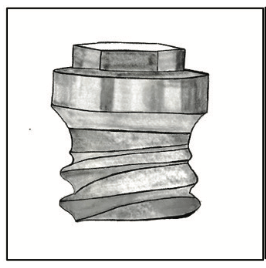
Fig.1: External Hexagon

Fig.2: External spline connection
This implant method, which was created for completely edentulous arches, reduced stress surrounding implants by using several implants connected by a metal bar as opposed to internal hex designs. The hexagon was made to enable the implant to rotate (i.e., screw in) while being placed. As an anti-rotational device, it is a crucial design element in single tooth replacements. The ability to directly take imprints of the implant head rather than the abutment was made possible by the design, which made laboratory testing and abutment selection possible.2 Other designs were introduced to solve rotational mismatch and lessen degree of misalignment. Modifications to external hex implant abutment connections included spline connection(fig.2), tapered hexagon, and external octagon.6,7
INTERNAL IMPLANT ABUTMENT CONNECTION:
An outward projection of the abutment can fit securely in an internal connection implant's chamber located inside implant body.8 Niznick created first internal connection in Core Vent implant, which had a 450 bevel, 1.7mm deep, and a 0.5mm wide hex.9
Changes to the outward connection decreased screw loosening, however internal connections developed as a result of microbiological sealing and aesthetic concerns. An internal implant abutment connection developed in order for eliminating biomechanical problems related with the exterior connection. The design's goals were to streamline the procedure and guarantee stability during the function and placement phase.10 They also reduced the stress transfer to the crestal.7
By aligning the restorative interface with the implant level, internal interface designs offer benefits such as a lower platform for restorative components, improved force distribution, a protected abutment screw, and resistance to joint separation and vibrations. They also offer potential for a microbial seal, increased flexibility, and improved esthetics.11 Deep within implant body, mating components move fulcrum to center, improving prosthetic screw stability and stress distribution.2
Classification of internal connection:12
According to its anti-rotational features:
- 6-point internal hexagon (fig.3)
- 12-point internal hexagon (fig.4)
- 3-point internal tripod (fig.5)
- Internal octagon (fig.6)
- Tube in tube
- Internal spline (fig.7)
According to mode of connection:
MODE OF CONNECTION
Slip-fit connection
Friction fit connection

Fig.3 Internal Hexagon
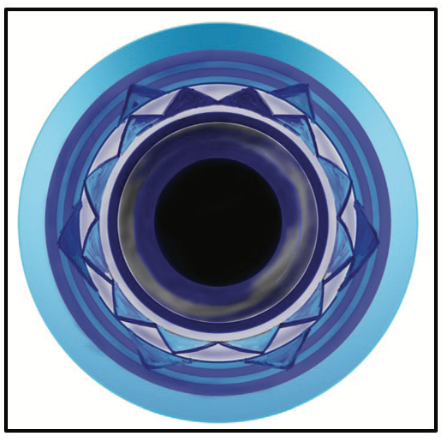
Fig.4 12-point internal hexagon

Fig.5 3-point internal tripod

Fig.6 Internal octagon

Fig.7 Internal spline
MORSE TAPER IMPLANT ABUTMENT CONNECTION: (fig.8)
A tapered projection on abutment fits into matching recess in implant to form cold-welded link between two surfaces in Morse taper implant abutment connection design.7 Occurrence where metal surfaces of implant and abutment fuse together without using heat or a welding substance is known as "cold welding" in implant abutment connections. Intimate surface contact and significant contact pressure between the two components are usually the causes. Implants and abutments with Morse taper function as one unit. By closing the tiny space between both, cold-welding process lowers possibility of microbiological leakage. 6

Fig.8 morse taper connection
The Morse taper also inhibits abutment tilting by resisting lateral stresses imparted to the prosthesis.7 By strengthening implant-abutment connection or eliminating necessity for retaining screw, the Morse taper design lowers the possibility of screw loosening in spite of occlusal stresses and permits platform switching.1
MECHANICAL CONSIDERATIONS:
Various implant connection types have been developed to provide specific mechanical, biological, & aesthetic advantages, ensuring a secure interface between the implant and prosthesis.
MECHANICAL PROPERTIES OF IMPLANT-ABUTMENT CONNECTIONS:
- MECHANICAL STRENGTH: In contrast to shallow joints (0.7mm) (external connections), Mollersten et al. discovered that deep joints (internal connections) offer stronger joint strength and more resilience to bending forces. This is particularly crucial in the molar region since it carries heavy loads.13 According to Chun et al. (2006), the internal hexagon connections' stress distribution is more advantageous within the implant and is then dispersed across the surrounding bone tissue. On other hand, greatest concentration of strain in external hexagon connections happens between the abutment and the implant platform.14
- STRESS DISTRIBUTION: The most vulnerable element in the vast network of parts that make up a dental implant system is bone—the dynamics of load distribution in implant abutment connection cause this susceptibility. Pressure is applied to the surrounding bone tissue when forces are applied, especially deep inside the implant structure. On the other hand, there is comparatively less direct force transfer through abutment, which is an essential intermediary component between implant and prosthetic restoration. This complex interaction emphasizes how important bone integrity is to preserving the stability and durability of dental implant devices.15 According to a 3D finite element analysis by Balik et al.16, inside hexagonal connection produced least amount of stress, whereas outward hexagonal connection produced greatest. The location where implant and abutment came into contact was found to have the most stress in external hexagonal connections, as opposed to conical and internal hexagonal connection systems. The danger of bone loss is increased by external hex connections, which tend to concentrate stress at crestal level. Internal connections transmit pressures more centrally and deeply, reducing peripheral stress in the crestal bone. Morse taper connections increase implant longevity by providing better sealing and evenly distributing stress.
- FRACTURE RESISTANCE AND MAXIMAL LOAD RESISTANCE: According to McGlumphy et al. (2007), 75% of the maximal torque before screw fracture is the ideal preloading. Compared to implant systems with shorter both designs, those with longer internal tube-in-tube connections and cam-slot fixation mechanisms are more durable and fracture-resistant.In 1995, Balfour & O’Brien observed that internal hexagon connection designs outperformed external hexagon connection in terms with both fracture strength and fatigue strength.18
- ROTATIONAL MISFIT: Most implant abutment connections use a "slip-fit" joint, where precise alignment is essential for stability. Misfits in multiunit fixed dentures or osseointegrated implants can lead to root or osseous deformation, causing loads on various components like screws and the implant-bone interface. Screw joint failure and loosening can be caused by these deformations as well as mismatches. Generally, internal connection designs exhibit less rotational misfit than exterior hex connections. A friction-fit design has been used in several internal connections to overcome rotational mismatch. The risk of screw loosening is decreased by the exact fit between the implant and abutment, which reduces micromotion.19
BIOLOGICAL CONSIDERATION:
Dental implants depend on their abutment connections for stability and success, which affect things like bone preservation, tissue health, and bacterial colonization. Understanding their biological impact is key to optimizing implant outcomes and long-term oral health.
- BIOLOGICAL WIDTH: Biological width around dental implants, typically around 2.04mm, is crucial for protecting against infections and maintaining bone and tissue health. The implant-abutment connection type, particularly internal connections like Morse taper, plays a key role in preserving this width by reducing stress, bacterial infiltration, and bone loss.20
- MICROGAP BETWEEN IMPLANT ABUTMENT INTERFACE: Microgaps at its junction, ranging from 1 to 60 microns, can lead to bacterial colonization and crestal bone loss. Minimizing these gaps is crucial for implant success. Morse taper connections, with their cold-welded interface, significantly reduce microgap formation and bacterial infiltration, promoting better long-term stability compared to external or internal hexagon connections.21
- MICROBIAL LEAKAGE: Peri-implantitis, a leading cause of implant failure, is influenced by bacterial colonization at implant-abutment connection. Studies show that Morse taper connections, with smaller microgaps (2-3 μm), significantly reduce bacterial leakage compared to external connection implants (10 μm gap).22
- EFFECTS OF MARGINAL BONE: A major contributing element to implant success is marginal bone loss surrounding dental implants, which can result in issues such as tissue recession, inflammation, and failure. Placed to match crestal bone, "bone-level" implants permit up to 1.5 mm of bone loss in first year and less than 0.2 mm per year after that for success. Marginal bone loss is also influenced by microgap and motion at implant-abutment link.23
PLATFORM SWITCHING: (fig.9)
In the late 1980s, introduction of wide-diameter dental implants led to use of mismatched standard diameter abutments. The observed outcome indicates that the implants in question demonstrated a lower-than-anticipated level of initial crestal bone loss. This pertains to the phenomenon of bone remodelling at crest of alveolar bone during healing process after placement of dental implants. Early clinical accounts have underscored improved responses in both soft tissues (gingiva) and hard tissues (bone) with the implementation of these platform switched implants. This was backed by the study conducted in 2006 by Lazzara and porter.24 This concept of platform switching is based on usage of a smaller diameter abutment than that of an implant. Platform switching is a feature offered by both external and internal connection implants. Platform switching reduces the creation of pockets by increasing the epithelial collar surrounding the abutment, creating a thicker and tighter seal.25

Fig.9 platform switching and platform matching implants.
MECHANISM OF PLATFORM SWITCHING:
Two of most possible reasons of marginal bone loss is micro gap between implant & abutment or micromotion around crest of bone. The mechanism of platform switching resulting is reduction of crestal bone loss could be:26
1. Inward Shift of Inflammatory Cell Infiltrate (Soft Tissue Response Theory)
2. Reduction in influence with microgap on crestal bone loss (Microgap theory)
3. Preservation of Biological Width & Increased Horizontal IAJ Distance (Biological width theory)
4. Reduction in Stress Levels within Peri-Implant Bone (Stress distribution theory)
5. Implant Stability Theory

Fig.10: Shows different types of dental implant complications (a) abutment fracture and screw loosening (b) prosthetic framework fracture (c) marginal bone loss (d) implant body fracture (e)loss of osseointegration or early implant failure
COMPLICATIONS: (fig.10)
It is possible to attach abutments to implant externally or inside.
Internally connected abutments are more stable than externally connected ones, according to research from in vitro trials. Because of this biomechanical advantage, internal implant abutment connections exhibited a lower rate of abutment screw loosening (1.5%) than external implant abutment connections (7.5%). However, exterior implant abutment connections frequently experience cracks. One drawback of external connections is the potential for abutment screw fractures.27
Complications with dental implants can generally be classified into three categories: mechanical, biological, and aesthetic.28
Biological complications in dental implants are categorized as early or delayed failures. Early occurs within first year, primarily due to surgical errors, systemic conditions, or premature loading, leading to loss of osseointegration. Minimizing surgical errors can significantly reduce failure rates. Delayed implant failures occur post-loading due to factors like infections, occlusal overload, poor maintenance, mal-positioned implants, or uncleanable prosthetic designs, leading to conditions such as mucositis or peri-implantitis.27
CONCLUSION:
For an implant to be stable and successful over long term, connection between implant and abutment must be accurate, mechanically stable, microgap-free, and resistant to loading and fatigue. Conical connections distribute load more evenly and demonstrate better biological outcomes, with less marginal bone loss, fewer cases of peri-implantitis, and fewer mechanical issues compared to external and traditional internal hexagon systems. While no single connection is universally superior, conical and Morse taper designs have shown improved performance in single-unit and aesthetic restorations. Platform switching helps preserve crestal bone and papillae in tight spaces, and all connection types achieve high success rates when appropriately used. Advanced internal connection designs dominate the market, with ongoing research expected to refine clinically effective options further.
REFERENCES:
- The Glossary of Prosthodontic Terms 2023. J Prosthet Dent. 2023 Oct 1;130(4):e1–e3.
- Singla S, Rathee M. Know your implant connections. Afr J Oral Health Sci. 2017;6(2):1-7.
- Ceruso FM, Barnaba P, Mazzoleni S, Ottria L, Gargari M, Zuccon A, et al. Implant-abutment connections on single crowns: a systematic review. Oral Implantol (Rome). 2017;10(4):349-353.
- Garcia JCG, Fierro NC, Rodriguez LEQ, Gonzalez FC, Gomez REA, Meester I, et al. Implant-abutment connections: A literature review. Int J Appl Dent Sci. 2022;8(2):222–6.
- Lauritano D, Moreo G, Lucchese A, Viganoni C, Limongelli L, Carinci F. The Impact of ImplantAbutment Connection on Clinical Outcomes and Microbial Colonization: A Narrative Review. Materials (Basel). 2020 Mar 3;13(5):1131.
- Prithviraj D, Muley N, Gupta V. The Evolution of External and Internal Implant–Abutment Connections: A Review. Int Dent Res. 2012;2(2):37-42.
- Hari Krishna M, Srinivas K, Ravishankar Y, Tirumalrao D. Implant Abutment Connections. AP State Dent J. 2016;9(2):317-22.
- Misch CE. Contemporary Implant Dentistry. 3rd ed. St. Louis, MO: Mosby; 2007.
- Niznik GA. The coreventtmimplant system. The evolution of the osseointegration implant.Oral health. 1983;7(3):13–7.
- Goiato MC, Pellizzer EP, da Silva EV, Bonatto Lda R, dos Santos DM. Is the internal connection more efficient than external connection in mechanical, biological, and esthetical point of views? A systematic review. Oral Maxillofac Surg. 2015;19(3):229-42.
- Merz BR, Hunenbart S, Belser UC. Mechanics of the implant-abutment connection: an 8degree taper compared to a butt joint connection. Int J Oral Maxillofac Implants. 2000;15(4):519-26.
- Shafie H. Clinical and laboratory manual of dental implant abutments. Shafie HR, editor. Nashville, TN: John Wiley & Sons; 2014.
- Mollersten L, Lockowandt P, Linden L-A. Comparison of strength and failure mode of seven implant systems: an invitro test. J Porsthet Dent. 1998;78(6):582–91.
- Chun HJ, Shin HS, Han CH, Lee SH. Influence of implant abutment type on stress distribution in bone under various loading conditions using finite element analysis. Int J Oral Maxillofac Implants. 2006;21(1):195-202
- Goiato MC, Pellizzer EP, da Silva EVF, Bonatto L da R, dos Santos DM. Is the internal connection more efficient than external connection in mechanical, biological, and esthetical point of views? A systematic review. Oral Maxillofac Sur. 2015;19(3):229–42.
- Balik A, Karatas MO, Keskin H. Effects of different abutment connection designs on the stress distribution around five different implants: a 3-dimensional finite element analysis. J Oral Implantol. 2012;38(Suppl 1):491–6.
- McGlumphy EA, Mendel DA, Holloway JA. Implant screw mechanics. Dent Clin North Am. 1998;42(1):71-89.
- Balfour A, O’Brien GR. Comparative study of antirotational single tooth abutments. J Prosthet Dent. 1995;73(1):36-43.
- Saha S, Sarkar S, Giri TK, Mukherjee S, Ghosh R. Comparative evaluation of biomechanical properties of implant-abutment connections: A review. J. Oral Rehabil. 2021;1(2):110-9.
- Rodríguez-Ciurana X, et al. The effect of interimplant distance on the height of the interimplant bone crest when using platform-switched implants. Int J Periodontics Restorative Dent. 2009;29(2):141-51.
- Kowalski J, Lapinska B, Nissan J, Lukomska-Szymanska M. Factors influencing marginal bone loss around dental implants: A narrative review. Coatings. 2021;11(7):865.
- Verdugo CL, Núñez G J, Avila AA, San Martín CL. Microleakage of the prosthetic abutment/implant interface with internal and external connection: in vitro study. Clin Oral Implants Res. 2014;25(1):1078-83.
- Sasada Y, Cochran DL. Implant-Abutment Connections: A Review of Biologic Consequences and Peri-implantitis Implications. Int J Oral Maxillofac Implants. 2017;32(6):1296-307.
- Lazzara RJ, Porter SS. Platform switching: A new concept in implant dentistry for controlling postrestorativecrestal bone levels. Int J Periodont Restorative Dent. 2006;26(1):9-17.
- Iocca O. Evidence Based Implant Dentistry. Switzerland:Springer; 2016.
- Callan DP, Cobb CM, Williams KB. DNA probe identification of bacteria colonizing internal surfaces of the implant-abutment interface: a preliminary study. J Periodontol. 2005;76(1):115-20.
- Vaidya S, Desai R. Complications and their Management in Implantology. Int J Prosthodont Restor Dent. 2012;2(4):150–5.
- Wittneben J-G, Buser D, Salvi GE, Bürgin W, Hicklin S, Brägger U. Complication and failure rates with implant-supported fixed dental prostheses and single crowns: a 10-year retrospective study: Clinical performance of implant reconstructions. Clin Implant Dent Relat Res. 2014;16(3):356–64.
Disclaimer from Guident
The views and opinions expressed in articles published in Guident are solely those of the authors and do not necessarily reflect the views of the editors, the editorial board or the publisher, Ivory India. Guident does not endorse any product, technique or treatment described. Clinical content is intended for qualified dental and medical professionals and is not a substitute for individual clinical judgement. Guident, its editors and the publisher accept no liability for any consequence arising from the use of information published in the journal.
How to cite this article
Dr. Aayush Shah, Dr. Shailendra Kumar Sahu, Dr. Anurag Dani. Implant Abutment Connections: Key Concepts, Biomechanical Insights, and Clinical Outcomes. Guident. 2025 Oct;18(11). Available from: https://ivoryindia.in/articles/implantology/implant-abutment-connections-key-concepts-biomechanical-insights-and-clinical-outcomes.html