Rehabilitation of an Osteoporotic Patient Using Corticobasal Implants: A Three-Year Follow-Up Case Report
Dentonic Oral Surgery Implant Centre Rajbagh, Srinagar, J&K
ABSTRACT
This case report describes the successful oral rehabilitation of an elderly female patient suffering from severe osteoporosis using corticobasal implantology. The patient was referred by her orthopaedician to improve masticatory efficiency and dietary intake, thereby supporting systemic bone stability. She declined removable prosthetic options for aesthetic reasons. After medical consultation and adjustment of her medications, corticobasal implants were strategically placed in regions of healthy cortical bone. Within 48 hours, immediate prosthetic rehabilitation was achieved, significantly improving her confidence and quality of life. Over a three-year follow-up, the patient demonstrated excellent implant stability, improved oral function, and measurable enhancement in bone density. This case demonstrates the effectiveness of corticobasal implants in restoring function and systemic health in osteoporotic patients unsuitable for conventional implant protocols.
Keywords: Corticobasal Implants, Osteoporosis, Immediate Loading, Oral Rehabilitation, Geriatric Implantology
INTRODUCTION
Osteoporosis is a progressive systemic disorder characterized by a decrease in bone mass and deterioration of bone microarchitecture, leading to increased fracture risk. Oral rehabilitation in such patients presents clinical challenges, particularly in achieving stable osseointegration for conventional implants due to compromised trabecular bone density.
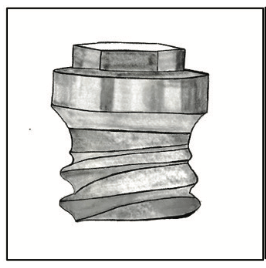
Corticobasal implantology offers a reliable alternative, engaging dense cortical bone regions for immediate loading and long-term stability. These implants enable functional restoration even in medically compromised or low bone-density conditions. This report presents the case of an elderly female patient with severe osteoporosis who achieved successful oral rehabilitation and improved systemic bone health through corticobasal implants.
CASE PRESENTATION
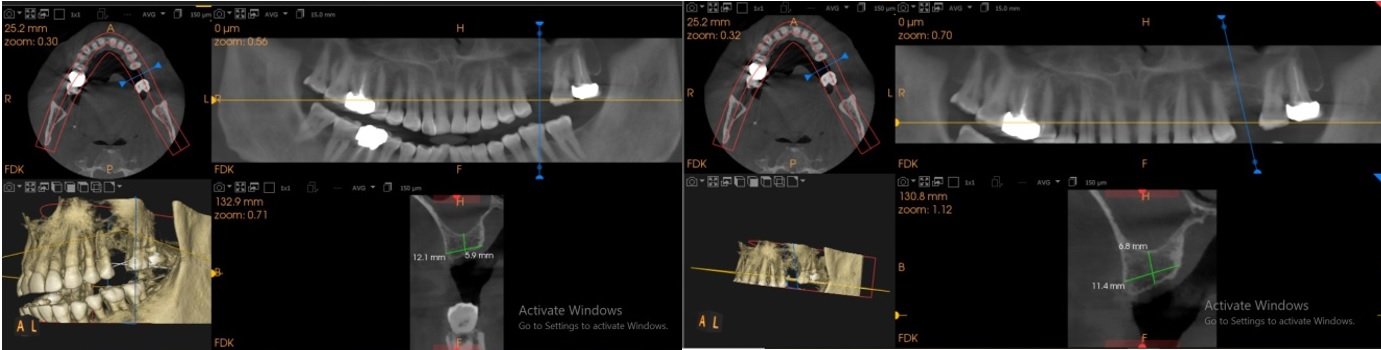
A female patient in her sixties with severe osteoporosis was referred by her ortho-paediatrician for oral rehabilitation to enhance chewing efficiency and nutritional intake. Her blood investigations revealed normal values except for raised TSH levels. The patient was non-diabetic and had near-normal blood pressure.

During consultation, removable prosthetic options were proposed but rejected by the patient due to aesthetic concerns and her desire to maintain a natural, feminine appearance. After interdisciplinary discussion with her orthopaedician, necessary medication modifications were performed to optimize her systemic health for implant surgery.
A plan for corticobasal implant placement was finalized, focusing on regions of healthy cortical bone. The procedure was performed under aseptic conditions, and immediate loading was achieved using a fixed provisional prosthesis within 48 hours.
The patient demonstrated remarkable psychological improvement and restored confidence shortly after treatment. After a few months of uneventful follow-up, final prostheses were delivered, providing enhanced comfort, aesthetics, and functionality.


FOLLOW-UP AND OUTCOMES
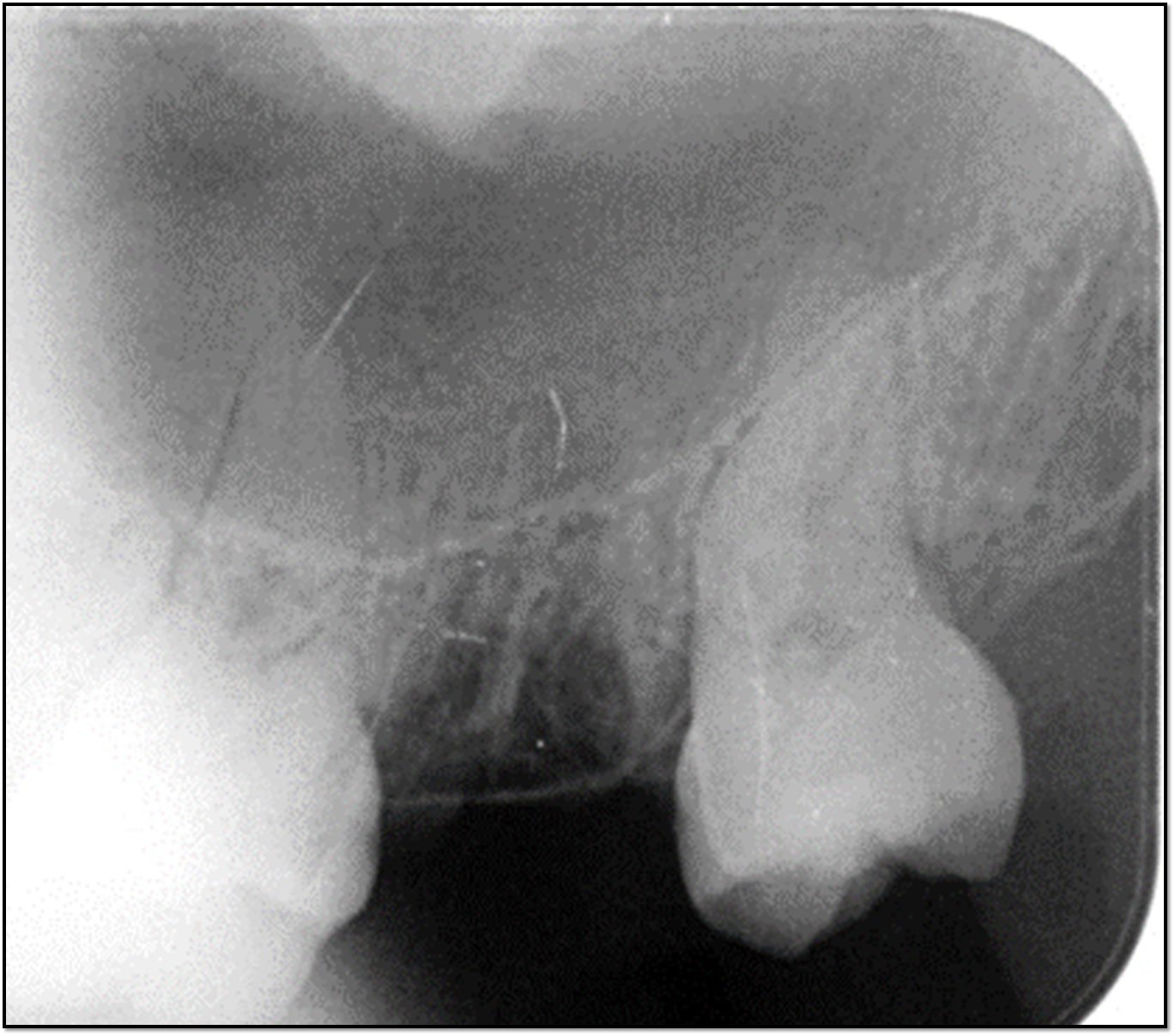
The patient has been on regular follow-up for three years. Clinical and radiographic assessments confirmed stable osseointegration with no peri-implant bone loss. Functionally, the patient resumed a normal diet, contributing to better nutrient absorption.
As reported by her orthopaedician, her overall bone mineral density showed improvement, correlating with her enhanced dietary habits and effective mastication. The patient expressed complete satisfaction with both functional and aesthetic outcomes.


DISCUSSION
Dental rehabilitation in osteoporotic patients remains challenging due to diminished bone density and reduced regenerative capacity. Traditional endosseous implants depend on cancellous bone quality, making them less predictable in such cases.
Corticobasal implants, by contrast, engage the dense basal cortical bone, which maintains its mineral composition even in osteoporotic conditions. This allows immediate prosthetic loading and functional stimulation, which in turn helps preserve and even enhance bone density through mechanotransduction.
In this case, functional restoration positively influenced the patient’s systemic bone health by improving dietary compliance and chewing efficiency. The psychological uplift observed immediately post-rehabilitation highlights the holistic impact of corticobasal implantology.
These findings align with recent studies emphasizing that functional rehabilitation can significantly aid in systemic osteoporosis management by promoting balanced nutrition and bone metabolism.
CONCLUSION
Corticobasal implantology is a safe, effective, and transformative solution for patients with osteoporosis who are unsuitable for conventional implant protocols. The immediate functional loading and long-term success achieved in this case demonstrate how this technique not only restores oral function but also contributes positively to systemic bone health and patient confidence.
Clinical Significance
Corticobasal implantology provides a predictable solution for geriatric and osteoporotic patients, offering immediate function, improved quality of life, and enhanced systemic outcomes when traditional methods are contraindicated.
Acknowledgments
The authors thank the patient for her cooperation and the orthopaedic team for their support in interdisciplinary management.
Conflict of Interest
None declared.
REFERENCES
- Ihde S. Principles of Corticobasal Implantology. International Implant Foundation, 2019.
- Reddy MS, et al. Implant placement in osteoporotic patients: A clinical perspective. J Prosthet Dent, 2020;123(4):620–626.
- Malo P, et al. Immediate function of implants in compromised bone: a prospective clinical study. Clin Oral Implants Res, 2018;29(7):654–660.
Disclaimer from Guident
The views and opinions expressed in articles published in Guident are solely those of the authors and do not necessarily reflect the views of the editors, the editorial board or the publisher, Ivory India. Guident does not endorse any product, technique or treatment described. Clinical content is intended for qualified dental and medical professionals and is not a substitute for individual clinical judgement. Guident, its editors and the publisher accept no liability for any consequence arising from the use of information published in the journal.
How to cite this article
Dr. Muhammad Shafie. Rehabilitation of an Osteoporotic Patient Using Corticobasal Implants: A Three-Year Follow-Up Case Report. Guident. 2025 Nov;18(12). Available from: https://ivoryindia.in/articles/implantology/rehabilitation-of-an-osteoporotic-patient-using-corticobasal-implants-a-three-year-follow-up-case-report.html