Minimally Invasive Placement of a Short Implant in the Maxillary Posterior Region: A Case Report
Wisdom Dental Clinics ®, Jaipur, India
ABSTRACT
Short implants offer a reliable solution for rehabilitation of the posterior maxilla with reduced vertical bone height, particularly when sinus anatomy limits implant length. A 4.8 × 6 mm short implant was placed in the maxillary left first molar region of a 55-year-old man in this case study using a minimally invasive technique that was close to the maxillary sinus. Successful osseointegration and functional restoration were achieved using a bone-level implant design with platform shifting and a screw-retained prosthesis. The approach was chosen to avoid extensive bone augmentation, shorten recovery time, and optimize patient comfort.
Keywords: Short implant, Posterior maxilla, Sinus proximity, minimally invasive, Screw-retained crown
INTRODUCTION
For consistent success in oral rehabilitation, the use of dental implants has been strongly recommended. However, anatomical limitations and limited bone volume, like those caused by the inferior alveolar nerve and maxillary sinus, can present serious difficulties, especially in the mandibular and the maxillary posterior areas.1 One Furthermore, insufficient availability of vertical bone height may arise from sinus pneumatisation and alveolar ridge loss after exodontia. In these clinical situations, clinicians might think about using additional surgical techniques to increase bone, like distraction osteogenesis, sinus elevation, block grafting, inferior alveolar nerve (IAN) transposition, and guided bone regeneration.2,3,4 Despite their proven effectiveness, these treatments are more invasive, carry a higher risk of morbidity, need longer treatment durations, and are more expensive, which may discourage patients looking for implant placement.
Short implants (≤8 mm), inserted with minimally invasive techniques, present a viable alternative, reducing complications and ensuring comparable survival rates in appropriate cases.5
Reduced height of the bone in the posterior maxillary region due to sinus pneumatization and crestal bone resorption often challenges implant placement. While the sinus lift methods are effective, they increase surgical morbidity and cost. Short implants (≤6 mm length) have emerged as predictable alternatives, minimizing risk while providing adequate support for posterior occlusal load. This report highlights clinical outcomes of a short implant placed with a minimally invasive technique.
CASE REPORT
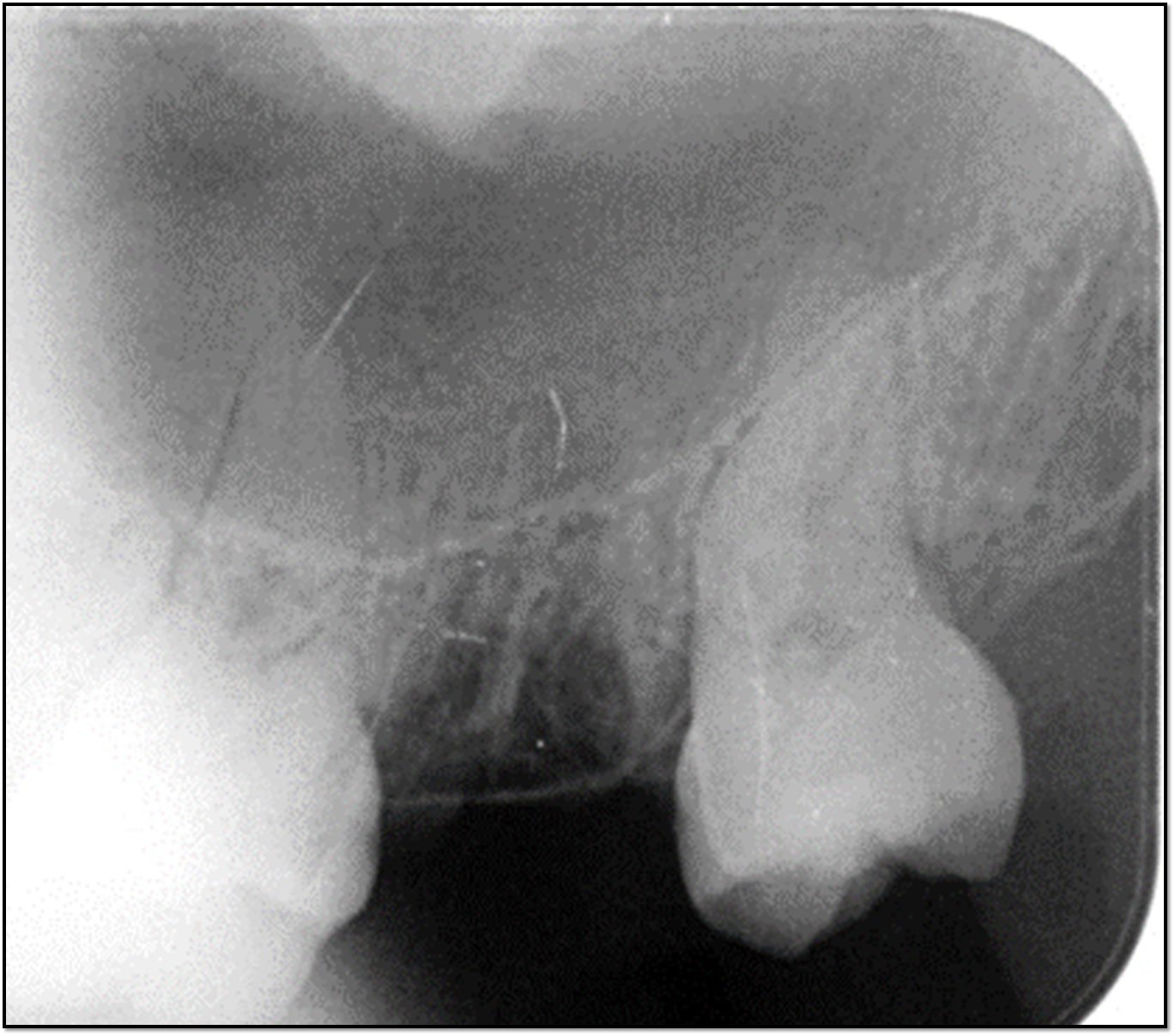
A 55-year-old male patient presented with a missing maxillary left first molar. CBCT revealed limited vertical bone height due to the proximity of the maxillary sinus area. Patient medical history was non-contributory and non-significant. Placement of a standard-length implant was unsuitable without sinus augmentation. Informational treatment consent was obtained from the patient.(Figure 1a,b)
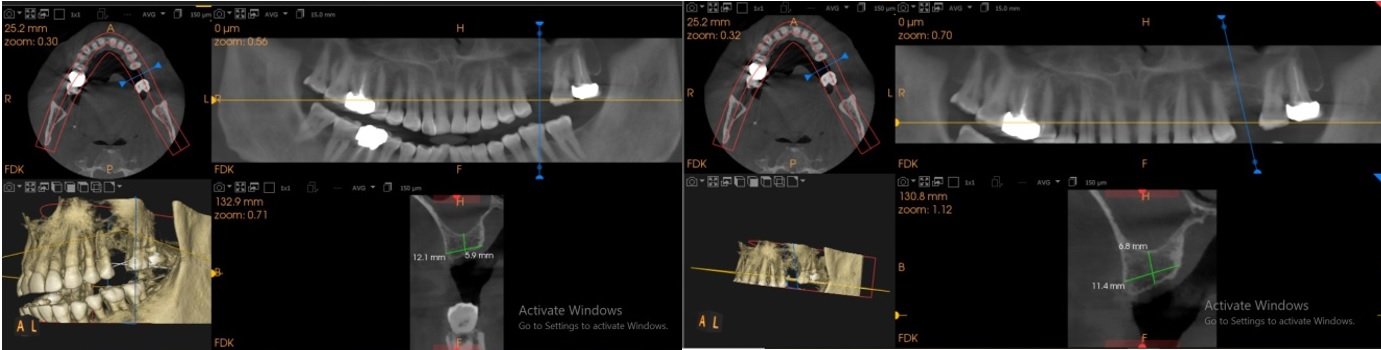
Figure 1.a,b Preoperative CBCT revealed limited bone height
Treatment Plan
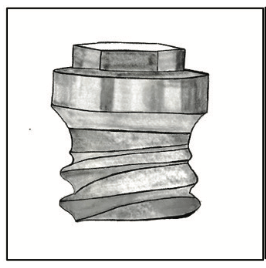
A 4.8 mm × 6 mm short, bone-level implant was planned to be placed, using a minimally invasive approach to avoid sinus lift surgery.
Surgical Procedure
- Local anesthesia was administered.
- Minimal flap incision was performed.
- Sequential osteotomy was completed following implant protocol.
Osteotomy preparation was done sequentially using pilot and calibrated twist drills under copious sterile irrigation to prevent overheating. Extra care was taken to maintain the integrity of the sinus floor while achieving a parallel path aligned with the occlusal scheme of the adjacent teeth. A 4.8 × 6 mm titanium short implant was positioned at bone level, and excellent primary stability was achieved, confirmed clinically by resistance to insertion torque of (35 Ncm) . The implant platform was ideally situated slightly subcrestal to support future platform switching and soft-tissue preservation. (Figure 2a,b) (Figure 3)

Figure 2a,b Short Implant placement

Figure. 3 OPG depicting proper positioning of implant placed
Healing Phase
A 4-month osseointegration period allowed stable bone adaptation. Radiographic review demonstrated favourable healing and significant platform shifting at the bone level. Four months later, the patient was called back for the prosthetic procedures. A repeat of the ISQ test revealed outstanding biological stability, with readings ranging from 84 to 87, demonstrating superior osseointegration or secondary stability as a result.
Prosthetic Phase
A stock abutment with a central access hole was placed to support a screw-retained crown, allowing retrievability and improved hygiene. The prosthesis was torqued to manufacturer guidelines and occlusion was refined.(Figure 4a,b)(Figure 5)


Figure 4a,b Final Aesthetic and functional outcome

Figure 5. Abutment placed at the respective position
Outcome & Follow-Up
At 6 and 12 month follow-ups, soft-tissue contours were stable, no peri-implant inflammation was observed, and radiographs confirmed crestal bone stability. The patient reported functional and aesthetic satisfaction.(Figure.6)

Figure 6. Final Follow-up radiograph
DISCUSSION
Short implants are effective alternatives in anatomically limited posterior maxilla regions. Literature supports survival rates comparable to standard implants when proper occlusal control is maintained. Platform shifting and screw-retained prosthetics improve long-term stability.
In severely damaged alveolar ridges, short dental implants have been suggested as an alternate treatment to streamline implant insertion operations, avoid important structures, reduce surgical trauma, and the risk of problems arising from invasive surgical procedures. In light of this, short dental implants might be more appropriate in this instance.6
Implant survival rates have been linked to a number of parameters, including prosthodontic design, surgical preparation methods, bone density and quantity, implant surface, and implant primary stability.7
A well-prepared osteotomy site with the drilling stopped at a diameter smaller to that of the implant diameter can accomplish the biologically necessary primary implant stability. A larger crown-implant length ratio, high bone density in the area, and a higher bite force are some risk factors that should be considered when considering short dental implants as they may increase stress. Therefore, some techniques are needed to reduce stress. These include splinting various implants together with the splinted crowns, eliminating cantilever as much as feasible, and reducing the size of the crown in the bucco-palatal dimension to reduce the lateral force on the restoration.7
For the implant therapy to be considered as a primary treatment technique, it must meet both functional and aesthetic objectives. With the aim of shortening the course of alveolar bone resorption and treatment duration, endosseous implants placed into extraction sockets promptly have a high success rate of 94 to 100%, in contrast to delayed placement.8
With similar survival rates and fewer problems as enhanced surgeries, short implants provide a reliable option for posterior maxilla rehabilitation with limited bone volume. Success requires careful planning, atraumatic methodology, and appropriate case selection. High survival rates and minimal marginal bone loss for short implants are supported by the literature.
The current study shown that the use of 6 mm implants is a practical substitute for sustaining prostheses in the posterior premolar region of both the maxilla and the mandible within the one-year follow-up period assessed in this examination.
CONCLUSION
A reliable method for replacing posterior maxillary teeth close to the sinus is short implant implantation. Long-term follow-up continues to support its clinical success. Minimally invasive placement of short implants in the maxillary posterior region is an effective, patient-centered approach for cases with limited bone height, achieving high survival rates and reduced morbidity compared to more invasive augmentation methods.
REFERENCES
- Bell R B, Blakey G H, White R P, Hillebrand D G, Molina A. Staged reconstruction of the severely atrophic mandible with autogenous bone graft and endosteal implants. J Oral Maxillofac Surg 2002; 60: 1135-1141.Return to ref 1 in article
- Morand M, Irinakis T. The challenge of implant therapy in the posterior maxilla: providing a rationale for the use of short implants. J Oral Implantol 2007; 33: 257-266.
- Felice P, Cannizzaro G, Barausse C, Pistilli R, Esposito M. Short implants versus longer implants in vertically augmented posterior mandibles: a randomised controlled trial with 5-year after loading follow-up. Eur J Oral Implantol 2014; 7: 359-369.
- Renouard F, Nisand D. Impact of implant length and diameter on survival rates. Clin Oral Implants Res 2006; 17: 35-51.
- Tang, C., Du, Q., Luo, J. et al. Simultaneous placement of short implants (≤ 8 mm) versus standard length implants (≥ 10 mm) after sinus floor elevation in atrophic posterior maxillae: a systematic review and meta-analysis. Int J Implant Dent 8, 45 (2022). https://doi.org/10.1186/s40729-022-00443-1
- Mokcheh A, Jegham H, Turki S. Short implants as an alternative to sinus lift for the rehabilitation of posterior maxillary atrophies : Systematic review and meta-analysis. J Stomatol Oral Maxillofac Surg. 2019;120(1):28-37. [Google Scholar]
- Srinivasan M, Vazquez L, Rieder P, Moraguez O, Bernard J, Belser U. Survival rates of short (6 mm) micro-rough surface implants: a review of literature and meta-analysis. Clin Oral Implants Res. 2014;25(5):539-45. [Google Scholar]
- Sekar AC, Praveen M, Saxena A, Gautam A. Immediate Implant Placement: A Case Report. J Indian Prosthodont Soc. 2012;12(2):120-2. [Google Scholar] [Crossref]
Disclaimer from Guident
The views and opinions expressed in articles published in Guident are solely those of the authors and do not necessarily reflect the views of the editors, the editorial board or the publisher, Ivory India. Guident does not endorse any product, technique or treatment described. Clinical content is intended for qualified dental and medical professionals and is not a substitute for individual clinical judgement. Guident, its editors and the publisher accept no liability for any consequence arising from the use of information published in the journal.
How to cite this article
Dr. Gaurav Gupta, Dr. D.K. Gupta, Dr. Neelja Gupta. Minimally Invasive Placement of a Short Implant in the Maxillary Posterior Region: A Case Report. Guident. 2025 Nov;18(12). Available from: https://ivoryindia.in/articles/implantology/minimally-invasive-placement-of-a-short-implant-in-the-maxillary-posterior-region-a-case-report.html