Temporomandibular Disorder (TMD) Management Using Invisalign: A Modern Orthodontic Approach- a Case Report
Wisdom Dental Clinics ®, Jaipur, India
ABSTRACT
Temporomandibular disorders (TMDs) represent a group of musculoskeletal and neuromuscular conditions involving the temporomandibular joint (TMJ), masticatory muscles, and associated structures. Traditionally managed through splint therapy, physiotherapy, and pharmacologic interventions, orthodontic treatments are increasingly being recognized for their potential to restore functional occlusion and relieve TMD symptoms. This report presents the case of an adult patient with chronic TMD symptoms and malocclusion, successfully treated with Invisalign clear aligner therapy integrated into a multidisciplinary approach.
Keywords: Temporomandibular disorder, Invisalign, occlusal rehabilitation
INTRODUCTION
Temporomandibular disorders (TMD) comprise a group of conditions affecting the temporomandibular joint, masticatory muscles, and associated structures, presenting with symptoms such as pain, joint sounds, restricted movement, and headaches. Among the various etiological factors, occlusal discrepancies have been considered a potential contributing factor in certain cases, although the relationship remains complex and not strictly causal.1 Orthodontic intervention aims to improve occlusal harmony and functional stability, which may reduce abnormal loading on the temporomandibular joint.
Invisalign, a clear aligner system, has emerged as a contemporary orthodontic modality offering both aesthetic and functional advantages. It utilizes a series of custom-made removable aligners to achieve controlled tooth movement and occlusal correction. Studies suggest that clear aligners may positively influence masticatory function and TMD symptoms over time.2 Additionally, aligners can act similarly to occlusal splints by providing a protective effect against parafunctional habits such as bruxism and by promoting muscle relaxation.3
Recent imaging and three-dimensional studies have demonstrated that clear aligner therapy does not produce significant adverse effects on temporomandibular joint structures, supporting its safety in orthodontic management.4 Furthermore, achieving a stable musculoskeletal position and proper occlusal relationship is critical in alleviating TMD symptoms, highlighting the importance of orthodontic correction in selected patients.5
However, it is important to recognize that TMD is multifactorial in origin, involving biological, psychological, and functional components pharmacotherapy, physiotherapy, and behavioral management.
Invisalign represents a promising adjunct in the management of TMD in patients where malocclusion is a contributing factor. With appropriate case selection and careful monitoring, it can enhance both functional outcomes and patient comfort.
CASE REPORT
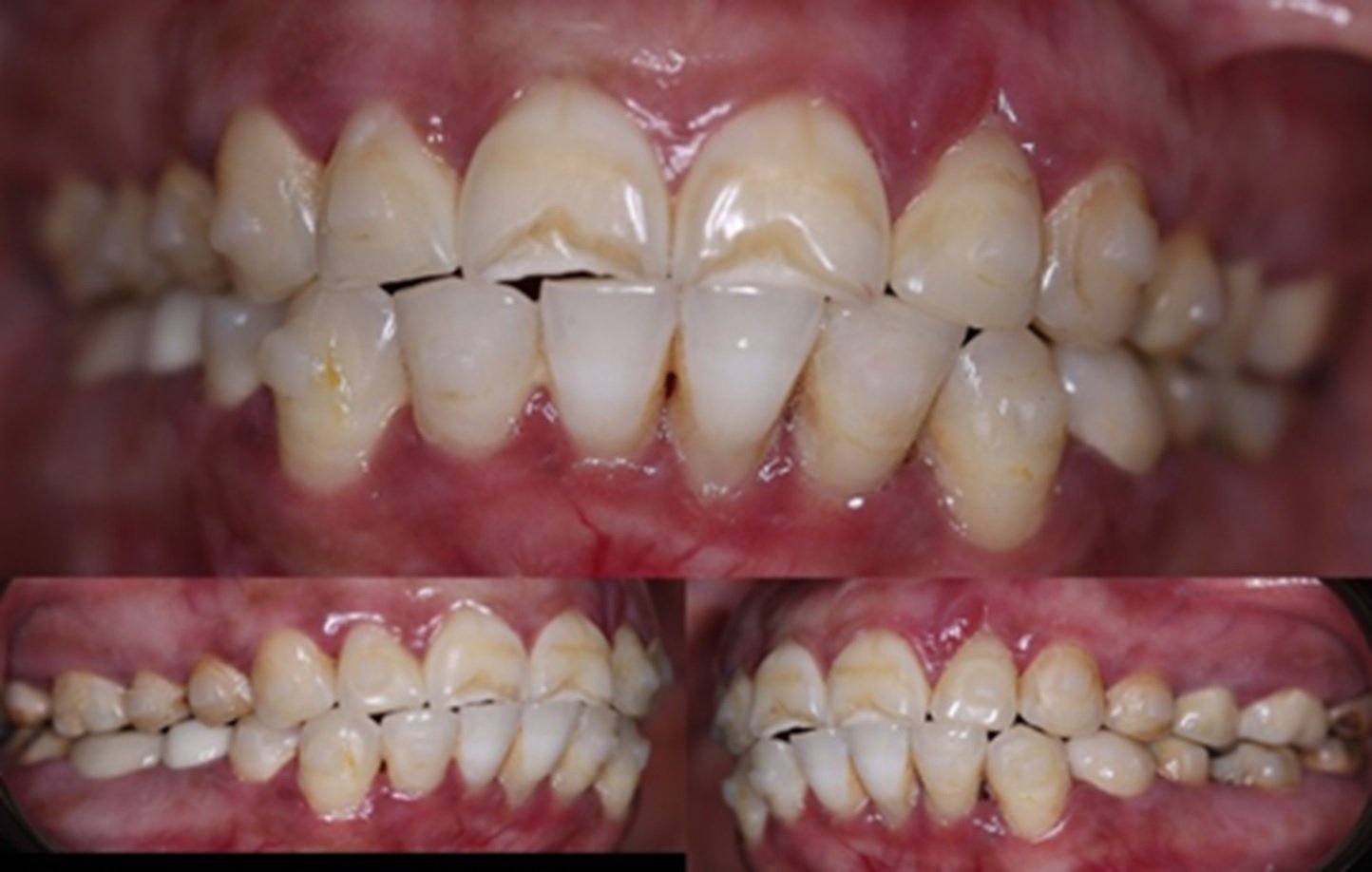
A 28-year-old female presented with a complaint of chronic bilateral TMJ pain, audible joint clicking, and morning stiffness lasting for over one year. She also reported headaches and difficulty during mastication. The patient had a convex profile, a mild Class II division malocclusion, overbite, mild crowding. Medical history was non-contributory. No previous orthodontic treatment had been undertaken. [Figure 1]

Figure 1: Before intraoral photographs
Clinical Examination
Extraoral findings: Facial asymmetry absent; tenderness noted over lateral pterygoid and masseter muscles bilaterally.
Intraoral findings: Deep bite and anterior crowding.
TMJ evaluation: Clicking on opening and closing on both sides; limited mouth opening; no crepitus.
Diagnostic imaging: Panoramic radiograph showed symmetrical condylar morphology without degenerative changes.
Diagnosis: Myofascial pain dysfunction syndrome secondary to occlusal instability and deep bite.
Treatment Objectives
- Reduce TMJ loading and pain symptoms.
- Establish an ideal occlusal relationship with even contacts
- Correct deep bite and minimize anterior interferences
- Maintain facial harmony and improve functional occlusion
Treatment Plan
The patient was treated with Invisalign clear aligner (Align Technology, San Jose, CA, USA) as part of a comprehensive occlusal therapy plan. The treatment involved:
Phase I – Neuromuscular stabilization: Use of first passive aligners mimicking splint therapy to achieve muscular relaxation.
Phase II – Active orthodontic correction: Sequential tooth movements involving mild anterior intrusion and posterior extrusion to level the occlusal plane and open the bite.
Phase III – Functional detailing: Adjustment of canine guidance and centric contacts through refinement aligners.
Supportive therapy: Physiotherapy for masticatory muscle relaxation and self-exercises. [Figure 2]

Figue 2: Phases of treatment
Aligners were worn 22 hours per day, changed weekly for a total of 28 aligners. Follow-ups were scheduled every 6–8 weeks. Patient was satisfied with results.[Figure 3] Comparison of before and after was done. [Figure 4]
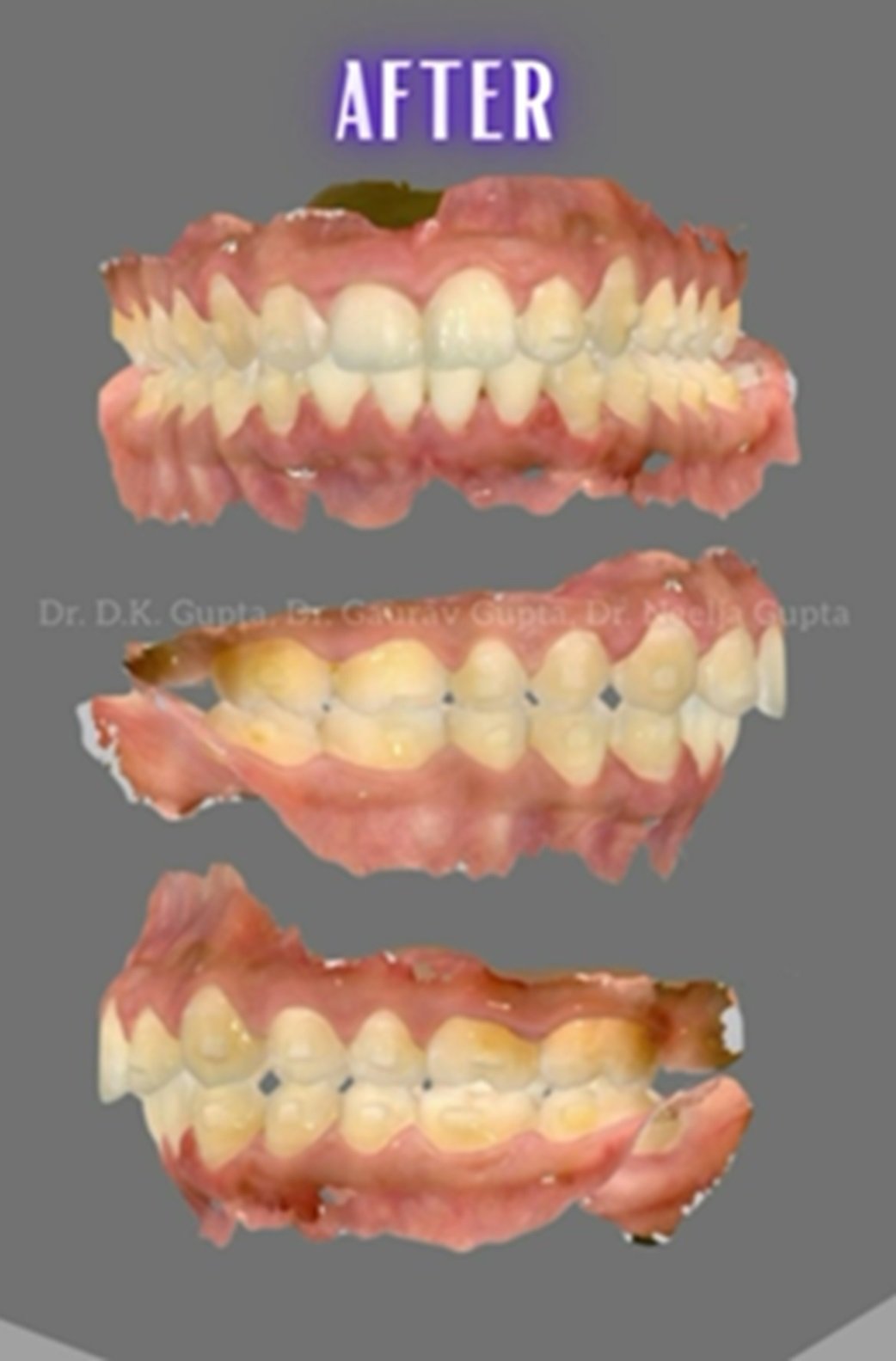
Figure 3: After intraoral photographs

Figure 4 :Comparsion
DISCUSSION
The etiology of TMD is multifactorial, and it involves an alteration in the functional balance between the fundamental elements of the stomatognathic system: dental occlusion, jaw muscles and TMJ. Costen was one of the first to established with certainty the involvement of occlusion in the development of TMD. Rammelsberg offered a review of the etiopathogenic model of TMD development wherein high abrasion and insufficient restorative procedure on
Posterior teeth are risk factors causing occlusal instability.6
Teeth clenching and bruxism have been extensively studied as possible risk factors for TMD as well. The Occlusal Vertical Dimension (OVD) for dentate individual is mainly determined by the remaining dentition, hence loss of tooth substance might influence the OVD. A loss of OVD can significantly affect patient function, comfort and aesthetics and to some extent have an effect on the TMJ.7
Various treatment options are currently available to treat patients with TMD, ranging from conservative methods to more invasive procedures. There is considerable evidence to support conservative management therapies of TMD such as occlusal appliances, behavioural therapy, physiotherapy, invisalign and jaw exercises.8,9
Invisalign may play a role in TMD management by improving occlusal harmony. Studies have shown that aligners can function similarly to occlusal splints, helping to reduce TMJ symptoms in selected cases.3
The controlled and gradual tooth movement achieved with Invisalign ensures precise occlusal adjustments, minimizing the risk of sudden changes that could aggravate TMD symptoms. Digital planning further enhances treatment predictability.5
Additionally, aligner therapy may influence masticatory muscle activity. Reduction in muscle hyperactivity can help relieve pain and improve jaw function in patients with muscle-related TMD.
Invisalign aligners may also provide a protective effect in patients with bruxism by acting as a barrier between teeth, thereby reducing wear and minimizing occlusal trauma.10
This case demonstrates the effective use of Invisalign for both dental correction and functional rehabilitation in a TMD patient. The continuous occlusal coverage of aligners contributes to neuromuscular deprogramming, disclusion of posterior teeth, and redistribution of occlusal forces, similar to occlusal splints.
CONCLUSION
Invisalign clear aligner therapy presents a viable, minimally invasive treatment option for certain types of temporomandibular disorders associated with dental malocclusion. When used with comprehensive clinical evaluation, digital planning, and supportive physiotherapy, it can achieve both aesthetic and functional rehabilitation with high patient comfort.
REFERENCES
- Zhang Z, et al. TMD symptoms and stability. BMC Oral Health.2024
- Heleiwa-Ferioli T, et al. Aligners and bruxism. J Clin Exp Dent. 2024.
- Miller DB. Invisalign in TMD treatment. Int J Orthod. 2009.
- Rossini G, et al. Clinical effectiveness of Invisalign. Prog Orthod. 2015.
- Alwafi AA, et al. Mandibular tooth movement with aligners. Sci Rep. 2023
- Rammelsberg P. “Untersuchungen über Ätiologie, diagnose und Therapie von Diskopathien des Kiefergelenkes”. Berlin: Quintessenz; 1998
- Turner KA and Missirlian DM. “Restoration of the extremely worn dentition”. J Prosthetic Dent 52.4 (1984):467-474.
- List T. “Pharmacologic interventions in the treatment of temporomandibular disorders, atypical facial pain, and burning mouth syndrome. A qualitative systematic review”. J Orofacial Pain 17.4 (2003):301-310.
- Carlsson GE. “Critical review of some dogmas in prosthodontics”. J Prosthodont Res 53.1 (2009):3-10.
- Lombardo L, et al. Aligners and muscle activity. J Clin Med.
Disclaimer from Guident
The views and opinions expressed in articles published in Guident are solely those of the authors and do not necessarily reflect the views of the editors, the editorial board or the publisher, Ivory India. Guident does not endorse any product, technique or treatment described. Clinical content is intended for qualified dental and medical professionals and is not a substitute for individual clinical judgement. Guident, its editors and the publisher accept no liability for any consequence arising from the use of information published in the journal.
How to cite this article
Dr. Gaurav Gupta, Dr. D.K. Gupta, Dr. Anirudh Agarwal. Temporomandibular Disorder (TMD) Management Using Invisalign: A Modern Orthodontic Approach- a Case Report. Guident. 2026 Apr;19(5). Available from: https://ivoryindia.in/articles/orthodontics/temporomandibular-disorder-tmd-management-using-invisalign-a-modern-orthodontic-approach-a-case-report.html