Management of Fracture of Maxillary Single Complete Denture with Prefabricated Metal Mesh
Kim’s Kingsway Hospital Nagpur, Department of Prosthodontics, Crown and Bridge, Rungta College of Dental Sciences & Research Centre, Bhilai
ABSTRACT
Fracture of the complete denture (CD) may cripple the day-to-day routine life of the patient. This may eventually be quite disappointing and frustrating for both the patient as well as the clinician. Midline fracture was the most common problem of these 71% midline fracture seen in maxillary denture and in mandibular denture its 29%. Metal can be added to the denture bases in various forms namely the wires, bars, mesh and plates. This helps to increase the strength of denture. The reinforcement method using prefabricated metal mesh is an easy, simple, less time consuming and relatively economical. This case report portrays the prosthetic rehabilitation of an edentulous patient with reinforced of maxillary complete dentures using prefabricated metal mesh.
Introduction
Patients who has become entirely edentulous in one jaw and retaining either or all or some of natural teeth in the others with several difficulties in providing successful single complete denture is common.1 Mostly the complete denture is made with the material acrylic resin; polymethyl methacrylate (PMMA).2,3 Advantages of acrylic resin are that it is easy to use, easy to repair and less time consuming. Disadvantages are low impact strength and low fatigue resistance.
During chewing or performing any activities in the mouth, there is an increased masticatory force due to the opposing natural teeth.4 This results in fracture. Causes of fractures include occlusal disharmony, flexure and fatigue of the denture base as a result of alveolar resorption and impact as a result of dropping the denture.5,6 Midline fracture was the most common type of fracture during the period of study 195(61%).7
A plethora of strategies have been proposed in the past for the reinforcement of acrylic denture base materials.8 They include:
- Metal reinforced complete dentures,
- Substituting PMMA with polycarbonates and polyamides,
- Chemical modification of PMMA - incorporating cross linking agents or rubber in the form of butadiene styrene,
- Strengthening of PMMA by incorporating fibers namely the carbon fibres, glass fibres, aramid fibres, Lucitone, Trevalon high, Paladon ultra,
- Using visible light polymerized (VLC) resins,
- Strengthening by incorporating metal inserts into the heat processed denture bases. Metal can be added to the denture bases in the form of wires, bars, mesh or plates,
- Incorporation of nanomaterials in acrylic resins i.e. Nano resins,
- Using polymers -PEEK (PolyEtherEtherKetone) or PEKK (PolyEtherKetoneKetone).
All the above methods of reinforcement have shown considerable increase in the resistance to the denture fractures and decrease in chances of failure of the prosthesis. Studies have proven a considerable beneficial effect on the fracture resistance of PMMA by incorporating metal to the PMMA matrix.8
This article explain case report where maxillary single complete denture was fabricated preventing the fracture by using prefabricated metal mesh.
CASE REPORT
A 76 years old male patient reported to the Department of prosthodontics and crown and bridge, Rungta College of Dental Sciences and Research, Bhilai, with the chief complaint of repeated fracture of the upper denture. Patient has past dental history of extractions of the grossly decayed and mobile maxillary teeth due to chronic generalized periodontitis. Last year his denture had been repaired by routine laboratory procedure.
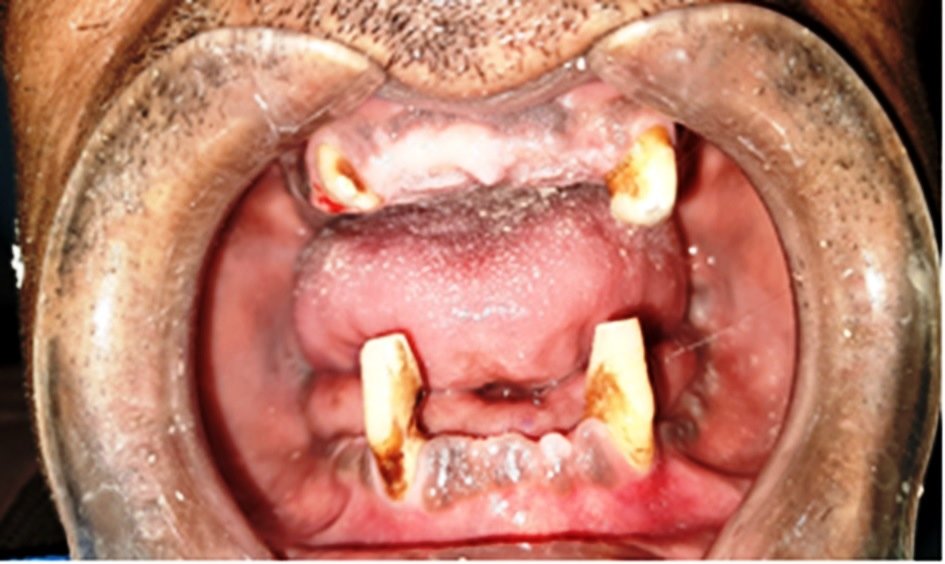
Intraoral examination revealed completely edentulous maxillary ridge and opposing dentulous mandibular arch (Fig.1). Mucosa was normal and the opposing teeth required minor alterations. Saliva was of medium consistency and patient was co-operative and philosophical.
His main concerned to increase the strength of denture, which is also economical for him. So considering all the factors and history of denture fractures, maxillary denture with prefabricated mesh was planned for the patient.

Fig. 1: Intraoral view of maxillary arch and mandibular arch
PROCEDURE
The preliminary steps of complete denture fabrication remained the same:
Preliminary impression of the maxillary arch was made using impression compound. Impression of lower arch made by alginate (Fig.2). Then primary cast was obtained by using type II dental plaster (Fig.3). After adaptation of the wax spacer on maxillary cast, custom tray was fabricated using autopolymerizing acylic resin. Border moulding of maxillary arch was performed using low fusing green stick compound and the final impression was made using zinc oxide eugenol impression paste (Fig. 4). Definitive cast was poured using dental stone (Fig. 5).

Fig. 2: Primary impression of maxillary and mandibular arch

Fig. 3: primary cast of maxillary arch

Fig. 4: Maxillary arch border moulding and final impression

Fig. 5: Definitive cast
After that temporary denture base and maxillary occlusal rim was fabricated. Maxillo-mandibular relations were recorded and evaluated for optimum aesthetics and phonetics (Fig.6). And then transferred to the articulator. The artificial teeth were adjusted and Teeth were selected on basis of SPA concept. Teeth arrangement was done. Trial denture was assessed intra-orally, to verify the function, fit and esthetics, before its processing (Fig.7).

Fig. 6: Jaw relation

Fig.7: Try in
The flasking procedure was carried out. The size of the reinforcement mesh was marked using a black compact disc marker, and was trimmed accordingly with the help of sharp scissors. Then it was adapted to the master cast by using a universal plier and kept aside to be incorporated after the dewaxing procedure. The dewaxing process was completed.
The already adjusted prefabricated metal mesh was checked on the maxillary cast for any last minute corrections in its adaptation (Fig.8). A sort of sandwiched procedure was implemented which involved adapting some amount of the dough resin on the maxillary cast over which the metal mesh was placed accurately and the denture was packed, pressed and processed in the conventional manner. The processed denture was retrieved and cleaned. The denture was finished, polished (Fig.9).

Fig. 8: Processing with metal mesh

Fig. 9: Processed denture base
Then denture was tried in the patient’s mouth for evaluation of appropriate esthetics and occlusion (Fig 10). After the necessary occlusal corrections, the prostheses i.e. removable maxillary complete denture with prefabricated metal mesh was delivered. Patient was given instructions (Fig 11).

Fig. 10: Final prosthesis (intra oral view)

Fig. 11: Happy patient
DISCUSSION
Fracture of single complete denture are common when opposing natural teeth as the high forces acting on the denture leads to stress propagation which will further lead to crack and finally causing fracture in mid line area. The midline fracture in a denture is often a result of flexural fatigue. Though poly Methyl Metha Acrylate denture bases have good mechanical, biological and esthetic properties, the impact and fatigue strength of PMMA are not entirely satisfactory, thus may fail when there is excessive parafunctional and/or functional force.9
In case of fracture of the single denture, a number of factors may be attributed namely improper occlusal plane (mandibular), high frenum, improper occlusal scheme and occlusal forces, improper denture base thickness and foundation.10 The best way to counteract these problems by using a metal mesh reinforcement in the prosthesis inspite of its disadvantages of increased cost, complex fabrication procedure and inability to reline and rebase.4
The metal grid strengthener for heat processed PMMA denture bases is available in both stainless steel and gold plated metal. They have a thickness of 0.4mm and their mesh design helps to produce a good resin bond. Prefabricated metal mesh does not increase the weight of the prosthesis. The considerable decrease in the propagation of microcracks due to the metal reinforcement aids in reducing the chances of fracture, thereby increasing the fracture resistance of PMMA.11 This sandwiched technique of incorporating the metal mesh aids in achieving a uniform thickness of acrylic without increasing the bulk of the denture base ultimately increasing the strength of the denture. Metal mesh, thus proves to be a viable and an economical option for the patient.
There are some clinical studies regarding the clinical behaviour of removable acrylic reinforced dentures. Narva et al. found that polymer pre-impregnated partial fibre reinforcement seemed to be useful in eliminating fractures of acrylic removable dentures.12 Dhiman RK et al. ,reported use of a cast gold alloy base for the maxillary denture to improve fracture resistance and also to improve the thermal perception.13 Farmer JB, proposed reported incorporation of a metal mesh in the palatal aspect of the maxillary denture during processing to fortify against leverage forces on the midpalate.14
The single denture treatment requires the same chair time as that needed for the construction of two complete dentures and it is more demanding for both the dentist and the dental technician. The most visible adverse sequelae of single denture treatment are the wearing of the natural teeth and denture fracture. Both are prevented in this case.
CONCLUSION
This article details a method for fabrication of denture by reinforcing single maxillary complete denture using a commercially available pre formed metal mesh. Conventional metal base dentures are costly and required more patient appointments hence another simple and economical method of reinforcing denture with commercially available metal mesh is also described in this article.
REFERENCES
- Beyli MS, Dent M and Fraunhofer V. An analysis of causes of fracture of acrylic resin dentures J Prosthet Dent 1981;46(3):238-241.
- Jagger DC, Harrison A and Jandt KD. Review The reinforcement of dentures 1999;26:185-194.
- Naik S, Preetham P, Behera SS, Shreelok BS. Metal mesh dentures: A Boon to conventional dentures. Indian J Stomatol 2012;3(3):197-199.
- Devendra Kumar, R Ravichandran, Harsha Kumar K, Vivek V Nair. Management of recurrent fracture of single removable complete denture using stainless steel mesh reinforced denture base opposing a removable partial denture: A case report. Int J Appl Dent Sci 2021;7(4):71-74
- Sheikh Ali M, Al zahrani SB. Causes of denture fracture: A survey. Saudi Dental J 2006;18(3):149-155.
- Rodrigues AH. Metal reinforcement for implant supported mandibular overdentures. J Prosthet Dent 2000;83(5):511-513.
- Khasawneh SF. A clinical study of complete denture fractures at four military hospitals in Jordan. JRMS 2003;10(3):27-31.
- Arpit Sikri and Jyotsana Sikri. “Prefabricated Metal Mesh Reinforced Removable Complete Denture: Case Report". Scientific Archives Of Dental Sciences 5.2 (2022): 46-53.
- Ohkube C., Kurtz K. S., Suzuki Y., Hanatani S., AbeM., Hosoi T. Comparative study of maxillary complete dentures constructed of metal base and metal structure framework. Journal of oral rehabilitation, 2001; 28: 1: 49-56
- Darbar UR, Huggett R, Harrison A. Denture fracture: a survey. Br Dent J. 1994;176:3425
- Jameson WS. Fabrication and use of a metal reinforcing frame in a fracture prone mandibular complete denture. J Prosthet Dent. 2000;83:476-479.
- Narva KK, Vallittu PK, Helenius H, Yli-Urpo A. Clinical survey of acrylic resin removable denture repairs with glass-fiber reinforcement. Int J Prosthodont 2001; 14: 219–224.
- Dhiman RK, Chowdhury SKR. Midline Fracture In Single Complete Acrylic Vs Flexible Dentures. MJAFI. 2009;65:141-5.
- Farmer JB. Preventive Prosthodontics: Maxillary Denture Fracture. J Prosthet Dent. 1983;50:172-175.
Disclaimer from Guident
The views and opinions expressed in articles published in Guident are solely those of the authors and do not necessarily reflect the views of the editors, the editorial board or the publisher, Ivory India. Guident does not endorse any product, technique or treatment described. Clinical content is intended for qualified dental and medical professionals and is not a substitute for individual clinical judgement. Guident, its editors and the publisher accept no liability for any consequence arising from the use of information published in the journal.
How to cite this article
Dr. Samiksha Ajmire, Dr. Ravleen Khalsa, Dr. Anjali Rathore. Management of Fracture of Maxillary Single Complete Denture with Prefabricated Metal Mesh. Guident. 2023 Mar;16(4). Available from: https://ivoryindia.in/articles/prosthodontics/management-of-fracture-of-maxillary-single-complete-denture-with-prefabricated-metal-mesh.html