Risk Factors of Dental Caries
Department of Public Health Dentistry, K. D. Dental College and Hospital, Mathura, Uttar Pradesh, India
INTRODUCTION
Dental caries is the disease of civilization affecting the mankind since the dawn of the time. Caries has also been noted in the fossil remains of Pithecanthropus erectus and Homo rhodesiensis, early ancestors of man. Caries seems to have increased considerably in Homo sapiens during Neolithic period when it was perhaps as high as that seen in many contemporary primitive people. Dental caries is a chronic disease, a process that progresses very slowly in most individuals.1
Dental caries may be considered as a disease of modern civilization, since prehistoric man was rarely affected from dental caries. There was no evidence of dental caries in the relatively very few teeth found in skull fragments of our earliest known ancestors, Pithecanthropus. However, extensive decay was noticed in the skull of Rhodesian man from the Neanderthal age. And also, evidence of caries was found among few skulls of the prehistoric race, which lived in Europe about 15-18 thousand years ago.2
The total consumption of sugar, as well as the frequency of its intake, undoubtedly contributes to the onset of dental caries. Diet is a dominant variable in determining dental caries prevalence and it can mask other factors.3
In 1890, Miller gave the chemoparasitic theory for dental caries. Then, there was no reason to look beyond the oral cavity for the causes of dental caries. Dental research since that day has provided so many factors which seemed to influence the occurrence of caries. So, instead of finding "a cause" of dental caries, the concept of "multifactorial disease" became more acceptable.4
Dental caries is an infectious disease in which bacterial by products mainly acids, dissolve the hard tooth surfaces. Pathology of caries is a multifactorial, which depends on four factors, i.e., diet, microorganisms, host defences and time. To establish caries risk, factors like clinical and microbiological data, food habits, socioeconomic status (SES) and oral hygiene habits could be considered.5
DEFINITIONS
Dental caries6
"Dental caries is an infectious microbial disease that begins as demineralization of the inorganic portion of the tooth, followed by destruction of the organic portions, leading to cavity formation". The interaction between the biofilm and the tooth surfaces is called the caries process and the manifestation of the stage of the process at one point in time is the caries lesion.
Risk factor6
Risk factors are social, economic or biological status, behaviors or environments which are associated with or cause increased susceptibility to a specific disease, ill health or injury.
Caries susceptibility7
According to the Medical Subject Headings (MeSH) by the National Library of Medicine, Dental Caries Susceptibility is defined as "the predisposition to tooth decay (dental caries)."
Caries activity8
Caries activity refers to the speed or rate at which dental caries (tooth decay) is progressing in an individual at a given time. It indicates whether the decay process is active, slowly progressing, arrested, or inactive. High caries activity means new lesions are developing or existing ones are rapidly worsening, whereas low caries activity suggests minimal or no active demineralization.
Caries risk9
Caries risk is the probability that an individual will develop dental caries (tooth decay) within a certain period of time, based on the balance of protective and pathogenic factors in their mouth.
SALIENT FEATURES OF CARIOUS PROCESS: 1
- Carious process is spread over time
- Carious process does not have to progress
- The initial lesion can be arrested and reversed
- All ages are susceptible to caries
- The major cause of tooth loss in all age groups is dental caries
EPIDEMIOLOGICAL TRIAD AND FACTORS 10
The epidemiological triad is a model used to study how diseases spread. It considers the interaction between three key factors: the agent (the cause of the disease), the host (the organism affected by the disease), and the environment (external factors that influence the disease). By understanding these interactions, public health professionals can develop strategies to prevent and control diseases.
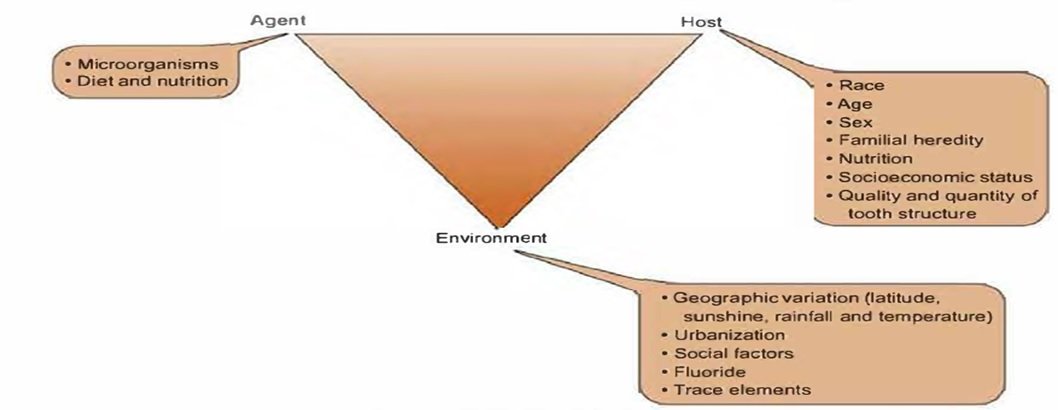
Fig.1: Epidemiological Triad10

Fig.2: In addition, a fourth factor i.e. Time must be considered in etiology of dental caries. (Newburn, 1982)11
Here's a breakdown of the three components:10
- Host Factors
- Agent Factors
- Environment Factors
The interaction of these factors under conducive conditions leads to dental caries development.
RISK AT CRITICAL pH12
The critical pH is the pH at which a solution is just saturated with respect to a particular mineral, such as tooth enamel. If the pH of the solution is above the critical pH, then the solution is supersaturated with respect to the mineral, and more mineral will tend to precipitate out. Conversely, if the pH of the solution is less than the critical pH, the solution is unsaturated, and the mineral will tend to dissolve until the solution becomes saturated. The concept of critical pH is applicable only to solutions that are in contact with a particular mineral, such as enamel. Saliva and plaque fluid, for instance, are normally supersaturated with respect to tooth enamel because the pH is higher than the critical pH, so teeth do not dissolve in saliva or under plaque. However, these fluids cannot be supersaturated with respect to individual ions, such as calcium or phosphate.12
RISK FACTORS 13
Dental caries is an infectious and transmissible disease caused mainly by acid-producing bacteria present in dental plaque. The disease develops through the interaction of four key factors: microorganisms, host factors, diet, and time. Acidogenic bacteria ferment dietary carbohydrates, producing acids that lower oral pH below the critical level (5.5), resulting in enamel demineralization.
Etiologic Factors
- Microflora: Main cariogenic bacteria include Streptococcus mutans, S. sobrinus, and Lactobacillus. These organisms are acidogenic, aciduric, and capable of forming biofilms on tooth surfaces.
- Host Factors: Saliva quantity and quality, tooth structure, enamel maturity, and plaque-retentive anatomy influence caries susceptibility.
- Diet: Frequent intake of fermentable carbohydrates, especially sucrose, promotes bacterial acid production and plaque formation.
- Time: Longer exposure of teeth to acidic conditions increases demineralization.
Role of Dental Plaque
Dental plaque is a soft bacterial biofilm adhering to tooth surfaces. It contains millions of microorganisms embedded in a polysaccharide matrix. Plaque accumulation, especially in fissures, gingival margins, and interproximal areas, is strongly associated with caries development. Pioneer colonizers such as streptococci attach to pellicle-coated tooth surfaces and initiate plaque formation.
Oral Environment
The oral cavity acts as a microbial ecosystem where saliva regulates microbial growth. Salivary flow varies during sleep, eating, and stimulation. Reduced salivary flow favors bacterial accumulation and acid retention, increasing caries risk. Different oral habitats such as fissures, gingival sulci, and interproximal spaces provide favorable sites for bacterial colonization.
Cariogenic Microflora
- Mutans streptococci: Major initiators of enamel caries due to strong adhesion, acid production, and extracellular polysaccharide formation.
- Lactobacilli: Associated mainly with progression of deep dentinal lesions and acidic environments.
- Other bacteria: Actinomyces, Prevotella, and related species contribute particularly to root caries.
External Modifying Factors
- Dietary Factors
Frequent consumption of fermentable carbohydrates, especially sucrose, increases cariogenicity. Sucrose enhances plaque stickiness and supports bacterial colonization.
- Socioeconomic and Behavioral Factors
Low socioeconomic status, poor education, inadequate oral hygiene, irregular dental visits, and unhealthy dietary habits are strongly linked to higher caries prevalence.
Internal Modifying Factors
- Role of Saliva
Saliva protects teeth through:
- Buffering and neutralizing acids
- Remineralization with calcium and phosphate ions
- Antimicrobial action
- Clearance of food debris and microorganisms
Reduced salivary secretion (xerostomia/hyposalivation) significantly increases caries risk.
- Systemic Diseases
Conditions such as Sjögren’s syndrome, diabetes, depression, and long-term medication use may impair salivary flow and host defense mechanisms, increasing susceptibility.
Tooth Factors
Tooth morphology, fissure depth, delayed eruption, rough enamel surfaces, and exposed root surfaces favor plaque retention and caries development. Molar fissures are the most caries-prone areas due to prolonged plaque accumulation and difficult cleaning.
THE COMMON RISK FACTOR APPROACH (SHEIHAM AND WATT 2000): 14
The dental caries has a multifactorial etiology with a complex interplay of multiple risk factors, such as age, gender, socioeconomic status (SES), water fluoride level, dietary factors such as the physical forms of carbohydrate, snacking habits, and frequency of sugar consumption. Untreated dental caries not only causes pain and discomfort but also, in addition, places a financial burden on the society.
The Common Risk Factor Approach addresses risk factors common to many chronic conditions within the context of the wider socio-environmental milieu. Oral health is determined by diet, hygiene, smoking, alcohol use, stress and trauma. As these causes are common to a number of other chronic diseases, adopting a collaborative approach is more rational than one that is disease specific.14
RISK GROUPS 15
Determination of caries-risk is important for assessment of the individual aetiological factors of existing carious lesions and of the caries risk situation. Repeated determination of the caries-risk allows an evaluation of the success or the need for modification of preventive measures. Indications of an increased caries-risk in specific children in community preventive programmes will allow selection of an individual preventive.15
The caries-risk, therefore, is the risk of an individual developing a carious lesion. Increased risk may be the result of several caries producing factors coinciding or of insufficient defence mechanisms leading to different caries prevalence. By definition, risk is aimed at assessing developments in the future. It can, however, be assessed only on the basis of symptoms present at, or having manifested themselves by, the time of assessment.15
Risk groups can be divided into two categories:15
- Risk age group and
- Other risk groups.
Risk Age Groups
- 5–8 years: eruption of first permanent molars
- 11–15 years: eruption of second permanent molars
- 19–22 years: eruption of third molars
- Older adults: increased root caries risk
Other High-Risk Groups
- Children of mothers with high mutans streptococci levels
- Frequent sugar consumers
- Individuals with xerostomia
- Orthodontic patients
- Pregnant and lactating women
- Patients receiving head and neck radiotherapy
- Medically compromised individuals
CARIES RISK ASSESSMENT 16
Risk assessment procedures used in medical practice generally have sufficient data to accurately quantitate a person’s disease susceptibility and allow for preventive measures. However, in dentistry, sufficiently validated multivariate screening tools to determine which children are at higher risk for dental caries are limited.16
Two caries risk assessment tools, namely the Cariogram and CAMBRA tools, have been validated in clinical trials and clinical outcomes studies. Several other published caries-risk assessment tools utilize similar components but have not been clinically validated.16
Cariogram17: Douglas Bratthall coined the phrase “Cariogram” to depict the interaction of diverse etiological factors of caries. Cariogram is a computer based application that was developed to provide practical caries risk evaluations.
The Cariogram is a piez chart with five colored sectors that indicate the distinct sets of factors connected to dental caries: green, dark blue, red, light blue, and yellow.

Fig.3: Cariogram
CLINICAL APPROACH 18
A thorough clinical approach for managing dental caries involves a structured and systematic assessment of each patient’s individual risk factors. This helps in planning personalized preventive and treatment strategies.
Below are the key components explained in detail:
1. Caries History
- Assess the patient’s past experience with dental caries, such as the number of fillings, crowns, or teeth lost due to decay.
- A high past caries experience often indicates a higher risk of future caries.
2. Caries Status
- Perform a careful clinical and radiographic examination to detect:
- Initial caries lesions: These are early, non-cavitated white spot lesions that may be reversible with proper management.
- Established caries: Visible cavities or larger areas of decay that require restorative treatment.
3. Fluoride Exposure
- Ask about the type of fluoride products the patient uses (fluoridated toothpaste, mouth rinses, professionally applied varnishes, or community water fluoridation).
4. Plaque Control and Oral Hygiene
- Inspect the teeth and gums for plaque accumulation and signs of poor oral hygiene, such as gingivitis.
5. Dietary Habits
- Take a detailed diet history.
- Give tailored dietary advice to reduce fermentable carbohydrate intake if needed.
6. Bacterial and Salivary Tests
- For patients at high risk, additional tests may be done to guide preventive strategies:
- Streptococcus mutans test: Estimates levels of cariogenic bacteria.
- Lactobacillus test: Indicates the presence of bacteria associated with caries progression.
- These tests help to identify underlying biological factors that may need to be addressed.
7. Social and Behavioural Factors
- Assess the patient’s motivation, awareness, and ability to comply with preventive instructions.
CONCLUSION
Dental caries is influenced by a complex interplay of factors, including dietary habits, oral hygiene practices, and the presence of certain bacteria. Suboptimal oral hygiene, like infrequent brushing and flossing, is a significant risk factor. Dietary choices, particularly the consumption of sugary foods and drinks, also contribute to caries development. Furthermore, inadequate fluoride exposure and the presence of certain bacteria in the mouth can increase the risk of tooth caries.19
The key risk factors include diet and snacking, frequent sugar consumption especially between meals, sticky food for extended periods, specific dietary patterns. Also, an individuals’ oral hygiene practices including the inadequate brushing leaves a breeding ground for bacteria that cause tooth caries, an ignorance to flossing, tongue cleaning poses risk to development in dental caries.19
The fluoride strengthens tooth enamel and makes it more resistant to acid attacks, preventing caries. Also, use of fluoridated toothpaste for brushing is an effective way to obtain fluoride. Many other factors such as the age both amongst the children and older adults are at higher risk due to factors like developing teeth and potentially weakened enamel, or dry mouth, which can lead to increased caries.20
Lower socioeconomic status can be associated with limited access to oral healthcare and lower levels of education about oral hygiene, increasing caries risk. Systemic conditions and medications can cause dry mouth, thus increasing caries risk.20
Another obvious factor governing the carious exposure is the presence of any previous caries experience. This shows individuals with higher risk of developing new ones. The anatomical positioning, tooth morphology also can affect their susceptibility to caries. More importantly, the role of bacterial activity, particularly Streptococcus mutans, play a significant role in caries development with time exposed to a cariogenic environment (bacteria, sugars, etc.), holds higher the risk of caries.21
REFERENCES
- Hiremath SS, Sushi Kadonakuppe. Dental Caries. Textbook of Public Health Dentistry. Chapter 29, 4th ed. 261-263.
- Hiremath SS. Textbook of Public Health Dentistry. Epidemiology of Dental Caries. Chapter 11, 4th ed. 111-117.
- P B Hunter. Risk factors in dental caries. Int Dent J. 1988 Dec;38(4):211-7.
- Hiremath SS and Archana Krishnamurthy. Caries Risk Assessment. Textbook of Public Health Dentistry. Chapter 32, 4th ed. 284-289.
- Keyes, P.H. Present and future measures for dental caries control. Journal of American Dental Association. 1969 Dec;79(6):1395–1404.
- Global Health Risks- Mortality and burden of disease attributable to selected major risks. The World Health Report. 2002:1-70.
- Rathee M, Sapra A. National Library of Medicine, Dental Caries Susceptibility. Stat Pearls Publishing; 2026 Jan
- Fejerskov O., Kidd E. Dental Caries: The Disease and its Clinical Management. 3rd Edition, Wiley Blackwell. 2015.
- Featherstone J.D.B. The science and practice of caries prevention. Journal of the American Dental Association. 2000;31(7):887-99.
- Curtis, Denice C. Ortega, Fernando Eckhart, Scott Monar, Johanna Thompson Paige. Utilizing the Caries Risk Assessment Model (Caries Management by Risk Assessment) in Ecuador. Journal of International Oral Health. 2018;10(6):287-292.
- E Newbrun. Preventing dental caries: current and prospective strategies. J Am Dent Assoc. 1992;123(5):68-73.
- Colin Dawes. What is the critical pH and why does a tooth dissolve in acid? J Can Dent Assoc. 2003 Dec;69(11):722-4.
- Per Axelsson. Diagnosis and Risk Prediction of Dental Caries. Chapter 1, 1st ed. 1-170.
- Kumar D, Gandhi K, Maywad S, Malhotra R, Ahuja S, Kapoor R. Prevalence and correlation of dental caries with its specific risk factors in 5-15-year old school going children in urban population of Ghaziabad. International Journal Clinical Pediatric Dentistry 2020 Jan-Feb;13(1):72-78.
- Harris R, Nicoll AD, Adair PM, Pine CM. Risk factors for dental caries in young children: a systematic review of the literature. Community Dental Health 2004;21:71-85.
- American Academy of Pediatric Dentistry. Caries-risk assessment and management for infants, children, and adolescents. The Reference Manual of Pediatric Dentistry. Chicago, Ill.: American Academy of Pediatric Dentistry; 2024:306-12.
- Bratthall D, Hänsel Petersson G. Cariogram--a multifactorial risk assessment model for a multifactorial disease. Community Dent Oral Epidemiology. 2005 Aug;33(4):256-64.
- Klock B, Emilson D-G, Lind S-0, et al. Prediction of caries activity in children with today’s low caries incidence. Community Dent Oral Epidemiol. 1989;17:285-292.
- Demers M, Brodeur J-M, Simard P L, et al. Caries predictors suitable for mass-screenings in children: a literature review. Community Dent Health 1990;7:11.
- Sun S, Lou Y, Weng X. Dental caries prevalence and caries-associated risk factors of students aged 12–15 years in Xide County of Liangshan Prefecture, China: a cross-sectional study. BMJ Open 2024;14:082922.
- Anil S, Anand PS. Early Childhood Caries: prevalence, risk factors, and prevention. Front Pediatr. 2017;18,5:157.
Disclaimer from Guident
The views and opinions expressed in articles published in Guident are solely those of the authors and do not necessarily reflect the views of the editors, the editorial board or the publisher, Ivory India. Guident does not endorse any product, technique or treatment described. Clinical content is intended for qualified dental and medical professionals and is not a substitute for individual clinical judgement. Guident, its editors and the publisher accept no liability for any consequence arising from the use of information published in the journal.
How to cite this article
Dr. Shrey Vardhan, Dr. Navpreet Kaur, Dr. Manish Bhalla. Risk Factors of Dental Caries. Guident. 2026 Jul;19(8). Available from: https://ivoryindia.in/articles/general/risk-factors-of-dental-caries.html