Immediate Smile Rehabilitation Using Corticobasal Implantology: A Case Series of Four Patients Restored Within 24 Hours
Dentonic Oral Surgery Implant Centre Rajbagh, Srinagar, J&K
ABSTRACT
Background: Restoration of missing or non-restorable teeth has traditionally required prolonged treatment durations, multiple surgical interventions, and delayed prosthetic loading. Corticobasal implantology has emerged as an evidence-based alternative that enables immediate implant placement and functional loading, thereby significantly reducing treatment time while maintaining predictable clinical outcomes.
Objective: To present four clinical cases demonstrating successful immediate extraction (where indicated), corticobasal implant placement, and fixed prosthetic rehabilitation within 24 hours.
Methods: Four patients with different clinical presentations requiring replacement of anterior or posterior teeth were treated using corticobasal implantology. Treatment included atraumatic extraction where necessary, immediate placement of corticobasal implants, and fixed prosthetic rehabilitation within 24 hours.
Results: All four patients achieved immediate restoration of function and aesthetics with excellent primary stability, uneventful healing, and high patient satisfaction. Immediate loading allowed patients to resume their daily routine without prolonged treatment interruptions.
Conclusion: Corticobasal implantology provides a predictable, minimally invasive, and time-efficient solution for immediate tooth replacement. The protocol offers substantial benefits in selected clinical situations by reducing treatment duration, improving patient acceptance, and restoring confidence through immediate functional and aesthetic rehabilitation.
Keywords: Corticobasal Implantology, Immediate Loading, Basal Implants, Immediate Implant Placement, Smile Rehabilitation, Fixed Prosthesis.
INTRODUCTION
Loss of anterior or posterior teeth due to trauma, extensive caries, root fracture, or failed restorations has a profound impact on function, aesthetics, speech, and psychological wellbeing. Conventional implant therapy generally involves extraction, a healing period of several months, implant placement, osseointegration, and delayed prosthetic loading. Although highly successful, this approach often requires multiple appointments and prolonged treatment duration, which many patients find inconvenient.
Modern implant dentistry has increasingly focused on reducing treatment time while maintaining predictable clinical outcomes. Corticobasal implantology represents one such advancement. Unlike conventional crestal implant systems that primarily rely on cancellous bone, corticobasal implants obtain anchorage from the highly mineralised cortical bone, allowing immediate functional loading in appropriately selected cases.
Immediate loading protocols minimise patient discomfort, reduce the number of surgical interventions, eliminate extended edentulous periods, and enable rapid restoration of both aesthetics and function. These advantages have significantly improved patient acceptance of implant therapy.
This article presents four clinical cases that illustrate the versatility of corticobasal implantology in restoring patients' smiles within 24 hours.
CASE SEREIS
CASE 1
Patient Profile
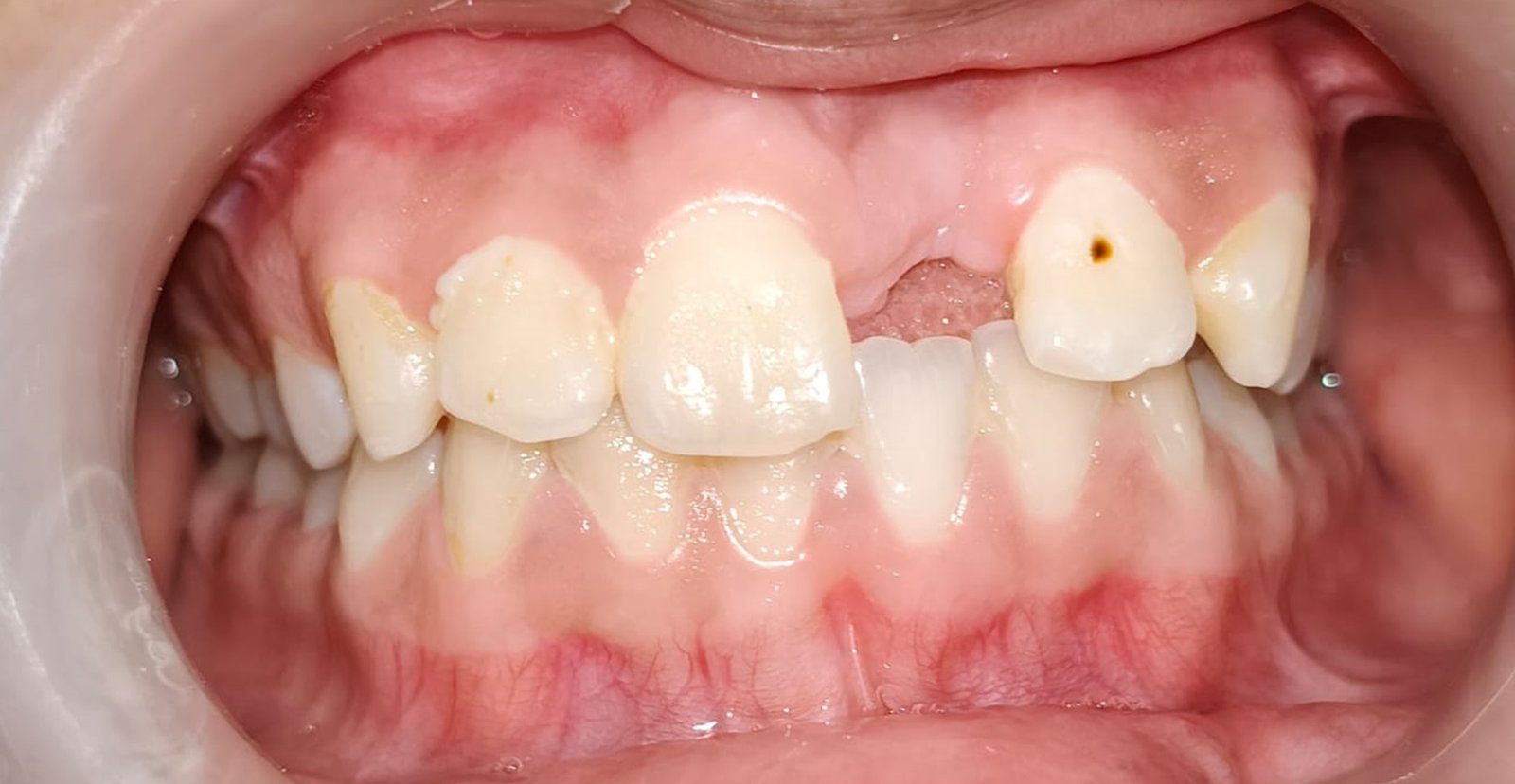
A female agricultural worker in her early forties presented with a fractured maxillary left lateral incisor. Clinical examination confirmed that the tooth was non-restorable and required extraction.
Patient Concern
The patient expressed concern regarding the prolonged treatment time associated with conventional implant therapy, as she could not afford to remain without a tooth for several months due to her occupation and social interactions.
Treatment Planning
Following clinical and radiographic evaluation, immediate extraction and corticobasal implant placement with immediate loading were planned.
Surgical Procedure
The fractured tooth was atraumatically extracted, preserving the surrounding bone and soft tissues. A corticobasal implant was placed with excellent primary stability. An immediate provisional restoration was fabricated.
Prosthetic Rehabilitation
Within 24 hours, a fixed implant-supported crown was delivered.
Outcome
The patient resumed her agricultural work on the following working day with restored aesthetics, function, and confidence. Healing was uneventful and patient satisfaction was excellent.

CASE 2
Patient Profile
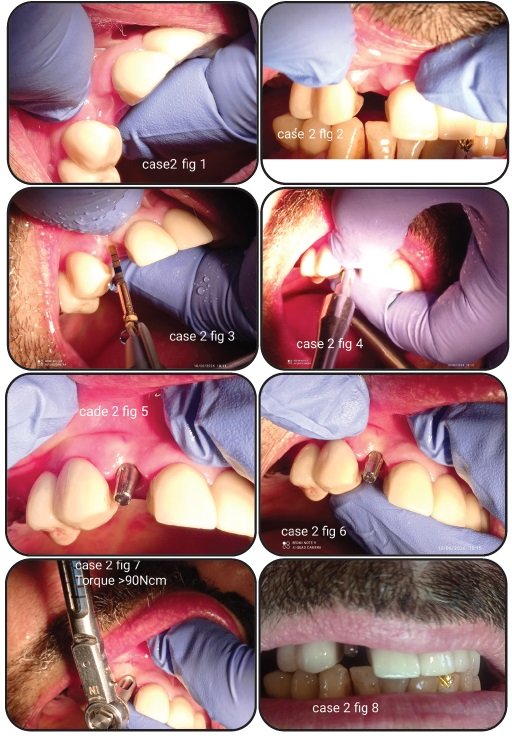
A male patient in his fifties reported with a missing tooth that had previously been extracted elsewhere. The adjacent teeth had full-coverage crowns, and he had been advised to wear a removable partial denture.
Patient Concern
The patient was unwilling to use a removable prosthesis and sought a fixed replacement.
Clinical Findings
Clinical and radiographic examination showed complete healing of the extraction site with adequate bone suitable for corticobasal implant placement.
Treatment
A corticobasal implant was inserted with immediate functional loading.
Prosthetic Rehabilitation
A fixed implant-supported crown was delivered on the same day.
Outcome
The patient avoided unnecessary preparation of adjacent crowned teeth and received an immediate fixed replacement with excellent function and aesthetics.
CASE 3
Patient Profile
A young unmarried female presented with a fractured maxillary premolar. She was scheduled to be married within one month and was extremely anxious regarding her appearance.
Referral
The patient was referred by a general dental practitioner specifically for immediate implant rehabilitation.
Treatment Planning
Considering the patient's psychological concerns and limited available time before her wedding, immediate extraction, corticobasal implant placement, and immediate loading were selected.
Surgical Procedure
Following atraumatic extraction, a corticobasal implant was inserted with high primary stability.
Prosthetic Rehabilitation
A fixed implant-supported crown was delivered within 24 hours.
Outcome
The patient regained her natural smile before her wedding and reported complete satisfaction with the aesthetic outcome and treatment experience.

CASE 4
Patient Profile
An elderly female presented with fractured zirconia crown restoration in the anterior region. Clinical examination revealed a submerged root beneath the fractured prosthesis, resulting in compromised aesthetics.
Treatment Planning: Extraction of the retained root followed by immediate placement of a Bioline Gold-Plated Corticobasal Implant was planned.
Surgical Procedure: The root was removed atraumatically, and the implant was placed with excellent bicortical anchorage.
Prosthetic Rehabilitation: A fixed crown was delivered the following day.
Outcome: Excellent soft tissue adaptation, immediate aesthetic improvement, and restoration of normal function were achieved.

DISCUSSION
Patient expectations in modern implant dentistry have evolved considerably. Individuals increasingly seek treatment options that minimise surgical interventions, shorten treatment duration, and provide immediate functional and aesthetic rehabilitation.
Corticobasal implantology addresses many of these expectations by utilising the dense cortical bone for implant anchorage. Because primary stability is obtained from cortical bone rather than cancellous bone alone, immediate functional loading becomes clinically feasible in appropriately selected patients.
The advantages observed in these cases include:
- Immediate restoration of aesthetics and smile.
- Functional rehabilitation within 24 hours.
- Reduced overall treatment duration.
- Elimination of prolonged edentulous periods.
- Reduced number of clinical visits.
- Improved patient acceptance and compliance.
- Faster return to professional and social activities.
- Reduced psychological stress associated with tooth loss.
One noteworthy aspect of the fourth case was the use of Bioline Gold-Plated Corticobasal Implants. Their highly polished gold-coated surface is designed to minimise bacterial adhesion, reduce peri-implant inflammation, and promote favourable soft tissue healing. Even in situations with larger extraction socket discrepancies ("jumping distance"), satisfactory healing and clinical stability were achieved.
Although immediate loading requires careful case selection, meticulous surgical technique, and adherence to established biomechanical principles, the present case series demonstrates that predictable outcomes can be achieved across different age groups and clinical situations.
Clinical Significance
Immediate corticobasal implantology represents a paradigm shift in implant rehabilitation by enabling extraction, implant placement, and fixed prosthetic restoration within a single treatment sequence. This approach significantly improves patient experience while maintaining functional and aesthetic success.
Clinicians trained in corticobasal implantology can confidently offer an alternative treatment modality that addresses one of the most common patient concerns in dentistry: prolonged treatment duration.
CONCLUSION
The four cases presented demonstrate that corticobasal implantology is a predictable and efficient solution for immediate tooth replacement. Restoration of aesthetics and function within 24 hours significantly enhances patient confidence, satisfaction, and quality of life.
Immediate loading protocols not only reduce treatment time but also minimise patient anxiety, decrease the number of appointments, and facilitate rapid return to normal daily activities. As clinical evidence and practitioner experience continue to expand, corticobasal implantology is expected to become an increasingly valuable treatment option in contemporary implant dentistry.
Declaration of Patient Consent: The authors certify that appropriate patient consent was obtained for publication of clinical information and images. Every effort has been made to protect patient identity and maintain confidentiality.
Conflict of Interest: The authors declare no conflict of interest.
Financial Support and Sponsorship: Nil.
Disclaimer from Guident
The views and opinions expressed in articles published in Guident are solely those of the authors and do not necessarily reflect the views of the editors, the editorial board or the publisher, Ivory India. Guident does not endorse any product, technique or treatment described. Clinical content is intended for qualified dental and medical professionals and is not a substitute for individual clinical judgement. Guident, its editors and the publisher accept no liability for any consequence arising from the use of information published in the journal.
How to cite this article
Dr. Muhammad Shafie, Dr. Mateen Shafie. Immediate Smile Rehabilitation Using Corticobasal Implantology: A Case Series of Four Patients Restored Within 24 Hours. Guident. 2026 Jul;19(8). Available from: https://ivoryindia.in/articles/implantology/immediate-smile-rehabilitation-using-corticobasal-implantology-a-case-series-of-four-patients-restored-within.html