Immediate Corticobasal Implant Rehabilitation in Cardiac Patients with Permanent Pacemakers: A Report of Two Cases
Dentonic Oral Surgery Implant Centre Rajbagh, Srinagar, J&K
INTRODUCTION
Dental treatment in cardiac patients has always represented a significant clinical challenge for dental practitioners. Even relatively minor procedures such as dental extractions often create anxiety among clinicians because of the potential for medical emergencies, stress-induced cardiovascular complications, anticoagulant therapy considerations, and uncertainty regarding procedural safety.
Patients with established cardiac disease frequently enter dental clinics with heightened fear and emotional stress. Many of these individuals receive extensive counselling regarding lifestyle restrictions and procedural precautions from their cardiologists, which unintentionally creates apprehension toward undergoing dental treatment. Additionally, such patients are commonly prescribed multiple medications, including anticoagulants, antihypertensives, antiarrhythmics, and antiplatelet agents, further complicating treatment planning.
Historically, implant dentistry in medically compromised individuals was approached cautiously. Conventional implant protocols involving multiple surgeries, delayed loading, bone grafting, and prolonged treatment duration were considered physically and psychologically demanding for fragile cardiac patients. Consequently, many clinicians avoided offering implant-supported rehabilitation to such patients.
Advancements in implantology, particularly immediate corticobasal implant concepts, have transformed treatment possibilities for medically compromised individuals. Corticobasal implants utilize the cortical bone for anchorage and permit immediate functional loading, thereby reducing surgical trauma, minimizing treatment time, and avoiding extensive augmentation procedures. Such approaches can significantly improve oral rehabilitation outcomes while simultaneously reducing patient stress and improving quality of life.
The present report describes two cardiac patients with permanent pacemakers who were successfully rehabilitated using immediate corticobasal implant protocols with immediate loading.
CASE REPORT
CASE 1
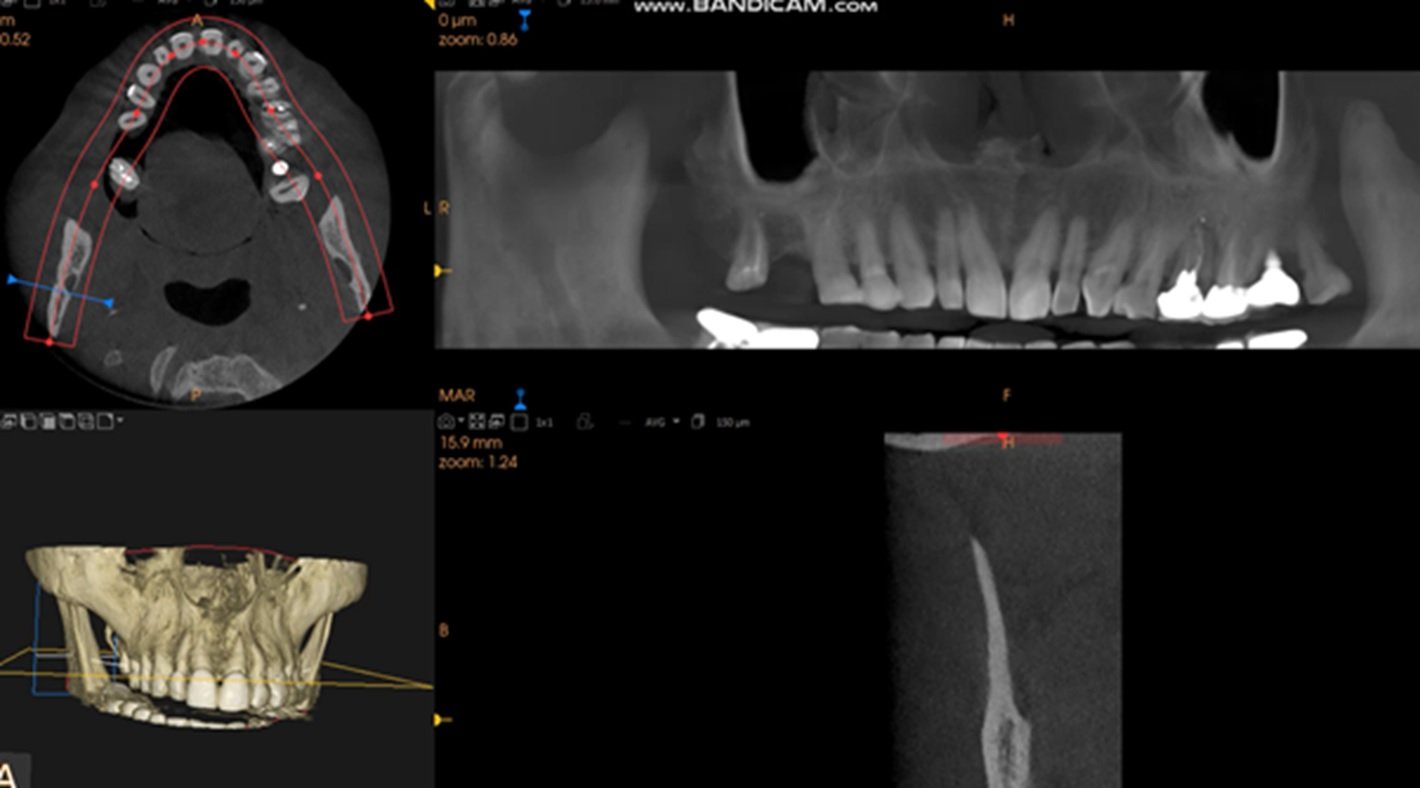
A 75-year-old female patient reported to the dental clinic with the chief complaint of inability to chew properly following dislodgement of a fixed partial denture (FPD) that she had been wearing for approximately 20 years. Clinical examination revealed extensive decay and structural compromise of the supporting abutment teeth, rendering them non-restorable.
The patient had a significant medical history of cardiac dysfunction managed with a permanent pacemaker. She was under continuous cardiac medication and regular cardiology supervision. The patient expressed a strong desire for fixed teeth again, as she had been functionally and psychologically comfortable with fixed prosthetic rehabilitation for many years.
A detailed medical evaluation was conducted, and consultation with her cardiologist was obtained. After careful review of her cardiovascular status and pacemaker function, the patient was considered medically fit for dental implant rehabilitation under appropriate precautions.
Considering her age, cardiac status, and desire for rapid rehabilitation, an immediate corticobasal implant approach was selected. The remaining compromised teeth were extracted atraumatically, followed by placement of corticobasal implants engaging cortical bone. Immediate functional loading was planned.
The surgical procedure was completed uneventfully under strict monitoring and stress reduction protocols. Within two days, the patient received fixed implant-supported prosthetic rehabilitation. Postoperative recovery was satisfactory with no cardiovascular complications, infection, or implant-related issues.
The patient reported marked improvement in mastication, speech, confidence, and overall psychological well-being.



CASE 2
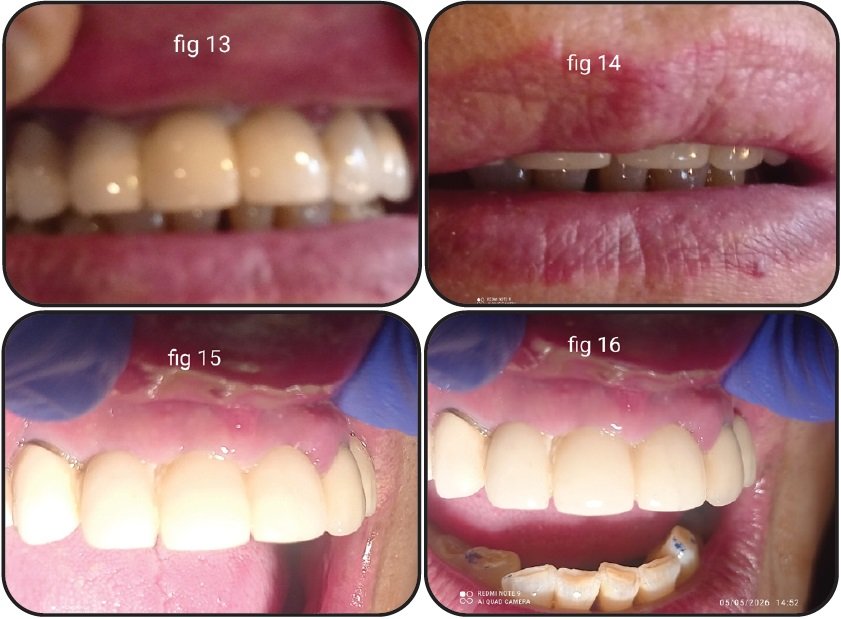
A 40-year-old female patient presented with fractured anterior crowns in the maxillary esthetic zone. Medical history revealed recent cardiac intervention requiring placement of a permanent pacemaker. According to the patient, the anterior prosthetic crowns fractured during endotracheal intubation performed during the cardiac procedure.
The patient was emotionally distressed because of compromised facial esthetics and inability to smile confidently. Clinical and radiographic examination revealed unsuitable residual anterior prosthetic structures requiring replacement.
Following consultation and clearance from her cardiologist, implant-supported rehabilitation was planned. Given the patient’s medical history and desire for immediate esthetic restoration, immediate corticobasal implants were selected.
The implants were placed successfully with bicortical stabilization and immediate loading principles. A fixed prosthesis was delivered shortly after implant placement. The entire treatment was completed without intraoperative or postoperative complications.
The patient demonstrated excellent functional adaptation and expressed significant satisfaction with the esthetic outcome and restoration of self-confidence.


DISCUSSION
Management of cardiac patients in dentistry requires careful consideration of systemic health, stress management, medication interactions, and procedural planning. Patients with pacemakers are often perceived as medically fragile, leading many clinicians to avoid elective surgical interventions unless absolutely necessary.
However, oral rehabilitation plays an essential role in nutrition, speech, social interaction, and psychological health. Loss of teeth or prosthetic failure may contribute to depression, social withdrawal, reduced chewing efficiency, and deterioration in quality of life, particularly among medically compromised individuals.
Immediate corticobasal implantology offers several advantages in such patients:
- Reduced treatment duration
- Immediate functional loading
- Minimal surgical invasiveness
- Elimination of prolonged edentulous periods
- Avoidance of complex grafting procedures
- Reduced psychological stress
- Faster restoration of oral function
Unlike conventional implant systems that primarily depend on cancellous bone osseointegration and delayed loading protocols, corticobasal implants derive stability from the cortical bone, allowing immediate prosthetic rehabilitation even in compromised anatomical situations.
Interdisciplinary coordination between the dentist and cardiologist remains essential. Thorough medical history assessment, medication review, stress reduction measures, and careful monitoring contribute significantly to treatment success.
The present cases demonstrated successful rehabilitation without cardiac complications, suggesting that with proper planning and modern implant protocols, cardiac patients with pacemakers can safely undergo implant-supported fixed rehabilitation.
Furthermore, the psychological transformation observed in both patients was substantial. Restoration of fixed dentition not only improved oral function but also enhanced emotional confidence and social comfort.
CONCLUSION
Immediate corticobasal implant rehabilitation can be considered a predictable, safe, and efficient treatment modality for selected cardiac patients with permanent pacemakers. With appropriate medical evaluation, cardiology clearance, and meticulous surgical planning, successful fixed prosthetic rehabilitation can be achieved even in medically compromised individuals.
These cases demonstrate that modern implantology has significantly expanded treatment possibilities for cardiac patients who were once considered unsuitable candidates for implant-supported rehabilitation. Immediate functional restoration can positively influence both oral health and psychological well-being, ultimately improving overall quality of life.
Clinical Significance
Immediate corticobasal implants provide an effective solution for medically compromised cardiac patients requiring rapid fixed dental rehabilitation. Proper interdisciplinary management enables safe treatment execution while restoring function, esthetics, and patient confidence.
Declaration of Patient Consent
The authors certify that appropriate patient consent was obtained for publication of clinical information and images. The patients understood that efforts would be made to conceal identity, although anonymity cannot be guaranteed.
Conflict of Interest: The authors declare no conflict of interest.
Financial Support and Sponsorship: Nil.
Disclaimer from Guident
The views and opinions expressed in articles published in Guident are solely those of the authors and do not necessarily reflect the views of the editors, the editorial board or the publisher, Ivory India. Guident does not endorse any product, technique or treatment described. Clinical content is intended for qualified dental and medical professionals and is not a substitute for individual clinical judgement. Guident, its editors and the publisher accept no liability for any consequence arising from the use of information published in the journal.
How to cite this article
Dr. Muhammad Shafie, Dr. Mateen Shafie. Immediate Corticobasal Implant Rehabilitation in Cardiac Patients with Permanent Pacemakers: A Report of Two Cases. Guident. 2026 Jun;19(7). Available from: https://ivoryindia.in/articles/implantology/immediate-corticobasal-implant-rehabilitation-in-cardiac-patients-with-permanent-pacemakers-a-report-of-two.html