Lateralization and Transpositioning of Inferior Alveolar Nerve for Dental Implant Placement
University of Genova Fellowship Program, India
INTRODUCTION
Dental implants have become a widely accepted treatment option for patients with both partially and completely edentulism. Particularly rehabilitation of edentulous posterior mandibular regions with severe ridge atrophy using implants is subject to anatomical, surgical and biological difficulties and poses a challenge to an implantologist.1,2 In many cases, the bone is severely atrophied that sufficiently long fixtures cannot be placed without encroaching on the inferior alveolar nerve (IAN). In this situation, restorative options include the use of short fixtures, onlay bone grafting to increase ridge height, and more complicated and detailed imaging analysis to allow positioning of implants alongside, rather than into, the nerve canal during the procedure. Another option is to move the IAN laterally from its canal by either nerve lateralization (IANL). With nerve lateralization, the IAN is exposed and traction is used to deflect it laterally while the implants are placed. The IAN is then left to fall back into position, against the fixtures. With this procedure, there is no interference with the incisive nerve. With nerve transposition, a corticotomy is done around the mental foramen and the incisive nerve is transacted, such that the mental foramen is repositioned more posteriorly.
In the posterior mandible, the bone quality may not be as good as it is in the anterior mandible. In particular, if shorter implants are used to ensure that there is no encroachment on the nerve canal, initial implant stability will be unicortical. In addition, there is a risk to the IAN as the operator tries to maximise implant length on the basis of measured available bone height. The advantages of IANT include the ability to place longer fixtures and to engage 2 cortices for initial stability.1,3 Kan et al.1,4 pointed out that the amount of bone superior to the mandibular canal (MC) is often insufficient for the placement of fixtures of the ideal length.
In addition, the existing bone that is superior to the MC is often of poorer quality than its cortical counterpart. These factors and the fact that shorter implants have been associated with higher failure rates have led to the development of methods of IAN repositioning that allow placement of longer fixtures; with these methods, the inferior cortex of the mandible is engaged, which leads to greater initial stability.1
IANL and IANT are surgical procedures that reposition the IAN for the purpose of implant placement without bone augmentation. The buccal cortex surrounding the MC is removed to allow IAN repositioning. This procedure raises the risk of neuropathies, such as paresthesia, hypoesthesia, and anaesthesia of the IAN.1,5
IANL is defined as the lateral reflection of the IAN without incisive nerve traction (preservation of the incisive nerve and lateralization of inferior alveolar neurovascular bundle posterior to the mental foramen)1,6; exposure and traction are used to deflect the IAN laterally while the implants are placed. The IAN is then left to fall back in against the fixtures.1,3,4,6
CLINICAL REPORT
A patient aged sixty-five years old came with relevant medical history with a complain of mobility of the implant supported prosthesis on the lower left side of complete mandibular arch rehabilitation done eight years back. As the patient has not reported for more than six years to the clinic, there was no follow up of peri-implantitis or implant mobility. It was found that the posterior most implant on lower left region had severe bone loss around the implant and a draining sinus from peri-implant region. As the patient had no significant pain subjectively and hence not reported earlier. However, patient had noticed mild mobility of the prosthesis since last three months. The treatment done earlier included the use of cantilever prosthesis as there was insufficient bone posterior to mental foramen. The rational involved removable CD prosthesis on the opposing arch. Hence, not much occlusal forces predicted on the implant supported prosthesis. Scan reveals severe bone loss posterior to mental foramen was insufficient as seen in Fig. 1 & 2.

Fig. 1: Computed tomography scan of mandibular arch
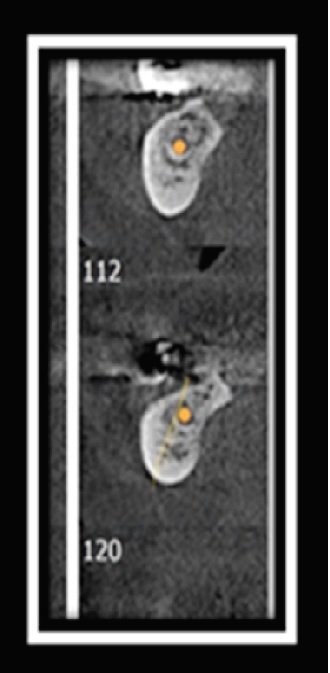
Fig. 2: Computed tomography of the mandibular left side (An implant site)
The technique involved the preparation of a cortical bone window (via osteotomy or drilling) that is located posterior to the mental foramen.20 (Fig. 3: A & B).

Fig. 3: Schematic drawing showing the Inferior Alveolar Neurovascular bundle transposition (A) and lateralization (B)
Bone was removed using a piezoelectric surgery unit to drill and access window for nerve. After removing the cortical bone, a curettage was used for removal of spongy bone and the cortical layer of the canal in cases where the cortical layer surrounding the canal is not dense or thick (Fig. 4). A special instrument (blunt bone excavator/curette) was used to carefully pull the nerve bundle laterally from the bony window to protect the IAN while the cortical layer was removed using piezosurgery device. Bone removal in close vicinity to the neurovascular bundle should be performed patiently and thoroughly. This is usually performed using special curettes parallel to the surface of the nerve bundles in an antero-posterior direction. Tiny bone spicules around the nerve were removed (Fig. 5). The area was thoroughly irrigated so that the nerve bundle can be clearly seen.13 (Fig. 6) The neurovascular bundle inside the canal is freed using special curettes and is moved laterally using a nerve hook. Then, a 10 mm wide gauze cord or elastic band is passed below the nerve to retract it from the surgical site in order to decrease the risk of ischemic trauma to the nerve. The second purpose of retracting the nerve from the surgical site during the operation is to reduce the risk of IAN damage.13 After carefully freeing the nerve, the latter was separated using a vessel loop - while applying gentle traction outwards as the implants are positioned,20 the implant should be long enough to pass the MC and engage the basal body below the canal to achieve sufficient primary stability.13 Finally, the vessel loop was removed and the nerve was replaced (Fig. 7 & 8), It was then grafted with synthetic Bovine bone mixed with autogenous bone.(Fig. 9) This defect was covered by collagen membrane (Fig. 10) and stabilize by stab sutures lingually to the flap.20
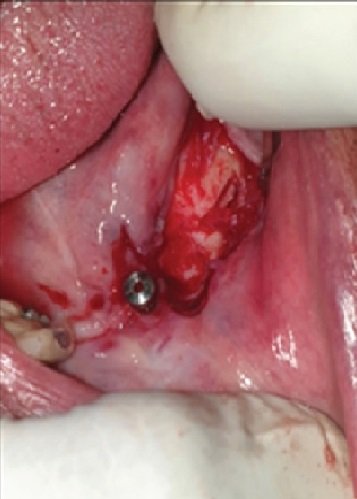
Fig. 4: Removal of cortical bone and curattage

Fig. 5: Bone window is prepared

Fig. 6: Bone window
There is no interference with the incisive nerve.25

Fig. 7

Fig. 7 & 8: Removal of vessel replacement of inferior alveolar nerve

Fig. 9: Bone graft is placed

Fig. 10: Resorbable membrane is placed
Postoperative measures
Antibiotic and corticosteroid prophylaxis is recommended because of the extensiveness and duration of surgery. Using corticosteroids pre- and post- operatively helps diminish the symptoms. However, there is no consensus in this regard; since inflammation can be among the causes of nerve dysfunction, corticosteroid therapy can be beneficial.13
DISCUSSION
According Lorean et al. study2, stretching the nerve by 10 - 17% of its original length may result in disruption of the nerve fibers internally. In situations where only small traction is needed, ANL may be utilised. IANT is utilised when bigger amount of stretching is needed. Kan et al.4 retrospective study demonstrated that the ND for IANT were 77.8% (7/9) and for the IANL. 33.3% (4/12). The most popular surgical technique for IAN repositioning was IANT.
In the study by Lorean et al.1,2 (in which 68 IANL and 11 IANT were performed), the authors failed to mention how many implants were placed during each procedure. Implant survival rate was 100% in 10 out of 16 studies. In Lorean et al. study2, implant survival rate was 99.57%.
In Chrcanovic et al.7 it was 88%; in Ferrigno et al.9 it was 95.7%; and Kan et al.1,4 presented a 93.8% implant survival rate.
The lowest implant survival rates were found in Kan et al.10 with 33.33% and Karlis et al.11 with 0%. The most popular method of implant osseointegration evaluation was panoramic radiograph (12/16 studies). In two studies8,12, both of which were performed by the same author (Proussaefs), the method of implant osseointegration evaluation was a Perio-Test unit (Siemens, Bensheim, Germany); while in two other studies (Lorean et al.1,2 ,Kan et al.1,4), the implant osseointegration evaluation method was not mentioned.
Indications
The study of selected articles12,15,16 revealed the following indications of IANL and IANT:
The major reason for using this technique is to prevent IAN injury during implant placement in edentulous posterior atrophic mandibles. Class IV, V, or VI of Cawood and Howell16 with extrusion of the antagonist tooth and reduced prosthetic free space. Class V or VI of Cawood and Howell16 with presence of inter foraminal teeth (patients were not candidates for inter foraminal implant-prosthetic methods).Class V or VI of Cawood and Howell16 if the patient desires a fast implant-prosthetic rehabilitation with predictable outcomes. In orthognathic surgeries, such as lower border shaving and total mandibular subapical osteotomy, Preservation of IAN in cancer surgery in the posterior mandible, When placement of short implants is not a viable option (in case of severely atrophic mandibles when the residual bone above MC ranges between 0.5 and 1.5 mm).Less than 10 - 11 mm bone height above the canal, when the quality of the spongy bone does not provide sufficient stability for implant placement.
Contraindications 13,14
If the mandible presents advanced resorption of the alveolar process, If the patient has poor general health, including systemic diseases that may worsen the patient’s health condition after the IAN reposition procedure, Limitations in accessing the surgical site, The patient is susceptible to infection or bleeding, The patient has thick corticaly bone buccally and a thin neurovascular bundle, People who become easily stressed out and are over sensitive even towards the smallest surgical complications. Such patients do not have tolerance and compatibility skills and, therefore, are not good candidates for nerve transposition surgery.
Several advantages and disadvantages of the procedures were found and are described below:
The advantages of the IANL and IANT
- Longer implants can be placed in the same surgical step.
- Greater primary implant stability is provided thanks to the possibility of bicortical mandibular fixation. This technique avoids the need for additional radiation- intensive and costly imaging studies. Simple panoramic radiography and clinical examination are all that are required.
- Possibility of placement of a greater number of implants, which improves the overall strength of the final prosthesis.
- Possibility for simultaneous placement of implants during surgery, which allows a reduction in treatment time compared with other techniques as bone grafts that require a long waiting period before implant insertion together with additional surgeries.
- The option for immediate loading for the enhancement of masticatory function, dramatically improving the patient’s quality of life.
- The evaluation values for implant survival rates are similar to those for standard implantation procedures.
- As a biomechanical advantage, IAN transposition presents an increase in resistance to occlusal forces and promotes a good proportion between the implant and the prosthesis.
The disadvantages of the IANL and IANT
One of the disadvantages of this procedure is that it does not recover alveolar ridge anatomy.18
Another negative point of this procedure is that it temporarily weakens the mandible due to removal of cortical bone; which, in combination with implant placement, may lead to mandibular fracture at the operation site.2,3,18,19,20 According to Peleg5, cylindrical non-threaded implants are recommended after the IANL procedure, as threaded implants in close contact with the nerve may cause neurosensory problems. The initial stability will depend only on the marginal cortical bone. The most common failures are due to bruxism and poor occlusal relations; therefore, patients with bruxism or poor occlusal relations make, implant stability and survival to less favourable. An additional disadvantage for such operations is the potential risk for osteomyelitis.14
SUMMARY
Inferior alveolar nerve repositioning is a technique that has been used for more than 20 years with good survival and survival rates. This is sometimes the only possible procedure to help patients to obtain a fixed prosthesis, especially in edentulous atrophic posterior mandibles. There are two main techniques for inferior alveolar nerve repositioning that are relatively safe and offer a high survival rate: inferior alveolar nerve lateralization and inferior alveolar nerve transposition. Increased protection of the neurovascular bundle is afforded during implant placement. Inferior alveolar nerve lateralization and transposition in combination with the installation of dental implants offer advantages, such as reducing the risk of inferior alveolar nerve damage. With careful pre-operative surgical and prosthetic planning, imaging, and extremely precise surgical technique, this procedure can be successfully used for implant placement in an edentulous atrophic posterior mandible.
CONCLUSION
With careful pre-operative surgical and prosthetic planning, imaging, and extremely precise surgical technique, this procedure can be successfully used for implant placement in edentulous posterior mandibular segments. Block grafted combustion short implants are not possible, so simple bone window to lateral nerve repositioning could be vital alternative to place long and stable implants.
REFERENCES
- Abayev B, Juodzbalys G. Inferior Alveolar Nerve Lateralization and Transposition for Dental Implant Placement. Part I: a Systematic Review of Surgical Techniques. Juurnal of Oral and Maxillofacial Research. 2015;6(.
- Lorean A, Kablan F, Mazor Z, Mijiritsky E, Russe P, Barbu H, Levin L. Inferior alveolar nerve transposition and reposition for dental implant placement in edentulous or partially edentulous mandibles: A multicenter retrospective study. Int J Oral Maxillofac Surg. 2013 May;42(5):656-9.
- Morrison A, Chiarot M, Kirby S. Mental nerve function after inferior alveolar nerve transposition for placement of dental implants. J Can Dent Assoc. 2002 Jan;68(1):46-50.
- Kan JY, Lozada JL, Goodacre CJ, Davis WH, Hanisch O. Endosseous implant placement in conjunction with inferior alveolar nerve transposition: an evaluation of neurosensory disturbance. Int J Oral Maxillofac Implants. 1997 Jul-Aug;12(4):463-71.
- Peleg M, Mazor Z, Chaushu G, Garg AK. Lateralization of the inferior alveolar nerve with simultaneous implant placement: a modified technique. Int J Oral Maxillofac Implants. 2002 Jan-Feb;17(1):101-6.
- Khajehahmadi S, Rahpeyma A, Bidar M, Jafarzadeh H. Vitality of intact teeth anterior to the mental foramen after inferior alveolar nerve repositioning: nerve transpositioning versus nerve lateralization. Int J Oral Maxillofac Surg. 2013 Sep;42(9):1073-8.
- Chrcanovic BR, Custódio AL. Inferior alveolar nerve lateral transposition. Oral Maxillofac Surg. 2009 Dec;13(4):213-9.
- Proussaefs P. Vertical alveolar ridge augmentation prior to inferior alveolar nerve repositioning: a patient report. Int J Oral Maxillofac Implants. 2005 Mar-Apr;20(2):296-301.
- Ferrigno N, Laureti M, Fanali S. Inferior alveolar nerve transposition in conjunction with implant placement. Int J Oral Maxillofac Implants. 2005 Jul-Aug;20(4):610-20.
- Kan JY, Lozada JL, Boyne PJ, Goodacre CJ, Rungcharassaeng K. Mandibular fracture after endosseous implant placement in conjunction with inferior alveolar nerve transposition: a patient treatment report. Int J Oral Maxillofac Implants. 1997 Sep-Oct;12(5):655-9.
- Karlis V, Bae RD, Glickman RS. Mandibular fracture as a complication of inferior alveolar nerve transposition and placement of endosseous implants: a case report. Implant Dent. 2003;12(3):211-6.
- Proussaefs P. Inferior alveolar nerve transposing in a situation with minimal bone height: a clinical report. J Oral Implantol. 2005;31(4):180-5.
- Hassani A, Motamedi MHK, Saadat S. Inferior alveolar nerve transpositioning for implant placement. Oral Maxillofac Surg. 2013 Jun;26.
- Dal Ponte GL, Toledo GL, Toledo-Filho JL, Marzola C, Pastori CM, Zorzetto DL, Capelari MM. Lateralization and transposition use of the inferior alveolar nerve before the advent of short implants. Surgery and Maxillofacial Traumatology sponsored by the Hospital Association of Bauru - Base Hospital and the Brazilian College of Oral and Maxillofacial Surgery and Traumatology.
- Gasparini G, Boniello R, Saponaro G, Marianetti TM, Foresta E, Torroni A, Longo G, Azzuni C, Cervelli D, Pelo S. Long term follow-up in inferior alveolar nerve transposition: our experience. Biomed Res Int. 2014;2014:170602.
- Cawood JI, Howell RA. A classification of the edentulous jaws. Int J OralMaxillofac Surg. 1988 Aug;17(4):232-6.
- Del Castillo Pardo de Vera JL, Chamorro Pons M, Cebrián Carretero JL. Repositioning of the inferior alveolar nerve in cases of severe mandibular atrophy. a clinical case. Med Oral Patol Oral Cir Bucal. 2008 Dec 1;13(12):E778-82.
- Vasconcelos Jde A, Avila GB, Ribeiro JC, Dias SC, Pereira LJ. Inferior alveolar nerve transposition with involvement of the mental foramen for implant placement. Med Oral Patol Oral Cir Bucal. 2008 Nov 1;13(11):E722-5.
- Barbu HM, Levin L, Bucur MB, Comaneanu RM, Lorean A. A modified surgical technique for inferior alveolar nerve repositioning on severely atrophic mandibles: case series of 11 consecutive surgical procedures. Chirurgia (Bucur). 2014 Jan-Feb;109(1):111-6.
- Quantius B. Lateralization of the inferior alveolar nerve. Report. Implants. 2010 Mar.
- Campbell N, Brandom B, Day JW, Moxley T. Practical suggestions for the anaesthetic management of a myotonic dystrophy patient. Myotonic Dystrophy Foundation. Toolkit. p. 73-80.
- Del Castillo Pardo de Vera JL, Chamorro Pons M, Cebrián Carretero JL. Repositioning of the inferior alveolar nerve in cases of severe mandibular atrophy. a clinical case. Med Oral Patol Oral Cir Bucal. 2008 Dec 1;13(12):E778-82.
Disclaimer from Guident
The views and opinions expressed in articles published in Guident are solely those of the authors and do not necessarily reflect the views of the editors, the editorial board or the publisher, Ivory India. Guident does not endorse any product, technique or treatment described. Clinical content is intended for qualified dental and medical professionals and is not a substitute for individual clinical judgement. Guident, its editors and the publisher accept no liability for any consequence arising from the use of information published in the journal.
How to cite this article
Dr. Vikas Gowd, Dr. Kirti Gowd, Dr. Urwashi Kumari, Dr. Gowds Dental Clinic Hyderabad. Lateralization and Transpositioning of Inferior Alveolar Nerve for Dental Implant Placement. Guident. 2019 Sep;12(10). Available from: https://ivoryindia.in/articles/implantology/lateralization-and-transpositioning-of-inferior-alveolar-nerve-for-dental-implant-placement.html