A Dual Approach to Prosthodontic Rehabilitation: Cast Partial Denture in the Mandible and Fixed Prosthesis in the Maxilla: A Case Report
Department of Prosthodontics and Crown & Bridge, K.D. Dental College & Hospital, Mathura, UP, India
ABSTRACT
Partially edentulous patients often present with complex rehabilitation needs requiring a combination of fixed and removable prostheses. Kennedy’s Class I mandibular arches pose a biomechanical challenge due to bilateral distal extension edentulous spaces and lack of posterior abutments. Cast partial dentures (CPDs) remain the treatment of choice in such cases, offering stress distribution and preservation of abutment teeth. Conversely, short-span edentulism in the maxillary posterior segment can be effectively restored with fixed partial dentures (FPDs) for superior esthetics and function. This case report describes the comprehensive rehabilitation of a patient with a Kennedy’s Class I mandibular arch restored using a CPD, along with replacement of missing maxillary posterior teeth using FPDs, ensuring harmonious function, improved esthetics, and patient satisfaction.
INTRODUCTION
Partial edentulism is common in prosthodontic practice and requires rehabilitation to restore function, esthetics, and maintain oral health. The choice of removable or fixed prosthesis depends on factors such as classification of edentulism, abutment condition, ridge form, occlusion, and patient expectations.
Kennedy’s Class I, defined by bilateral distal extension edentulous spaces, is challenging due to the absence of posterior abutments and the risk of prosthesis rotation and uneven load distribution. A cast partial denture (CPD) is preferred in such cases as it offers cross-arch stabilization, favorable stress distribution, and scope for future modification. The altered cast technique can further improve ridge support and denture base adaptation.
In the maxillary arch, when short-span posterior edentulism exists with sound abutments, fixed partial dentures (FPDs) provide superior esthetics, efficient function, and better patient acceptance compared to removable options.
This case report presents a combined approach which includes CPD (Cast Partial Denture) for the mandibular arch and FPDs in the maxillary arch ensuring occlusal balance, restoration of vertical dimension, and long-term success.
CASE REPORT
A 57 year old male patient reported to the department of prosthodontics with the chief complaint of missing teeth in his upper and lower back tooth region on both the sides since 1 year.
On examination, 16 and 26 were missing in the maxillary arch with rest of the teeth present and 35,36,37,46,47 were missing in the mandibular arch.
Various treatment plans were discussed with the patient but as per the financial constraints of the patient, lower cast partial denture and upper fixed partial denture was planned.
Given figures shows the pre operative view-

Fig. 1: Intraoral view of upper arch & Fig. 2: Intraoral view of lower arch
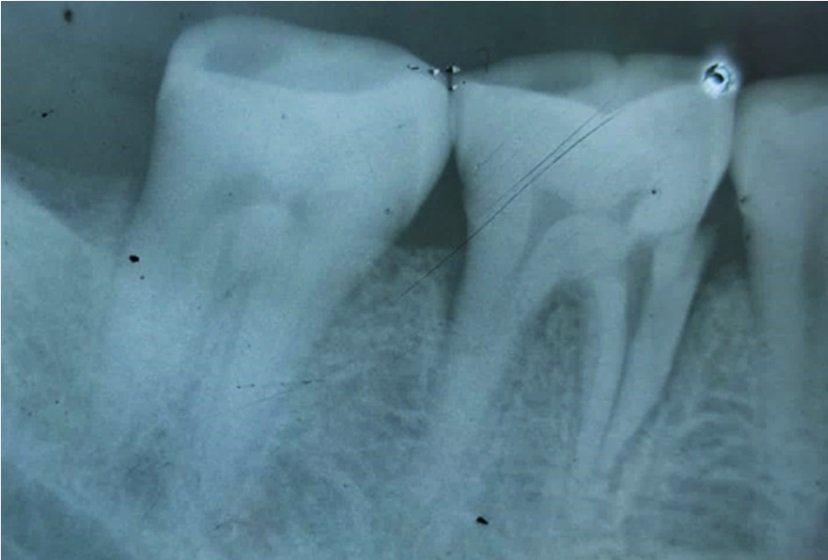
Diagnostic impression was made for maxillary and mandibular arches using alginate and diagnostic cast was poured. The case was proceeded with the rehabilitation of upper missing molars on both the sides of the arch with a three-unit PFM bridge fixed prosthesis respectively. Simultaneously, the mandibular diagnostic cast was used for surveying and for planning an accurate CPD design. Then intraoral mouth preparation was done as per the design for mandibular cast partial denture. Mesial Rest seats were prepared on 34 and 45 with guide planes given on the distal abutment teeth (fig.5). Then, Border molding was done and secondary impression was made using light body for the mandibular arch (fig. 6)

Fig. 3: PFM bridge on right and left side of the maxillary arch to restore missing 16 and 26 & Fig. 4: Surveying of the mandibular diagnostic cast

Fig. 5: Preparation of mesial rest seats on 34 and 45

Fig. 6: Secondary impression with light body
Then metal frame was fabricated on the mandibular secondary cast, according to the design planned (fig .7,8) consisting of a mesh type minor connector and lingual plate from premolar to premolar region for extra retention and to support the remaining teeth. Mesial rests were given on 34 and 45 along with respective proximal plates and an infrabulge Y clasp was given on the distal abutment teeth on both the sides.

Fig 7: CPD framework & Fig 8: lateral view
A fitting of the cast partial framework was performed to assess fit and comfort for the patient (fig.9).

Fig 9 CPD intraoral metal framework Try-in
Jaw relation was recorded which was then followed by try -in and the patient was evaluated for esthetics as well as speech. After that, the denture was processed and insertion was done (fig 10a & 10b). Post insertion instructions were given which involved Patient education on insertion and removal of CPD, oral hygiene maintenance, and importance of recall visits.

Fig 10a and 10b showing CPD insertion (frontal and lateral view)
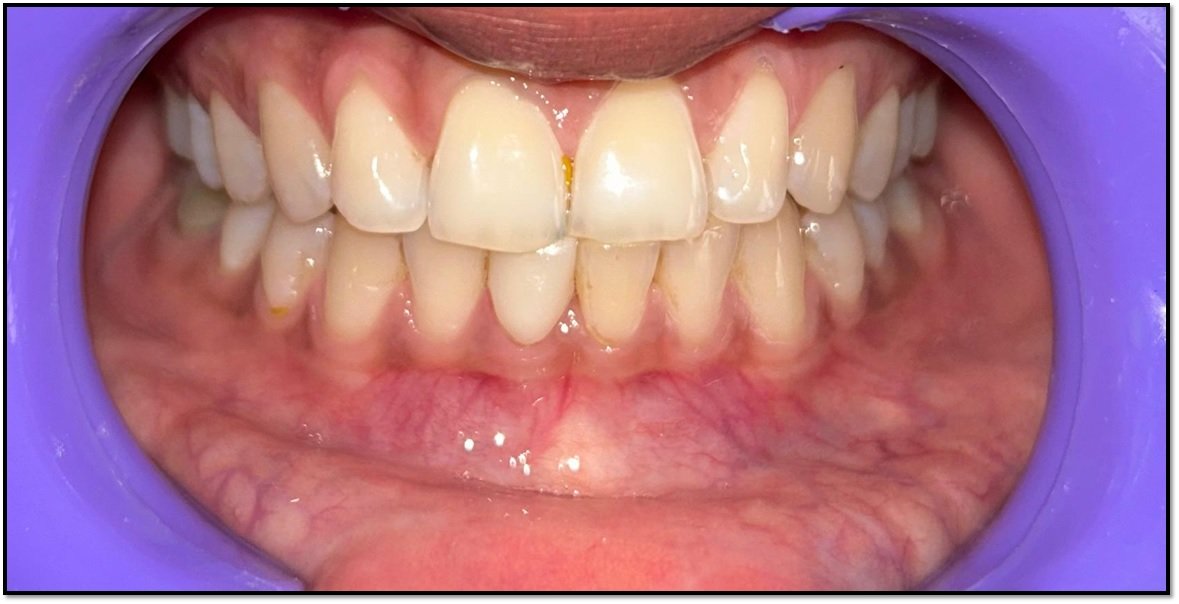
The patient was reviewed after 1 week and again at 6 months, with no complications noted. He demonstrated a satisfactory adaptation to the prosthesis.

Fig 11 Post operative view
DISCUSSION
This case illustrates a combined prosthodontic approach to rehabilitation. Kennedy’s Class I cases require careful consideration due to rotational tendencies of distal extension bases. The use of the RPI system and indirect retainers minimized torque on abutments and ensured long-term periodontal health. The altered cast technique provided functional impression recording, improving denture base adaptation.
The maxillary FPDs restored esthetics and function efficiently, with high patient acceptance due to their fixed nature. Harmonization of occlusion between the fixed and removable prostheses was crucial to avoid overload and achieve balanced function.
A combination of removable and fixed modalities thus allowed for a comprehensive, biomechanically sound, and patient-friendly rehabilitation.
CONCLUSION
Rehabilitation of a Kennedy’s Class I mandibular arch with a cast partial denture, combined with fixed partial dentures for the maxillary posterior region, provides an effective treatment strategy. This approach ensures proper stress distribution, functional restoration, and esthetic enhancement. Careful planning, accurate prosthesis design, and patient education are critical for long-term success and satisfaction.
REFERENCES
- Carr AB, Brown DT. McCracken’s Removable Partial Prosthodontics. 13th ed. Elsevier; 2016.
- Zarb GA, Hobkirk J, Eckert S, Jacob R. Prosthodontic Treatment for Edentulous Patients. 13th ed. Elsevier; 2013.
- Phoenix RD, Cagna DR, DeFreest CF. Stewart’s Clinical Removable Partial Prosthodontics. 4th ed. Quintessence; 2014.
- Shillingburg HT, Hobo S, Whitsett LD, Jacobi R, Brackett SE. Fundamentals of Fixed Prosthodontics. 4th ed. Quintessence; 2012.
- Shrestha S, Sah S. Esthetic Rehabilitation with a Cast Partial Denture. J CMS Nepal. 2016;12(4):189-92.
- Malik SS, Khuswaha NS, Avasthi A. Designing of Cast Partial Denture-A Review. Ann. Int. Med. Den. Res. 2020; 6(1):DE04-DE11
- Neha Alone et al Rehabilitation of Partially Edentulous Patients with Cast Partial Denture: A Case Report, J Res Med Dent Sci, 2022, 10 (12): 163-166.
Disclaimer from Guident
The views and opinions expressed in articles published in Guident are solely those of the authors and do not necessarily reflect the views of the editors, the editorial board or the publisher, Ivory India. Guident does not endorse any product, technique or treatment described. Clinical content is intended for qualified dental and medical professionals and is not a substitute for individual clinical judgement. Guident, its editors and the publisher accept no liability for any consequence arising from the use of information published in the journal.
How to cite this article
Dr. Yamini Bhushan, Dr. Abhinav Agarwal, Dr. Manesh Lahori. A Dual Approach to Prosthodontic Rehabilitation: Cast Partial Denture in the Mandible and Fixed Prosthesis in the Maxilla: A Case Report. Guident. 2025 Sep;18(10). Available from: https://ivoryindia.in/articles/prosthodontics/a-dual-approach-to-prosthodontic-rehabilitation-cast-partial-denture-in-the-mandible-and-fixed-prosthesis-in.html