Advancements in Maxillofacial Prosthesis in Prosthodontics: A Literature Review
Department of Prosthodontics and Crown & Bridge K.D. Dental College & Hospital, Mathura, UP, India
ABSTRACT
Maxillofacial prosthodontics is a specialized field focused on the rehabilitation of patients with congenital or acquired defects affecting the oral and facial structures. Defects caused by trauma, tumor resection, congenital anomalies, and infections often result in significant functional, esthetic, and psychological impairment. Recent advancements in biomaterials, digital dentistry, computer-aided design/computer-aided manufacturing (CAD/CAM), three-dimensional (3D) printing, osseointegrated implants, artificial intelligence (AI), robotics, and tissue engineering have revolutionized maxillofacial rehabilitation. Modern technologies enable fabrication of patient-specific prostheses with improved retention, esthetics, precision, comfort, and longevity. Silicone elastomers reinforced with nanoparticles have enhanced mechanical properties and antimicrobial resistance. CAD/CAM systems and additive manufacturing technologies have reduced clinical time and improved prosthesis accuracy. AI-assisted workflows and robotic systems are increasingly used for treatment planning and prosthesis fabrication. Tissue engineering and regenerative medicine show future potential for biologically integrated craniofacial rehabilitation. Despite remarkable progress, challenges such as high cost, limited accessibility, color instability, and lack of long-term clinical evidence remain. This review discusses historical developments, current advancements, clinical applications, limitations, and future perspectives in maxillofacial prosthodontics.1-11
Keywords: Maxillofacial prosthesis, CAD/CAM, 3D printing, prosthodontics, artificial intelligence, osseointegration, digital dentistry, tissue engineering.
INTRODUCTION
Maxillofacial prosthodontics is a specialized branch of prosthodontics concerned with rehabilitation of patients with congenital or acquired defects involving the head and neck region. These defects may result from trauma, oncologic surgery, congenital deformities, or infectious diseases and often produce severe functional and psychosocial disabilities. The primary objective of maxillofacial prostheses is restoration of esthetics, speech, mastication, deglutition, and psychological well-being.12,13
Conventional methods of prosthesis fabrication relied heavily on manual impressions, wax sculpting, and traditional laboratory processing techniques. Although effective, these methods were technique-sensitive, time-consuming, and often limited in precision and esthetics. Recent technological innovations including advanced biomaterials, digital imaging, CAD/CAM systems, additive manufacturing, osseointegrated implants, artificial intelligence, and tissue engineering have dramatically transformed the field of maxillofacial prosthodontics.1-5
These advancements have improved prosthesis accuracy, retention, biocompatibility, color stability, and patient satisfaction while reducing clinical and laboratory time. This literature review discusses recent advancements, current applications, limitations, and future perspectives in maxillofacial prosthetic rehabilitation.1-11
HISTORICAL PERSPECTIVE OF MAXILLOFACIAL PROSTHESIS

The history of maxillofacial prosthetics dates back to ancient civilizations where primitive facial replacements were fabricated from wood, leather, wax, and metals. Ambroise Paré introduced metallic facial prostheses during the sixteenth century and is regarded as one of the pioneers of facial prosthetics.13
The twentieth century marked significant progress with the introduction of acrylic resins and silicone elastomers, which improved esthetics and biocompatibility. The development of osseointegrated implants by Branemark revolutionized facial prosthetic retention and stability. Recent decades have witnessed rapid integration of digital technology, CAD/CAM systems, and additive manufacturing in prosthetic rehabilitation.3,12,13
CLASSIFICATION OF MAXILLOFACIAL PROSTHESES
Maxillofacial prostheses are broadly classified into intraoral and extraoral prostheses.12,13

Intraoral Prostheses
- Obturators
- Speech aid prostheses
- Palatal lift prostheses
- Mandibular resection prostheses
- Tongue prostheses
Extraoral Prostheses
- Auricular prostheses
- Nasal prostheses
- Orbital prostheses
- Ocular prostheses
- Midfacial prostheses
- Cranial prostheses
Combined Prostheses
Combined prostheses rehabilitate extensive craniofacial defects involving both intraoral and extraoral structures.12
CONVENTIONAL TECHNIQUES IN MAXILLOFACIAL PROSTHODONTICS
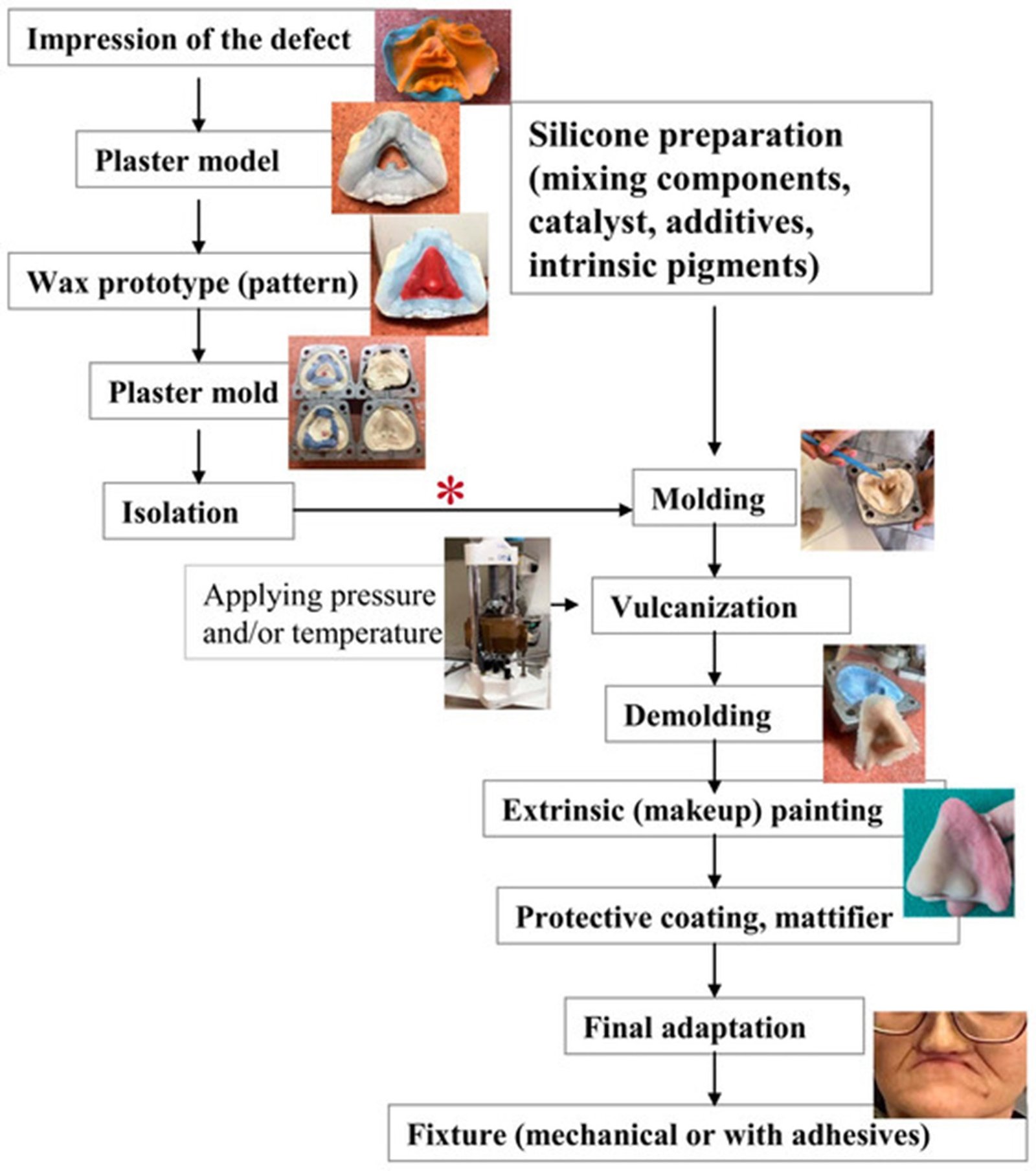
Traditional fabrication methods involved:
- Impression making using irreversible hydrocolloid or elastomeric materials
- Cast fabrication
- Wax pattern sculpting
- Flasking and processing
- Intrinsic and extrinsic coloration
- Mechanical or adhesive retention12,14
Although successful, conventional methods presented several limitations:
- Time-consuming procedures
- Technique sensitivity
- Difficulty in reproducing facial symmetry
- Poor marginal adaptation
- Inconsistent color matching
- Frequent prosthesis remakes9,12
These shortcomings encouraged development of digital and advanced manufacturing techniques.1,9
ADVANCEMENTS IN BIOMATERIALS
Silicone Elastomers
Medical-grade silicone remains the most commonly used material for facial prostheses because of its flexibility, biocompatibility, and life-like appearance. Recent improvements include:
- Enhanced tear strength
- Improved edge durability
- Better UV resistance
- Nanoparticle reinforcement
- Antimicrobial modifications10,12
Room temperature vulcanizing (RTV) silicone is preferred because of superior esthetics and marginal adaptation.12
Polyurethane Elastomers
Polyurethane materials possess superior elasticity and strength but demonstrate lower color stability and biocompatibility compared to silicone.12
Acrylic Resins
Polymethyl methacrylate (PMMA) is widely used for ocular and cranial prostheses because of rigidity, polishability, and dimensional stability.12
NANOTECHNOLOGY IN MAXILLOFACIAL MATERIALS
Incorporation of nanoparticles such as:
- Titanium dioxide
- Zinc oxide
- Silver nanoparticles
- Silicon dioxide
has improved mechanical properties, antimicrobial activity, and longevity of prosthetic materials.10,11
Smart Biomaterials
Modern research focuses on smart materials capable of self-healing, adaptive flexibility, and improved tissue compatibility.11
DIGITAL DENTISTRY AND CAD/CAM TECHNOLOGY
Digital technology has transformed maxillofacial prosthodontics through improved accuracy and reproducibility.1,3

DIGITAL DATA ACQUISITION

Intraoral and Facial Scanners
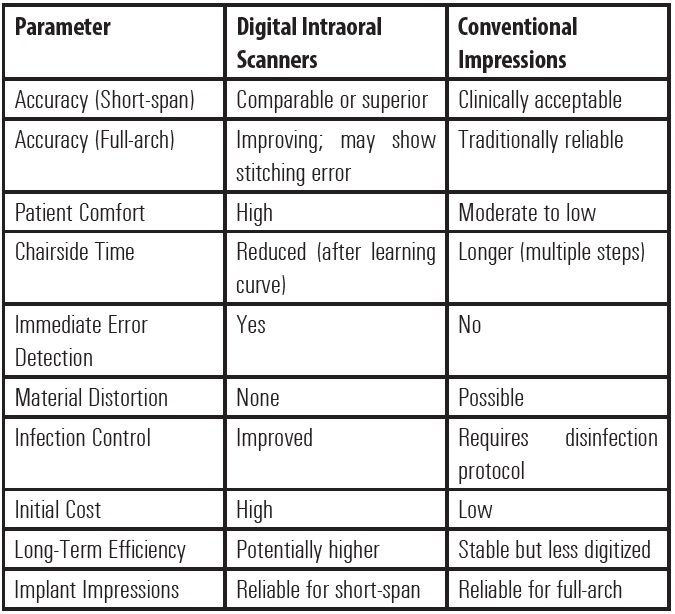
Digital scanners provide accurate noninvasive impressions with improved patient comfort and reduced distortion.9
Cone Beam Computed Tomography (CBCT)
CBCT facilitates:
- Defect evaluation
- Implant planning
- Anatomical assessment
- Surgical guide fabrication4
Magnetic Resonance Imaging (MRI)
MRI is particularly useful for soft tissue evaluation in craniofacial rehabilitation.3
Photogrammetry and 3D Facial Scanning
These methods allow accurate recording of facial contours and symmetry analysis.9
CAD/CAM Fabrication
CAD software enables virtual designing of prostheses while CAM systems permit precise fabrication using milling or additive manufacturing techniques.1,4
Advantages
- Improved accuracy
- Reproducibility
- Reduced clinical time
- Digital storage of records
- Enhanced esthetics
- Better patient communication1,9
CAD/CAM systems are widely used for:
- Obturators
- Surgical guides
- Facial prostheses
- Implant frameworks
- Titanium substructures 4
Direct metal laser sintering (DMLS) and milled titanium frameworks have improved strength and precision of implant-supported prostheses.4
3D Printing in Maxillofacial Prosthodontics
Three-dimensional printing has become one of the most important advancements in maxillofacial rehabilitation.1,2
ADDITIVE MANUFACTURING TECHNIQUES
Common techniques include:
- Stereolithography (SLA)
- Selective laser sintering (SLS)
- Fused deposition modeling (FDM)
- PolyJet printing
- Direct ink writing1,11
Applications
- Facial prostheses
- Surgical templates
- Implant guides
- Cranial implants
- Anatomical models
- Silicone molds1,2
Advantages
- Reduced fabrication time
- Improved customization
- Accurate fit
- Cost efficiency
- Reproducibility1,10
Direct Silicone Printing
Recent advancements permit direct 3D printing of silicone prostheses without conventional molds, reducing processing errors and improving surface detail.10
OSSEOINTEGRATED IMPLANTS IN MAXILLOFACIAL PROSTHODONTICS
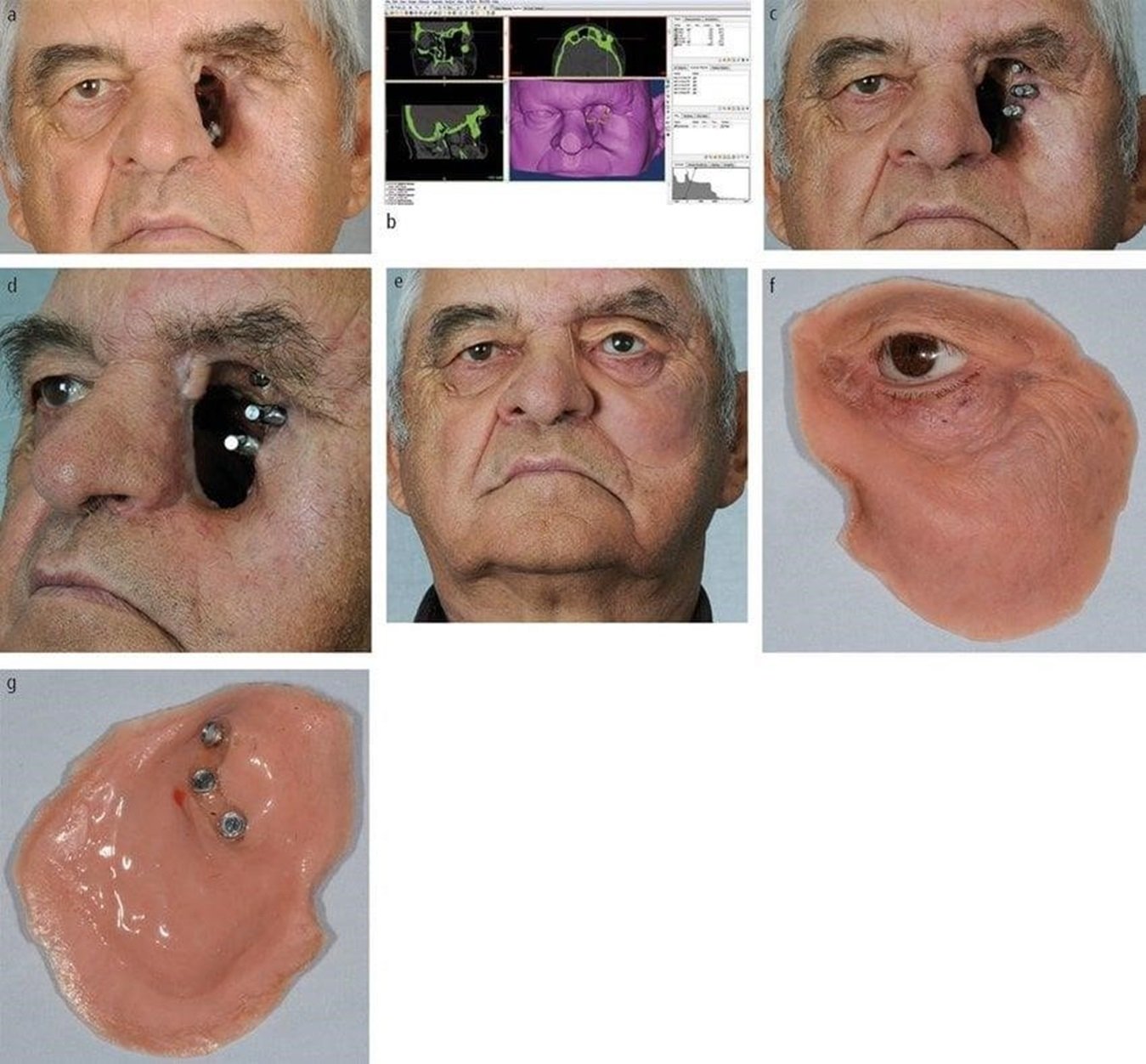
Osseointegrated implants significantly improved prosthesis retention and patient comfort.18
Craniofacial Implant Sites
Titanium implants are commonly placed in:
- Mastoid region
- Orbital rim
- Nasal floor
- Glabellar region 18
Advantages
- Excellent retention
- Improved esthetics
- Better stability
- Reduced dependence on adhesives 18
Retention Systems
- Bar and clip attachments
- Magnetic attachments
- Ball attachments 13
SURFACE MODIFICATIONS
Modern implants incorporate:
- Roughened surfaces
- Bioactive coatings
- Nanostructured surfaces
to enhance osseointegration and long-term success.4
ARTIFICIAL INTELLIGENCE IN MAXILLOFACIAL PROSTHODONTICS
Artificial intelligence has emerged as a valuable tool in prosthodontic rehabilitation.5-7
Applications
- Automated prosthesis designing
- Facial symmetry analysis
- Digital color matching
- Implant planning
- Treatment prediction
- Outcome assessment 5,6
Machine learning algorithms improve diagnostic accuracy and optimize prosthesis morphology according to patient anatomy.5
ROBOTICS AND AUTOMATION
Robotics has gained importance in implant surgery and prosthesis fabrication.8
Applications
- Robotic implant placement
- Surgical navigation
- Automated manufacturing
- AI-assisted rehabilitation 8
These technologies improve precision and reduce operator-related errors.8
TISSUE ENGINEERING AND REGENERATIVE MEDICINE
Tissue engineering combines:
- Stem cells
- Growth factors
- Biomimetic scaffolds
- Bioprinting technologies
for regeneration of craniofacial tissues.11
4D PRINTING
4D printing involves smart materials capable of altering shape and function over time in response to external stimuli such as temperature and moisture. This technology may play a future role in personalized craniofacial rehabilitation.11
ADVANCED RETENTION METHODS
Medical Adhesives
Modern silicone adhesives provide improved retention with minimal skin irritation.12
Magnetic Retention
Magnets allow easy insertion and removal of prostheses, especially orbital and auricular prostheses.13
Implant-Assisted Retention
Implants provide the most predictable retention for large facial prostheses.18
Color Matching and Esthetics
Achieving natural esthetics remains one of the greatest challenges in maxillofacial prosthetics.
Spectrophotometry
Digital color analysis improves shade matching accuracy.10
Digital Pigmentation
Computer-assisted pigmentation systems enable accurate intrinsic and extrinsic staining.10
Texture Reproduction
3D scanning and printing technologies help reproduce skin texture, wrinkles, and facial contours.9,10
Psychological and Quality of Life Improvements
Maxillofacial defects often result in severe psychological distress and social withdrawal. Prosthetic rehabilitation significantly improves:
- Self-confidence
- Social interaction
- Speech
- Mastication
- Quality of life 16
Digital workflows also reduce patient discomfort associated with repeated impressions and prolonged treatment time.9
CHALLENGES AND LIMITATIONS
Despite major advancements, several challenges remain:
- High treatment cost
- Limited availability of digital systems
- Technique sensitivity
- Material degradation
- Color instability
- Requirement for specialized training
- Lack of long-term clinical studies10,11
Direct silicone printing still faces limitations regarding:
- Surface finish
- Mechanical properties
- Biocompatibility
- Printer compatibility 10
FUTURE PERSPECTIVES
Future developments may include:
- Fully digital workflows
- AI-driven prosthesis fabrication
- Smart biomaterials
- Bioprinted tissues
- Augmented reality-assisted planning
- Robotic manufacturing systems
- Personalized regenerative therapies5,8,11
Integration of digital imaging, AI, robotics, and regenerative medicine is expected to redefine the future of maxillofacial rehabilitation.5-11
CONCLUSION
Maxillofacial prosthodontics has evolved remarkably with advancements in biomaterials, CAD/CAM systems, 3D printing, osseointegrated implants, artificial intelligence, robotics, and tissue engineering. These innovations have significantly improved prosthesis accuracy, retention, esthetics, durability, and patient satisfaction. Although challenges related to cost, accessibility, and material limitations persist, future integration of digital and regenerative technologies promises highly personalized and biologically integrated rehabilitation. Continuous interdisciplinary research and technological innovation will further enhance functional and psychological outcomes for patients requiring maxillofacial prosthetic rehabilitation.
REFERENCES
- Chander NG, Gopi A. Trends and future perspectives of 3D printing in prosthodontics. Med J Armed Forces India. 2024;80(4):399-403.
- Alyami MH. The applications of 3D-printing technology in prosthodontics: A review of the current literature. Cureus. 2024;16(9):e68501.
- Tribst JPM, Pereira GKR, Kleverlaan CJ. Advancements in dental care: The evolving landscape of prosthetic dentistry. J Clin Med. 2024;13(5):1225.
- Deeban Y. Effectiveness of CAD-CAM milled versus DMLS titanium frameworks for hybrid denture prosthesis: A narrative review. J Funct Biomater. 2024;15(12):376.
- Aljulayfi IS, Almatrafi AH, Althubaitiy RO, et al. The potential of artificial intelligence in prosthodontics: A comprehensive review. Med Sci Monit. 2024;30:e944310.
- Kong HJ, Kim YL. Application of artificial intelligence in dental crown prosthesis: A scoping review. BMC Oral Health. 2024;24:937.
- Iosif L, ?âncu AMC, Amza OE, et al. AI in prosthodontics: A narrative review bridging established knowledge and innovation gaps across regions and emerging frontiers. Prosthesis. 2024;6(6):1281-1299.
- Karnik AP, Chhajer H, Venkatesh SB. Transforming prosthodontics and oral implantology using robotics and artificial intelligence. Front Oral Health. 2024;5:1442100.
- Jahangiri M, Hakimaneh SMR, Bafandeh MA, et al. Application of digital molding in maxillofacial prosthetics: A narrative review. Galen Med J. 2024;13(SP1):e3656.
- Tarba CI, Cristache MA, Baciu IM, et al. Advancements in digital workflows for 3D-printed maxillofacial soft prostheses: Exploring design and materials in direct additive manufacturing: A scoping review. Appl Sci. 2025;15(4):1701.
- Khorsandi D, Fahimipour A, Abasian P, et al. 3D and 4D printing in dentistry and maxillofacial surgery: Recent advances and future perspectives. Int J Nanomedicine. 2021;16:7081-7109.
- Hatamleh MM, Polyzois GL, Nuseir A, et al. Materials in maxillofacial prosthodontics. J Prosthodont. 2010;19(2):83-89.
- Beumer J, Marunick MT, Esposito SJ. Maxillofacial Rehabilitation: Prosthodontic and Surgical Considerations. St Louis: Ishiyaku EuroAmerica; 2011.
- Taylor TD. Clinical Maxillofacial Prosthetics. Chicago: Quintessence Publishing Co; 2000.
- Lemon JC, Chambers MS, Wesley PJ, Martin JW. Technique for fabricating a mirror-image prosthetic ear. J Prosthet Dent. 1996;75(3):292-293.
- Goiato MC, Pesqueira AA, Ramos da Silva C, Gennari Filho H, Micheline Dos Santos D. Patient satisfaction with maxillofacial prosthesis. Literature review. J Plast Reconstr Aesthet Surg. 2009;62(2):175-180.
- Parr GR, Goldman BM, Rahn AO. Surgical considerations in maxillofacial prosthetics. Dent Clin North Am. 1989;33(2):207-225.
- Roumanas ED. Freestanding craniofacial implants for facial prostheses. J Prosthet Dent. 2002;87(1):95-98.
- Wang RR, Andres CJ. Hemifacial microstomia and hyperkeratosis rehabilitation using silicone prostheses. J Prosthet Dent. 1998;79(3):350-354.
- Gary JJ, Smith CT. Pigments and their application in maxillofacial elastomers: A literature review. J Prosthet Dent. 1998;80(2):204-208.
Disclaimer from Guident
The views and opinions expressed in articles published in Guident are solely those of the authors and do not necessarily reflect the views of the editors, the editorial board or the publisher, Ivory India. Guident does not endorse any product, technique or treatment described. Clinical content is intended for qualified dental and medical professionals and is not a substitute for individual clinical judgement. Guident, its editors and the publisher accept no liability for any consequence arising from the use of information published in the journal.
How to cite this article
Dr. Atasi Pandit, Dr. Rashmi Chahar, Dr. Manesh Lahori. Advancements in Maxillofacial Prosthesis in Prosthodontics: A Literature Review. Guident. 2026 Jun;19(7). Available from: https://ivoryindia.in/articles/prosthodontics/advancements-in-maxillofacial-prosthesis-in-prosthodontics-a-literature-review.html