Stability a Key to Success Using Neutral Zone Technique- a Case Report
Department of Prosthodontics and Crown-Bridge, College of Dental Surgery, B.P. Koirala Institute of Health Sciences, Dharan, Nepal
Abstract:
Background: Rehabilitation of severely resorbed mandibular ridge is a challenge to prosthodontist often encountered. The neutral zone is the potential space between the lips and cheeks on one side and the tongue on the other, that area or position where the forces between the tongue and cheeks or lips are equal. The neutral zone technique helps to construct a denture guided by muscle function and is in harmony with the surrounding oral structures. Though ultimate success also depends on other factors yet the most important step still remains the impression technique employed. Many impression techniques are suggested for increasing the success rates in such patients. Complete dentures with neuromuscular coordination is the groundwork of successful stable dentures.
Conclusion: Complete dentures with neuromuscular coordination is the groundwork of successful stable dentures. Severely resorbed mandibular ridge fabricated by neutral zone technique ensure muscular forces helps in retention and stabilization of the denture. Better speech, reduced food lodgement, sufficient tongue space, and comfort of the patient also can be ensured with such neutral zone dentures.
Keywords: neutral zone, stability, resorbed ridge, retention, stable denture
Introduction
With the advancement in the field of medical sciences the life expectancy has increased over the years, leading to increase in the number of geriatric patients. Further with the increase in number of geriatric patients there comes the complexity in the fabrication of complete dentures due to the resorbed ridges. The suitable position for the placement of the artificial teeth in relation to the surrounding tissues and the ridge is of utmost necessity. Watt suggested that the artificial teeth should be placed in the approximate position occupied by the natural teeth.(Watt DW) Weinberg’ designated that the buccal cusp and fossae of the posterior teeth should be directly over the crest of the ridge.(LA.)Severe resorption the mandibular ridge often is serious challenge to be dealt with and requires sound clinical knowledge, expertise and skill to rehabilitate such patients. Highly resorbed mandibular ridges lead to instability and discomfort to the patient. Long standing edentulism after the loss of natural teeth leads to sever bony and soft tissue changes, severity of which depends on the span of edentulousness.(Rastogi1)
There are various treatment options for managing the case of resorbed ridge -implant supported prosthesis like overdenture ,fixed prosthesis; surgical modifications such as sulcus deepening, ridge augmentations; retentive aids like suction devices, adhesives etc..(Bagul and Khandagale) Due to severe resorption retention is often compromised so stability becomes more important. To, ensure the stability in case of highly resorbed mandibular ridges many authors have advocated to set the artificial teeth in neutral zone. Neutral zone is defined as the potential space between lips and cheek on one side and tongue on the other side, that area or position where the forces between the tongue and cheeks or lips are equal.(Driscoll et al.) It is also known as zone of dead space, zone of equilibrium, zone of minimal conflict, potential denture space.(Bagul and Khandagale)
Incorrect position of the tooth and arbitrary shaping of the polished surfaces may have an ill effect on the feat of the prosthesis. The unstable lower complete denture is a enduring problem for our profession.(Sethi and Sethi)
Many materials have been suggested for shaping the neutral zone: modeling plastic impression compound, soft wax, a polymer of dimethyl siloxane filled with calcium silicate, silicone, and tissue conditioners and resilient lining materials. Many techniques have also been suggested using the materials in conjunction with movements including sucking, grinning and whistling, and pursing the lips.(Makzoumé) In this case report we have used combination of admixed technique given by Mc Cord and Tyson and cocktail impression technique for taking the final impression.
CASE REPORT
A 62 years old female patient reported to Department of Prosthodontics and Crown-Bridge, CODS, BPKIHS, with chief complaint of edentulousness of both maxilla and mandible since 5 years. On intra oral examination it was found that the mandibular ridge was highly resorbed, and maxillary ridge was well formed and round (fig 1).
Fig 1: Edentulous maxillary and resorbed mandibular ridge
Clinical Procedures
After the thorough clinical examination and explanation of the treatment plan to the patient, firstly primary impression was taken with impression compound of upper ridge and using Mc Cord Tyson technique on lower edentulous ridge on stock metal tray. For taking the impression of lower ridge impression compound and green stick compound are mixed in the ratio of 3:7 parts by weight are placed in a bowl of water at 60 degrees Celsius. (fig2)
Fig 2: Primary impression of lower ridge by Mc Cord Tyson technique and upper ridge by using impression compound.

Fig 3: Primary casts of both upper and lower ridge poured with type II dental plaster.

Fig 4: Acrylic pillars on custom tray with increased VDO supported by impression compound on top

Fig 5: Cocktail impression for lower ridge and creation of voids on cocktail impression right side for retention of ZOE secondary impression

Fig 6: Secondary impression on upper and lower arch with zinc oxide eugenol.
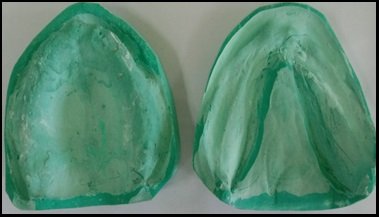
Fig 7: Master cast poured with dental stone typeIII

Fig 8: Articulation of pre-determined jaw relation before registration of neutral zone.

Fig 9: Neutral zone recorded and jaw relation verified in mouth

Fig 10: Jaw relation transferred to articulator after neutral zone recording

Fig 11: Securing of neutral zone using putty silicone impression material

Fig 12: Replacement of green stick and impression compound mix with modelling wax(left) and teeth arrangement done in neutral zone verified by secured putty silicone impression material(right).

Fig 13: Finished and polished complete denture insertion in patient’s mouth showing occlusion

Fig 14: Pre and post insertion photograph of patient
Discussion
The mean denture-bearing area of mandible is 12.25 cm2. Severely resorbed ridge results in increased inter-arch space, unstable and non-retentive mandibular dentures with inability to withstand the masticatory forces.(Rathee et al.)The mandibular denture often presents the most difficulties with pain and looseness being one of the most common complaint as the mandible atrophies at a greater rate than the maxilla and has less residual ridge for retention and support. Various clinical techniques have been used to improve support, retention, and stability of the lower denture.(Gahan and Walmsley) In this case we have used the mix of impression and green stick compound, that will provide molding of the material as well as be stable and self-supportive once it sets. Beresin and Schiesser(V E. Beresin) and Cagna et al have also advocated the use of modeling plastic for recording neutral zone. Performing different functions involving muscular forces in the mouth with soft moldable material helps to register the detail action of lips, cheeks, and tongue. These actions further help us to obtain good retention and stability of the denture by determining proper tooth position and shape of the polished surface of the denture.(Fahmy and Kharat)According to Fahmy and Kharat, in a case study they evaluated patient’s satisfaction for complete dentures made with either a conventional or a neutral zone technique. He then reported greater comfort and improved speech with the dentures fabricated using the neutral zone technique compared with their conventional ones. (Fahmy and Kharat)
Creating stable prosthesis is the supreme aim for any clinician. It is a reward and satisfaction for every clinician to restore the resorbed ridge with proper mastication , esthetics and retention.(Jain)
But the job is challenging and requires meticulous attention to details and following the protocol properly. Not every time in spite of trying one’s level best and using best techniques, we can achieve good outcome still the hope of succeeding helps us keep trying and is well said try until you succeed.
Conclusion
A thorough knowledge of the factors involved in achieving a stable lower denture is necessary for the clinician for a fruitful outcome in the treatment of the patient. Similarly, different impression techniques can be utilized for the achievement of neutral zone that is in harmony of the surrounding musculature. Also, the positioning and contouring of polished surfaces is utmost in achieving a stable and functional dentures, that lead to increased satisfaction of patient and improved treatment result in resorbed denture bearing foundation.Conflict of interest: none
References
- Bagul, Abhishek N., and Tushar S. Khandagale. “Neutral Zone: A Novel Technique for Management of Severely Resorbed Ridge.” International Journal of Preventive and Clinical Dental Research, vol. 4, no. 4, 2017, pp. 324–29, doi:10.5005/jp-journals-10052-0136.
- Driscoll, Carl F., et al. “The Glossary of Prosthodontic Terms: Ninth Edition.” The Journal of Prosthetic Dentistry, vol. 117, no. 5, 2017, pp. e1–105, doi:10.1016/j.prosdent.2016.12.001.
- Fahmy, F. M., and D. U. Kharat. “A Study of the Importance of the Neutral Zone in Complete Dentures.” The Journal of Prosthetic Dentistry, vol. 64, no. 4, 1990, pp. 459–62, doi:10.1016/0022-3913(90)90043-C.
- Gahan, M. J., and A. D. Walmsley. “The Neutral Zone Impression Revisited.” British Dental Journal, vol. 198, no. 5, 2005, pp. 269–72, doi:10.1038/sj.bdj.4812118.
- Jain, Manish. “Impression Techniques for the Resorbed Mandibular Arch: A Guide to Increased Stability.” Journal of the Scientific Society, vol. 42, no. 2, 2015, p. 88, doi:10.4103/0974-5009.157037.
- LA., Weinberg. “Tooth Position in Relation to the Denture Base Foundation. . Hickey JC, Zarb GA. Boucher’s Prost.” J PROSTHET DENT, vol. 8, 1957, p. :398-405.
- Makzoumé, Joseph E. “Morphologic Comparison of Two Neutral Zone Impression Techniques: A Pilot Study.” Journal of Prosthetic Dentistry, vol. 92, no. 6, 2004, pp. 563–68, doi:10.1016/j.prosdent.2004.09.010.
- Rastogi1, IshaIsha. “Management of Highly Resorbed Mandibular Ridge.” International Journal of Dental and Health Sciences, vol. 01, no. 04, 2014, pp. 512–22.
- Rathee, Dr. Manu, et al. “Prosthodontic Management of Severely Resorbed Mandibular Ridge Using Modified Impression Technique: A Case Report.” Indian Journal of Applied Research, vol. 3, no. 8, 2011, pp. 74–75, doi:10.15373/2249555x/aug2013/188.
- Sethi, Neha, and Neha Sethi. “Complete Dentures.” Review of All Dental Subjects (ROADS), 2015, pp. 471–471, doi:10.5005/jp/books/12580_12.
- V E. Beresin, Frank J. Schiesser. “The Neutral.” Educational Forum, vol. 33, no. 3, 1969, p. 342, doi:10.1080/00131726909338870.
- Watt DW, McGregor AR. Complete Dentures: General Considerations. In Designing Complete Dentures. Vol. 2nd ed., 1986.
Disclaimer from Guident
The views and opinions expressed in articles published in Guident are solely those of the authors and do not necessarily reflect the views of the editors, the editorial board or the publisher, Ivory India. Guident does not endorse any product, technique or treatment described. Clinical content is intended for qualified dental and medical professionals and is not a substitute for individual clinical judgement. Guident, its editors and the publisher accept no liability for any consequence arising from the use of information published in the journal.
How to cite this article
Dr. Pankaj Shah, Dr. Raj Kumar Singh, Dr. Pramita Suwal. Stability a Key to Success Using Neutral Zone Technique- a Case Report. Guident. 2020 Aug;13(9). Available from: https://ivoryindia.in/articles/prosthodontics/stability-a-key-to-success-using-neutral-zone-technique-a-case-report.html