
Tooth Supported Overdenture: Still a Superior Treatment Modality Than Conventional Dentures! a Case Report
Department Of Prosthodontics And Crown & Bridge, Seema Dental College and Hospital, Rishikesh
ABSTRACT
Overdentures are considered as a viable treatment modality and an alternative for complete dentures in preserving the alveolar ridge integrity for aged patients with few remaining teeth and with severely resorbed ridges. The remaining root stumps under the denture base reduces further resorption of alveolar ridge which provides sensory feedback and improves the stability of the dentures. Their associated advantages such as increased retention, stability, and support; decreased ridge resorption; and enhanced masticatory efficiency compared to the conventional dentures makes it superior. Moreover, after endodontic therapy on the remaining teeth, the use of copings (short/long) improvises the retention of the denture. The favorable outcome for the treatment depends on planned selection of teeth. Although implant-supported prosthesis results in a better survival, tooth?supported prosthesis has its own advantages in terms of providing proprioception and economical alternative. The present case report postulates the successful preservation of few remaining teeth for tooth-supported overdenture with metal copings in maxillary arch considering the favorable inter ridge distance and economical status of the patient rather than complete extractions.
Keywords: Tooth supported overdentures; metal copings
INTRODUCTION
Preventive prosthodontics mainly emphasizes on the importance of the procedures that can prolong or entirely get rid of the various prosthodontic problems in future.1 Periodontal ligament which surround the teeth help in maintaining the alveolar ridge height and it is eliminated upon extraction of teeth; its organizational influence on surrounding bone integrity changes. Consequently, the retention of natural tooth roots—even if submerged beneath the soft tissue—has been observed to preserve surrounding alveolar structure. For this very reason an approach has been espoused to retain the roots of natural teeth beneath a complete denture. This has been described as an overdenture because the removable denture rests over the retained roots.
An overdenture slows down the process of resorption, ameliorates denture foundation area and increases masticatory efficiency. As DeVan stated: “Perpetual preservation of what remains is more important than the meticulous replacement of what is missing” still stands true.1 Overdenture is defined as any removable dental prosthesis that covers and rests on one or more remaining natural teeth, the roots of natural teeth, and/or dental implants; a dental prosthesis that covers and is partially supported by natural teeth, natural tooth roots, and/or dental implants.3 Overdenture is also called by various other names such as overlay prosthesis, superimposed prosthesis and overlay denture.1
Renner et al. did a 4-year study in which it was endowed that 50% of the roots used as overdenture abutments persisted and were immobile.1 Overdentures are generally indicated in patients with a couple of existing retainable teeth in the oral cavity, along with those that have single denture, malrelated ridges, and few cases where retention and stability of the denture seems to be difficult. They are also contraindicated in those who have reduced interarch distance, unsatisfactory oral hygiene and systemic conditions.
So, why and how is overdenture superior to the removable complete denture prosthesis?
PROS AND CONS OF OVERDENTURE 1
PROS |
CONS |
|
|
OUTLINE OF THE CASE
A 76-year-old female patient reported to the Department of Prosthodontics and Crown & Bridge, Seema Dental College and Hospital, Rishikesh, with the chief complaint of difficulty in having food and poor aesthetics due to missing teeth. The patient gave a history of loss of teeth over a period of 5 years due to multiple caries and periodontal problems. The patient did not wear any dentures previously. On intraoral examination and OPG (Fig.1), teeth present were 13, 14, 22 and 24. 14 showed bone loss and was grossly attrited showing grade II mobility. The other teeth were grossly attrited but firm. The edentulous span possessed favourable ridge anatomy along with firmly attached keratinized mucosa. Radiographic examination of the remaining teeth revealed that 13, 22 and 24 showed good bone support. The mandibular arch was completely edentulous. The patient wanted a prosthesis with good retention. All the plausible treatment choices, including implant supported overdentures, were explained to the patient. The patient implicated that her remaining natural teeth should be saved. After contemplating on all the determinants involved, it was esteemed that an overdenture with maxillary arch and a complete denture with mandibular arch should be fabricated. Implant supported overdenture was not opted due to cost escalation and also taking into consideration the age and health status of the patient. Taking these factors into consideration, extraction of 14 was done and the sockets were allowed to heal (Fig. 2A & 2B) before commencing the treatment.
Prosthetic Management
Primary impression of the maxillary arch was made using irreversible hydrocolloid impression material and diagnostic casts were made with Type III gypsum product. After completion of endodontic therapy (Fig. 3A & 3B), dome shaped tooth preparations for cast copings were done 13, 22 and 24 (Fig.4A & 4B). Abutment teeth were prepared with a chamfer margin following which impression was made using polyvinyl siloxane elastomeric impression material (putty and light body) by single step double mix technique. Wax patterns of cast copings were fabricated and subsequently casting was done (Fig. 5). After proper finishing & polishing, fit of the copings were evaluated in the patient’s mouth, after which they were cemented on the abutments with glass ionomer cement (Fig. 6). The patient was recalled, custom trays were fabricated for both the arches. Border moulding was done and secondary impression was made with light body polyvinyl siloxane elastomeric impression material. Maxillary cast was poured after an hour with Type V die stone. Temporary denture bases and wax occlusal rims were fabricated on the master casts. The occlusal rims were made and maxillomandibular relation was recorded. Facebow transfer was done and casts were articulated according to the plane obtained (Fig 7 & 8). Acrylic teeth were arranged and try-in was carried out (Fig. 9). After thorough evaluation of aesthetics, occlusion, and phonetics, wax up was done and the maxillary and mandibular dentures were processed (Fig. 10 & 11). The maxillary overdenture and mandibular complete denture prosthesis were polished and placed in patient’s mouth (Fig. 12). Occlusion was evaluated and instructions were given for placement of dentures, and how to keep dentures and to chew food with it. Post placement check-up was done after 24 hours, 1 week and 1 month. The patient was very content with the prosthesis and was able to speak, chew and smile well. The patient was also instructed to come for recall visits every 6 months.
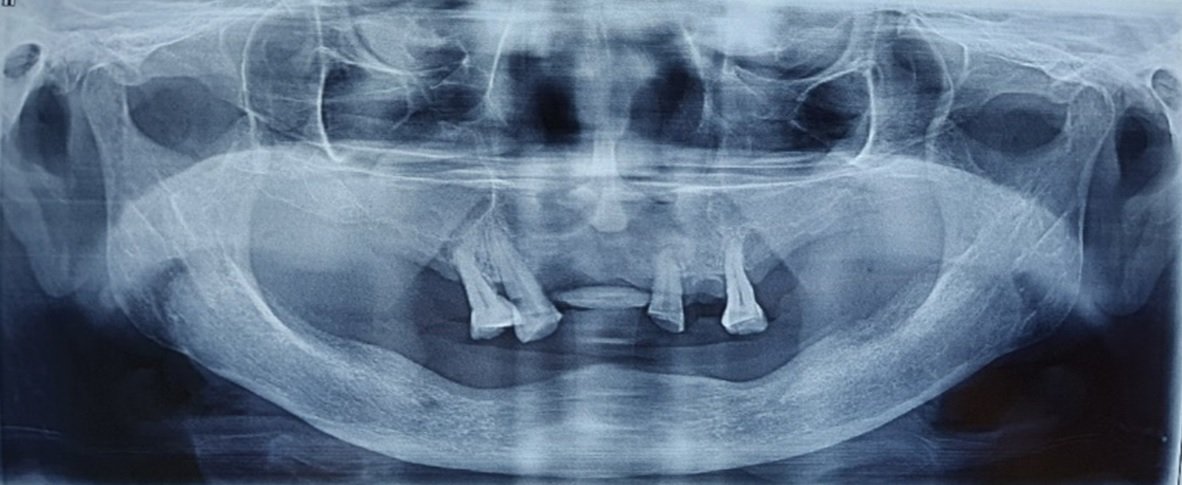
Fig.1: Pre-Treatment OPG of the patient.
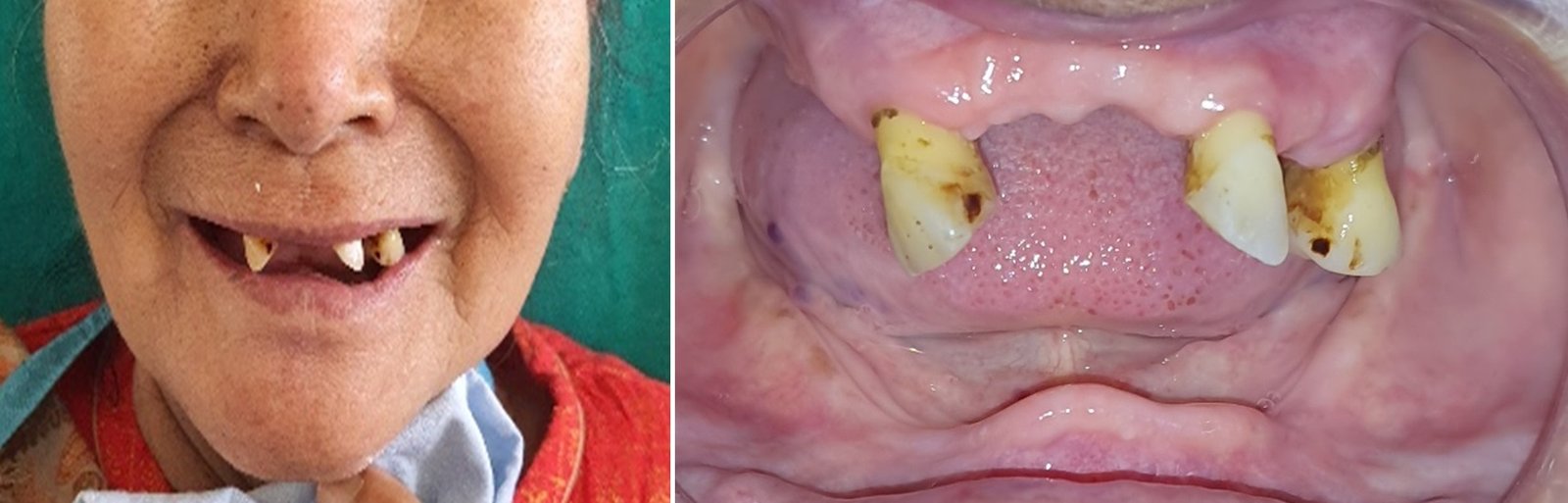
Fig.2A & B: Extraoral and intraoral photograph of patient before treatment
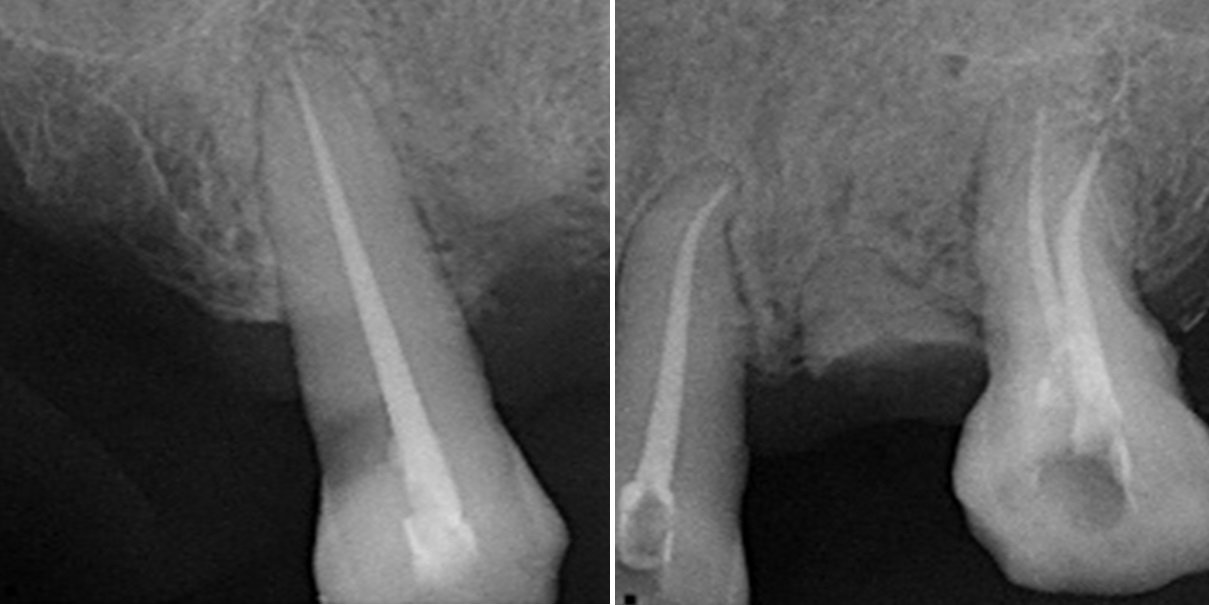
Fig.3A &B: Post obturation radiographs

Fig.4A &B: Dome shaped preparation of the remaining teeth

Fig.5: Metal copings on the cast

Fig.6: Metal copings luted with glass ionomer cement on prepared teeth


Fig.7 & 8: Facebow Transfer

Fig.9: Try in

Fig.10: Intaglio surface of the maxillary denture

Fig.11: Cameo surface of maxillary overdenture and mandibular complete denture

Fig.12: Denture inserted
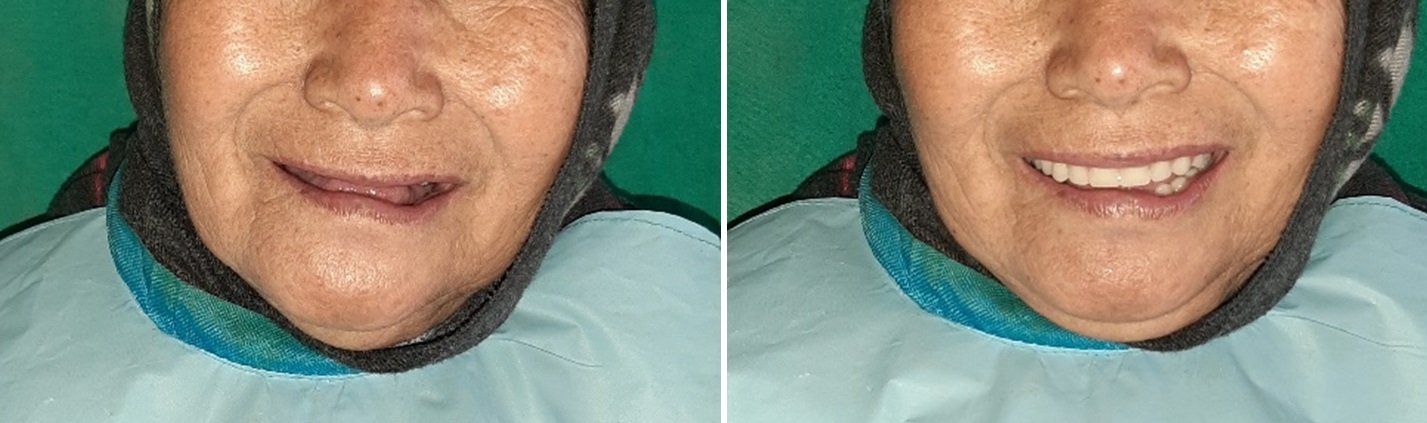
Fig. 13A &B: Pre and Post treatment pictures of the patient
DISCUSSION
Implants are one of the new treatment options that are being considered over tooth supported overdentures for better retention purpose. Even though implants give excellent results, conservation of tooth still remains the first priority. Greater weightage must be given on proper case selection, diagnosis, and treatment planning.4 While selecting an abutment tooth the following points to be considered are: adequate tooth structure, good periodontal support and location in order to provide support and possibly retention for an overdenture prosthesis.2
The major problems posed by conventional complete dentures such as loss of periodontal proprioception, lower stability and retention, progressive bone loss and low masticatory efficiency; can definitely be overcome by overdentures as they provide minimal tissue coverage and better distribution of forces. When a patient loses teeth, it brings down their self-esteem as it is an indirect reminder for being dependent on others and approaching senescence. Although elderly patients exhibit mutilated dentition, preserving the good prognosis teeth helps in excellent retention as well as stability of dentures. Thus, inhibiting the process of residual ridge resorption.5
Root canal treatment of the abutment teeth were done to gain more appropriate crown-root ratio. The reduction in the height of abutment teeth was around 2–3 mm, followed by placement of short copings. This procedure results in shortened appointment for preparing the teeth. The cumulative advantages of reduction in the pathological condition of residual ridge resorption while improvising the retention and stability of dentures gives a strong point for the employment of overdentures wherever possible.2
There are cases when the remaining teeth in the oral cavity are not suitable for removable partial dentures. In such cases overdentures are opted. Proprioception through the periodontal fibres, gives the patient a sense of discrimination to touch and pressure, which is less with conventional complete dentures.6. Rissin et al. in 1978 compared masticatory performance in patients with natural dentition, complete denture and over denture. Over-denture patient’s chewing efficiency was one-third higher than the complete denture patients.6 Crum and Rooney in their 5-year study said that there is an average loss of 0.6 mm of vertical bone in the anterior part of the mandible of overdenture patients through cephalometric radiographs as opposed to 5.2 mm loss in complete denture patients.1
Different attachments on the abutment teeth gives extra retention. But these attachments are high priced and in case of bare root overdentures, there is always a probability of fracture of the abutment roots. So, here in this case, we have used metal copings which are comparatively inexpensive for the patient. The major drawback of overdentures is difficulty in oral hygiene maintenance. Patient should be instructed about oral hygiene maintenance and reinforcement of the same has to be done. Recall examinations with radiographs at regular intervals of 6 months or less will maintain the status of the teeth and the oral cavity, eventually leading to the favorable outcome of the overdenture therapy. If any case, there is loss of abutment teeth, then the overdentures can be transformed into a conventional denture.4
CONCLUSION
Tooth supported overdenture is an excellent treatment modality than conventional dentures wherever possible. Prosthodontic rehabilitation with overdentures not only provides good esthetics and function but psychologically boosts the confidence of the patients due to presence of natural teeth. They bestow greater retention, stability, support and proprioception which increases chewing efficiency and decrease in the rate of residual ridge resorption. With the invention of implants in the field of dentistry, preservation of teeth for tooth supported overdentures have been overlooked. Nonetheless, as good as implants are, they come with an added treatment cost which is unaffordable for some patients, making it a “not-so” pocket friendly option for a few. Thus, tooth-supported overdentures have been a better alternative for implant overdentures, but the outcome of it still needs to be analyzed.
REFERENCES
- Samra RK, Bhide SV, Goyal C, Kaur T. Tooth supported overdenture: A concept overshadowed but not yet forgotten!. J Oral Res Rev 2015;7:16-21.
- Zarb G, Hobkirk JA, Eckert SE, Jacob RF. Prosthodontic treatment for edentulous patients. Complete dentures and implant-supported prostheses. 11th ed. St. Louis Missouri (USA): Mosby; 2013 p: 693.
- The glossary of prosthodontic terms. 9th ed. J Prosthet Dent. 2017;117(5S):e65.
- Roy S, Khan R, Biswas T, Mukherjee S, Giri TK. Case reports on tooth-supported overdenture. Int J Health Sci Res. 2017;7(6):339-43.
- Pradeep Raja BT, Manoharan PS, Rajkumar E. Tooth-supported attachment retained overdenture: Forgotten concept revisited - A case report. SRM J Res Dent Sci 2021;12:177-80.
- Barman J, Bhattacherjee S, Rahman R. Fabrication of tooth supported overdenture using customized metal short copings: A case report. IP Int J Maxillofac Imaging. 2020;6(1):12-14.
- Kaur H, Bhatia V, Khurana PRS, Buragohain A. Conventional tooth supported overdenture with copings – Can it ever be overlooked? J Dent Specialities. 2019;7(1):45-8.
Disclaimer from Guident
The views and opinions expressed in articles published in Guident are solely those of the authors and do not necessarily reflect the views of the editors, the editorial board or the publisher, Ivory India. Guident does not endorse any product, technique or treatment described. Clinical content is intended for qualified dental and medical professionals and is not a substitute for individual clinical judgement. Guident, its editors and the publisher accept no liability for any consequence arising from the use of information published in the journal.
How to cite this article
Dr. Himanshu Aeran, Dr. Jyotsna Seth, Dr. Shivani Nayak. Tooth Supported Overdenture: Still a Superior Treatment Modality Than Conventional Dentures! a Case Report. Guident. 2022 Jun;15(7-8). Available from: https://ivoryindia.in/articles/prosthodontics/tooth-supported-overdenture-still-a-superior-treatment-modality-than-conventional-dentures-a-case-report.html


