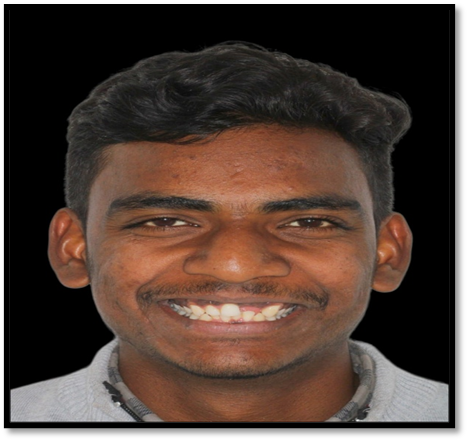
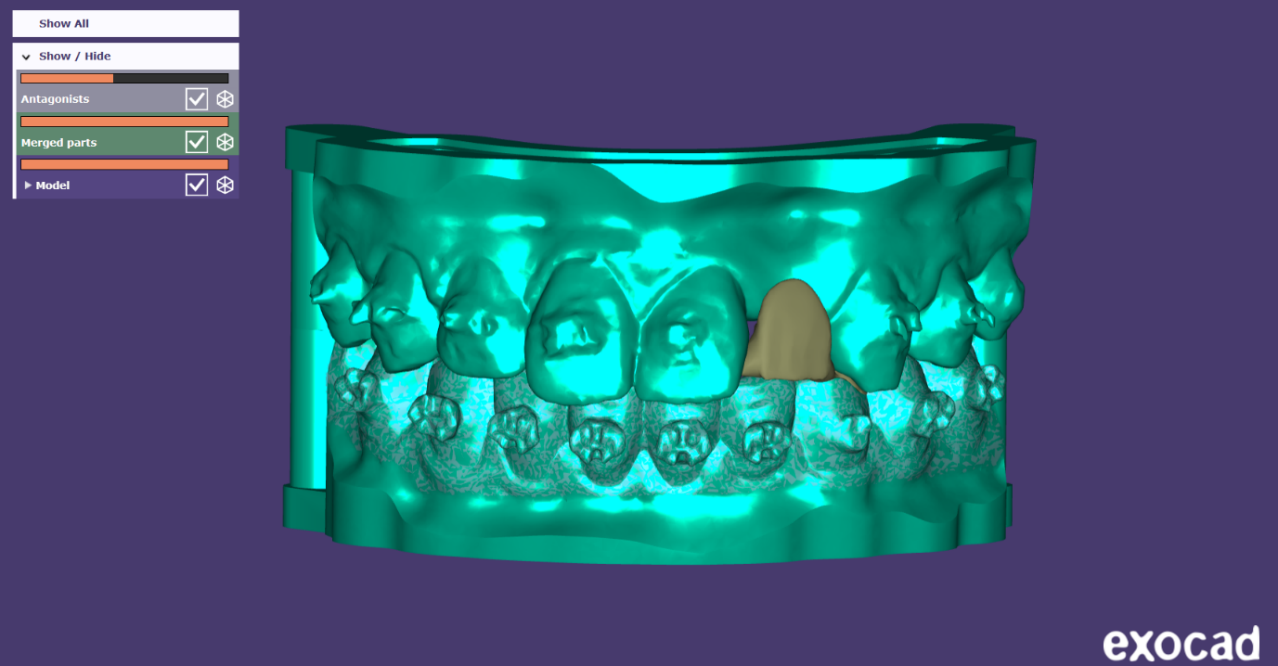
Conservative Esthetic Rehabilitation of Proclined Maxillary Anterior Teeth Without Ridge Contouring: A Case Report
(Professor & HOD), Department of Prosthodontics and Crown & Bridge, Department Of Endodontics, K.D. Dental College & Hospital, Mathura, UP, India
Abstract
Proclined maxillary anterior teeth with underlying alveolar bone prominence pose a challenge for esthetic rehabilitation. Surgical bone contouring is often recommended for optimal ridge form; however, patient preferences and reluctance toward surgical intervention may limit treatment options. This case report describes the prosthodontic management of a patient with unpleasant esthetics, extruded and fractured central incisors, proclined maxillary anterior teeth, and prominent labial alveolar bone. Following extraction of compromised teeth and immediate temporization, the patient was successfully rehabilitated with a porcelain-fused-to-metal (PFM) fixed partial denture without surgical bone contouring.
Keywords: Esthetics, Proclination, Alveolar bone prominence, Fixed partial denture, Immediate temporization
INTRODUCTION
Anterior tooth esthetics is strongly influenced by tooth position, ridge morphology, and gingival harmony. Proclination of maxillary anterior teeth often leads to alveolar bone prominence, which can result in excessive labial convexity and compromised prosthetic outcomes. While alveoloplasty or bone contouring may be advocated for optimal ridge form, patient factors such as unwillingness for surgery necessitate conservative alternatives.
Fixed partial dentures (FPDs) remain a reliable treatment option when implants or surgical correction are not feasible, especially if adjacent teeth can serve as strong abutments. This report highlights such a clinical situation where esthetic compromise due to proclination and bone protrusion was managed with prosthodontic rehabilitation while respecting the patient’s preferences.
CASE PRESENTATION
A 28-year-old female patient reported to the Department of Prosthodontics, K. D Dental College , Mathura, with the chief complaint of unpleasant esthetics due to irregularly positioned and fractured anterior teeth.
Clinical findings:
Tooth 11: extruded and proclined, periodontally compromised.
Tooth 21: fractured, with poor prognosis.
Teeth 12 and 22: sound, periodontally healthy, favorable crown-root ratio.
Prominent labial alveolar bone in relation to maxillary central incisor region, contributing to ridge protrusion.

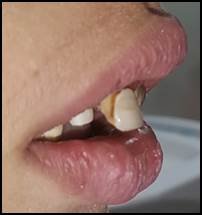
Pre-Operative Views
Treatment considerations:
Options included implant placement following ridge correction, removable prosthesis, or fixed partial denture.
Patient refused bone contouring and implant placement, demanding a fixed esthetic solution.
Final treatment plan: extraction of 11 and 21, immediate temporization, followed by definitive rehabilitation with PFM fixed partial denture using 12 and 22 as abutments.
CLINICAL PROCEDURE
Tooth Preparation:
Teeth 12 and 22 were prepared with shoulder finish line for PFM crowns.

Tooth Preparation-12 and 22
Extraction and Immediate Temporization:
Teeth 11 and 21 were atraumatically extracted. A chairside provisional fixed partial denture was fabricated with autopolymerizing resin to provide esthetics and support soft tissue contours.

Extraction of 11 and 21

Immediate Temporization
Healing Period:
The patient was kept under observation for 15 days. The extraction sockets healed satisfactorily. Labial ridge protrusion remained visible but was masked to an extent by provisional prosthesis.
Final Impression:
Elastomeric impressions were made after healing. A PFM fixed partial denture was fabricated, with labial contour adjustments to mask ridge prominence as much as possible without overbulking.

Final Impression Made
Try-in and Cementation:
At try-in, esthetics and phonetics were evaluated. Final prosthesis was cemented with glass ionomer cement.

Post-Operative Views

Pre-Treatment & Post-Treatment
Outcome and Follow-up
The patient was satisfied with the esthetic improvement, despite the residual labial fullness due to underlying bone protrusion. At the 3-month follow-up, prosthesis was functional, gingiva around abutments was healthy, and phonetics were satisfactory.
DISCUSSION
Anterior proclination and labial ridge prominence complicate prosthodontic rehabilitation. Ridge correction through bone contouring is the ideal approach, especially when implant therapy is planned. However, patient reluctance toward surgery may necessitate compromises.
In this case, strategic tooth preparation and careful prosthesis design were essential to mask ridge prominence while avoiding over-contoured labial surfaces. The limitations were explained to the patient, and treatment was delivered within the framework of their acceptance.
This highlights the importance of patient-centered care—balancing prosthodontic principles with patient preferences while ensuring function and acceptable esthetics.
CONCLUSION
Rehabilitation of proclined maxillary anterior teeth with underlying bone protrusion can be challenging when surgical correction is declined. A fixed partial denture, combined with careful tooth preparation and contour management, can provide a functional and esthetically acceptable outcome, emphasizing the importance of individualized treatment planning.
REFERENCES
- Rosenstiel SF, Land MF, Fujimoto J. Contemporary Fixed Prosthodontics. 5th ed. St. Louis: Elsevier; 2016.
- Shillingburg HT, Hobo S, Whitsett LD, Jacobi R, Brackett SE. Fundamentals of Fixed Prosthodontics. 4th ed. Chicago: Quintessence; 2012.
- Goodacre CJ, Bernal G, Rungcharassaeng K, Kan JY. Clinical complications in fixed prosthodontics. J Prosthet Dent. 2003;90(1):31-41.
- Spear F, Kokich VG, Mathews DP. Interdisciplinary management of anterior dental esthetics. J Am Dent Assoc. 2006;137(2):160-169.
- Pjetursson BE, Tan WC, Tan K, Brägger U, Zwahlen M, Lang NP. A systematic review of the survival and complication rates of fixed partial dentures (FPDs) after an observation period of at least 5 years. Clin Oral Implants Res. 2004;15(6):667-676.
- Seibert JS. Reconstruction of deformed, partially edentulous ridges, using full thickness onlay grafts. Part I: Technique and wound healing. Compend Contin Educ Dent. 1983;4(5):437-453.
Disclaimer from Guident
The views and opinions expressed in articles published in Guident are solely those of the authors and do not necessarily reflect the views of the editors, the editorial board or the publisher, Ivory India. Guident does not endorse any product, technique or treatment described. Clinical content is intended for qualified dental and medical professionals and is not a substitute for individual clinical judgement. Guident, its editors and the publisher accept no liability for any consequence arising from the use of information published in the journal.
How to cite this article
Dr. Shikha Shahi, Dr. Manesh Lahori Dean, Dr. Anuja Agrawal. Conservative Esthetic Rehabilitation of Proclined Maxillary Anterior Teeth Without Ridge Contouring: A Case Report. Guident. 2025 Oct;18(11). Available from: https://ivoryindia.in/articles/prosthodontics/conservative-esthetic-rehabilitation-of-proclined-maxillary-anterior-teeth-without-ridge-contouring-a-case.html