Microplastics in Orthodontics: A Review
Department of Orthodontics, Rural Dental College, PIMS (DU), Loni. Maharashtra
ABSTRACT
Microplastics are small plastic particles that can pose a threat to the environment and human health. One of the sources of microplastics that has not been widely studied is orthodontic rubber bands, which are used to correct misaligned teeth. This paper aims to investigate the potential release of microplastics and nanoplastics from orthodontic rubber bands and their chemical composition. The authors used scanning electron microscopy (SEM) and Raman spectroscopy to analyze the debris left behind by new and used rubber bands after rinsing with water and ethanol. They found that the rubber bands contained natural latex and other additives, such as ethylene propylene diene monomer (EPDM), polyisoprene, and silicone. They also observed that the rubber bands could release microscopic particles ranging from 10 nm to 10 μm in size, which could be ingested by the patients or enter the aquatic environment. The paper suggests that more research is needed to assess the environmental and health impacts of microplastics and nanoplastics from orthodontic rubber bands, and that alternative materials should be considered to reduce plastic pollution.
INTRODUCTION
Microplastics are small plastic particles that are less than 5 mm in size and can be classified into primary and secondary microplastics. Primary microplastics are intentionally manufactured and added to products such as toothpaste, cosmetics, and personal care products. Secondary microplastics are formed from the degradation of larger plastic items due to environmental and mechanical factors.1
Microplastics have become a global environmental and public health concern due to their widespread presence in various ecosystems and their potential impacts on biota and humans. Microplastics can act as carriers of toxic substances, such as heavy metals, organic pollutants, and pathogens, and can be ingested by aquatic and terrestrial organisms, leading to bioaccumulation and biomagnification in the food chain.1
Dentistry is one of the sources of microplastic pollution in the environment, as several dental products and materials contain plastic components that can release microplastics during their use or disposal. Toothpaste containing microbeads, resin-based composite restorations, denture base materials, orthodontic appliances, and clear aligners are some examples of dental products that can contribute to microplastic pollution.1
This review aims to provide an overview of the current knowledge on microplastics in orthodontics, focusing on their sources, effects on the body and the environment, and possible alternatives to reduce their use and impact.
SOURCES OF MICROPLASTICS IN ORTHODONTICS
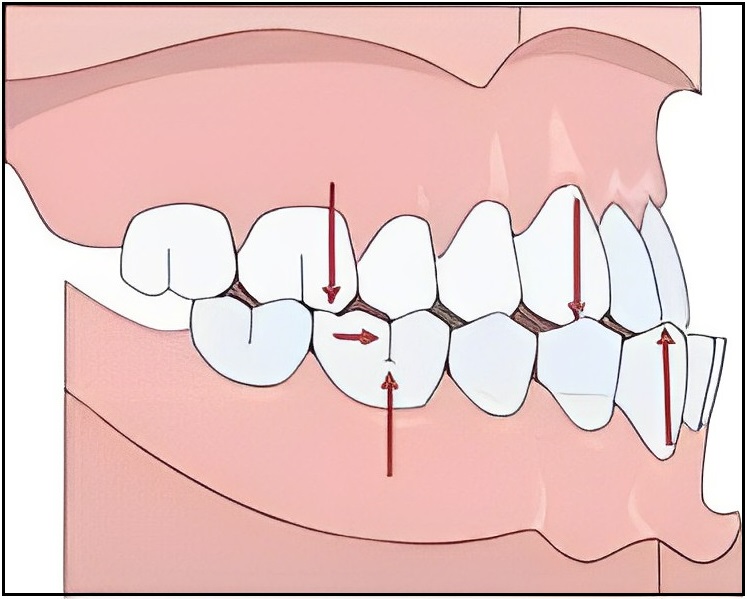
Orthodontics is a branch of dentistry that deals with the diagnosis, prevention, and correction of malpositioned teeth and jaws. Orthodontic treatment involves the use of various appliances that apply forces to the teeth and surrounding tissues to achieve the desired tooth movement and occlusion. Orthodontic appliances can be fixed or removable, metal or esthetic, active or passive, depending on the type and severity of the malocclusion and the patient’s preference.1
Orthodontic appliances are composed of different materials, such as metals, ceramics, polymers, or composites. Polymers are widely used in orthodontics due to their esthetic appeal, biocompatibility, flexibility, and low cost. However, polymers are also prone to degradation due to environmental and mechanical factors, such as temperature changes, saliva, pH, enzymes, bacteria, chewing forces, abrasion, and wear.1
The degradation of polymers can result in the release of microplastics into the oral cavity or the environment. Some examples of orthodontic appliances that contain polymers and can generate microplastics are:
- Clear aligners: Clear aligners are transparent thermoplastic trays that fit over the teeth and apply controlled forces to move them gradually. Clear aligners are popular among adult patients who seek an esthetic alternative to conventional braces. Clear aligners are made of different types of polymers, such as polyethylene terephthalate (PET), polyurethane (PU), or polycarbonate (PC).2 A recent study by Quinzi et al2 showed that clear aligners can release secondary microplastics due to mechanical friction simulated with artificial saliva exposure for 7 days. The study found that the number and size of microplastics varied depending on the type of polymer used for the aligners.
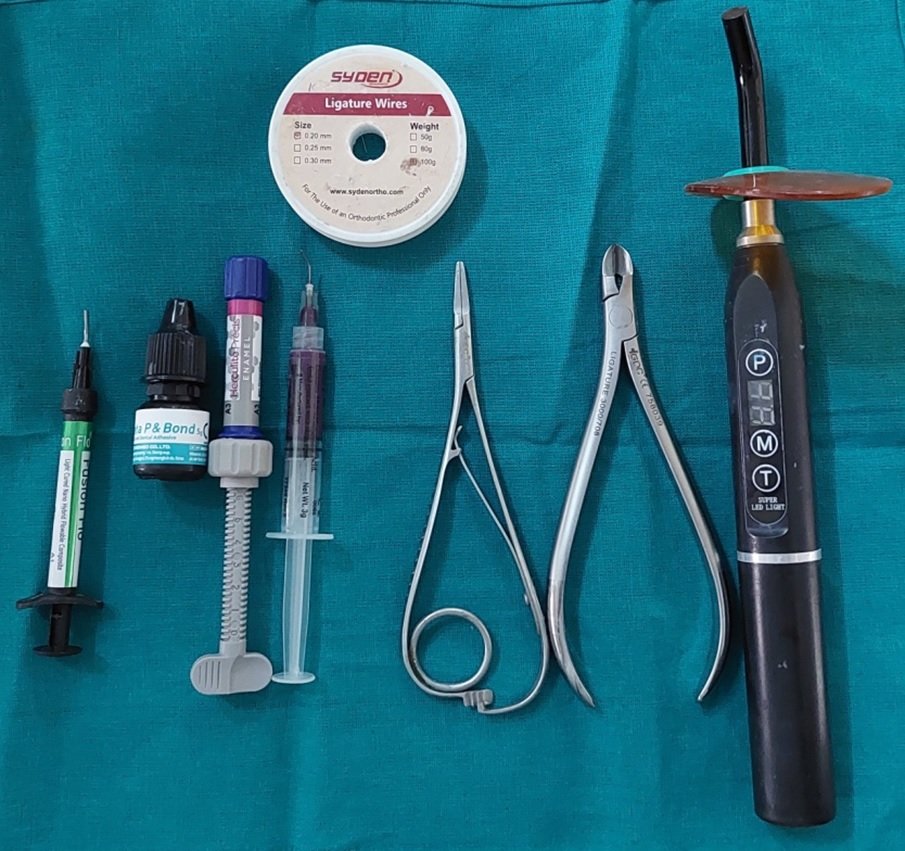
- Elastomeric ligatures: Elastomeric ligatures are small rubber rings that are used to attach the archwire to the brackets in fixed orthodontic appliances. Elastomeric ligatures come in different colors and sizes and are changed at each appointment. Elastomeric ligatures are made of polyurethane or polyisoprene.1 Elastomeric ligatures can degrade due to saliva, bacteria, enzymes, oxidation, staining agents, ultraviolet light, and mechanical stress.1 The degradation can result in the release of microplastics into the oral cavity or the environment.
- Esthetic brackets: Esthetic brackets are brackets that have a tooth-colored appearance and are used for cosmetic reasons. Esthetic brackets can be made of ceramic, composite, or plastic materials.1 Plastic brackets are usually made of polycarbonate or polyoxymethylene.1 Plastic brackets can degrade due to saliva, bacteria, enzymes, oxidation, staining agents, ultraviolet light, and mechanical stress.1 The degradation can result in the release of microplastics into the oral cavity or the environment.
- Denture base materials: Denture base materials are used to fabricate removable partial or complete dentures that replace missing teeth and surrounding tissues. Denture base materials can be classified into acrylic resins, polyamides, and thermoplastic elastomers.1 Acrylic resins are the most commonly used denture base materials due to their low cost, ease of processing, and good esthetics. However, acrylic resins are also susceptible to degradation due to water absorption, thermal cycling, chemical agents, microbial colonization, and mechanical stress.1 The degradation can result in the release of microplastics into the oral cavity or the environment.
These are some of the main sources of microplastics in orthodontics, but there may be others that have not been studied yet. The amount and type of microplastics released by orthodontic appliances depend on several factors, such as the polymer composition, the manufacturing process, the shape and size of the appliance, the duration and frequency of use, the oral hygiene practices, and the environmental conditions.1
Effects of Microplastics on the Body
Microplastics can enter the human body through different routes, such as ingestion, inhalation, or dermal contact. Ingestion is considered the most common route of exposure to microplastics for humans.1 Ingestion can occur directly by consuming food or beverages that contain microplastics or indirectly by swallowing microplastics that are present in the oral cavity due to dental products or materials.1
Once ingested, microplastics can have different fates depending on their size, shape, and chemical properties. Some microplastics may pass through the gastrointestinal tract without being absorbed and be excreted in feces. However, some microplastics may cross the intestinal barrier and enter the bloodstream or lymphatic system and reach different organs and tissues1.
The potential effects of microplastics on human health are not fully understood yet, but there are some possible mechanisms that could cause adverse outcomes. These include:
- Physical effects: Microplastics can cause physical damage to the tissues and organs that they come in contact with due to their sharp edges or irregular shapes. Microplastics can also induce inflammation and immune responses by activating macrophages and other cells that recognize them as foreign bodies.1
- Chemical effects: Microplastics can leach toxic substances that are present in their polymer matrix or on their surface. These substances can include monomers, additives, plasticizers, stabilizers, antioxidants, flame retardants, or colorants.1 Some of these substances have been shown to have endocrine-disrupting, carcinogenic, mutagenic, or teratogenic effects on humans.1 Microplastics can also adsorb environmental pollutants that are present in water or air, such as heavy metals, organic pollutants, or pathogens, and transfer them to the human body upon ingestion.1
- Biological effects: Microplastics can interact with the microbiota of the human body and alter their composition and function. Microbiota are the microorganisms that live in and on the human body and play important roles in digestion, immunity, metabolism, and health. Microplastics can affect the microbiota by providing a surface for microbial colonization, by influencing their gene expression and metabolism, or by inducing inflammatory and immune responses.1
The effects of microplastics on human health may vary depending on the dose, duration, and frequency of exposure, as well as the individual susceptibility and genetic factors. However, there is a lack of epidemiological studies and long-term data to assess the actual risks and impacts of microplastics on human health1.
EFFECTS OF MICROPLASTICS ON THE ENVIRONMENT
Microplastics can also have detrimental effects on the environment and its biodiversity. Microplastics can be transported by water currents, wind, or animals to different ecosystems, such as freshwater, marine, terrestrial, or atmospheric environments 1. Microplastics can persist for long periods of time in the environment due to their resistance to degradation and their low recovery rate.1
Microplastics can affect the environment and its biota by:
- Physical effects: Microplastics can cause physical damage to the organisms that ingest them or encounter them in their habitats. Microplastics can block or perforate the digestive tract, reduce stomach capacity, affect feeding behavior, impair growth and reproduction, or cause mortality.1 Microplastics can also alter the physical properties of sediments, such as porosity, permeability, or stability, and affect the organisms that live in them.1
- Chemical effects: Microplastics can leach or adsorb toxic substances that can affect the organisms that ingest them or come in contact with them. These substances can include monomers, additives, environmental pollutants, or pathogens.1Some of these substances have been shown to have endocrine-disrupting, carcinogenic, mutagenic, or teratogenic effects on wildlife.1 Microplastics can also affect the biogeochemical cycles of nutrients and elements in the environment by altering their availability or mobility.1
- Biological effects: Microplastics can interact with the microbiota of the environment and alter their composition and function. Microbiota are the microorganisms that live in different ecosystems and play important roles in nutrient cycling, decomposition, bioremediation, and symbiosis. Microplastics can affect the microbiota by providing a surface for microbial colonization, by influencing their gene expression and metabolism, or by inducing inflammatory and immune responses.1
The effects of microplastics on the environment and its biota may vary depending on the dose, duration, and frequency of exposure, as well as the species, trophic level, and ecological niche of the organisms. However, there is a lack of ecological studies and long-term data to assess the actual risks and impacts of microplastics on the environment and its biodiversity.1
ALTERNATIVES TO MICROPLASTICS IN ORTHODONTICS
Given the potential hazards of microplastics in orthodontics for human health and the environment, there is a need to find alternatives to reduce their use and impact. Some possible alternatives are:
- Biodegradable polymers: Biodegradable polymers are polymers that can be degraded by biological agents, such as enzymes, microorganisms, or plants, into harmless products, such as water, carbon dioxide, or biomass. Biodegradable polymers can be derived from natural sources, such as starch, cellulose, chitin, or proteins, or synthesized from renewable or fossil resources, such as polylactic acid (PLA), polyhydroxyalkanoates (PHA), or polybutylene succinate (PBS).1 Biodegradable polymers have been used for various biomedical applications, such as drug delivery, tissue engineering, or sutures.1 However, their use in orthodontics is still limited due to some challenges, such as mechanical properties, biocompatibility, degradation rate, cost, and availability.1 Some studies have explored the feasibility of using biodegradable polymers for orthodontic appliances, such as clear aligners2, elastomeric ligatures3, or brackets4, but more research and development are needed to optimize their performance and safety.
- Metallic appliances: Metallic appliances are appliances that are made of metal materials, such as stainless steel, titanium, or nickel-titanium alloys. Metallic appliances have been used for a long time in orthodontics due to their high strength, durability, corrosion resistance, and biocompatibility.1 Metallic appliances do not generate microplastics during their use or disposal. However, metallic appliances have some disadvantages, such as poor esthetics, high cost, metal allergy or sensitivity, or interference with magnetic resonance imaging (MRI).1 Therefore, metallic appliances may not be suitable for all patients or situations.
- Prevention and recycling: Prevention and recycling are strategies that aim to reduce the amount of microplastics generated by orthodontic appliances. Prevention involves avoiding or minimizing the use of plastic materials in orthodontics, such as choosing metal or ceramic appliances over plastic ones, or using toothpaste without microbeads. Prevention also involves educating patients and professionals about the environmental and health impacts of microplastics and promoting good oral hygiene practices to extend the lifespan of orthodontic appliances. Recycling involves collecting and reprocessing the plastic materials from orthodontic appliances after their use or disposal, such as clear aligners, elastomeric ligatures, or brackets. Recycling can reduce the amount of plastic waste that ends up in landfills or the environment and save resources and energy. However, recycling faces some challenges, such as the separation and identification of different types of plastics, the contamination and degradation of plastic materials, or the lack of infrastructure and incentives for recycling.
CONCLUSION
Microplastics are a global environmental and public health concern that affects various ecosystems and organisms, including humans. Orthodontics is one of the sources of microplastic pollution in the environment, as several orthodontic appliances contain plastic materials that can release microplastics during their use or disposal. Microplastics can have adverse effects on the body and the environment by causing physical, chemical, or biological damage to the tissues, organs, microbiota, or biogeochemical cycles. Therefore, there is a need to find alternatives to microplastics in orthodontics, such as biodegradable polymers, metallic appliances, or prevention and recycling strategies. However, more research and development are needed to optimize the performance and safety of these alternatives and to assess the actual risks and impacts of microplastics on human health and the environment.
REFERENCES
- Quinzi V., Cerroni L., Sfasciotti G.L., et al. (2020). Microplastic release from clear aligners during mechanical fatigue: An in vitro study. Journal of Dentistry 103: 103524.
- Parsaeimehr A., Miller C.M., Ozbay G. (2023). Microplastics and their interactions with microbiota. Heliyon 9: e15104.
- Alves M., Comba A., Graça J., et al. (2016). Degradation of polymeric materials used for orthodontic appliances: A systematic review. Journal of Dentistry 55: 1-9.
- Bock N., Woodruff M.A., Hutmacher D.W., et al. (2010). The potential of composite resorbable ceramic brackets for orthodontic treatment: In vitro degradation behaviour. Acta Biomaterialia 6: 2299-2305.
Disclaimer from Guident
The views and opinions expressed in articles published in Guident are solely those of the authors and do not necessarily reflect the views of the editors, the editorial board or the publisher, Ivory India. Guident does not endorse any product, technique or treatment described. Clinical content is intended for qualified dental and medical professionals and is not a substitute for individual clinical judgement. Guident, its editors and the publisher accept no liability for any consequence arising from the use of information published in the journal.
How to cite this article
Dr. Shubhangi Mani, Dr. Ravindra Manerikar, Dr. Yash Goenka. Microplastics in Orthodontics: A Review. Guident. 2023 Oct;16(11). Available from: https://ivoryindia.in/articles/orthodontics/microplastics-in-orthodontics-a-review.html