Immediate Loading Cortico Basal Implant with Bipodal Technique for Restoration of Traumatic Premolar Extraction Site: A Case Study
Dentonic Oral Surgery Implant Centre Rajbagh, Srinagar, J&K
ABSTRACT
This case study presents the successful restoration of an edentulous space in the right smile zone, resulting from traumatic premolar extraction, using the immediate loading cortico basal implant technique with the Bipodal Technique. A 28-year-old patient sought dental intervention to bridge the gap in his smile for an upcoming social event. Conventional implantation was not feasible due to the loss of buccal bone. This case report outlines the use of Monoimplants to engage two cortical areas, enabling the immediate placement and restoration of a provisional tooth for the patient.
INTRODUCTION
The restoration of edentulous spaces, particularly in the anterior maxillary region, is a common challenge in contemporary dentistry. Traumatic extractions leading to the loss of buccal bone pose unique difficulties for conventional implant procedures. This case study presents a novel approach using Monoimplants and the Bipodal Technique to achieve immediate restoration in such cases.
CASE PRESENTATION
A 28-year-old male patient visited our dental clinic with a specific request – to restore the gap in his right smile zone immediately, as he was scheduled to attend a wedding function later that evening. Examination revealed an edentulous space resulting from the traumatic extraction of a premolar, which had led to the loss of the buccal plate. Given the limited time frame, conventional implant placement with delayed restoration was not an option.

TREATMENT PLAN
To address the patient's immediate need for restoration, the decision was made to employ Monoimplants with the Bipodal Technique. This technique involves engaging two cortical areas - one palatal and another infrasinus, slightly lateral to the nasal chamber. This approach provides stability and support for immediate loading.

PROCEDURE
Preoperative assessment: Detailed radiographic and clinical examinations were performed to assess bone quality and quantity.
Anesthesia and asepsis: Local anesthesia was administered, and the surgical site was prepared following strict aseptic protocols.


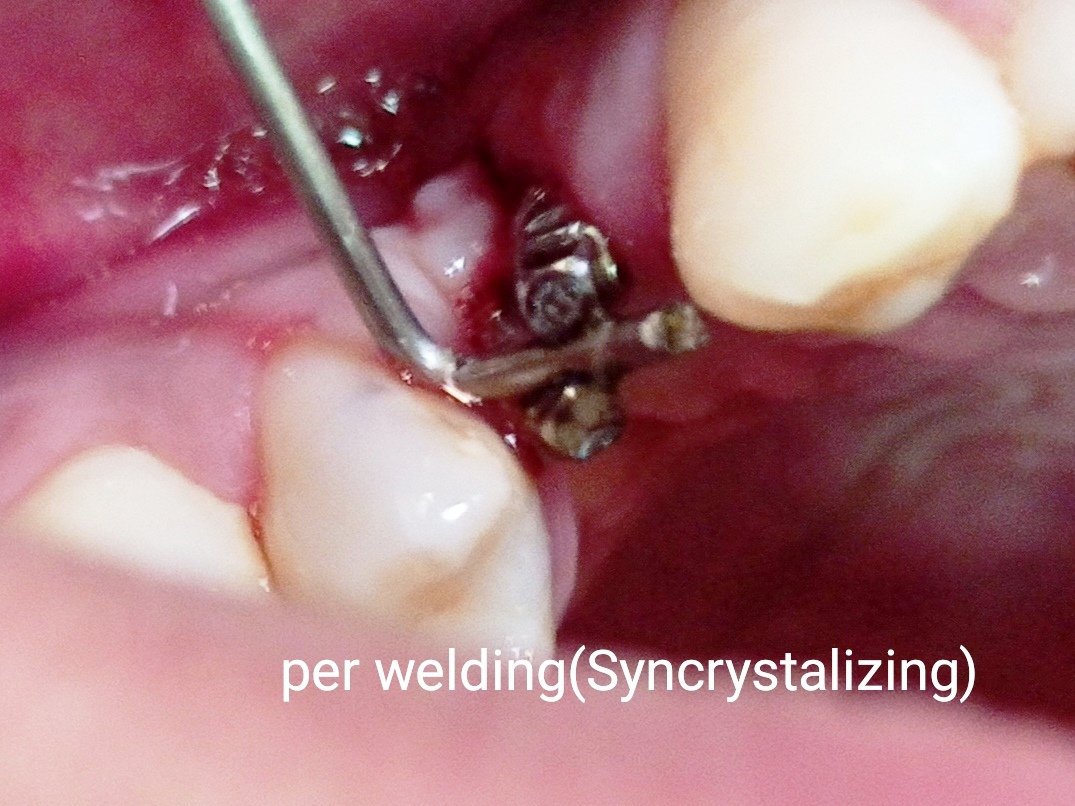


Osteotomy preparation: A precise osteotomy was created to accommodate the Monoimplant in the selected cortical areas.
Monoimplant placement: The Monoimplant was placed immediately into the palatal and infrasinus cortical areas. The implant was syncrystalized, ensuring optimal stability.
Provisional restoration: A provisional tooth was immediately attached to the Monoimplant, allowing the patient to regain function and aesthetics.
DISCUSSION
The presented case demonstrates the successful use of immediate loading cortico basal implants with the Bipodal Technique to restore a traumatic premolar extraction site. This innovative approach allowed for the immediate placement of a provisional tooth, enabling the patient to smile confidently during the social event that same evening.
The key to this success lies in the Monoimplants' ability to engage two cortical areas, providing exceptional stability even in challenging cases with minimal buccal bone. Immediate loading was achieved without compromising the final outcome.
CONCLUSION
The immediate loading cortico basal implant technique with the Bipodal Technique, as demonstrated in this case, offers an efficient and innovative solution for restoring edentulous spaces, particularly in cases with traumatic extraction and buccal bone loss. The use of Monoimplants allowed for the rapid placement of a provisional tooth, meeting the patient's immediate cosmetic and functional needs.
This approach offers significant advantages and may find wider applications in implant dentistry, particularly in time-sensitive situations.
Disclaimer from Guident
The views and opinions expressed in articles published in Guident are solely those of the authors and do not necessarily reflect the views of the editors, the editorial board or the publisher, Ivory India. Guident does not endorse any product, technique or treatment described. Clinical content is intended for qualified dental and medical professionals and is not a substitute for individual clinical judgement. Guident, its editors and the publisher accept no liability for any consequence arising from the use of information published in the journal.
How to cite this article
Dr. Muhammad Shafie. Immediate Loading Cortico Basal Implant with Bipodal Technique for Restoration of Traumatic Premolar Extraction Site: A Case Study. Guident. 2023 Oct;16(11). Available from: https://ivoryindia.in/articles/implantology/immediate-loading-cortico-basal-implant-with-bipodal-technique-for-restoration-of-traumatic-premolar.html